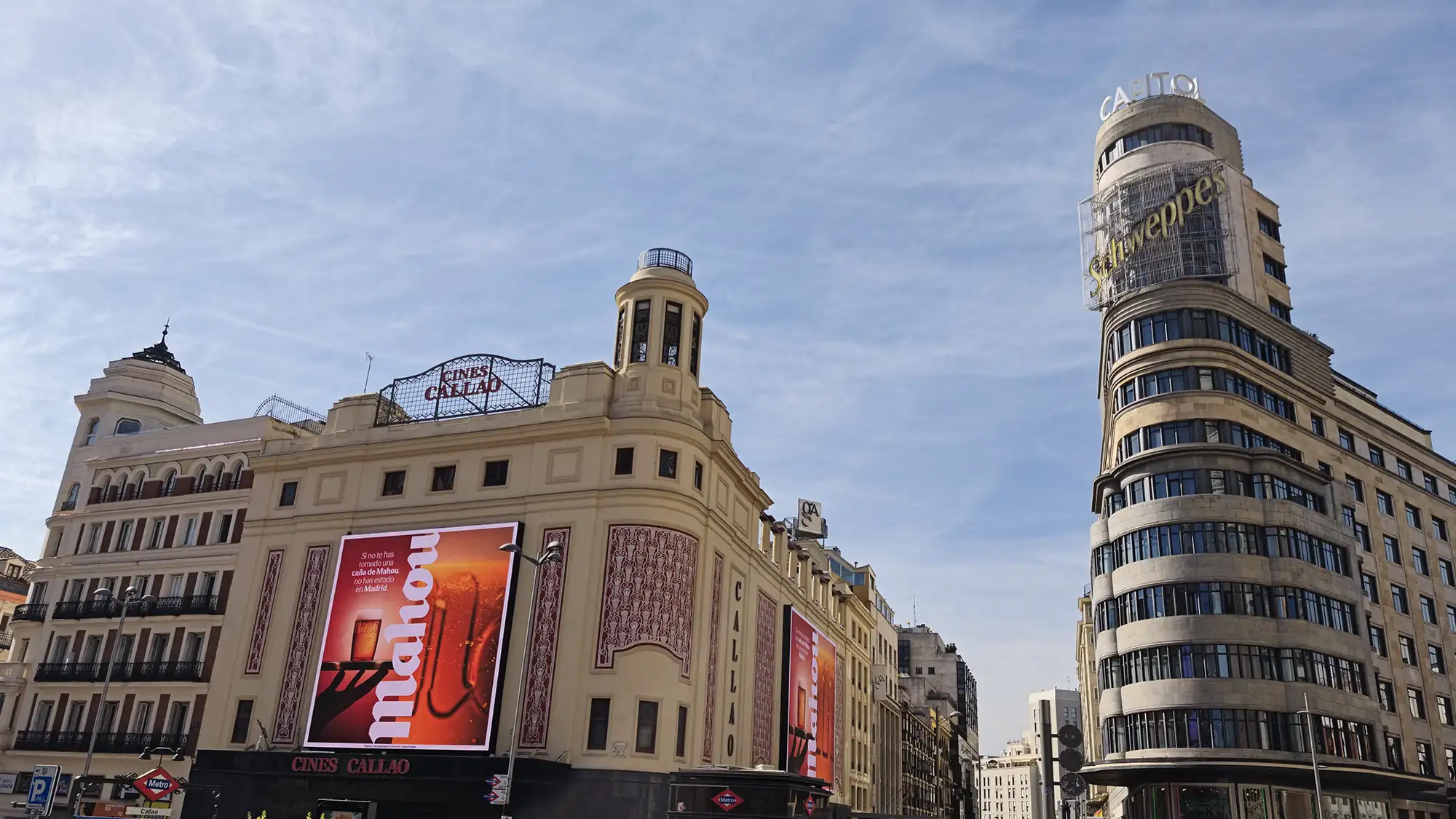
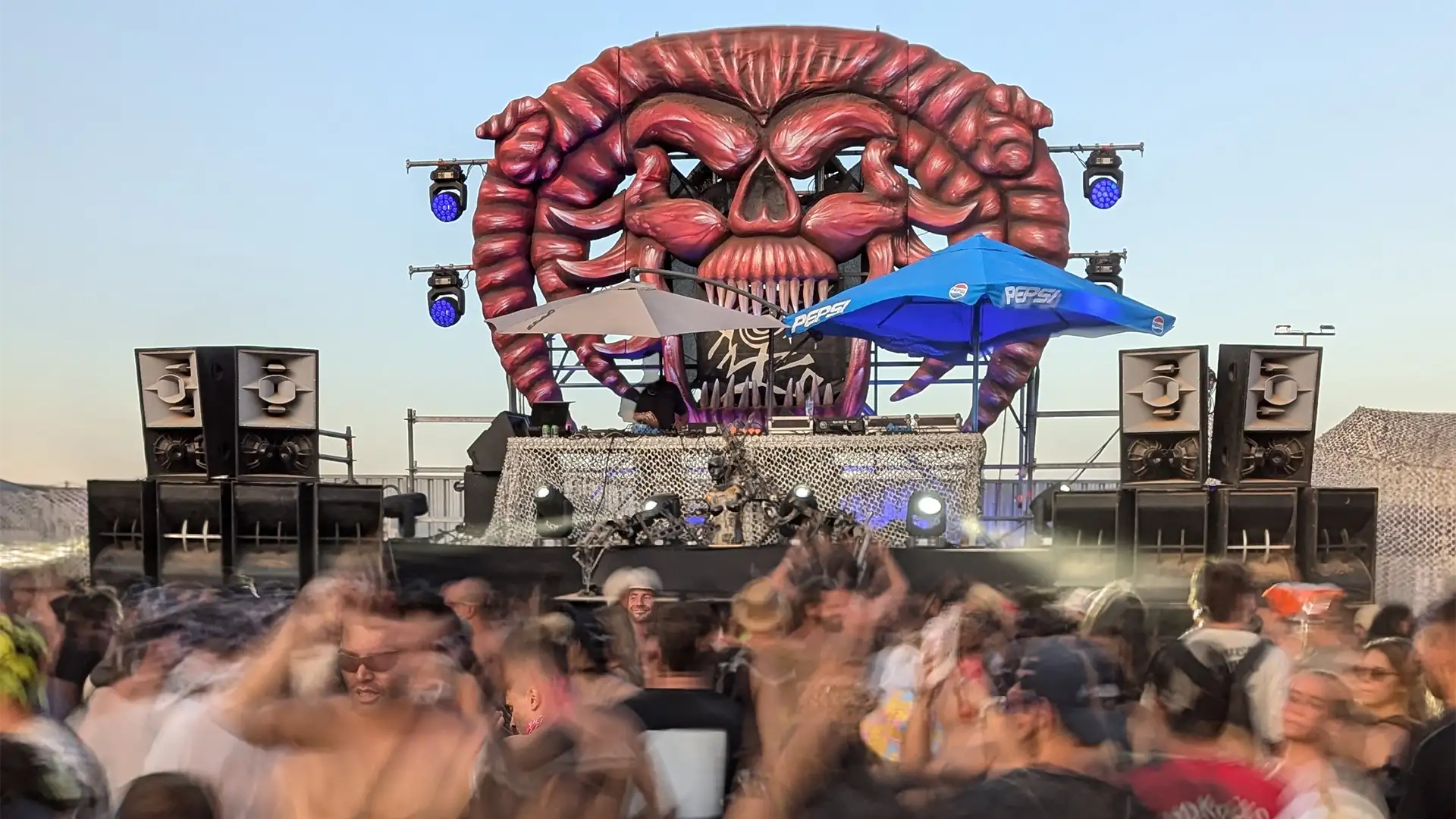
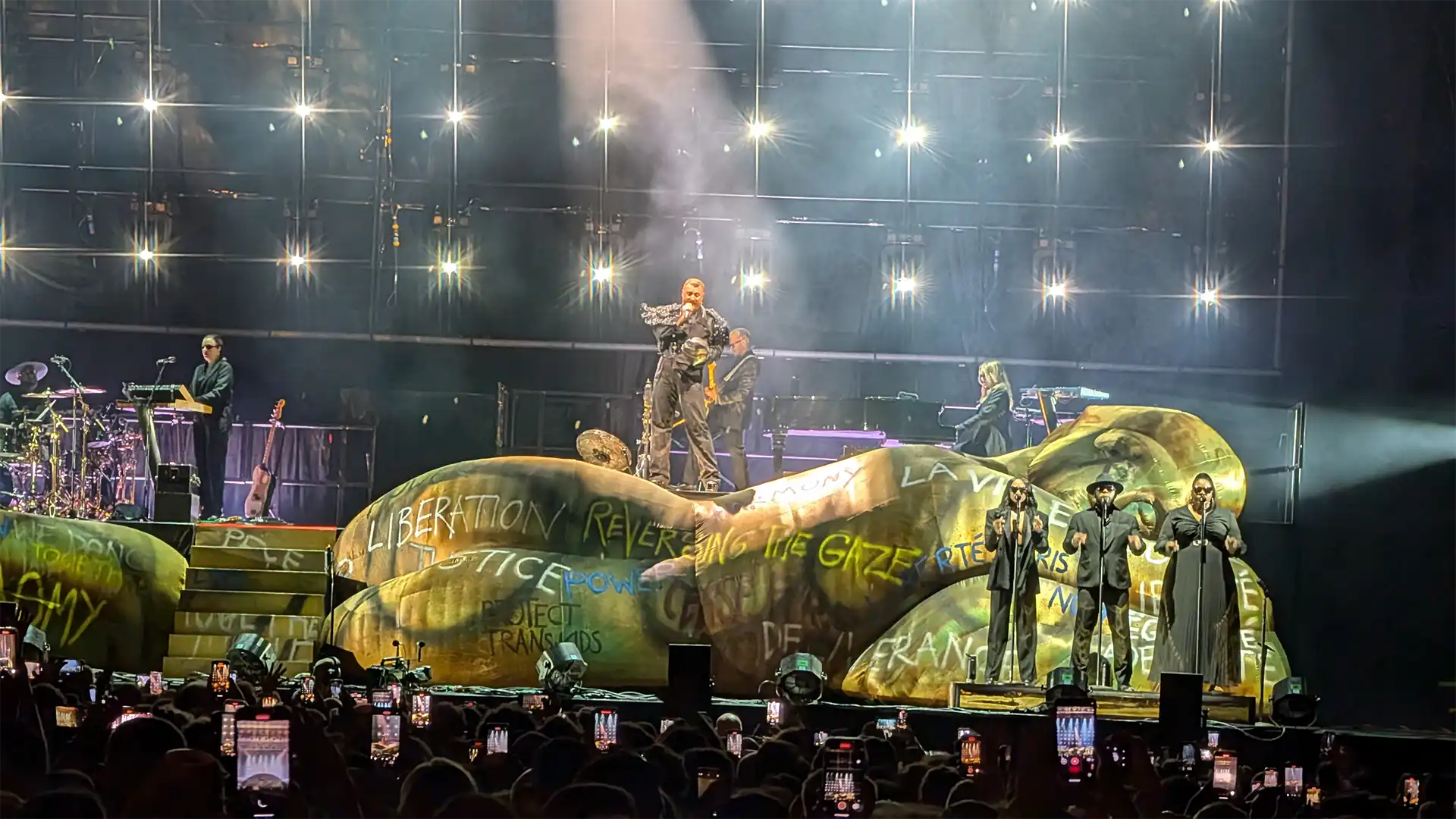
April is the month when Spain officially wakes up from winter. With temperatures rising across almost the entire country, the streets get busy again and the event calendar picks up the pace. Heavy jackets stay in the closet, early trips to the coast start making sense, and major outdoor festivals kick off the season.
The main highlight of April is undoubtedly Holy Week (Semana Santa), which in 2026 takes place during the first week of the month. Regardless of religion, it's a time when the whole country changes its routine, and cities transform to host one of the deepest traditions in Spanish culture. Alongside it, the month brings historical events, the first large music gatherings, and local celebrations welcoming spring.
Whether you are planning your trip or already live here, this is the guide to what you cannot miss in Spain in April 2026.
Holy Week (Semana Santa)
April 1 to 5
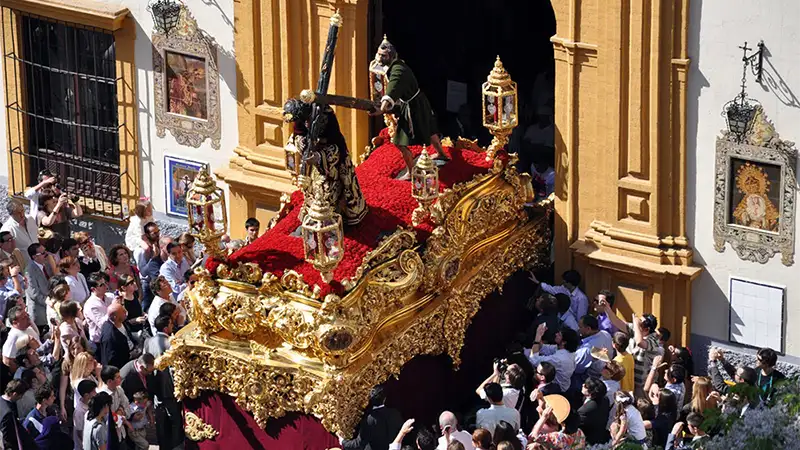
Holy Week is one of the most important religious events on the Spanish calendar and one of the most visited by international tourists. In 2026, the main week falls entirely in April, with Holy Thursday on the 2nd, Good Friday on the 3rd, and Easter Sunday on the 5th. During these days, cities across the country organize processions where brotherhoods carry massive floats with religious statues through the streets to the sound of marches and drums. Each city has its own style, rhythm, and traditions.
Seville
The most famous one in Spain. Dozens of brotherhoods walk through the historic center all week long, peaking with the Madrugá, during the night between Thursday and Friday. The amount of candle wax spilled on the streets is so big that there are signs warning of slippery ground.
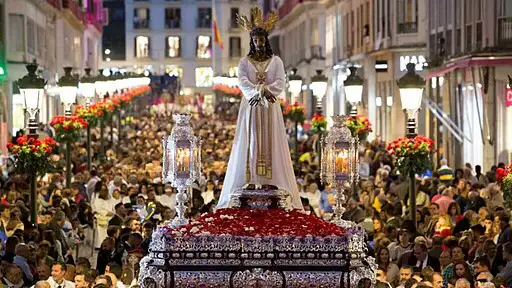
Málaga
It stands out for its giant "tronos" (thrones) carried on the shoulders of hundreds of devotees. The most striking moment is the parade of the Spanish Legion, which sings military anthems on Holy Thursday.
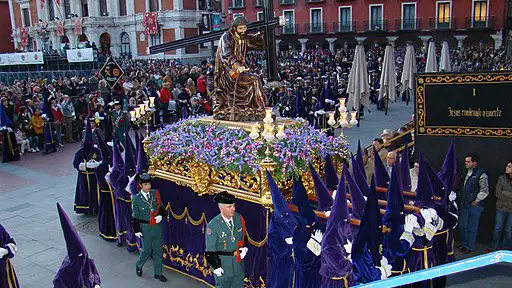
Valladolid
The sculptures featured in the processions are loaned by the city's National Sculpture Museum, including works by Gregorio Fernández and Juan de Juni. A silent Holy Week of great artistic value.
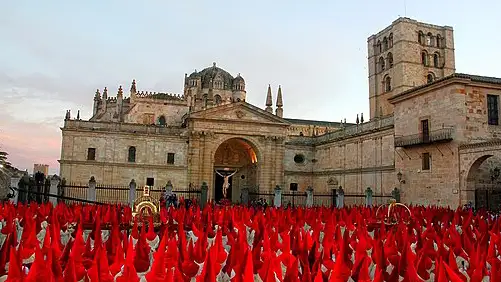
Zamora
Declared a Property of Cultural Interest, it is defined by the contrast between the absolute silence of the night processions and the music of the daytime ones. The Oath of Silence (Juramento del Silencio), on the night of Holy Wednesday, is one of its most striking moments.
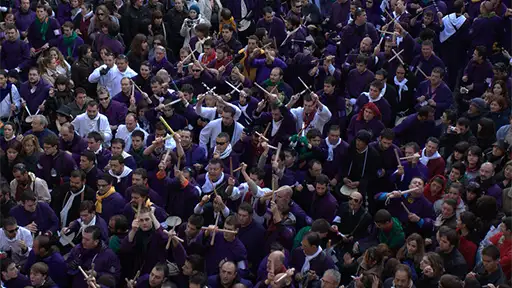
Cuenca
The most famous moment is the Camino del Calvario procession, in the early hours of Good Friday, with drums and trumpets through the narrow streets of the old town. Declared of International Tourist Interest.
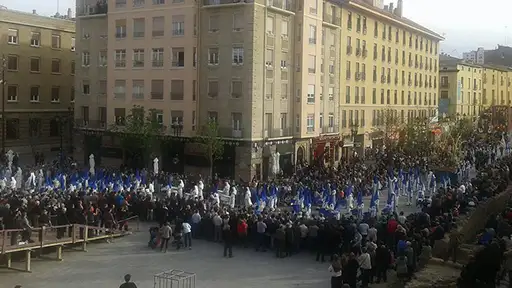
Zaragoza
Its distinguishing feature is the use of over 7,000 drums that accompany the processions. The Santo Entierro procession gathers the largest concentration of drummers in all of Spain.
Holy Week is one of the deepest and most traditional celebrations in Spain, bringing the entire country to a standstill. Processions take place in practically every city.
If you are in Spain during this time, it is almost impossible not to run into a religious procession, as the streets are taken over by brotherhoods, music, and a unique cultural atmosphere that defines the Spanish identity.
Here are some other honorable mentions:
San Vicente de la Sonsierra (La Rioja)
The Picaos is the only penitential flagellation ritual that has survived in Spain. During the processions, the disciplinants walk the streets striking their own backs as an act of penance.
Peñafiel (Valladolid)
On Easter Sunday, a child dressed as an angel descends on a cable to announce the son's resurrection to the Virgin Mary. It is one of the most unusual religious performances in the country.
Lorca (Murcia)
Famous for its biblical parades featuring horses, Roman chariots, and Egyptian floats. The highlight is the monumental silk and gold cloaks, embroidered by hand and protected as cultural heritage.
Hellín (Albacete)
The main event is the Tamborada, where thousands of people play drums for almost two full days. The deafening sound takes over the streets in an impressive collective tradition.
Cáceres
The processions wind through the medieval historic center, between stone walls and towers. The lighting, provided solely by torches and candles, creates a scene that takes you straight back in time.
Murcia
On the morning of Good Friday, the works of sculptor Francisco Salzillo take to the streets. During the procession, brotherhood members hand out bread, sweets, and hard-boiled eggs to the crowd.
Cartagena
It stands out for the strict organization of the penitents, who march in absolute synchronization, as if they were an army. It is considered one of the richest and most aesthetically pleasing processions in Spain.
Seville April Fair (Feria de Abril)
April 21 to 26
The Feria de Abril transforms Seville's routine for a week. The event is set up in a giant, enclosed area called the Real de la Feria, where the streets are lined with the famous casetas (canvas tents) where people gather to eat, drink the traditional rebujito, and dance sevillanas.
The vast majority of these casetas are private and belong to families, companies, or associations, meaning you can only enter if invited by a member. To ensure tourists don't miss out, the Seville city council sets up public casetas with free entry, where the atmosphere is very similar.
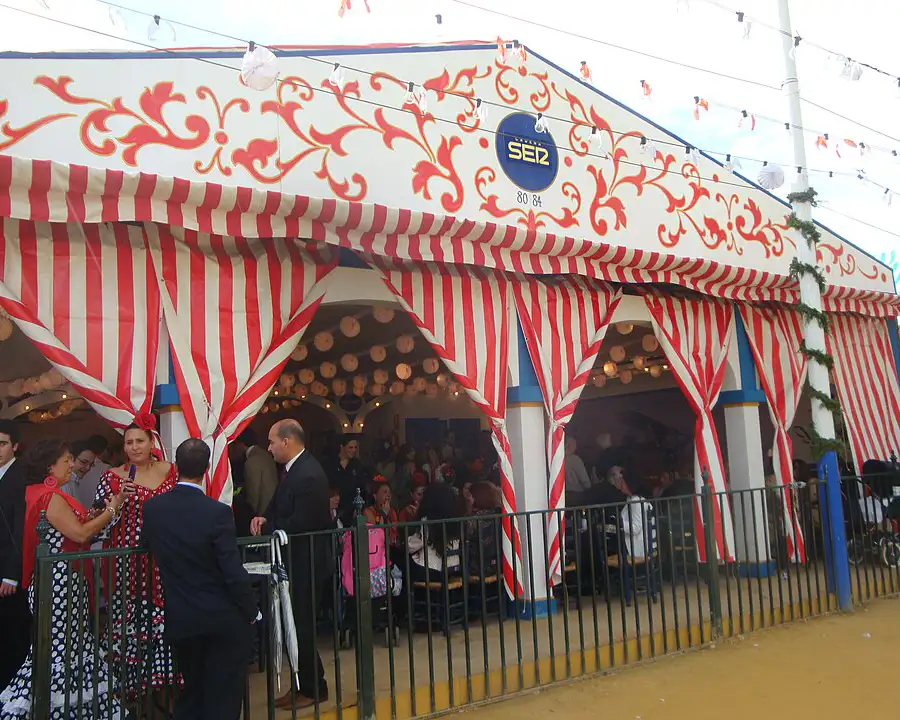
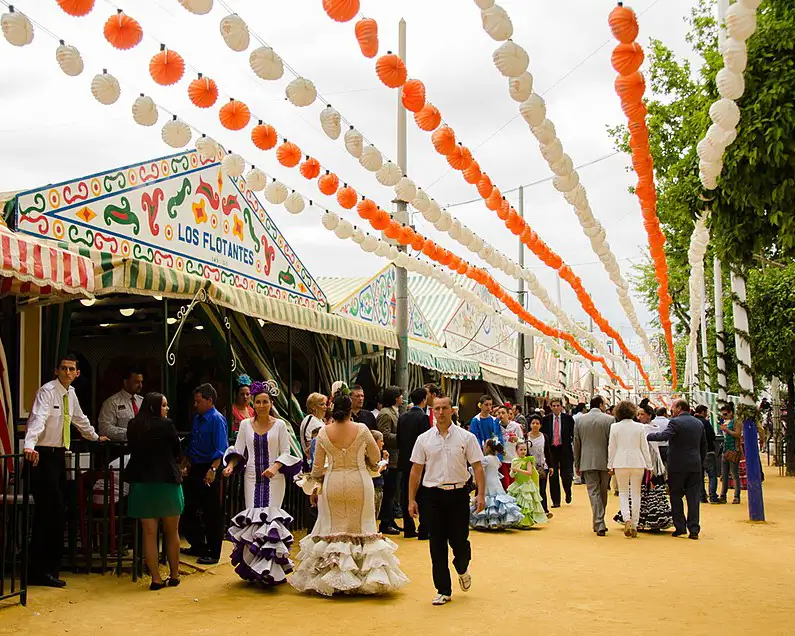
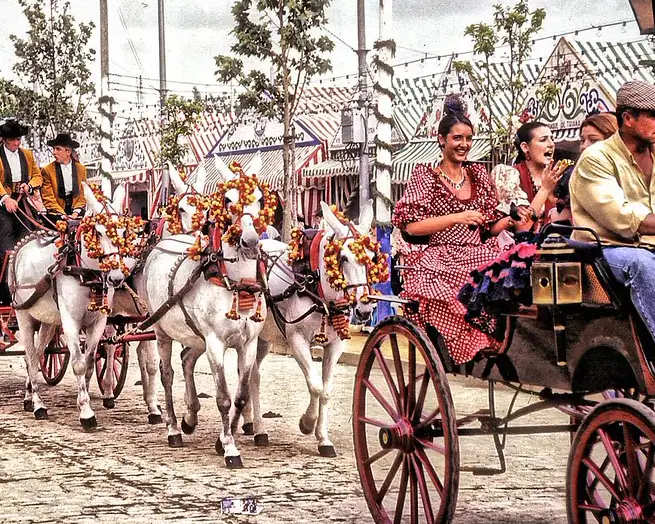
The Feria de Abril is not exclusive to Seville. In Barcelona, the Andalusian community organizes its own version at the Parc del Fòrum, featuring casetas, sevillanas, and traditional food. In 2026, it takes place from April 26 to May 4.
Music festivals
April marks the beginning of the festival season in Spain. Winter is left behind, and the first major events return to beaches, mountains, and outdoor venues. The calendar isn't as packed as in the summer yet, but it already offers options for very different tastes.
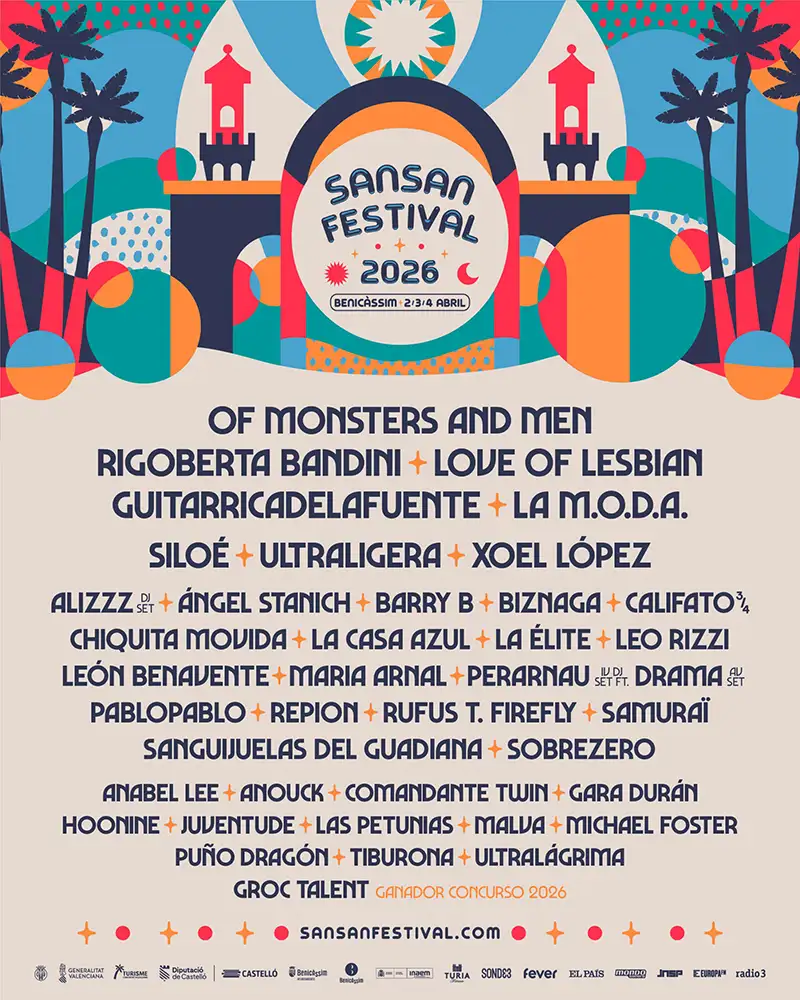
SanSan Festival
Music: Indie, pop, and rock
Where: Benicàssim, Castellón
When: April 2, 3, and 4
More information
This festival marks the official start of the festival season in Spain. It takes place by the sea during Holy Week.
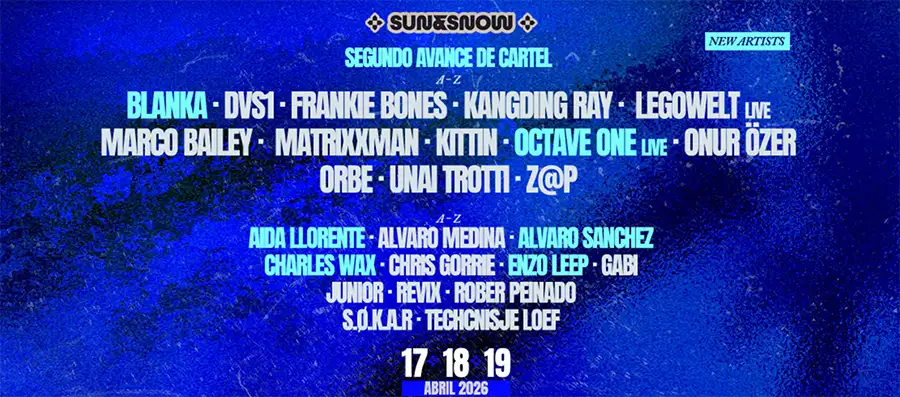
Sun and Snow Weekend
Music: Electronic
Where: Sierra Nevada National Park (Granada)
When: April 17 to 19
More information
The festival that brings electronic music to the high mountains of Sierra Nevada right in the middle of ski season.

FURY Hard Techno Festival
Music: Hard techno
Where: IFEMA Madrid
When: April 24
More information
The first edition in Madrid sold out, and the second arrives at IFEMA with more international artists and a larger production. It features over 10 hours of music, from 10 PM to 6 AM.
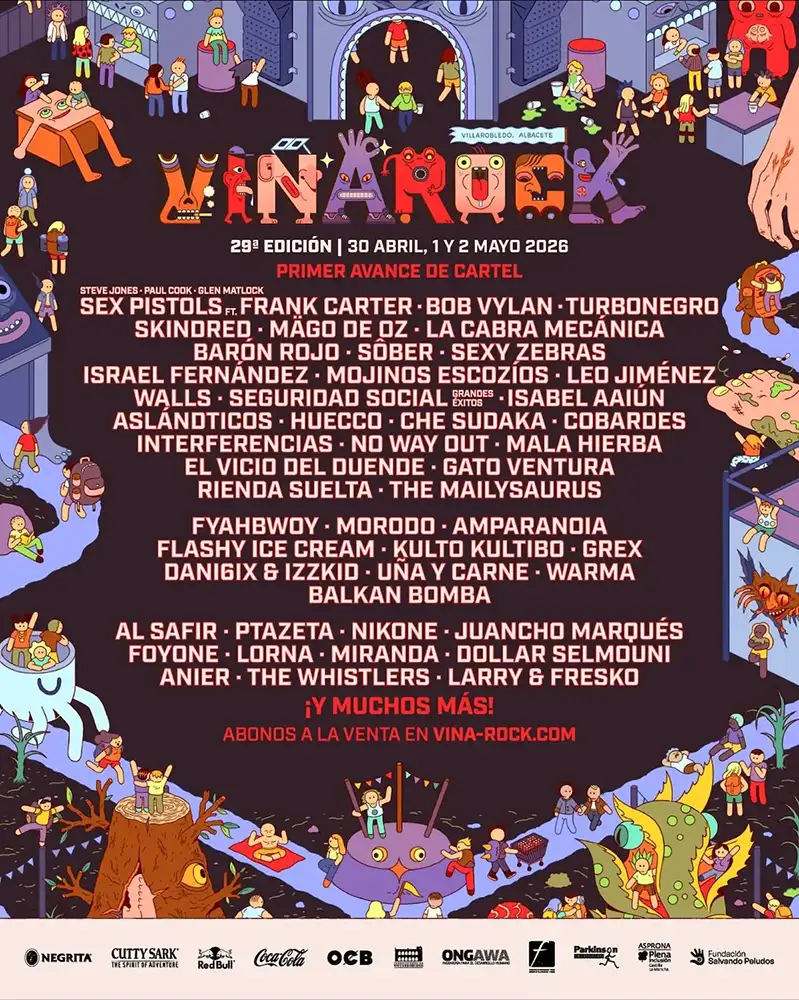
Viña Rock
Music: rock.
Where: Villarrobledo, Albacete
When: April 30 to May 2
More information
The largest Spanish-language rock and fusion festival in the country. It gathered over 240,000 people in its last edition.
Village Festivals and Curious Traditions
There is always a festival going on somewhere in Spain. The interior is full of local traditions that would be impossible to list on a single page. We have selected the most famous events we know here, but keep in mind that almost every pueblo (village) has its own celebration around this time.
Bando de la Huerta (Murcia) | April 7: Tens of thousands of Murcians take to the streets in traditional orchard costumes in a parade of ox-drawn carts, dance groups, and wagons that hand out food to the spectators. Declared of International Tourist Interest.
Entierro de la Sardina (Murcia) | April 11: Declared of International Tourist Interest, the festival closes the Spring Festivals with a multi-kilometer parade through the city streets. The floats are themed around the gods of Olympus and throw toys to the crowd while everyone blows a whistle. At the end, in the early hours of the morning, a giant cardboard sardine is burned amidst fireworks.
Las Mondas (Talavera de la Reina, Toledo) | April 11: A festival of Roman origin dedicated to the goddess Ceres (which was later converted into an offering to the Virgin of the Prado), featuring a parade of ram-drawn carts and offerings of flowers and wax.
Cata del Vino Montilla–Moriles (Córdoba) | April 22 to 26: The courtyard of an old military barracks becomes the center of attention to taste the region's fortified wines, accompanied by the best local tapas.
Romería de Nuestra Señora de la Cabeza (Andújar, Jaén) | April 26: One of the oldest pilgrimages (romerías) in Spain, with over a million people heading up to the Sierra Morena Sanctuary over the weekend.
Fiesta de la Lamprea (Arbo, Pontevedra) | April 24 to 26: A gastronomic festival dedicated to the lamprey, Galicia's most highly valued fish in the spring, with tastings and a traditional market on the banks of the Miño River.
Fiestas de Moros y Cristianos (Alcoy, Alicante) | April 25 to 27: The largest and most spectacular historical recreation in the country, with armies in luxurious costumes parading and battles featuring plenty of gunpowder.
Fiesta del Mayo Manchego (Pedro Muñoz, Ciudad Real) | April 30: A celebration that marks the arrival of spring with the "Mayos," traditional songs dedicated to women and the harvest, during a night of music and traditional costumes.