A stroll through the heart of Santiago: culture, authentic flavours, and meaningful landscapes
Santiago de Compostela is a compact destination and easy to explore in a short time. Most points of interest are in the historic centre, and you can move around on foot easily. The city marks the end of the Camino de Santiago, and even if you haven’t done the route, watching the pilgrims arrive helps explain its significance.
A one-day visit is enough to see the Cathedral, walk through the main streets, watch the activity in the squares and try Galician food. The city has local life, preserved history and a good range of bars and markets. It is a straightforward itinerary and enough to get a solid first impression of Santiago.
Step-by-Step Itinerary
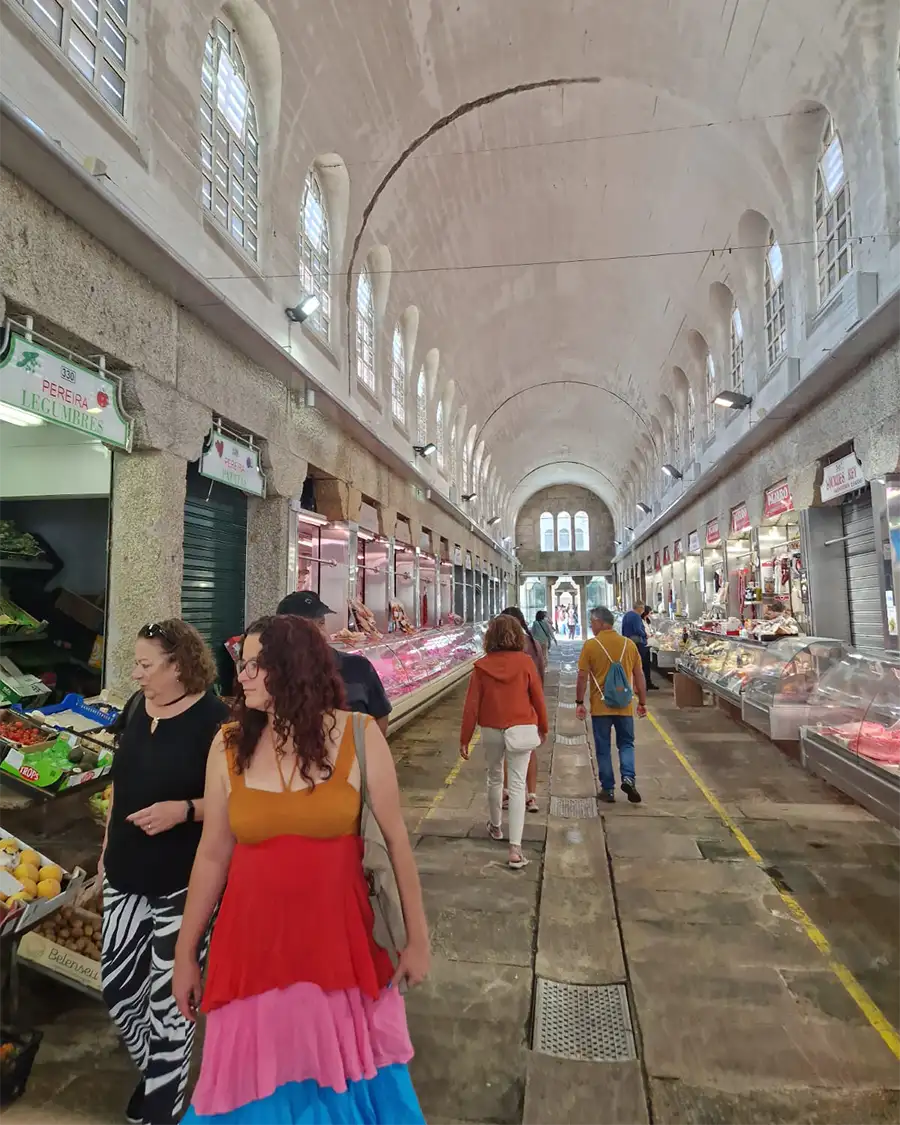
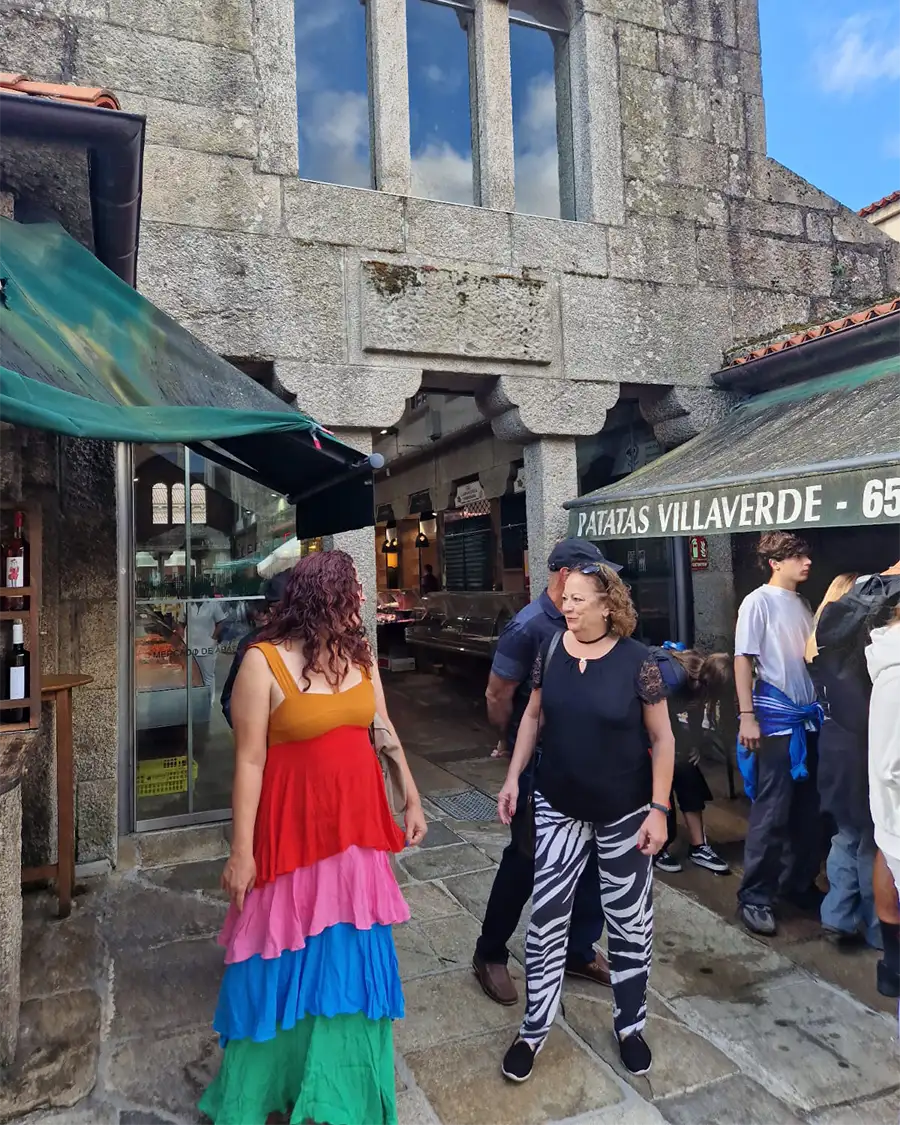
09:00 – Visit to Mercado de Abastos
Start your day at Mercado de Abastos, one of the most authentic and vibrant spots in Santiago de Compostela. In the morning, the market is in full swing, with all the stalls open, offering fresh fruit, vegetables, fish, cheeses, and cured meats. It’s the perfect place to pick up local products such as artisanal cheeses, traditional cured meats, fresh seafood, and Galician wines.
Beyond shopping, you can also enjoy freshly prepared snacks from stalls that use ingredients sourced directly from the market. It’s a fantastic way to immerse yourself in the local food culture and kickstart your day with authentic flavours.
10:00 – Stroll Through the Old Town
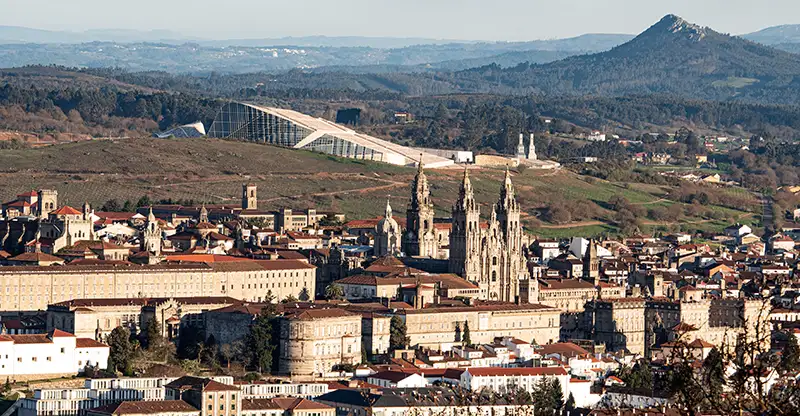
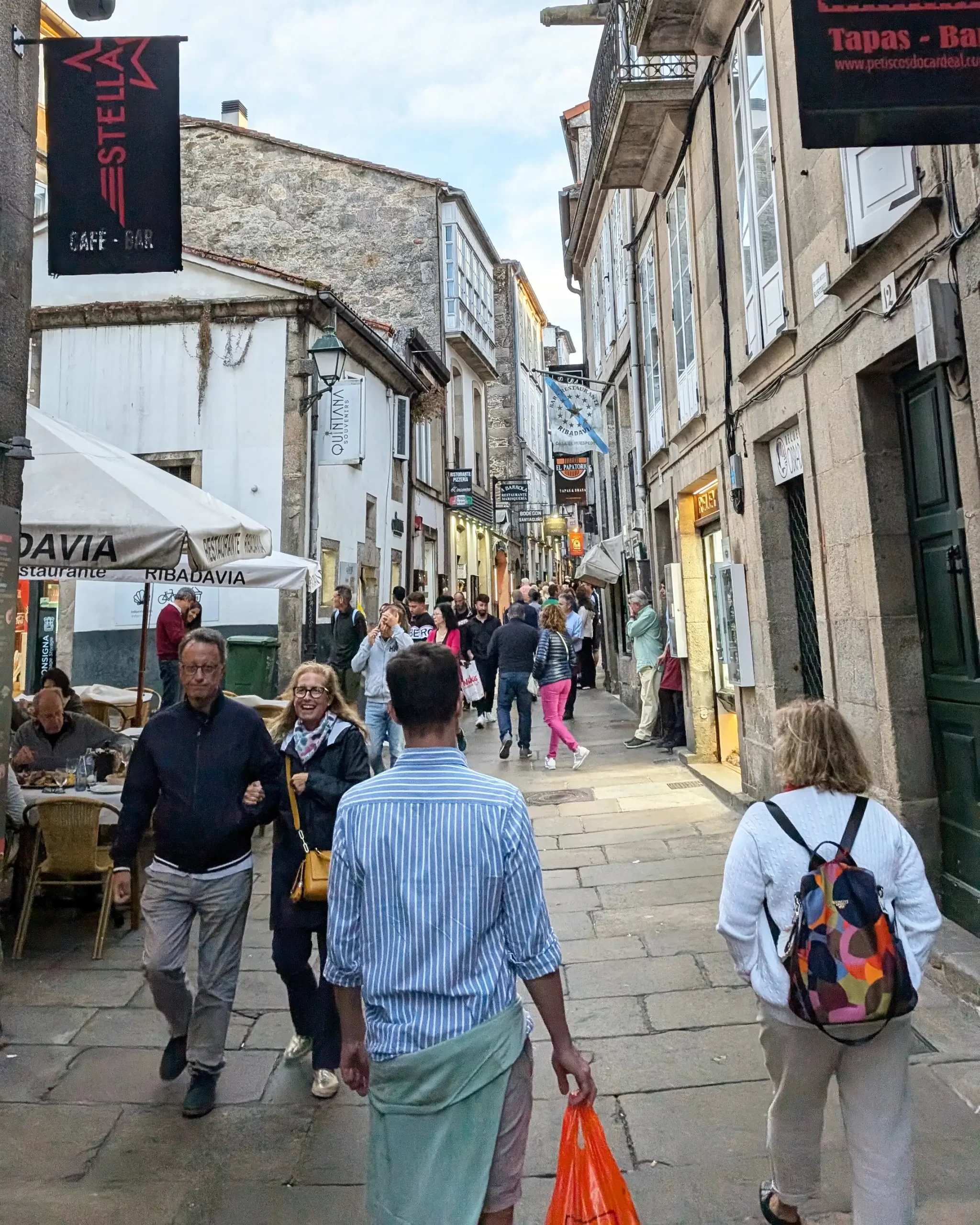
Santiago’s Old Town is one of the best-preserved in Europe. Start your walk on Rúa do Franco, one of the city's busiest streets, lined with bars and souvenir shops—perfect for soaking up the local atmosphere. Continue towards Praza das Praterías, where you’ll find the famous Fountain of the Horses and enjoy a beautiful view of one side of the Cathedral.
From there, follow Rúa do Vilar, one of Santiago’s most traditional streets, home to historic buildings, typical arcades, and small local shops. This walk is filled with architectural details and offers an authentic glimpse into daily life in Santiago. At the end of the street, you’ll reach Praza do Toural, one of the city’s main squares, where cafés begin to open their doors.
If you prefer a guided experience, consider joining a free walking tour, which lasts around two hours.
12:30 – Visit to Belvís Park
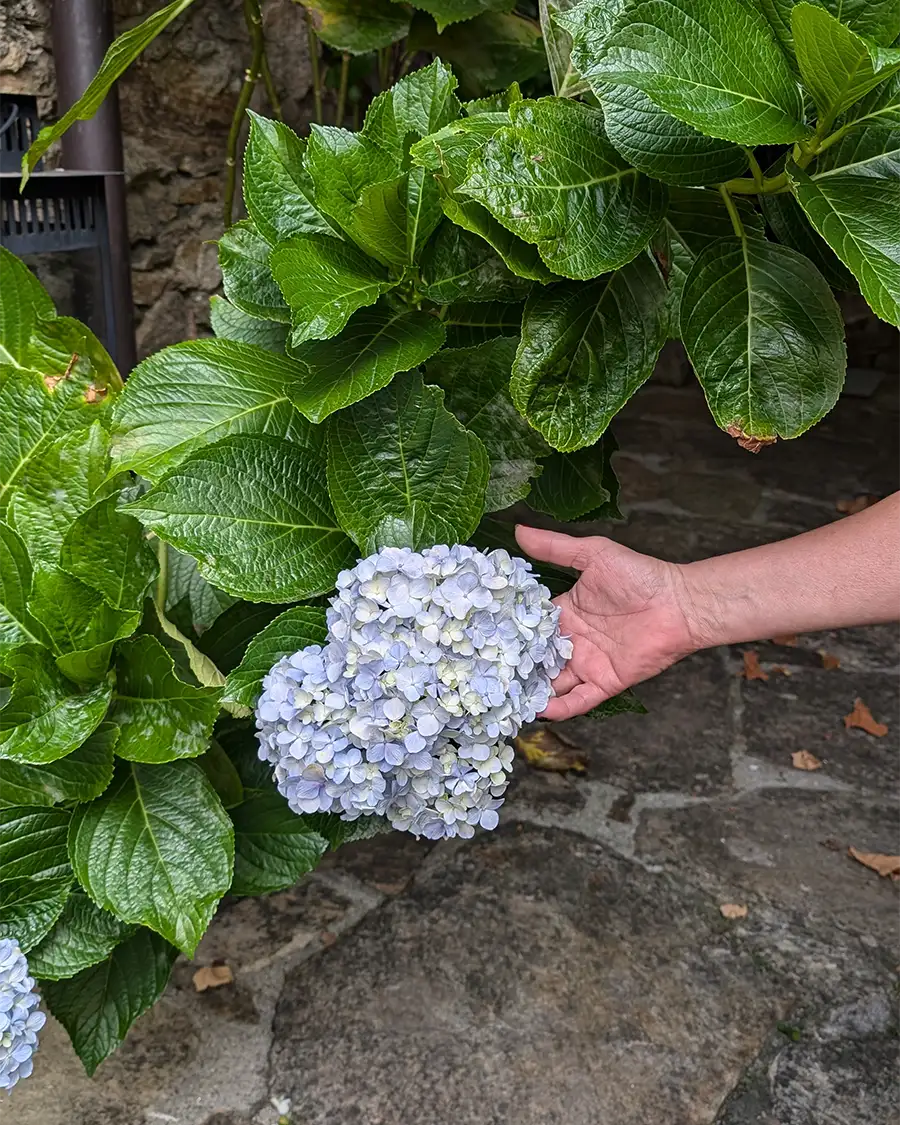
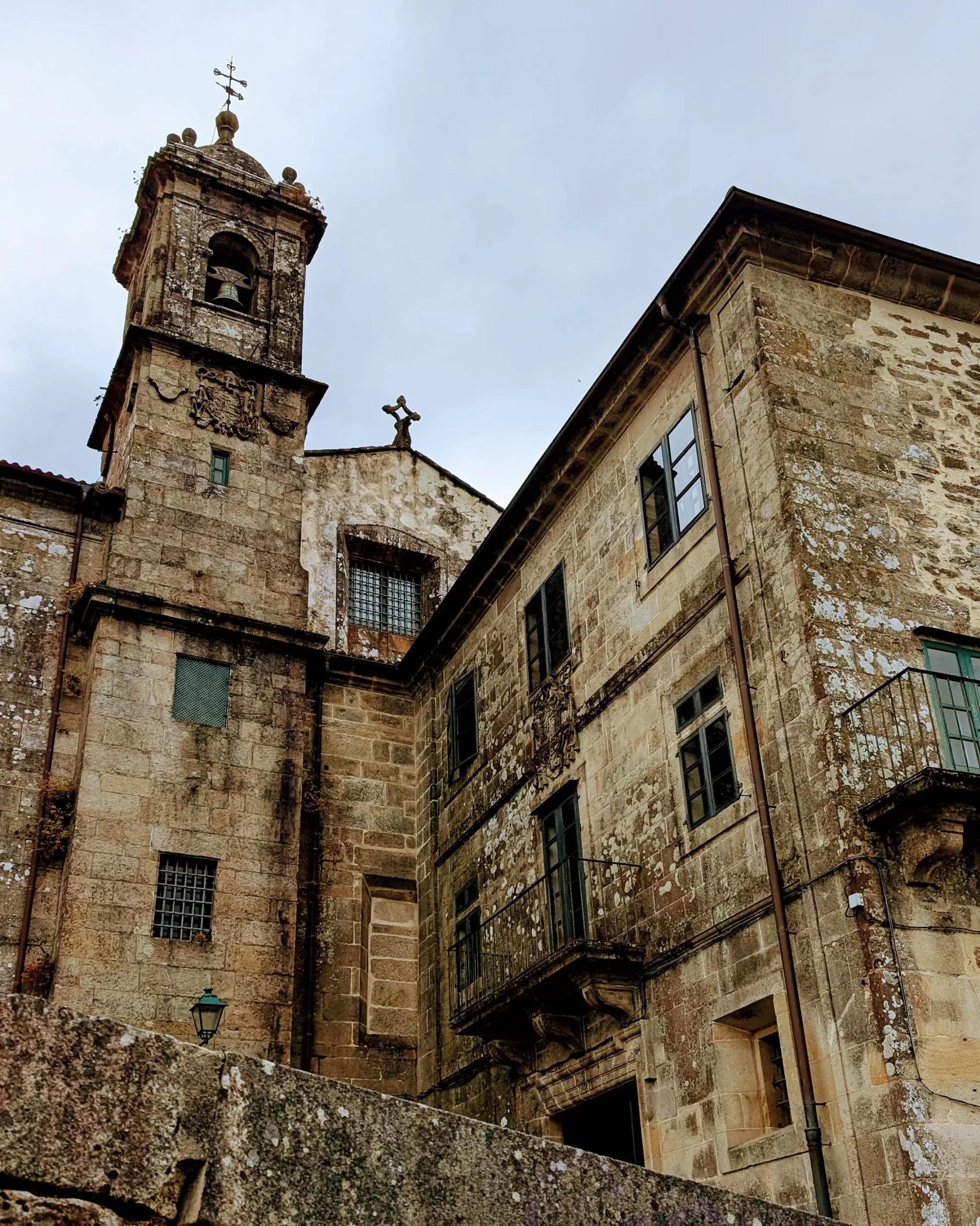
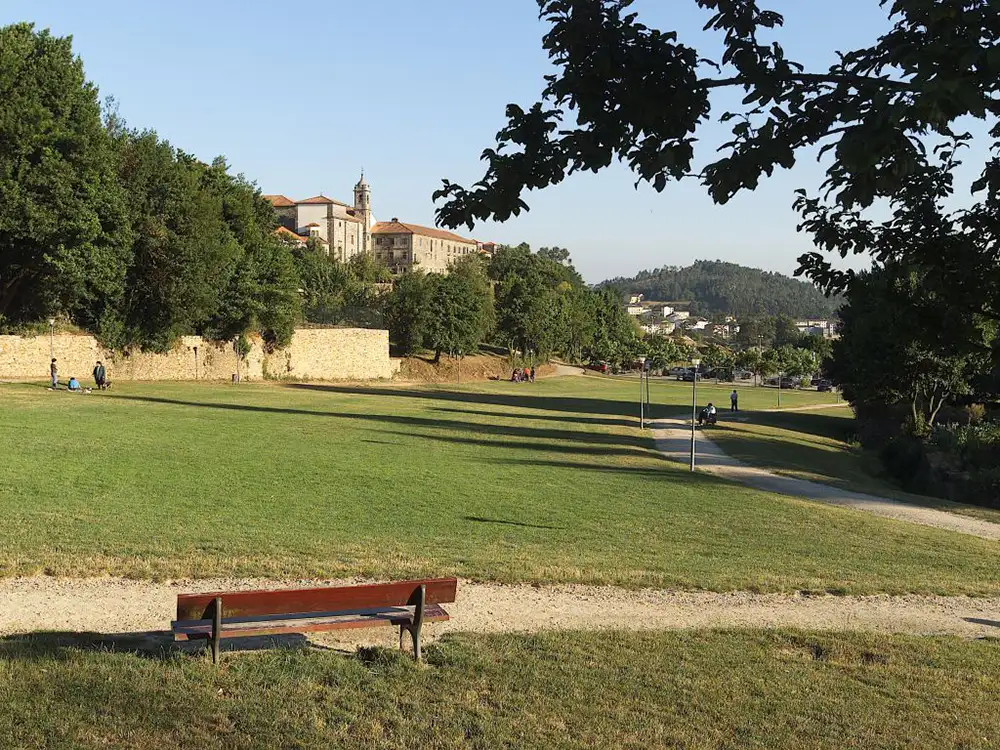
Located just a few minutes from the Old Town, Belvís Park is a great spot for a peaceful walk or simply to relax. With vast green spaces and scenic views of the city, it is one of the most tranquil parks in Santiago. Take some time to stroll through its gardens and admire the architecture of the Monastery of Belvís, which sits beside the park.
This is a quieter, less touristy area—perfect for unwinding before lunch and ideal for those looking to take a break outdoors.
13:30 – Lunch at O Sendeiro
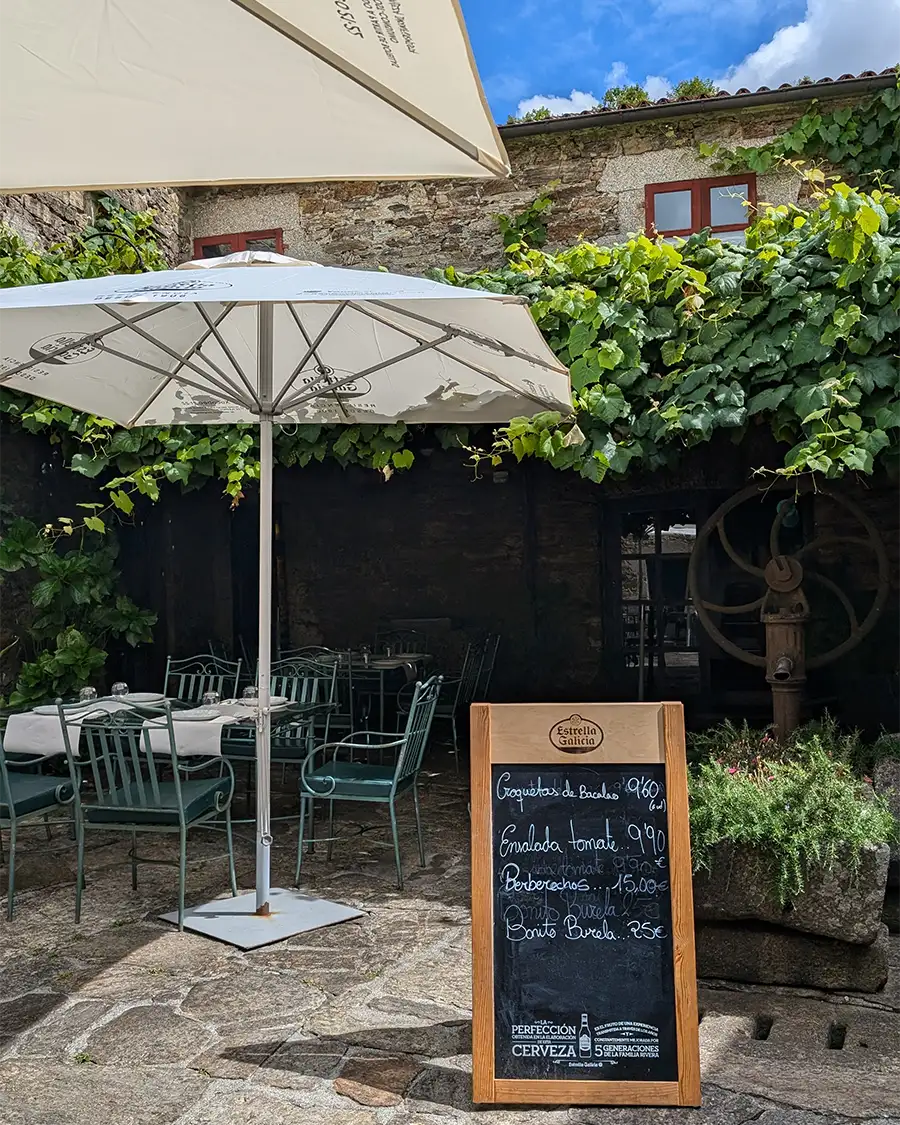
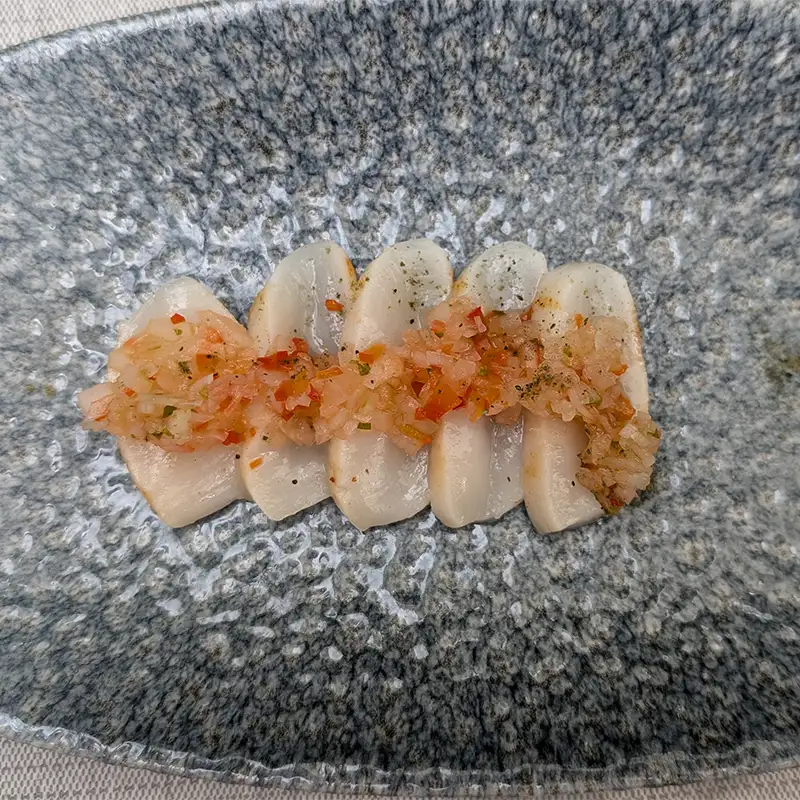
O Sendeiro is an excellent choice for a gourmet lunch in Santiago. We had the chance to try the tasting menu and highly recommend it—it was a fantastic experience. To enjoy this option, it's important to book in advance, as the six-course menu + two desserts is specially prepared for those who request it, costing €50 per person.
If you prefer, you can also order individual dishes à la carte. Everything we tried at O Sendeiro was exceptional, making it a great choice for both those looking for a full dining experience and those who prefer a more flexible meal.


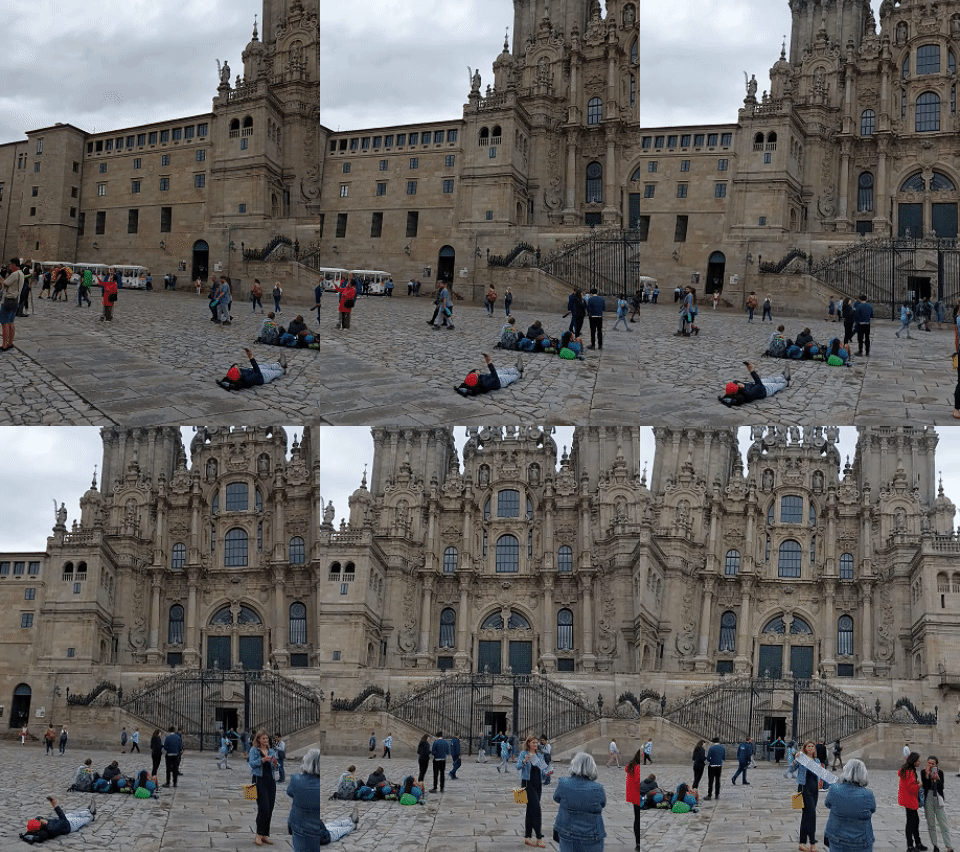
15:30 – Praza do Obradoiro and the Arrival of Pilgrims
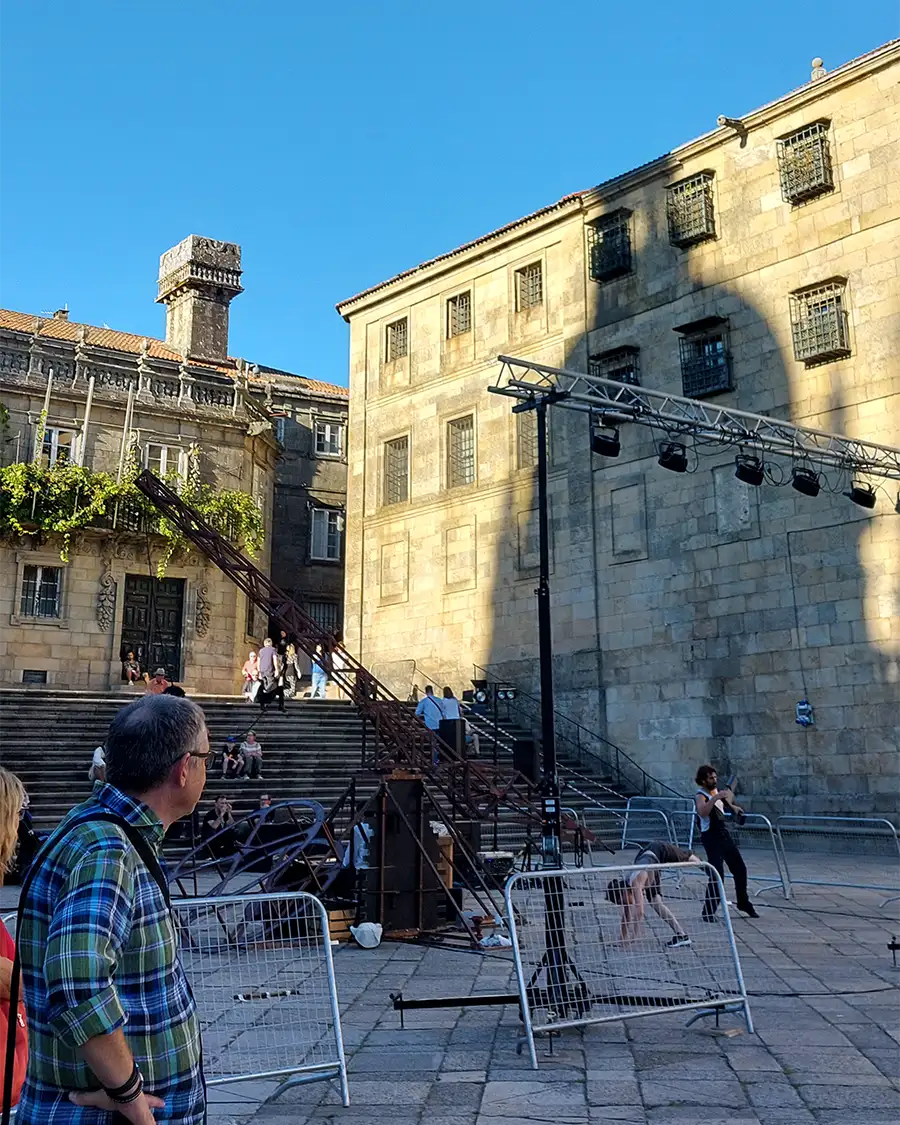
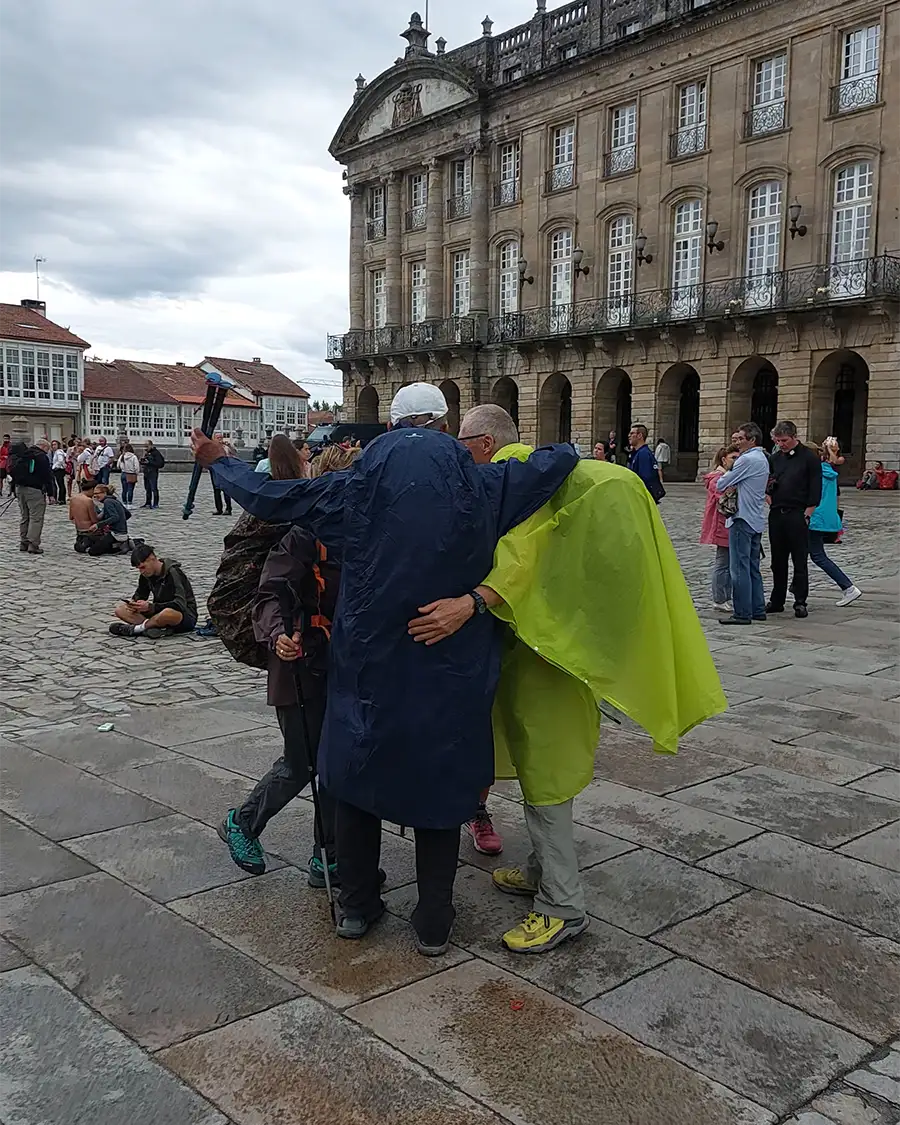
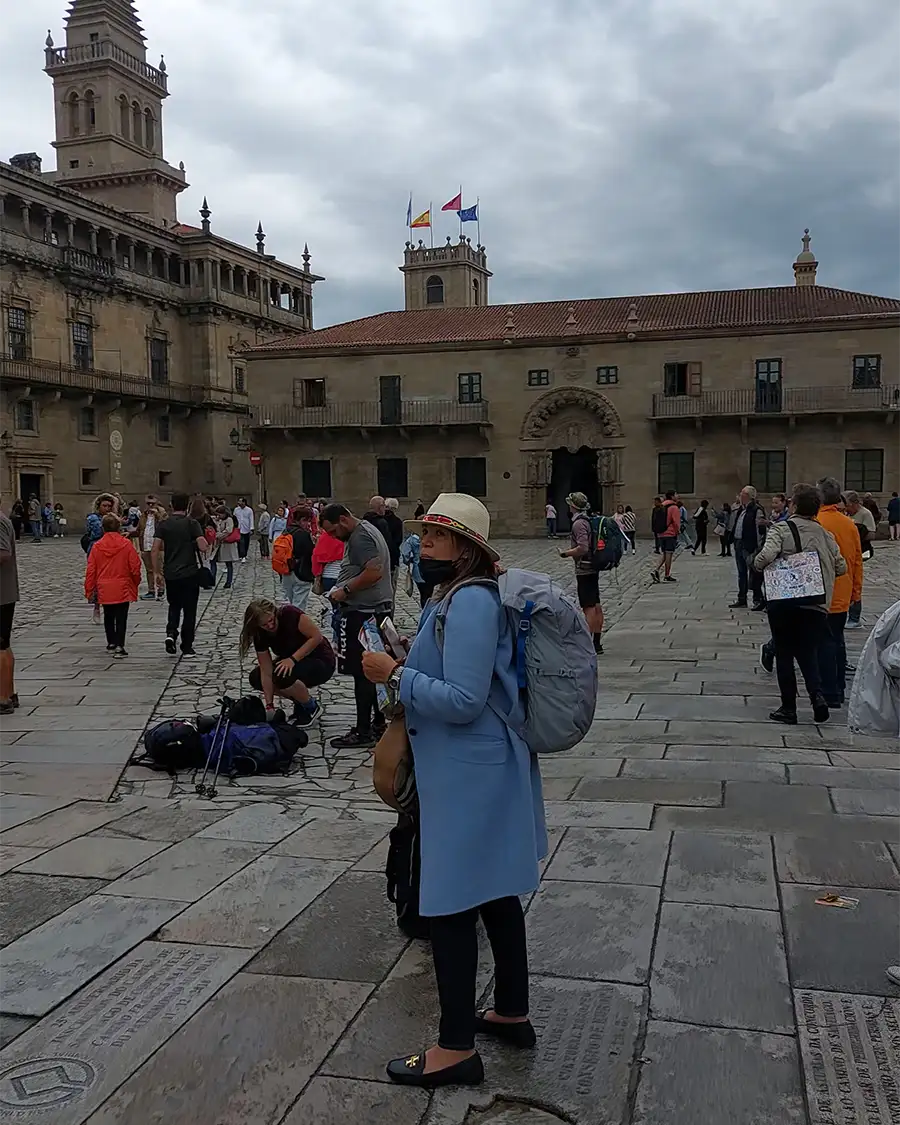
Praza do Obradoiro is the most symbolic arrival point in Santiago de Compostela, where pilgrims from all over the world complete their long journey along the Camino de Santiago. Standing in the square, you’ll witness one of the city’s most moving scenes—the moment when pilgrims, many of them exhausted yet filled with joy and a sense of achievement, finally reach their destination.
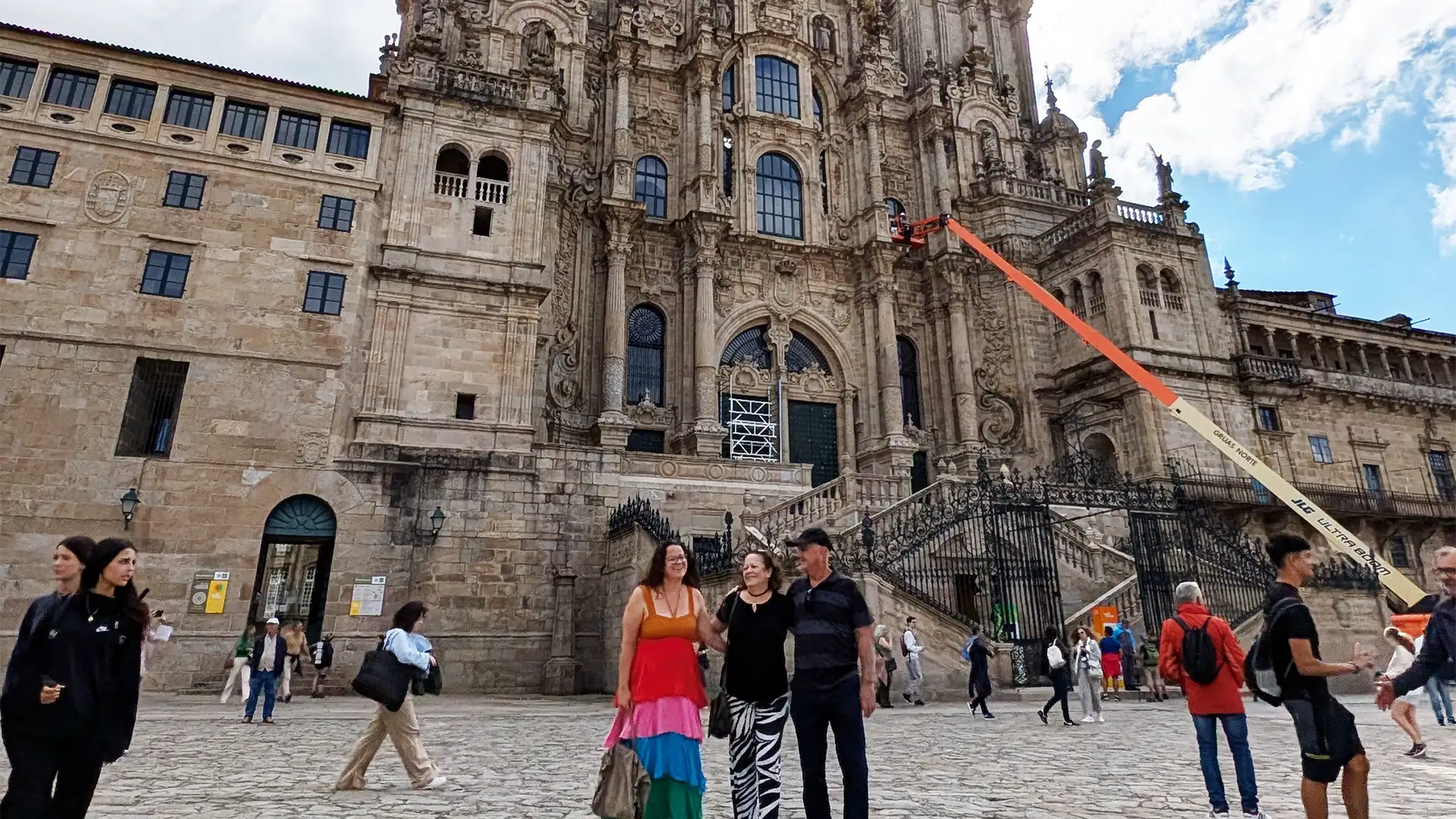
Beyond the emotional significance of the pilgrimage, Praza do Obradoiro is surrounded by some of Santiago de Compostela’s most important buildings. On one side stands the majestic Cathedral of Santiago, with its iconic Baroque façade. Around the square, you’ll also find the Parador de los Reyes Católicos, originally a hospital and now one of Spain’s most prestigious hotels, the Pazo de Raxoi, home to the city council and the Galician government headquarters, and the Colexio de San Xerome, which houses the rectorate of the University of Santiago.
These landmarks form one of the city’s most remarkable architectural ensembles, making the square an unmissable stop for anyone visiting Santiago.
16:00 – Visit to the Cathedral Museum and the Portico of Glory
The Cathedral Museum of Santiago and the Portico of Glory are excellent ways to explore the history of the cathedral and the city. Entry to the Portico of Glory is sold together with the museum ticket, and access is only possible with a ticket—it cannot be visited from inside the church. This is the gateway that pilgrims have passed through for centuries, and visits must be booked in advance, with a 30-minute time limit inside. Unfortunately, photography is not allowed, but you can observe fascinating details, such as the worn marble where countless pilgrims have placed their hands over the centuries, leaving permanent imprints of their fingers.
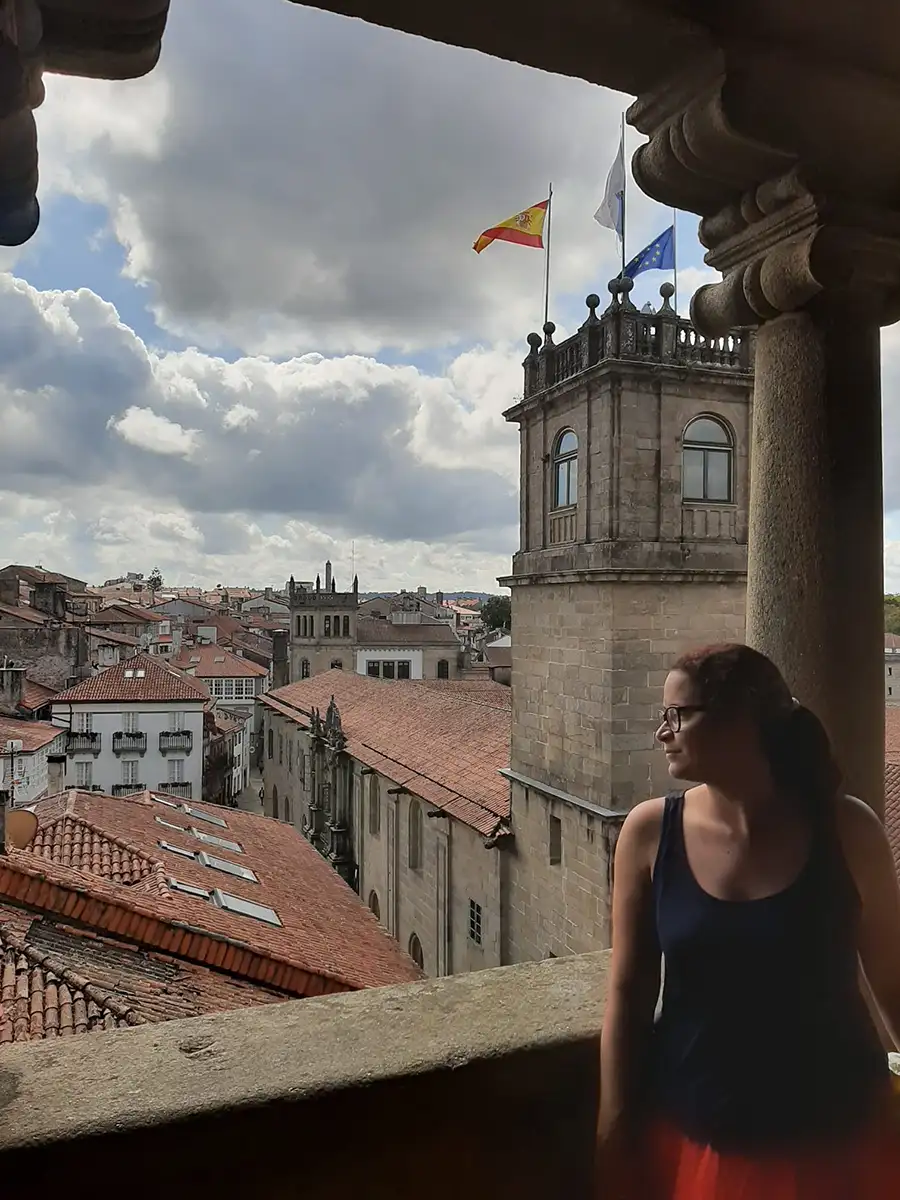
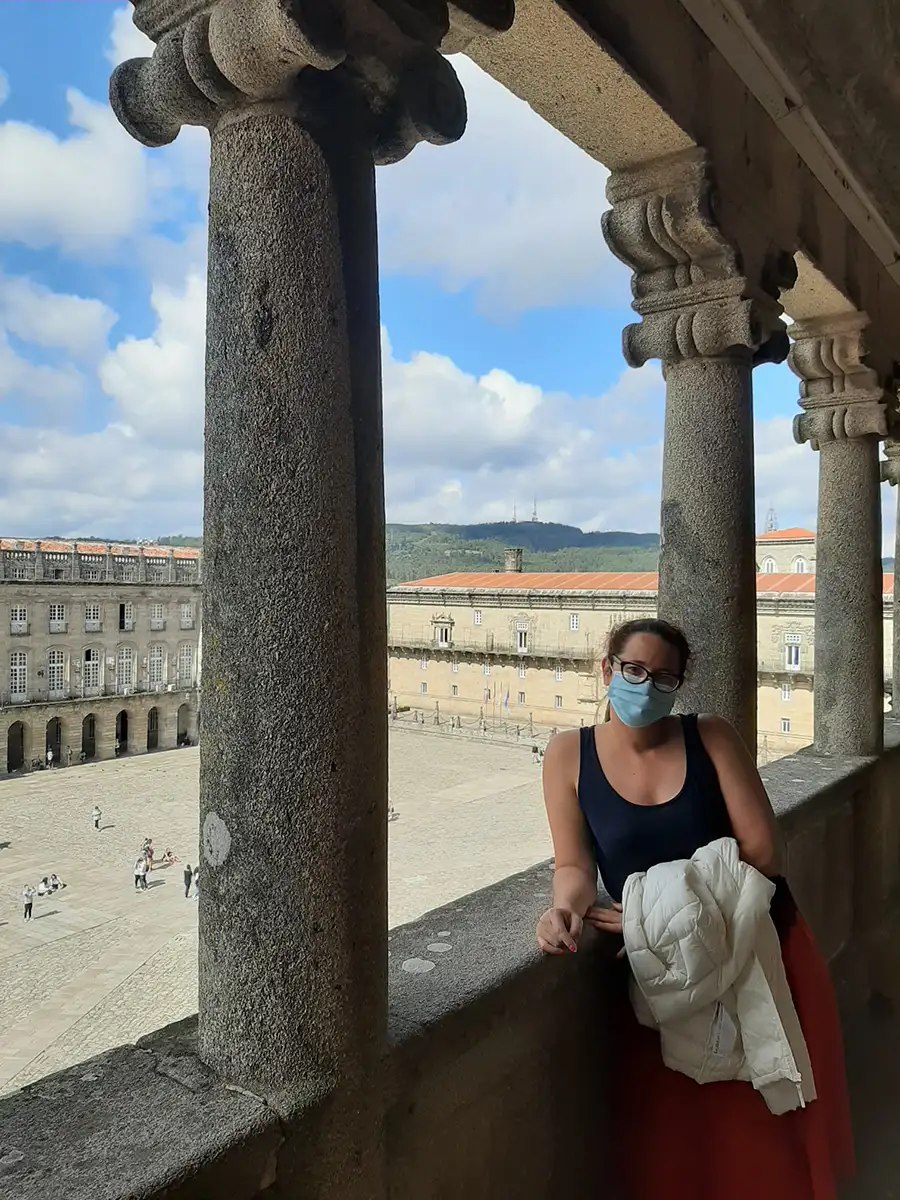
The Cathedral Museum is rich in history, featuring exhibitions on the cathedral’s construction, tapestries, religious art, and other cultural aspects of the city. However, if time is short, we recommend prioritising the Portico of Glory. The highlight of the museum is its upper balconies, which offer an incredible view of the square below, allowing visitors to watch the bustling movement below, including the emotional arrival of pilgrims.
18:00 – Visit to the Apostle’s Tomb
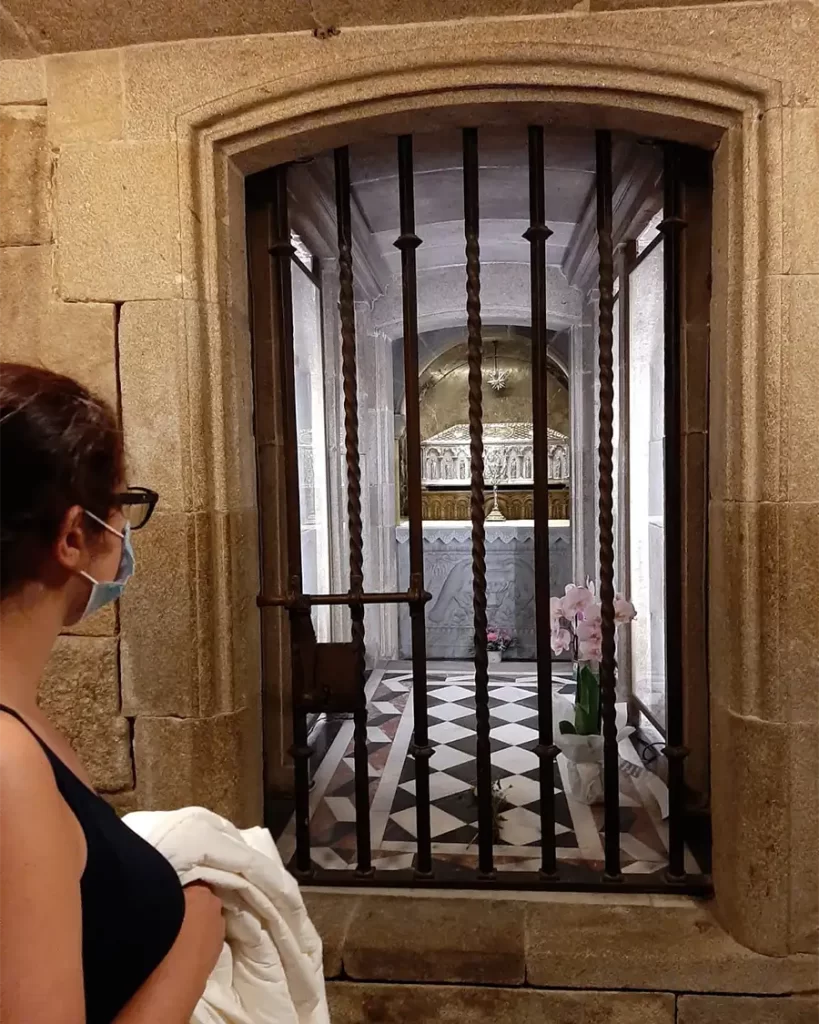
It is said that the Apostle Saint James is buried within the Cathedral of Santiago, and visitors can see his tomb. During our last visit in September 2024, entry was through Praza da Quintana de Vivos. Although queues are common, they tend to move quickly.
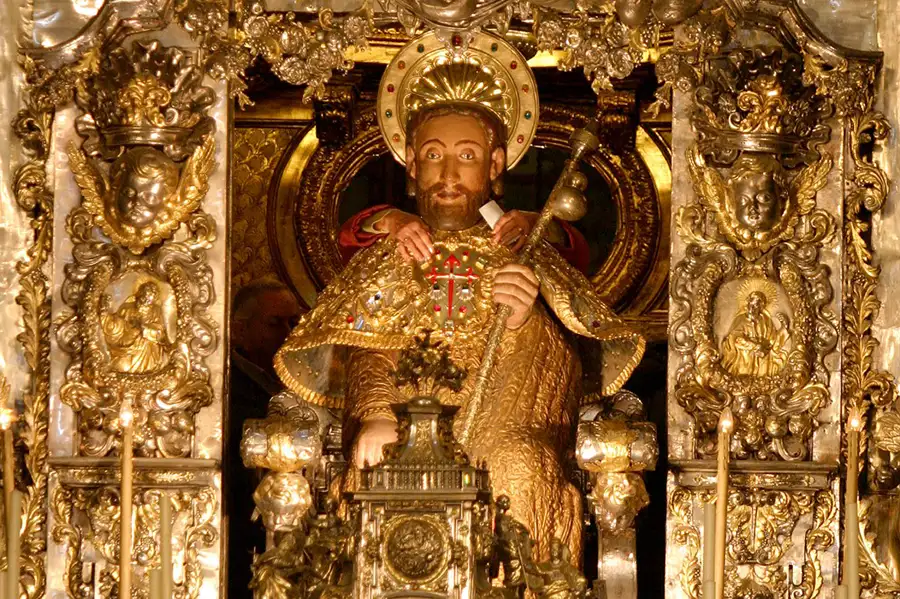
Upon entering, we followed a path behind the main altar and climbed a staircase leading to the famous statue of the Apostle, where we performed the traditional embrace of Saint James—one of the oldest Jacobean rites, documented since the 13th century.
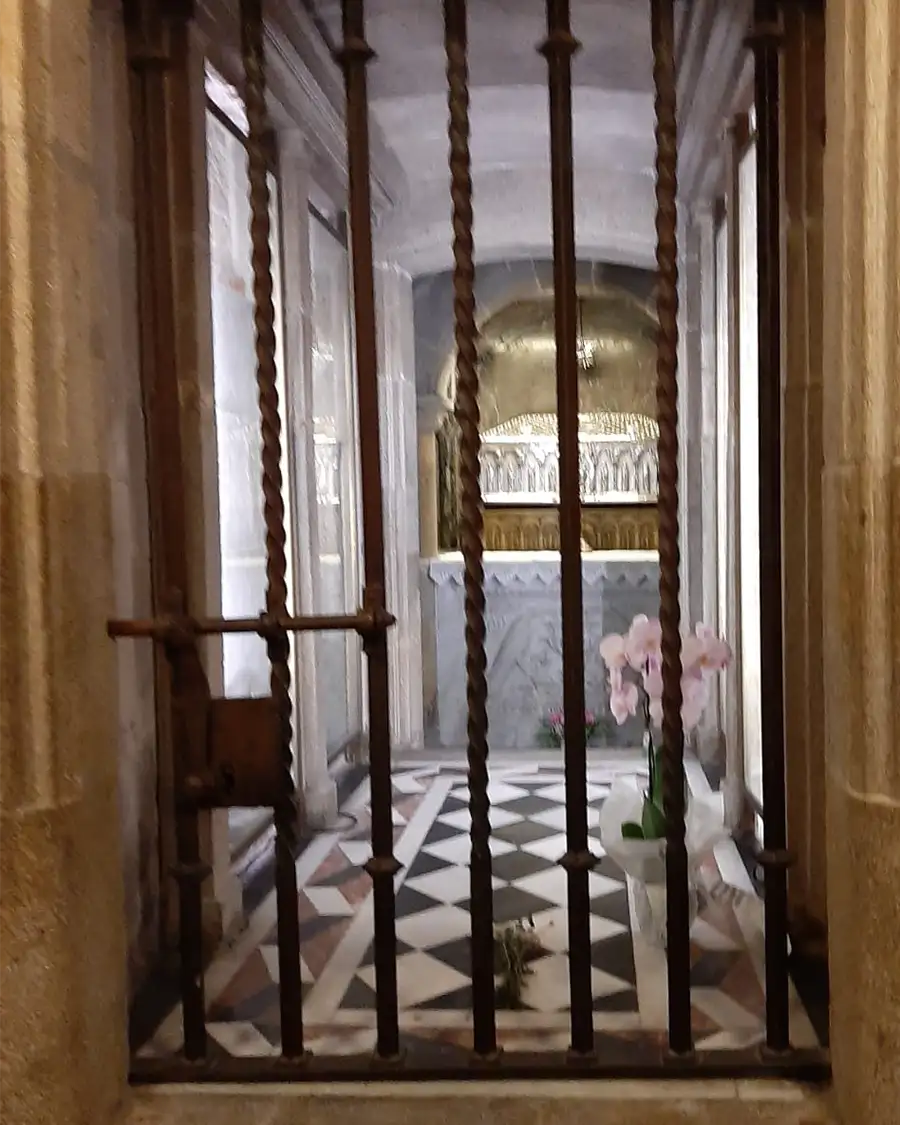
After the embrace, we descended to the crypt, located directly beneath the altar. According to tradition, this is where the remains of Saint James rest. Upon leaving the crypt, visitors have the option to explore more of the Cathedral of Santiago, as the exit leads directly into the church.
19:30 – Two Options
Pilgrim’s Mass at Santiago Cathedral
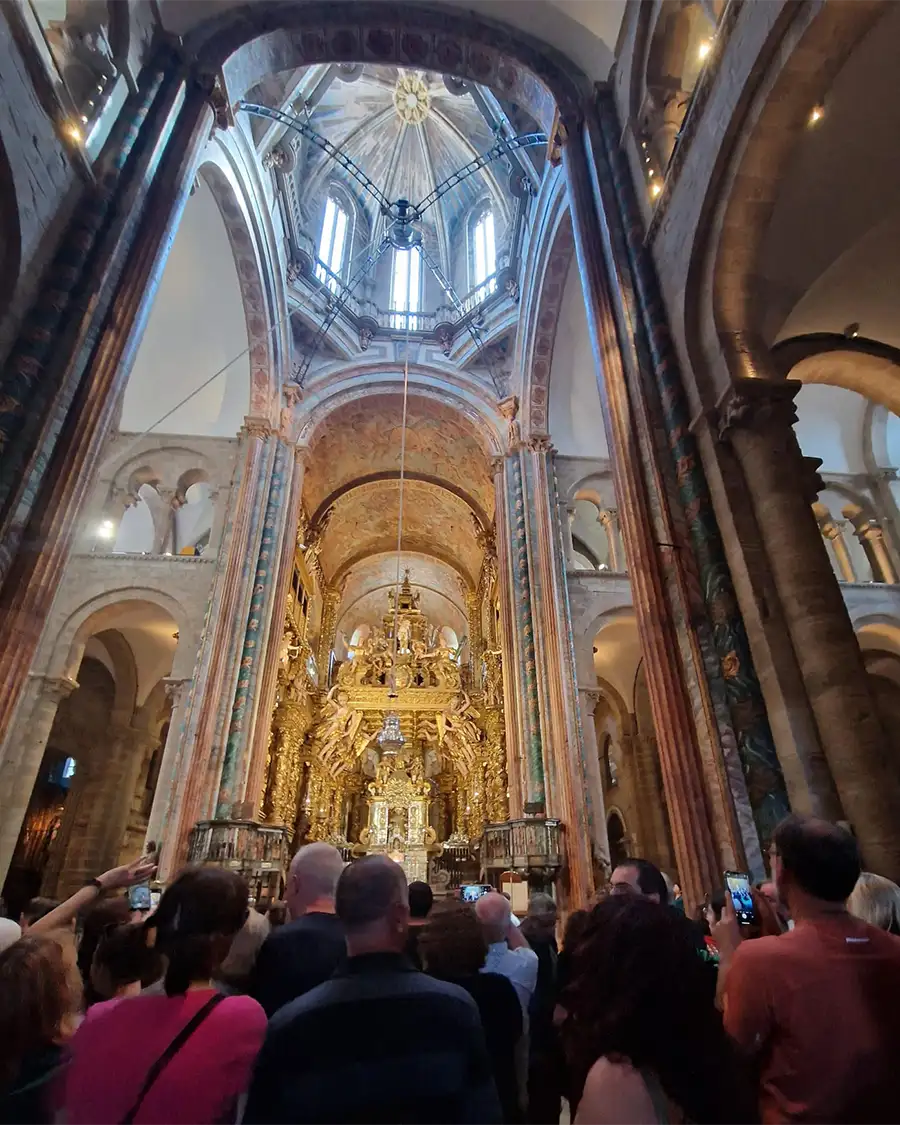
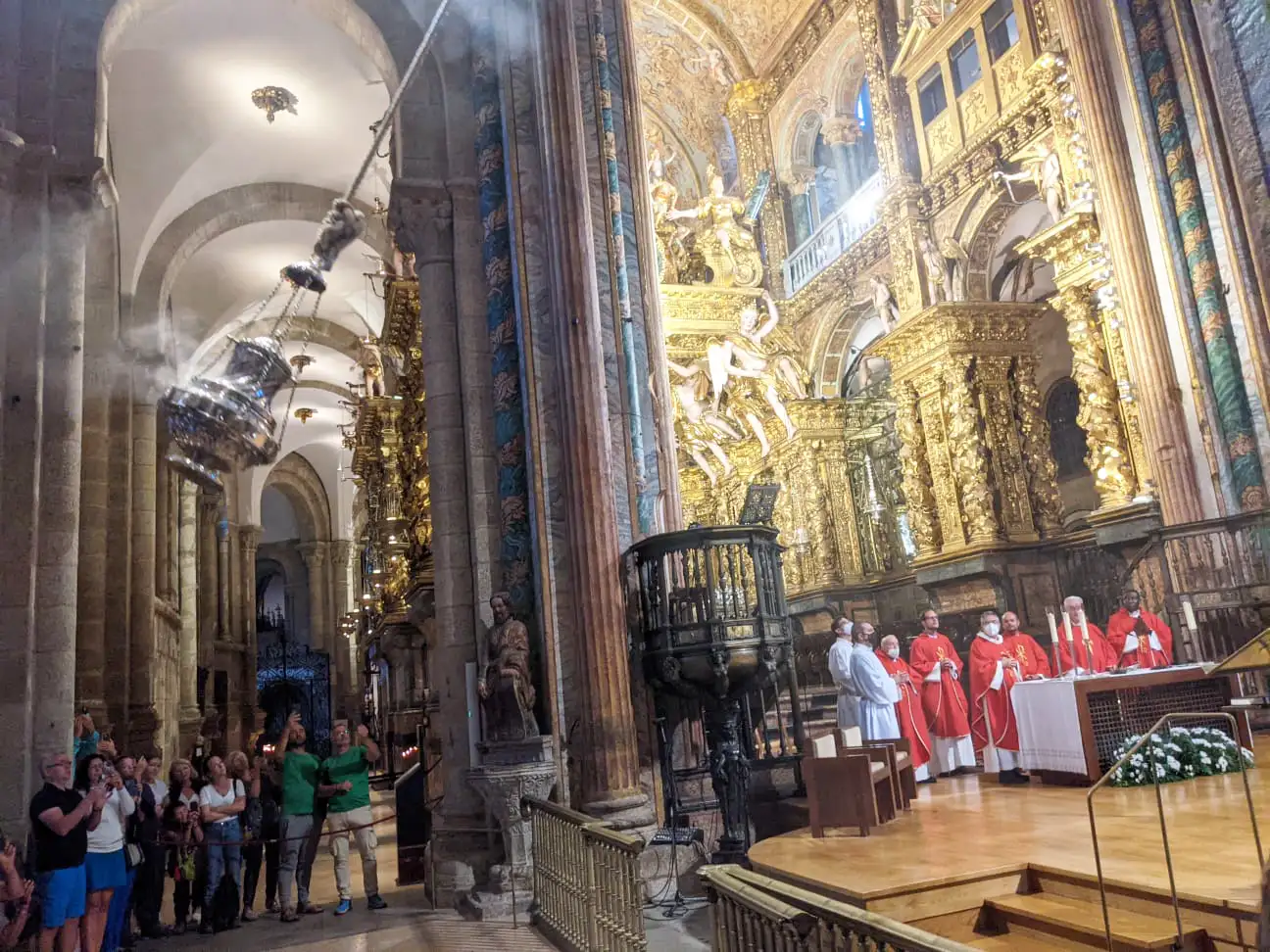
If you want to continue immersing yourself in the Camino de Santiago experience, the Pilgrim’s Mass at 7:30 PM is one of the most symbolic ceremonies in the Cathedral of Santiago. During the service, the names and nationalities of recently arrived pilgrims are read out, making it an emotional moment for those attending. Even for those who are not religious, it is an opportunity to feel the spiritual and historical connection of the city.
On certain occasions, you may witness the Botafumeiro, a giant incense burner that swings dramatically across the cathedral’s nave. Normally used on special occasions or when sponsored by groups of pilgrims, this ritual is a rare and impressive spectacle.
Entrance to the mass is through Praza das Praterías, and we recommend arriving early, as there is usually a queue. Note: Backpacks are not allowed inside!
Botafumeiro Dates:
Epiphany of the Lord – 6 January
Easter Sunday
Ascension of the Lord
Apparition of the Apostle in Clavijo – 23 May
Pentecost
Martyrdom of Saint James – 25 July
Assumption of Mary – 15 August
All Saints’ Day – 1 November
Christ the King
Immaculate Conception – 8 December
Christmas Day – 25 December
Transfer of the Apostle’s Remains – 30 December
"Paris-Dakar Rally": Bar Route
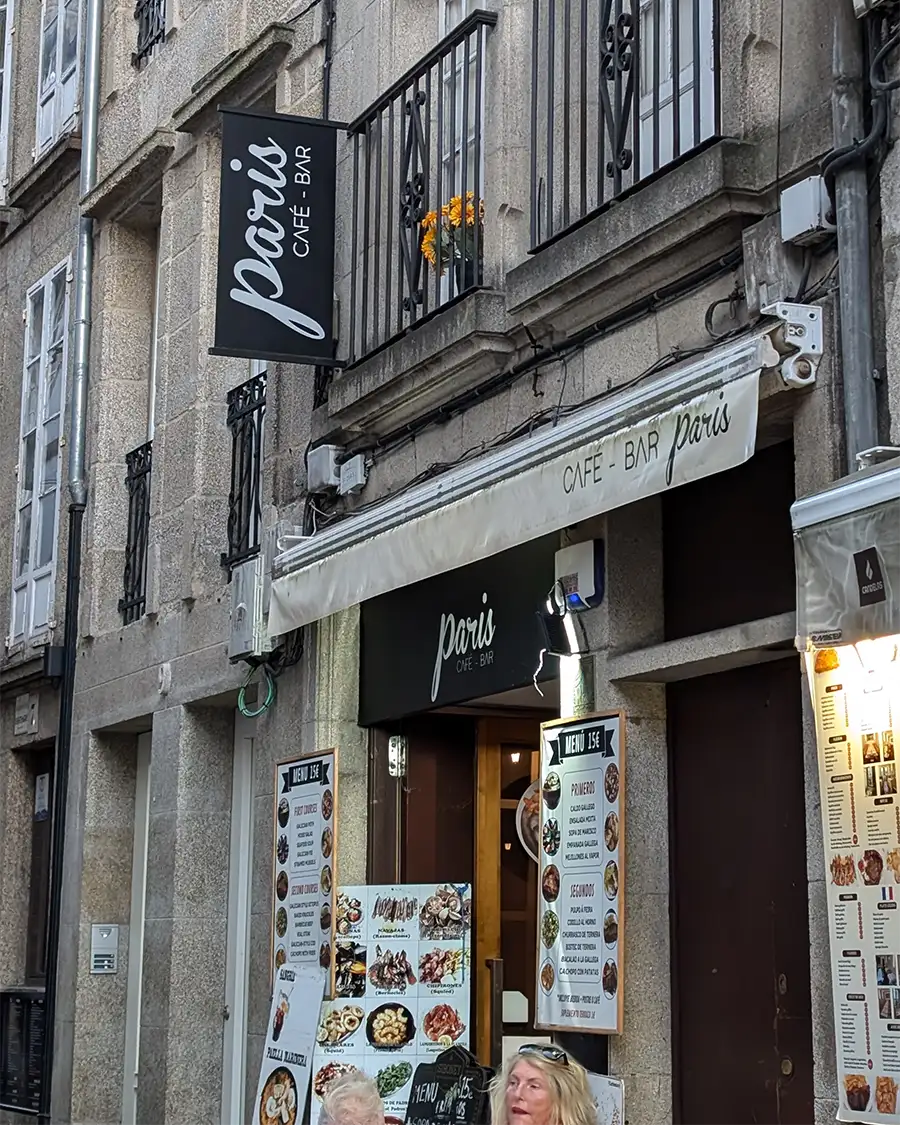
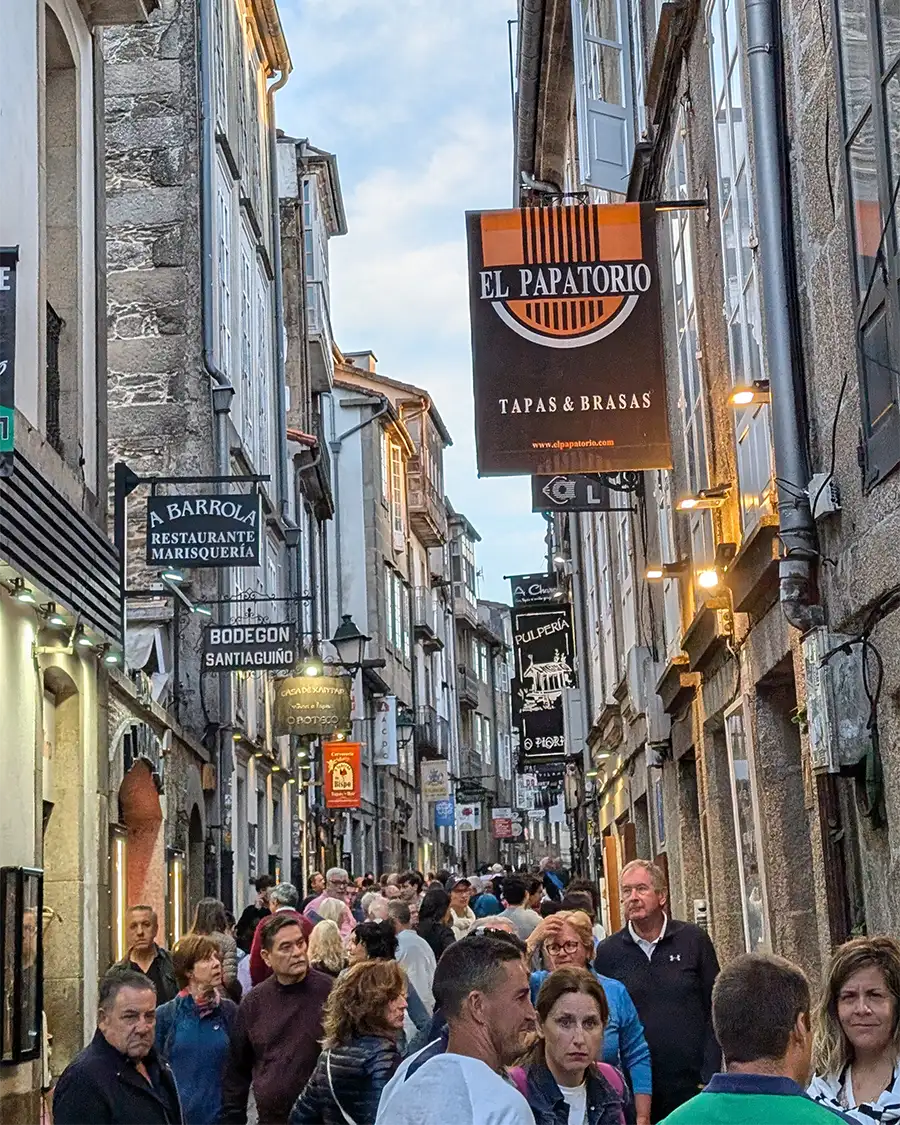
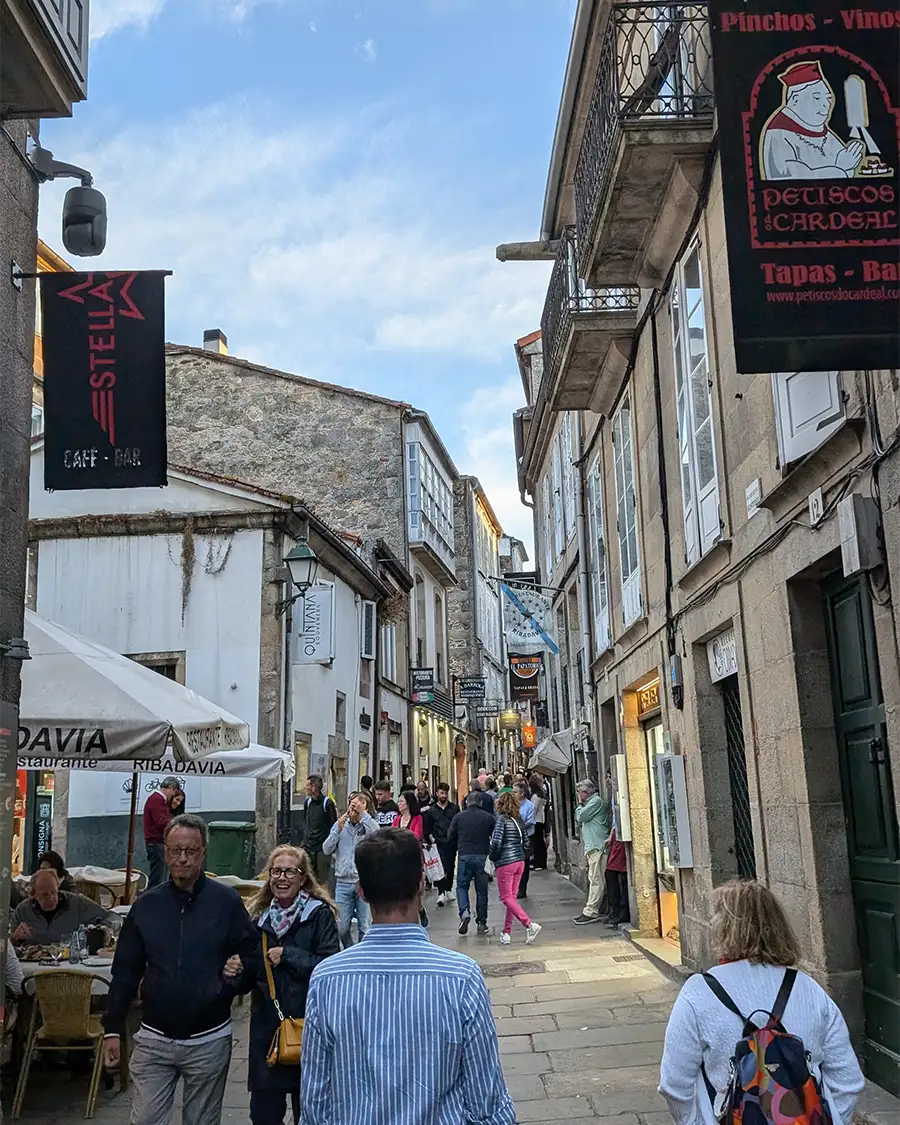
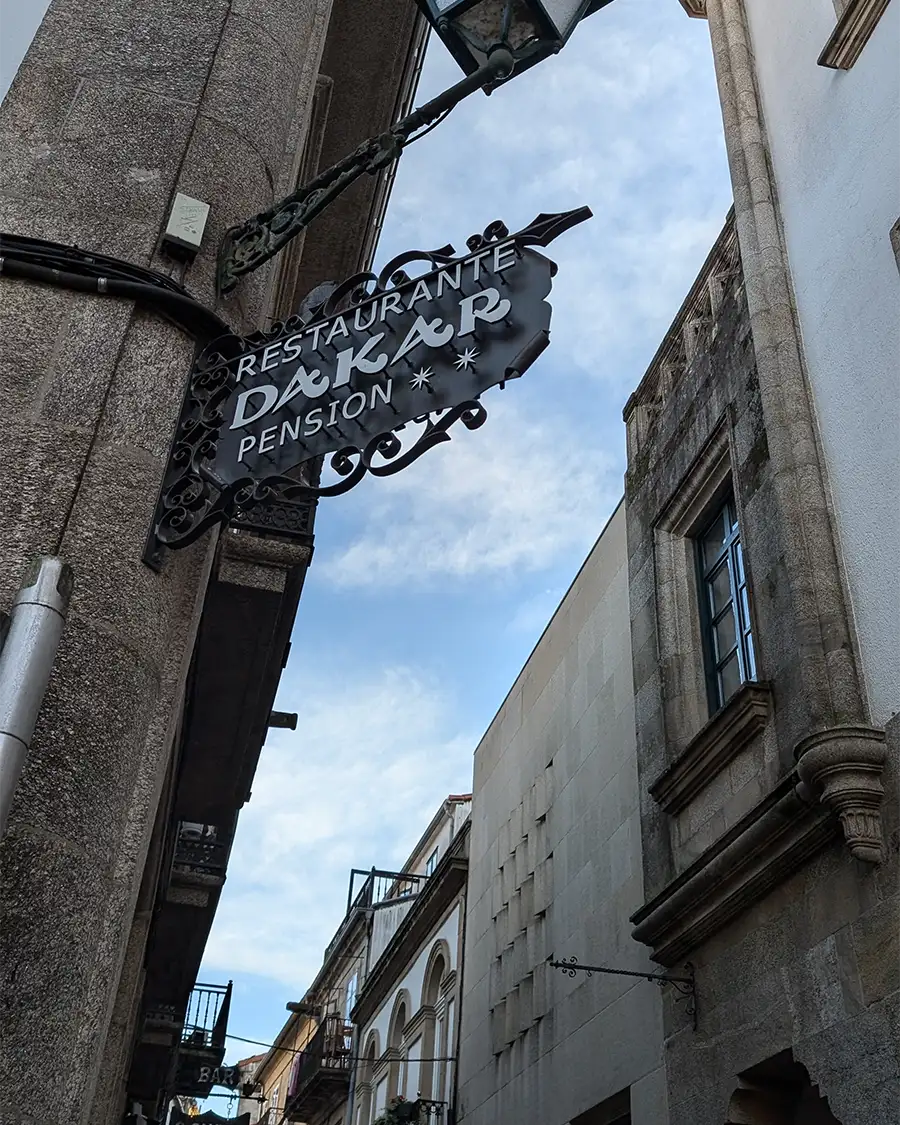
If you prefer a more relaxed experience and want to enjoy the local nightlife, the famous "Paris-Dakar" bar route is a great option to end the day. The nickname comes from the two bars marking the start and end of the route: Bar París and Bar Dakar, located on Rúa de San Pedro and Rúa de Santa Clara. The route passes through numerous traditional bars and restaurants, with fresh local seafood on display.
Along the way, you can stop at different bars to enjoy local beers, Galician wines, and of course, sample traditional tapas such as fresh seafood, mussels, and polbo á feira (Galician-style octopus). This is a unique opportunity to relax, socialise, and soak up Santiago’s lively atmosphere before heading for a more elaborate dinner. The route is particularly popular among locals and offers an informal yet delicious way to experience the city’s culinary culture.
21:00 – Try a Queimada
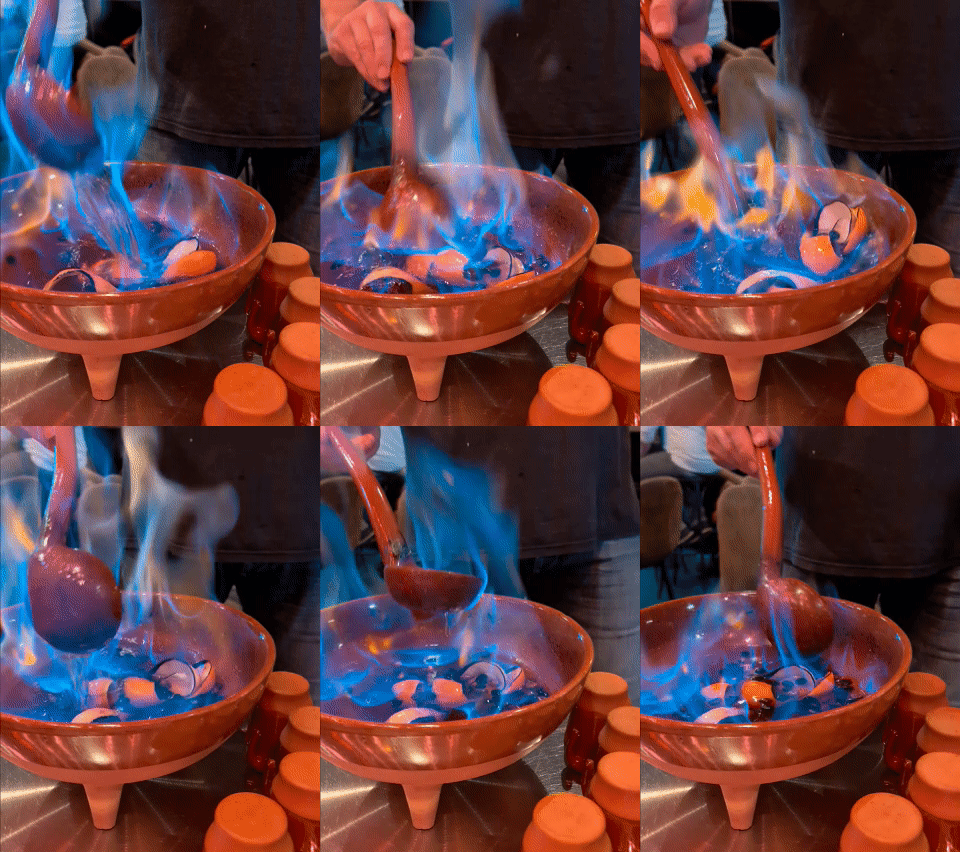
The Queimada Galega is a traditional ritual that was once performed to ward off evil spirits and offer protection against misfortune. While nowadays it is mostly a tourist experience, we still highly recommend it—it’s a unique and delicious tradition. Several bars and restaurants in Santiago offer the ritual, usually costing between €10 and €15 per person.
The drink is made with grape-based aguardiente, sugar, orange and lemon peels, and coffee beans. The highlight of the experience is when the aguardiente is set on fire, while the preparer recites ancient words in Galician, creating a mystical atmosphere.
We tried it at Rock Café O Cum, a cosy rock bar where the queimada is prepared directly at your table. Some places, however, offer a more theatrical experience, preparing the drink on a stage in front of the audience before serving it. There are plenty of options in the city, so choose the one that suits you best!

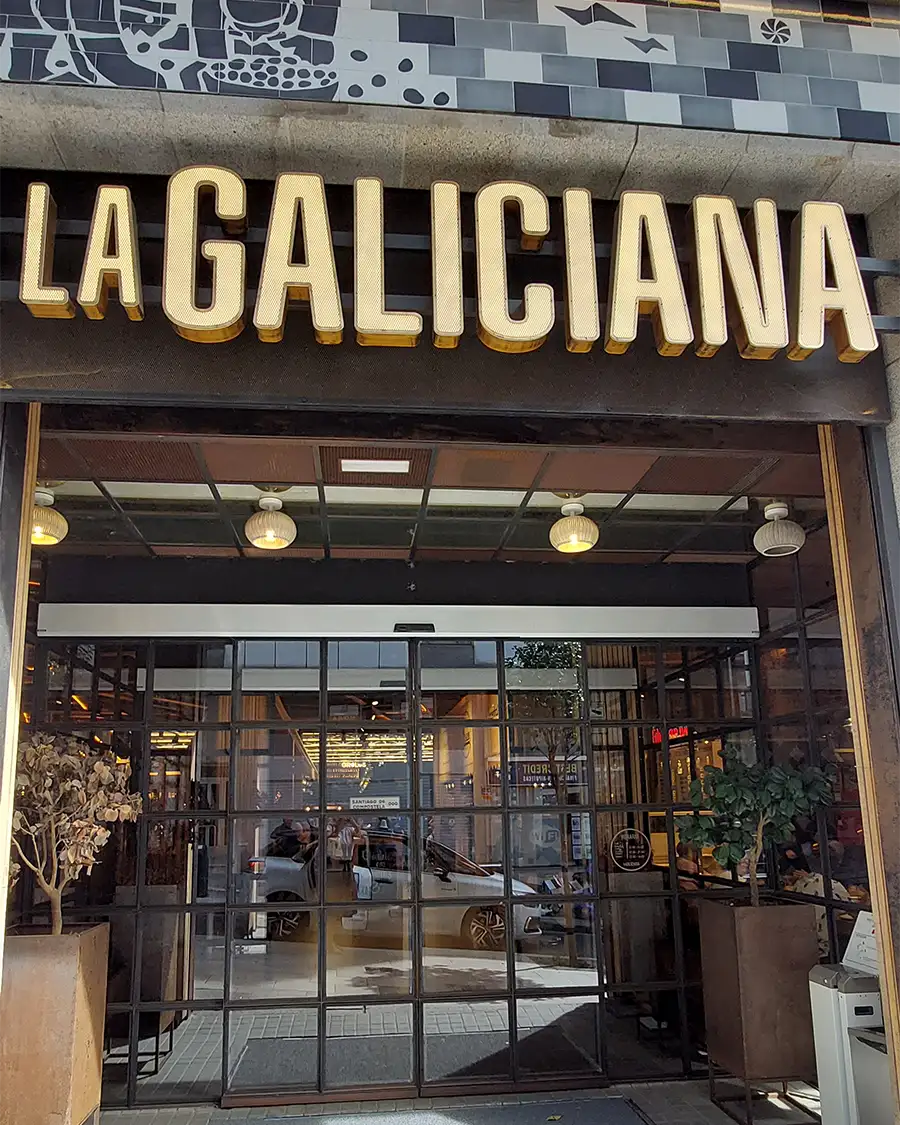
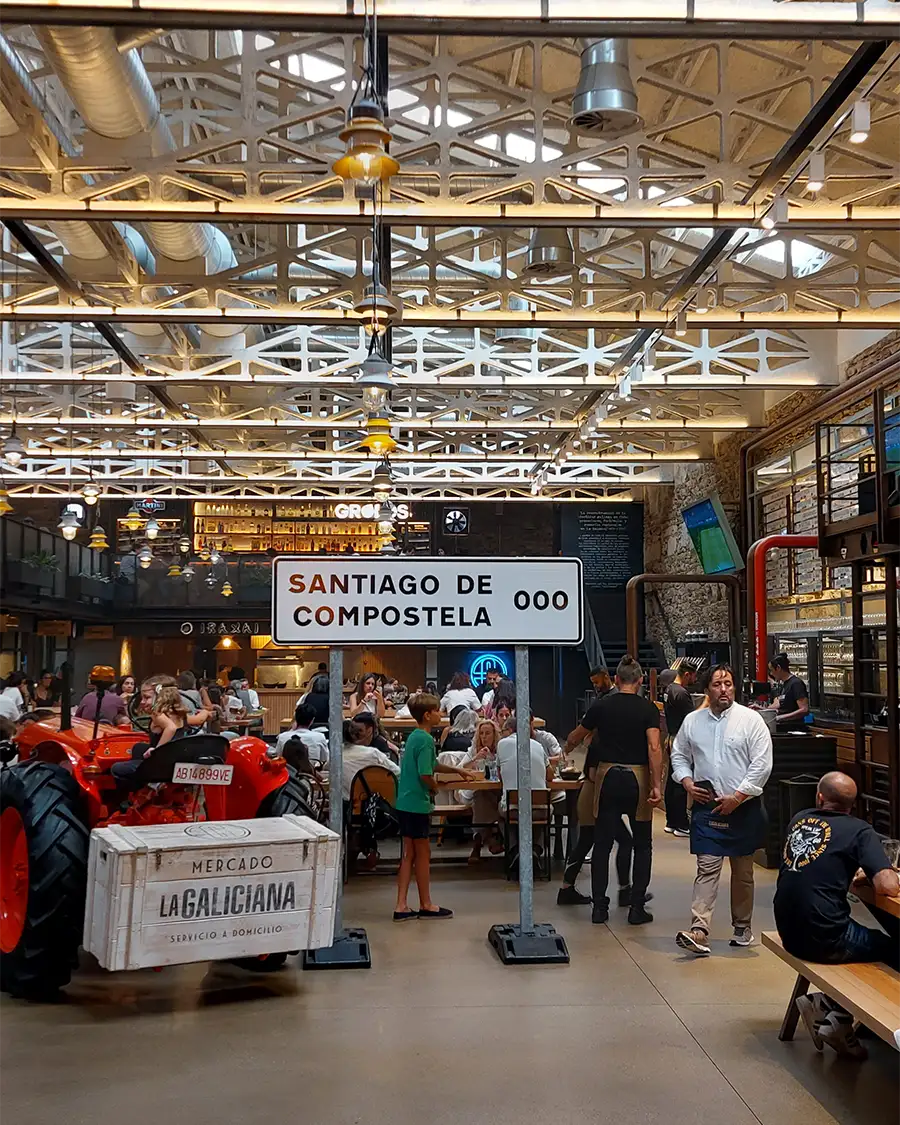
22:00 – Dinner at Mercado La Galiciana
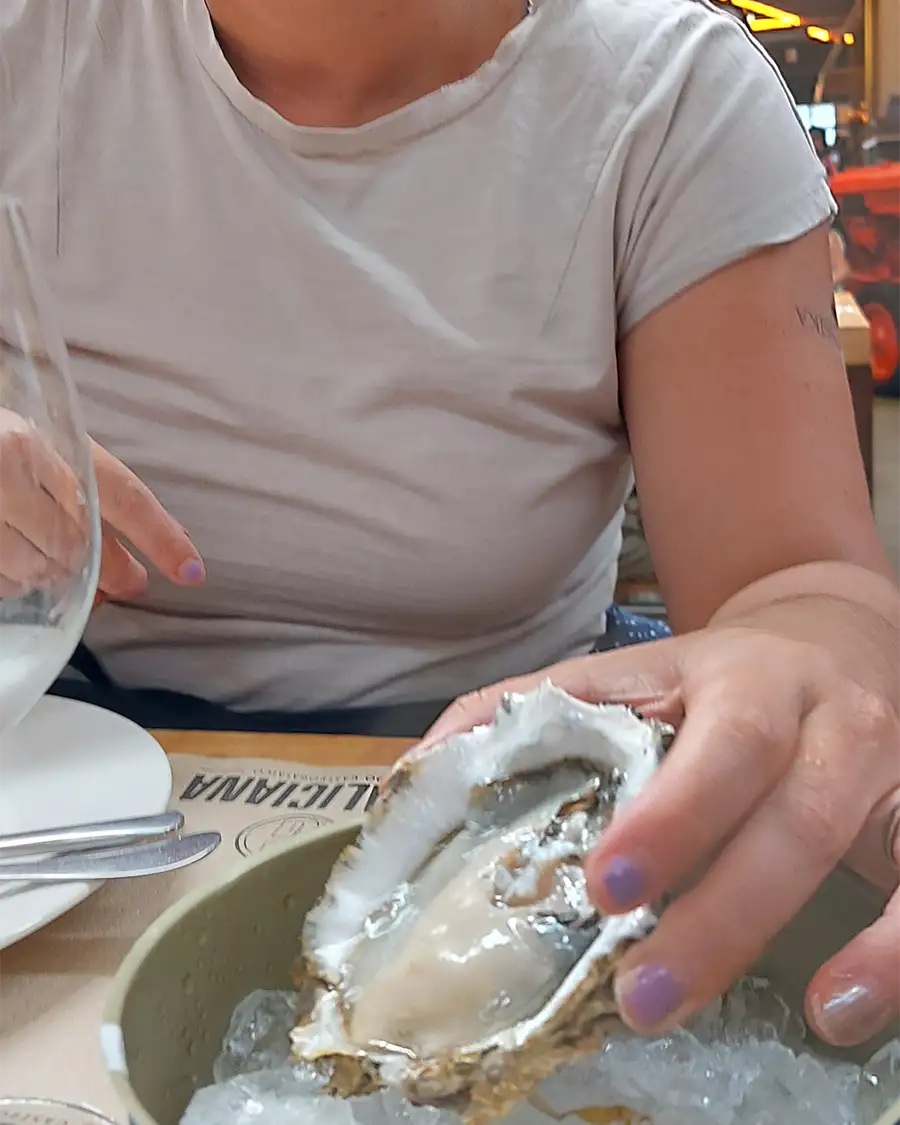
This market is packed with stalls offering a variety of food, from seafood and meats to rice dishes and other local specialities. What makes it even more appealing is that instead of ordering directly at the stalls, you can sit down, choose what you want, and have everything brought to your table by a waiter—making the experience much more convenient and comfortable.
It’s the perfect option for those who want to sample a bit of everything in a relaxed setting.

00:00 – NIGHT OUT! Pub Momo
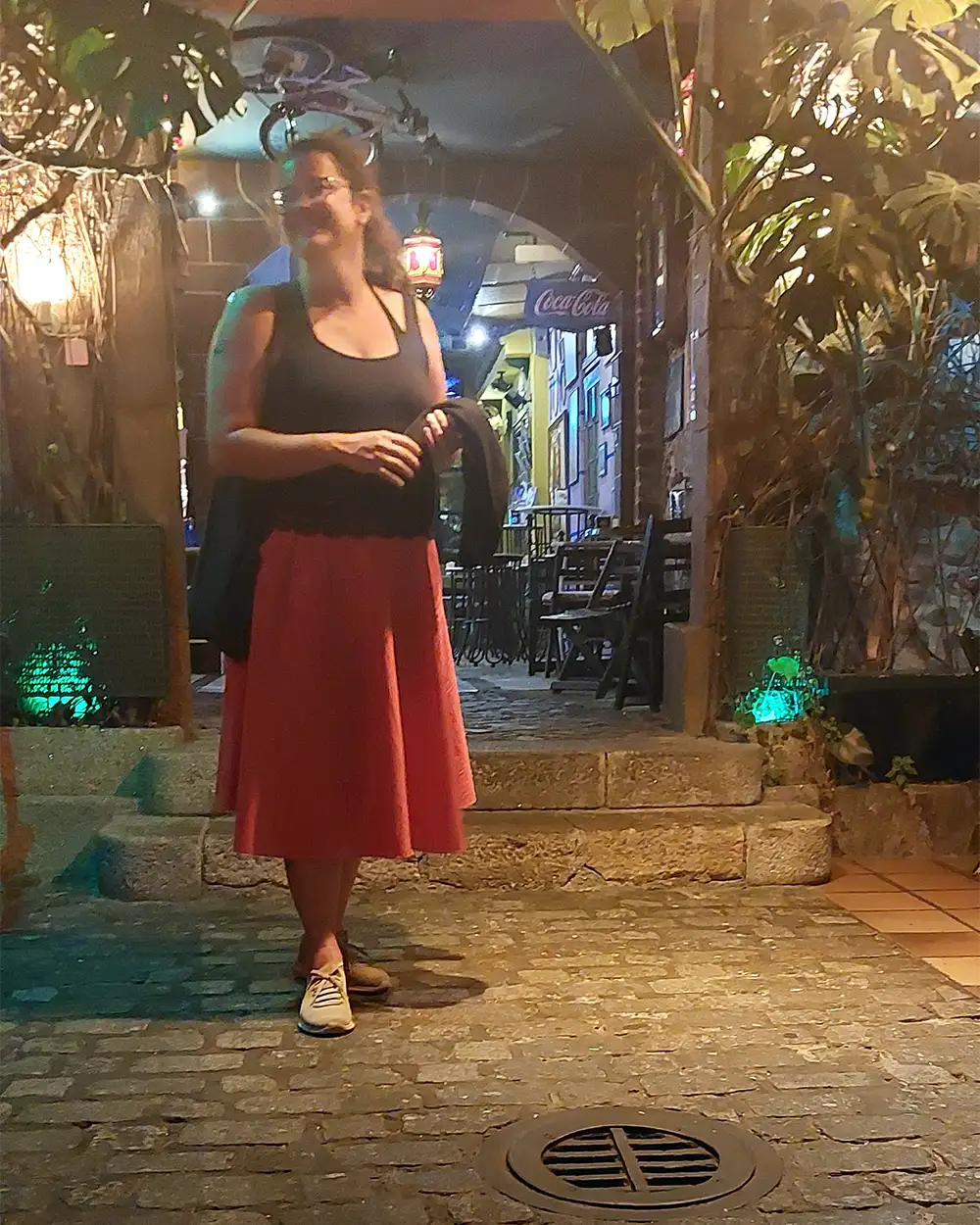
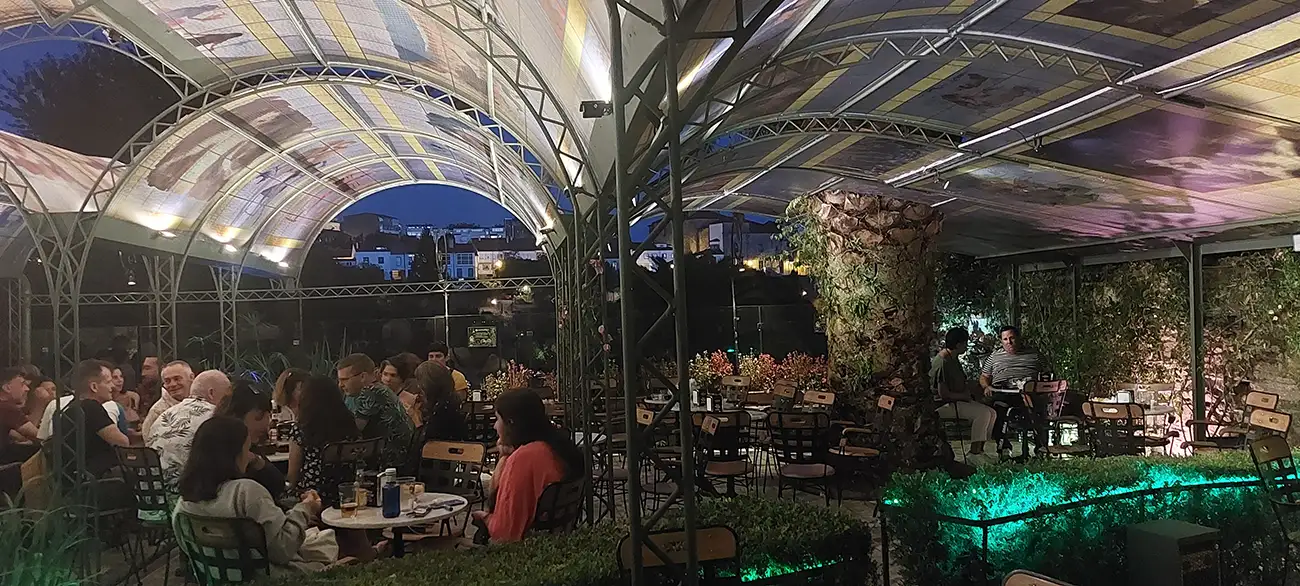
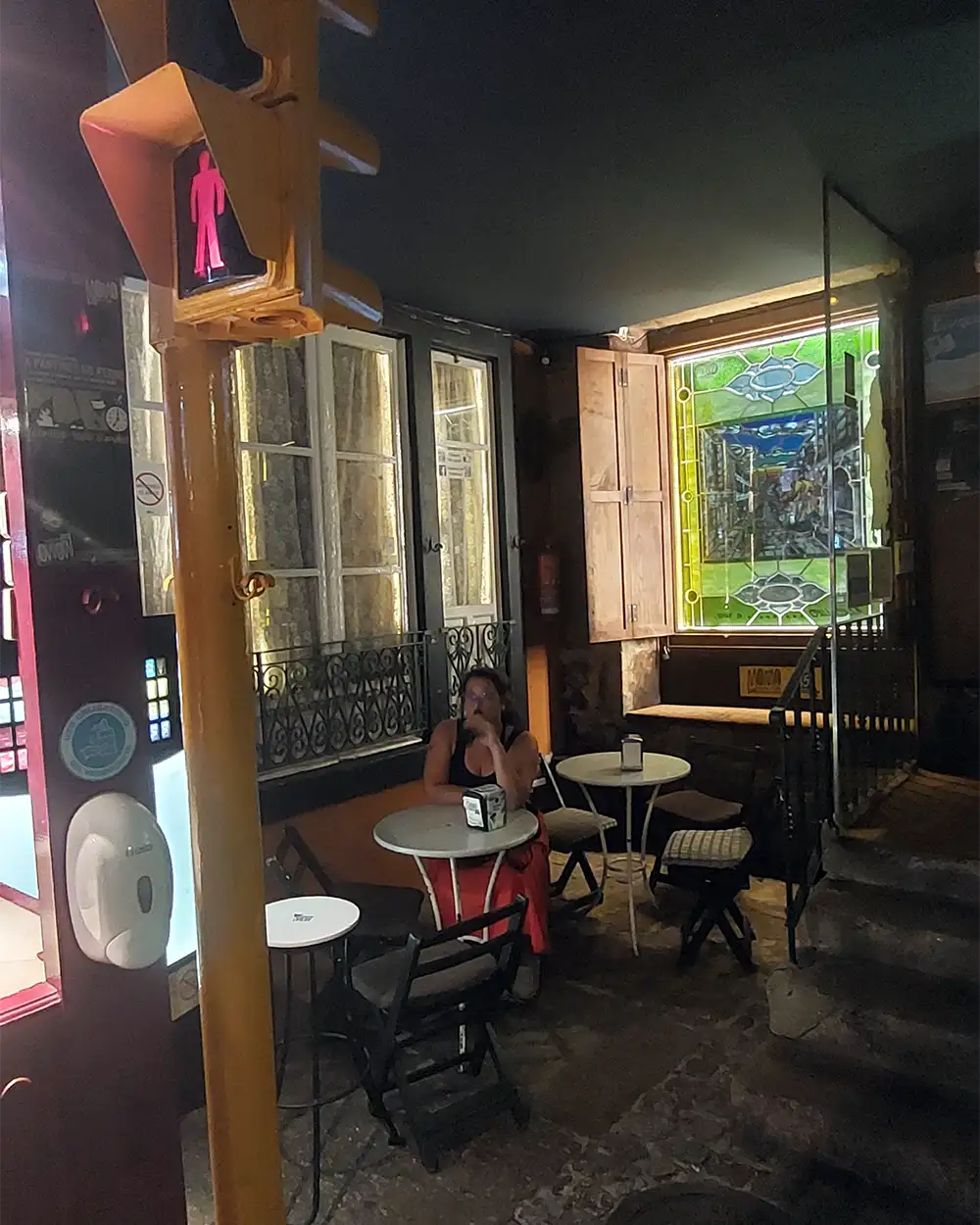
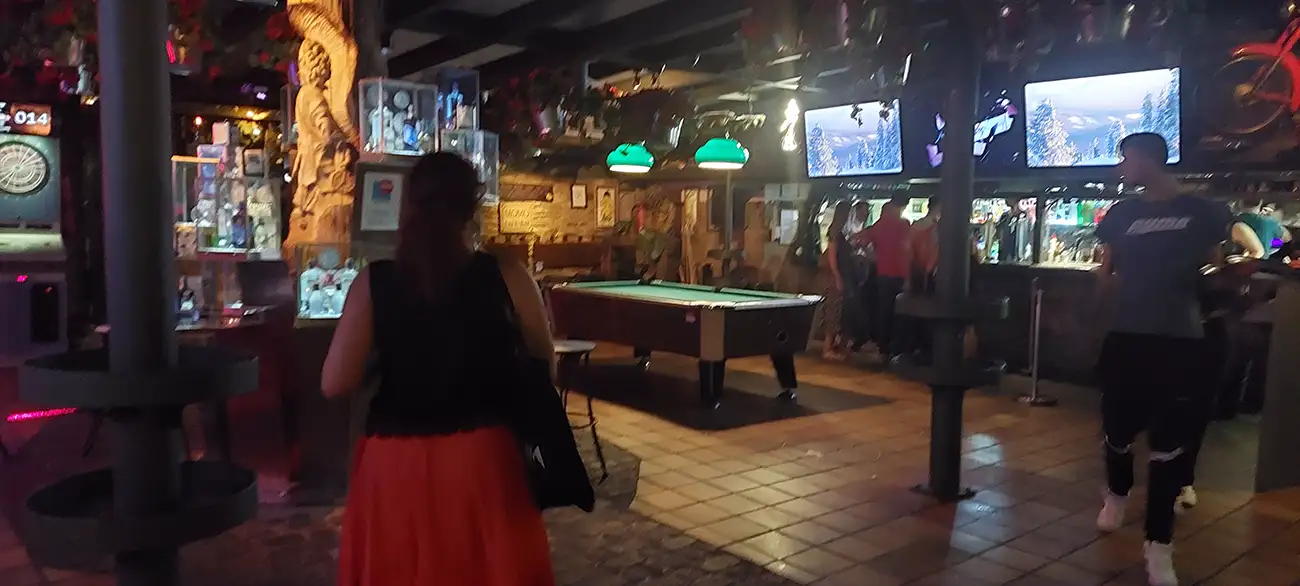
Pub Momo is a great spot for those looking to extend their night in Santiago. The place starts getting lively after midnight, with a vibrant atmosphere and a slight nightclub feel.
One of the coolest things about it is that as you walk in, it feels like a small street leading to an open-air area with outdoor seating and a great view. If you prefer to stay inside, the indoor space is also cosy and perfect for enjoying drinks and good music.
Santiago de Compostela is a destination that offers much more than just religious tourism. In a single day, you can experience the rich gastronomy, explore the centuries-old history in its cobbled streets, and immerse yourself in the unique atmosphere of the Camino de Santiago. Each experience in the city carries a cultural and spiritual depth that captivates any visitor. Santiago presents a perfect blend of tradition and modernity. And even with a short itinerary, it’s easy to understand why so many fall in love with this city full of life and meaning.