The event globally known as the Running of the Bulls in Pamplona is actually part of the San Fermín festival, or Sanfermines. These are huge celebrations that take place every year in the city of Pamplona in northern Spain. For many people looking from the outside, San Fermín seems to be just about that one image. They see people sprinting through narrow streets with loose bulls chasing them. However, the run is only a small part of a much larger festival. The celebration lasts for several days and has deep religious roots, along with a complex organization that involves the entire city.
It might look like just an extreme show or a tourist attraction, but San Fermín has its own specific rules, rituals, and meanings. These elements help us understand why this festival exists and how it became so well known. In this article, we will explain exactly what the San Fermín festivities are, how the bull run originated, and the role this event plays within the local culture.

How the festival is organized throughout the week
The festivities always take place between July 6th and July 14th. During this week, Pamplona completely changes its rhythm and revolves around the official schedule, which repeats daily.
The Chupinazo
Check out the main moments of the week
Chupinazo - July 6th at 12:00 PM sharp
The rocket fired from City Hall that signals the start of the festival. This is the moment when the crowd ties the red scarf around their necks and the party officially begins.
Running of the Bulls - From July 7th to 14th, 08:00 AM
YES! EIGHT IN THE MORNING! This is when the bulls are released into the city center streets and the crowd runs alongside the animals to the Bullring. Despite being the most famous image of the festival, the run lasts only a few minutes. It serves to transport the bulls to the bullring, where they are kept for the bullfight that takes place in the afternoon.
Street Parties - All day long
After the run, the schedule continues without breaks. There are parades of giant figures, brass bands, and communal meals that keep the streets packed from early morning until late at night.
Bullfights - From July 7th to 14th, 06:30 PM
The same six bulls that ran through the streets in the morning face the matadors in the traditional bullring in the late afternoon.
The Closing (Pobre de Mí) - Midnight on July 14th
The closing ceremony takes place at City Hall Square. The crowd gathers with candles to sing the farewell song and remove their red scarves.
To check the detailed schedule with all show times and events, visit the official San Fermín website.
Why do bulls run through the streets of Pamplona?
The bull run did not begin as a show or a tourist attraction, but for a practical and historical reason. For centuries, bulls were led from the farms to the city bullring on foot, passing through the streets, because modern transport did not exist.
In its early days, this route was carried out at dawn solely to complete the transfer. Over time, the runners began to run in front of the animals, either to help guide the herd or for the thrill of challenging danger. What began as a logistical necessity gradually became the core of the festivities, and the city authorities progressively established rules to regulate the run.
Today, the bulls run through the streets because this tradition has been maintained as part of the festival's identity. The course is closed off, monitored, and follows strict rules, but the objective remains the original one: to get the animals to the Bullring.
The Route: 875 metres of tension
The route is always the same and crosses Pamplona's historic center. The run starts at the Cuesta de Santo Domingo corrals and ends inside the Bullring (Plaza de Toros). It covers about 875 meters, usually completed in less than three minutes.
The course is lined with double wooden barriers to protect the spectators, turning the streets into a corridor with no side exits for the runners.
The most critical points are:
- Cuesta de Santo Domingo: The steep initial climb. This is where the bulls burst out of the corrals with full force and where the run is fastest.
- The Estafeta Turn: The most technically dangerous spot. It is a sharp 90-degree turn where bulls often lose traction, slip, and crash against the wooden barrier.
- Estafeta Street: A long, narrow straight where there are no side refuges. If a bull approaches, the runner has only two options: keep up the pace or dive to the ground.
The Uniform: Why White and Red?
It is not an official rule, but it is a dress code followed by nearly 100% of the people. Anyone who doesn't wear it stands out immediately as a clueless tourist.
- White (The Outfit) The origin lies with the Peña La Veleta, founded in 1931 by a group of working-class locals. To distinguish themselves from other associations, they chose white because it was an affordable option that was easy to find in local shops.
- Red (The Scarf) The meaning is religious. The scarf represents the martyrdom of San Fermín, who died by having his throat cut.
IMPORTANT: The Rule of the Scarf
The red scarf must only be tied around the neck after the Chupinazo (the opening rocket) on July 6th at 12:00 PM. Before this specific time, the correct etiquette is to keep it in your pocket or tied around your wrist.
Rules for running with the bulls
Although it may appear chaotic at first glance, the bull run follows clear safety rules, and all runners must follow the instructions of the Municipal Police and the drovers along the route. Anyone who breaks the rules may be removed from the course and fined.
Strictly prohibited

Running with bags, backpacks or any objects that may interfere with the run
Running in flip-flops, barefoot or with inappropriate footwear
Taking part under the influence of alcohol or drugs
Remaining on the route without the intention of running
Touching the animals
Attracting the bulls' attention or provoking them from behind
Taking photos or recording videos while running
Practical tips for experiencing San Fermin
San Fermin attracts hundreds of thousands of people every year, and Pamplona becomes completely packed during the festival. Planning ahead makes a real difference to enjoying the experience.
The first tip is to book accommodation as early as possible. Ideally, you should secure a hotel or apartment at least 6 to 9 months in advance, especially if you want to stay in the city centre. The closer it gets to July, the fewer options remain and the higher prices tend to be.
A common alternative is to stay in nearby towns and travel into Pamplona by public transport. It is a more affordable option, but it does mean missing part of the night-time atmosphere, as the festival runs all day and well into the early hours.
For those who prefer to watch the bull run in a calmer way, there is the option of renting private balconies along the route, especially on Calle Estafeta. In practice, rentals are usually done per window, not for the whole property, and it is common for the same apartment to host different groups watching from the same room, each from a separate window. We do not have a specific provider to recommend, but these spots are usually booked several months in advance and prices typically fall in the range of hundreds of euros per person.
It is also worth remembering that you do not need to run with the bulls to experience San Fermin. The festival takes over the streets all day long, with music, parades, packed bars and a constant atmosphere that goes far beyond the few minutes of the run.
Got the outfit and know how to escape the bull?
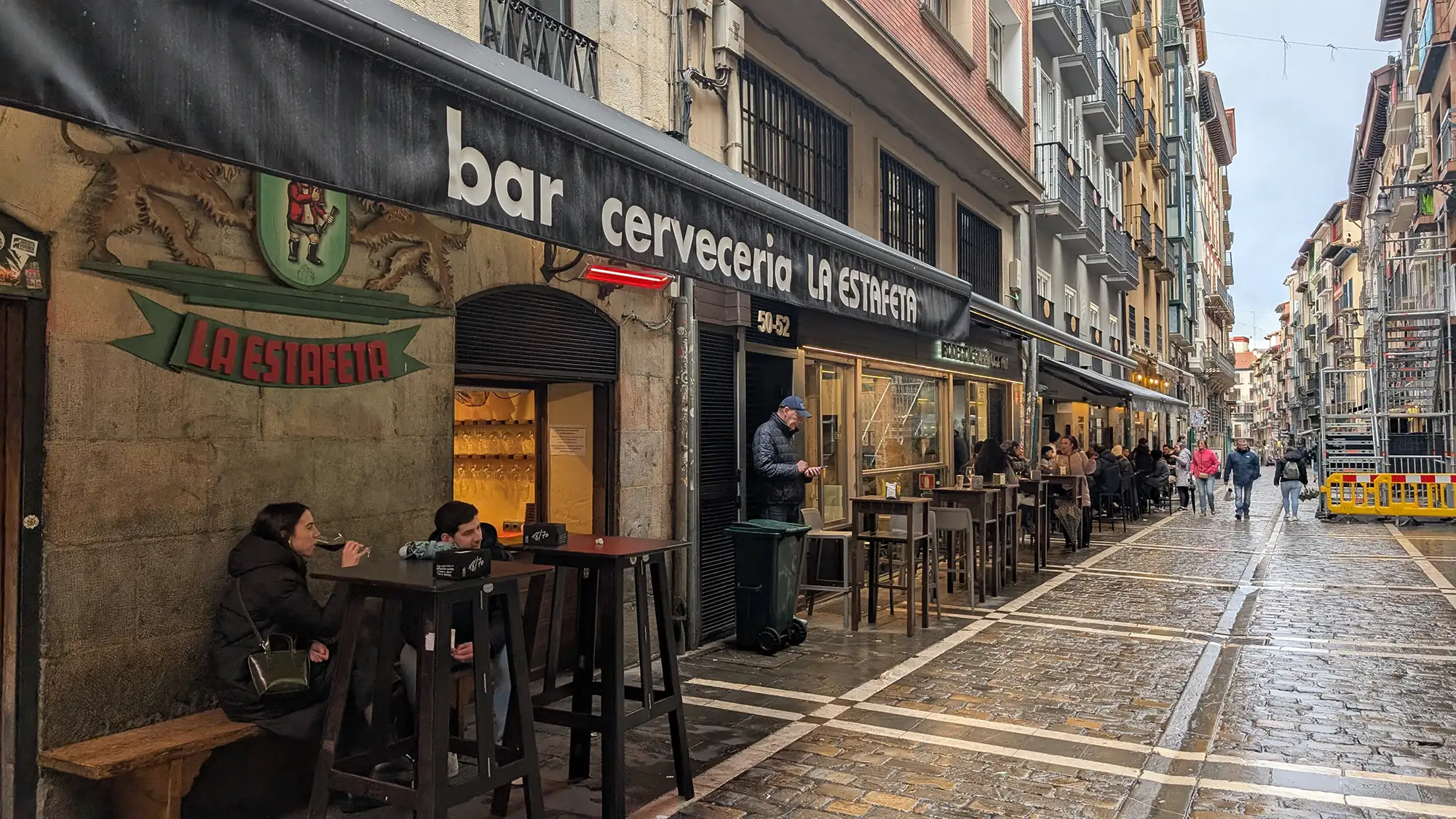
Now you need to refuel. Navarra’s food is legendary, and after the tension of the bull run, tradition says it's time to hit the bars.