August is a great month to visit Madrid, even with the heat. Call us mad (because it does get very hot, very hot indeed), but it is actually when we like being here the most. The reason is that this is when the verbenas take place, traditional street festivals that take over the oldest neighbourhoods in the centre and show the city at its most authentic.
The easiest way to picture a verbena is to think of a large street fair or a village fête. Streets close to traffic and get full with colourful decorations, food and drink stalls, and stages with live music.
In Madrid there are three festivals that happen one after another, in neighbouring districts in the centre. The celebrations start early in the month and follow a calendar that builds up to the biggest one, on 15 August.
The August street parties calendar
San Cayetano festivities: August 5-8
Neighborhood: Rastro/Embajadores
San Lorenzo festivities: August 9-12
Neighborhood: Lavapiés
La Paloma festivities: August 14-17
Neighborhood: La Latina
UPDATED 2026 MAP AND CALENDAR: COMING SOON
First stop: the San Cayetano street party in Rastro
August 5-8 | Main day: August 7
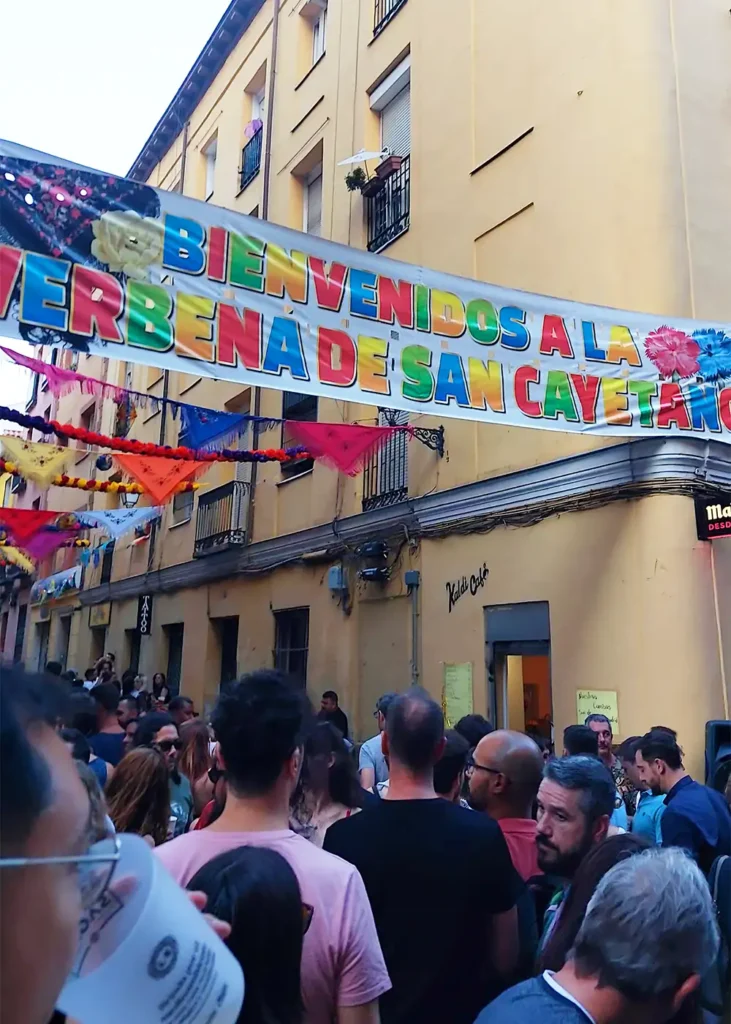
The first of the three festivals honours San Cayetano, patron saint of bread and work. It kicks off the August cycle.
Where the party takes place
The heart of the San Cayetano festival is the Rastro and Embajadores area. The main streets are Calle de Embajadores, Calle del Oso, Calle de San Cayetano and the squares of Cascorro and General Vara del Rey.
The saint's church, the Parroquia de San Millán y San Cayetano, is on Calle de Embajadores and is the starting point for the religious events.
What to expect from the San Cayetano street party
- A more local feel: as the first of the three festivals, the atmosphere tends to be more neighbourhood based and a little less crowded. It's a good introduction to Madrid's verbena culture.
- Decorated streets: Calle del Oso stands out in particular. Residents have kept up the tradition of decorating the street with shawls and lights for 45 years.
- The neighbors' limonada: locals hand out limonada for free, a traditional drink made with white wine and lemon juice.
- Music and people drinking in the streets: local bars set up outside with their own speakers on the pavement.
- The saint's procession: on 7 August, at around 8pm, the procession leaves the Parroquia de San Cayetano and goes along the festival's main streets, including Calle de Embajadores, Calle del Oso and Plaza de Cascorro.
Second stop: the San Lorenzo street party in Lavapiés
August 9-12 | Main day: August 10
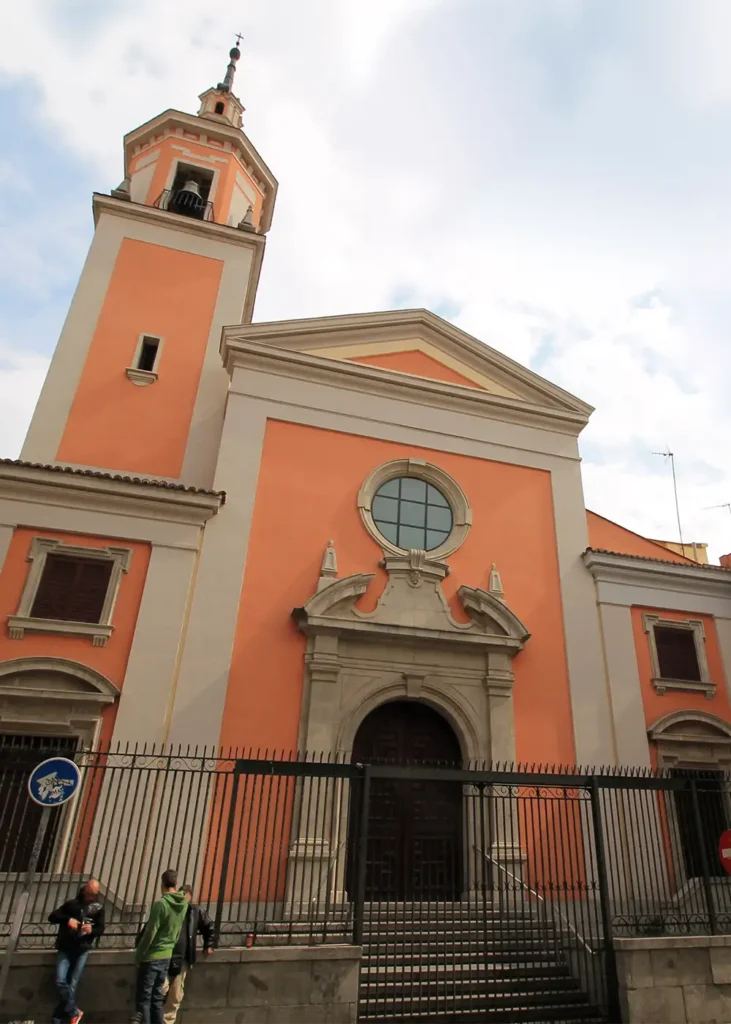
After San Cayetano, the festival moves to the neighbouring district, Lavapiés, to celebrate San Lorenzo. Lavapiés is Madrid's most multicultural neighbourhood, and that comes through in both the programme and the crowd.
Where the party takes place
The centre of the San Lorenzo festival is in Lavapiés. The main stage and most of the shows are in Plaza Arturo Barea. Other nearby streets and squares also host activities, including Calle Argumosa, Calle del Amparo, Calle Olivar and Calle Mesón de Paredes. The religious events take place at the Iglesia de San Lorenzo, on Calle Doctor Piga, 2.
What to expect from the San Lorenzo street party
- A multicultural and alternative atmosphere: the San Lorenzo festival has a more alternative crowd and programme, in keeping with the neighbourhood's identity.
- A street-level party: the streets of Lavapiés, especially Calle Argumosa, get packed. Bars set up outside, with everyone drinking and socialising in the open air.
- Street art everywhere: the neighbourhood has murals and graffiti all year round, and during the festival temporary creative installations pop up in various spots too.
- Quirky activities: these include a large Water Battle, open mic sessions for performers, and food based games, such as blind tastings.
- The procession amid the party: on 10 August, at 8pm, the San Lorenzo procession leaves the church on Calle Doctor Piga, 2, and goes through the festival streets.
Third stop: the La Paloma festivities in La Latina
August 14-17 | Main day: August 15
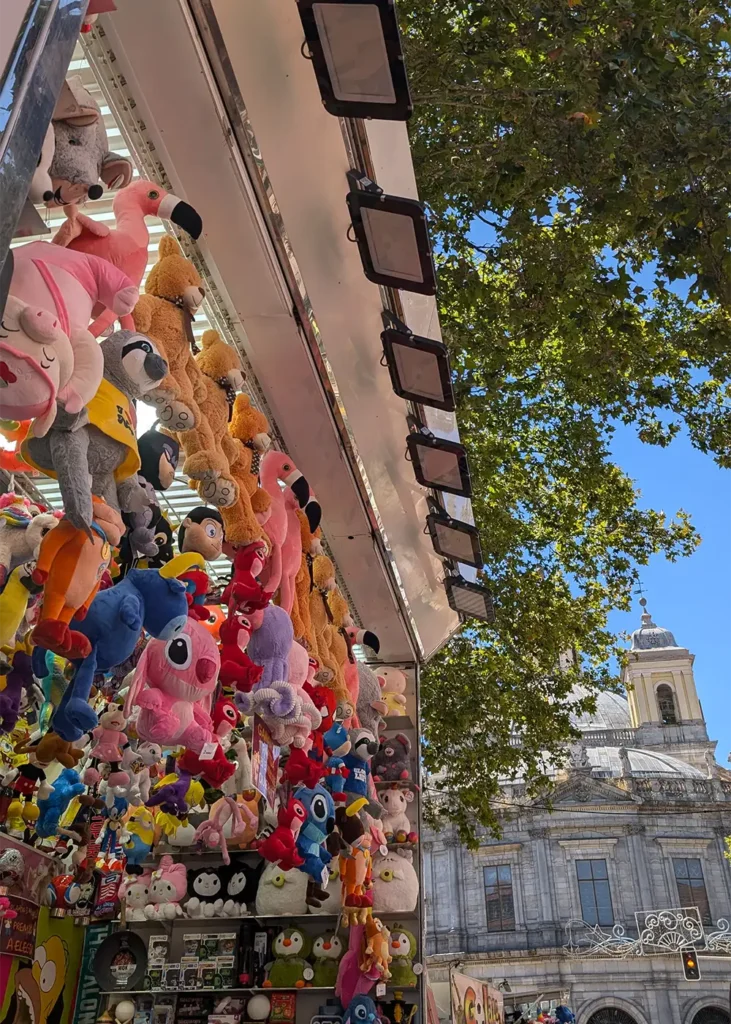
The August festival cycle ends with the celebration of the Virgen de la Paloma, the largest and most popular of the three. The festival takes over La Latina with an extensive programme, combining shows, castizo traditions and religious events that matter a great deal to locals.
Where the party takes place
The festival spreads across the whole of La Latina, with three main hubs.
- The Jardines de las Vistillas host shows by well known performers.
- Plaza de la Paja is where the more traditional, castizo activities take place.
- The Iglesia de la Virgen de la Paloma hosts the religious events.
What to expect from the La Paloma festivities
- The grand finale: the Festas de la Paloma is the largest and most famous of the three, and draws the biggest crowds.
- Castizo culture in Plaza de la Paja: this is the place to see Madrid at its most traditional, with locals dressed in typical costumes (chulapos and chulapas), dance contests such as chotis and pasodoble, and Manila shawls on display.
- Festival nights in Las Vistillas: the Jardines de las Vistillas host shows by well known names from the Spanish pop and rock scene.
- Food, drinks, and games: the neighbourhood turns into a large street fair, with food and drink stalls and games such as shooting galleries and duck fishing.
- Street games and competitions: there are mus championships, a popular Spanish card game, along with porrón and botijo drinking contests, which test the skill of aiming a jet of drink into your mouth without spilling.
- The largest procession of all: in the late afternoon of 15 August, the Virgen de la Paloma procession goes through the streets of La Latina and draws the largest number of devotees and onlookers of the three festivals.
Practical tips for enjoying the parties
Drinking on the street
Drinks at the official festival stalls can be expensive, so it's common to see groups buying their own drinks and ice from local shops. Technically, drinking in the street (known as botellón) is not allowed in Madrid, but the police tend to be tolerant during the festivals, provided a few rules are followed.
- No glass: for safety reasons, glass bottles are not allowed. Stick to cans or plastic bottles.
- Avoid spirits: the tolerance applies to lower strength drinks, such as beer, wine or tinto de verano. Spirits like vodka, gin or whisky risk being confiscated.
- The right place (stay within the festival area): permission to drink in the street only applies within the marked out festival zone. In nearby streets outside the event, police can issue fines.
- Access checkpoints: at bigger show venues, such as the Jardines de las Vistillas, there could be a security check at the entrance. The rules on bringing drinks in can change from year to year, or even day to day, so it's worth having a backup plan.
Watch out for pickpockets
Crowded festivals attract pickpockets. Take only what you need and leave your original passport at the hotel. A photo of it on your phone usually does the job.
Arrive early, but not too early
The atmosphere changes a lot depending on the time. For a calmer, more family friendly visit, go in the afternoon, before 8pm. From 10pm onwards the streets get busier, the main shows start and the pace picks up.
Hydration is essential (and the heat is unforgiving)
The August heat in Madrid is intense, even at night, and the crowds only add to it. Bring a water bottle and top it up at the drinking fountains around the city.
Cash
Most bars take cards, but street stalls may only accept cash. Having some cash on you avoids queues and problems with card machines.
Where to find restrooms?
The council sets up portable toilets at key points, but queues can be long. The other option is bar toilets. The unwritten rule is that if you use a bar's toilet, it's polite to buy something there.