Located in the south of the province of Badajoz, Zafra is a strategic stop along the historic Vía de la Plata (Silver Route). The town features a well-preserved historic center and offers a laid-back pace for anyone traveling through the Extremadura region.
The History of Zafra and the "Little Seville" Nickname
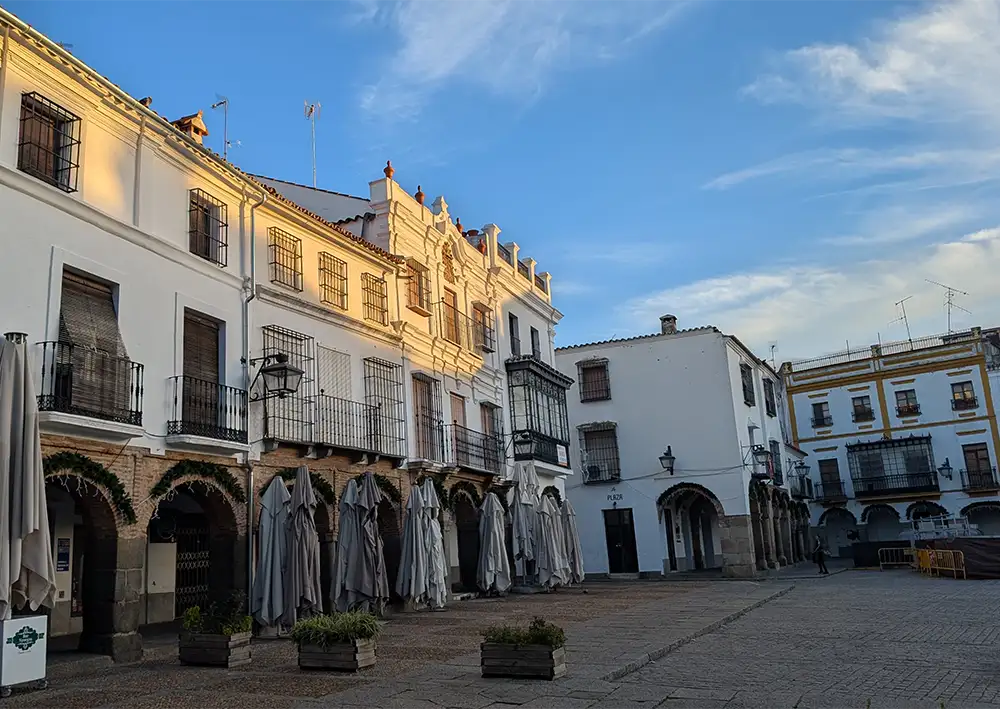
The nickname "Little Seville" comes from the narrow streets, whitewashed houses, and squares that mirror the Andalusian style. This resemblance is due to its proximity to Southern Spain, which heavily influenced the local architecture and the signature white facades.
During the Middle Ages, the town grew under the rule of the Dukes of Feria, who turned Zafra into a key commercial and political hub. Today, the historic center reflects this past, with buildings and plazas that keep the heritage of that period alive.
Main Landmarks and Sights in Zafra
Zafra is a compact town, making it easy to visit its main landmarks on foot. The historic center is small, with its heritage concentrated within just a few blocks, reflecting the town's commercial and religious importance over the centuries.
Plaza Grande and Plaza Chica
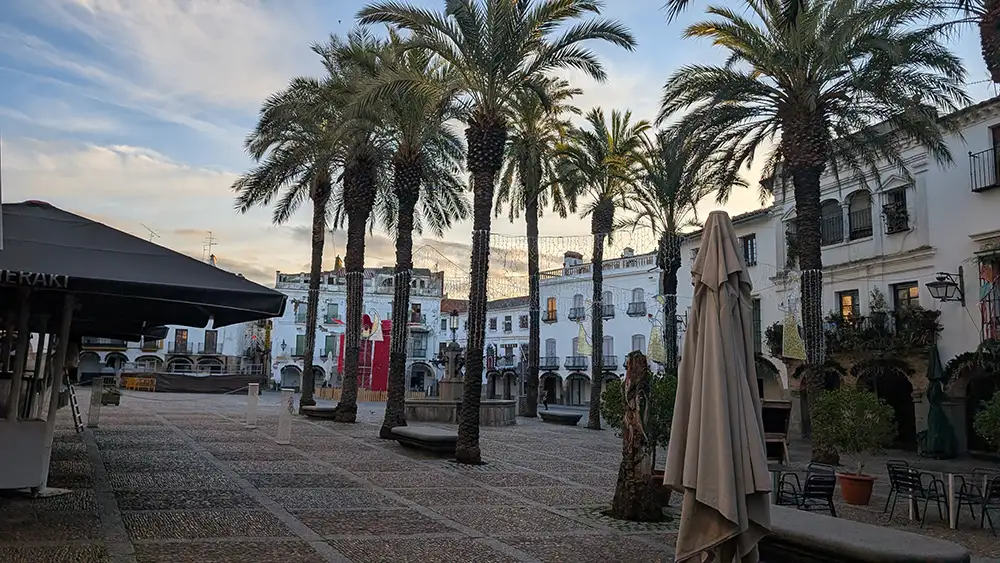
These two squares form a continuous space connected by the Arquillo del Pan. Filled with bars, restaurants, and outdoor seating, it is the best spot to grab a drink and watch the town's daily life. It also serves as the perfect starting point for exploring the rest of the historic center.
Alcázar de los Duques de Feria
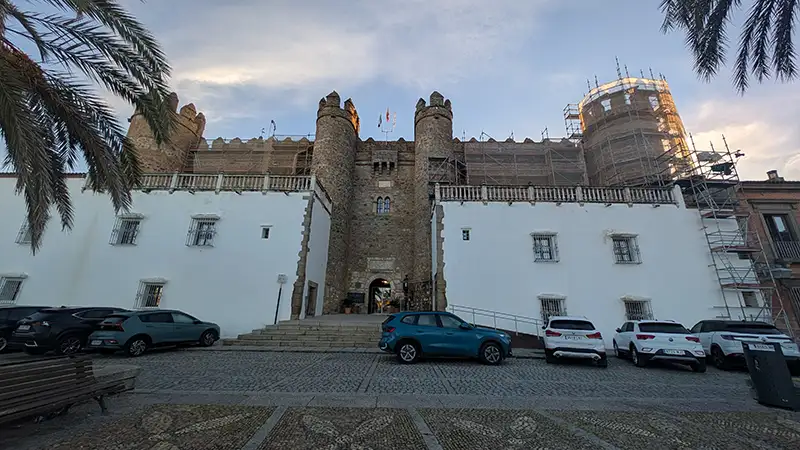
This 15th-century castle-palace was the residence of the Dukes of Feria and now houses the Parador de Zafra. Even if you aren't staying at the hotel, you can walk in to see the Renaissance central courtyard, built with white marble.
Tip: Have a coffee in the inner courtyard. It is the most affordable way to enjoy the palace's architecture without booking a room.
Collegiate Church of La Candelaria
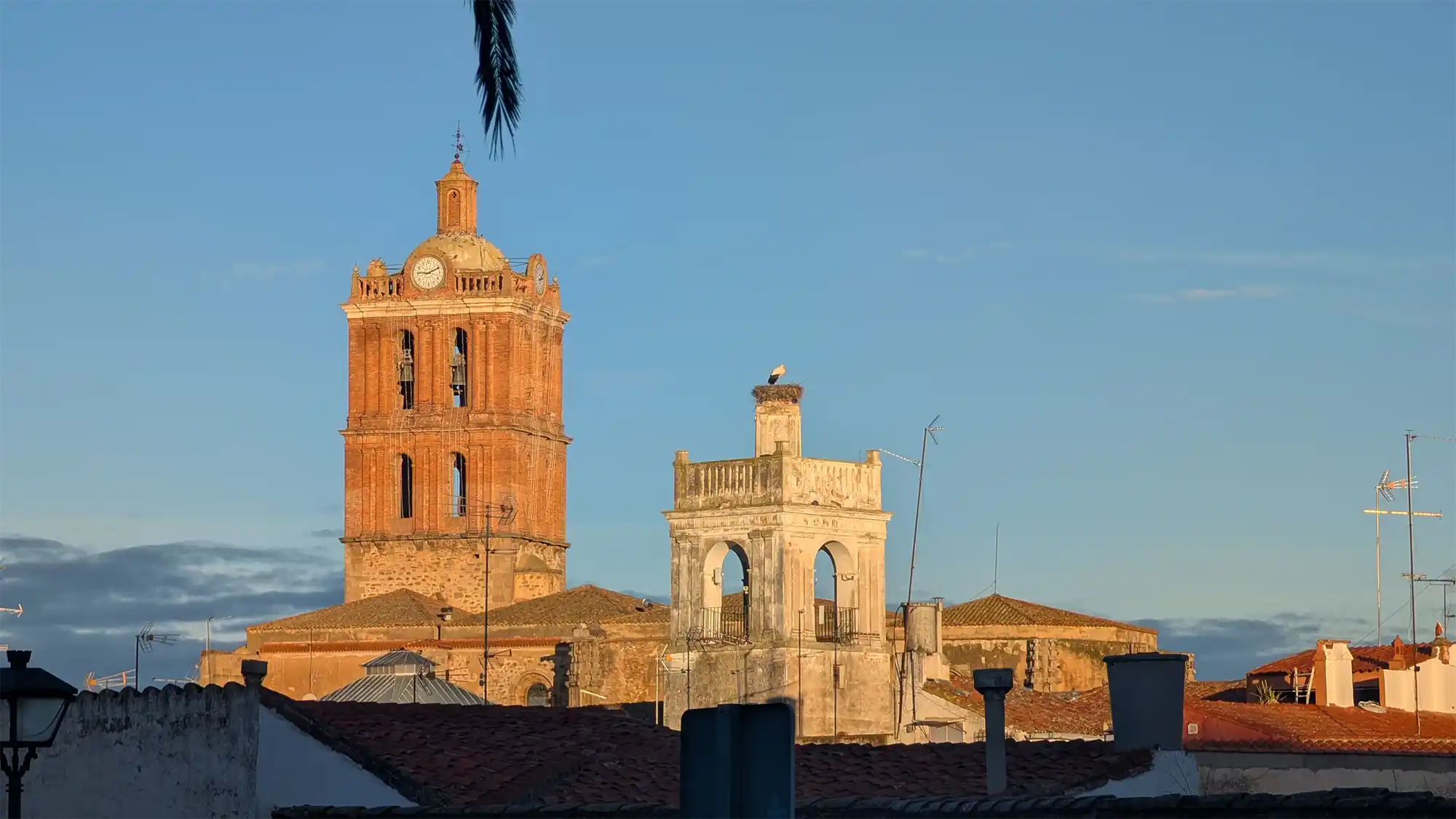
Built in the 16th century, this is Zafra's main church. The highlight of the interior is the massive golden Baroque altarpiece that covers the entire wall behind the altar.
Puerta de Jerez and the City Walls
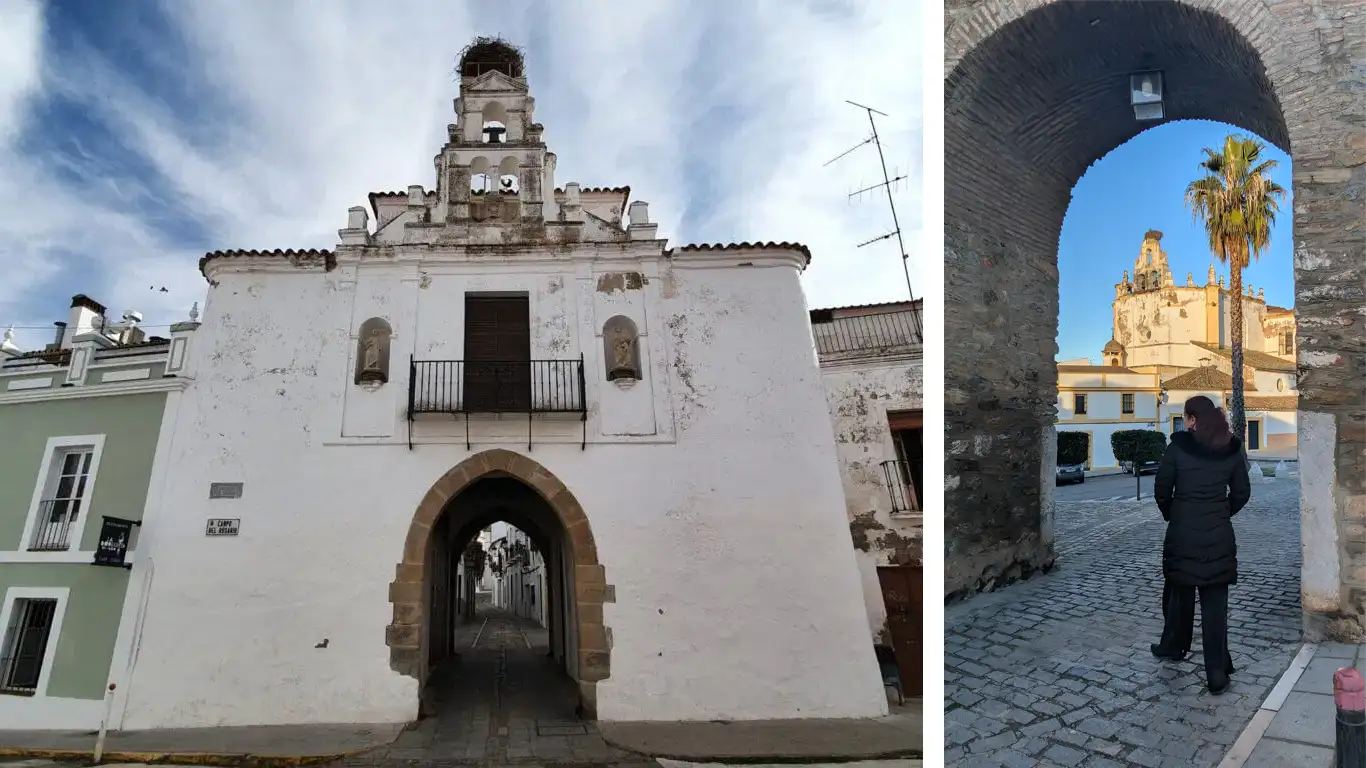
The Puerta de Jerez and the Puerta del Aceite are the stone gates remaining from Zafra's medieval fortifications. Both retain their original arches and mark the boundaries of the historic center. Between them, you can see sections of the ancient walls integrated into modern buildings.
Convento de Santa Clara
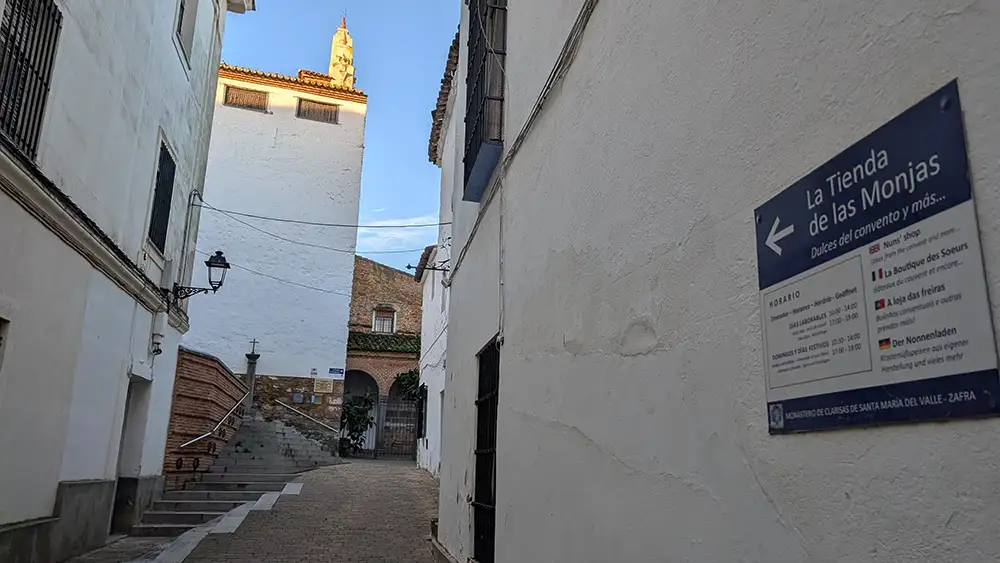
Founded in the 15th century, this convent now houses a museum of sacred art, featuring jewellery, paintings, and religious clothes. Some chapels are open to the public, while part of the building is still used by a cloistered order of nuns.
Calle Sevilla
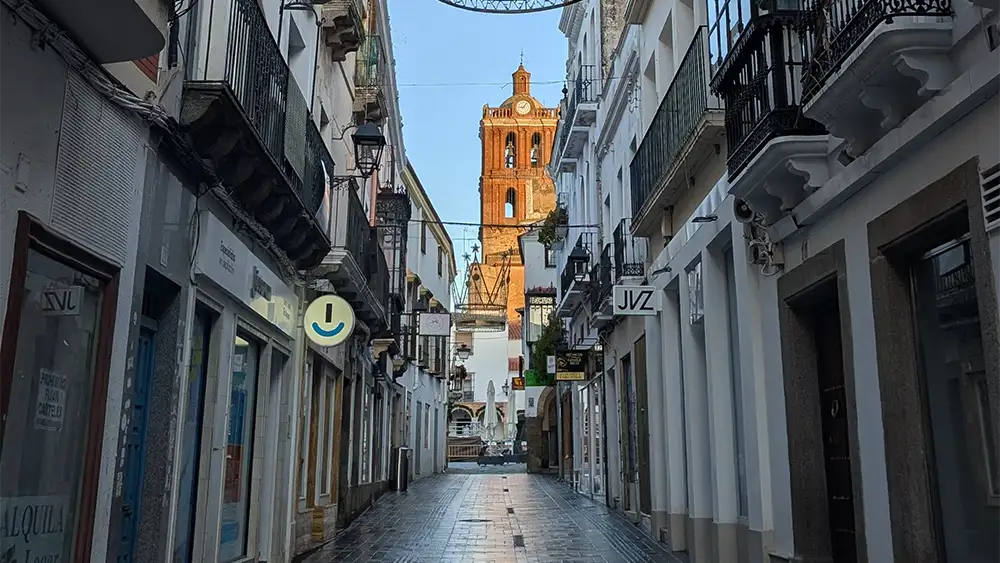
This is Zafra's main commercial street and the primary link between the modern town and the historic center. Being a pedestrian-only zone, it is lined with shops and cafes. The street's name highlights the cultural and aesthetic connection that the town shares with the Andalusia region.
The Social Heart: Plaza Grande and Plaza Chica
Plaza Grande and Plaza Chica form the center of social life in Zafra. Although they are distinct spaces, they are connected and function as a single unit, where the medieval style of the smaller square (Plaza Chica) blends with the 16th-century architecture of the larger one (Plaza Grande).
O Arquillo del Pan
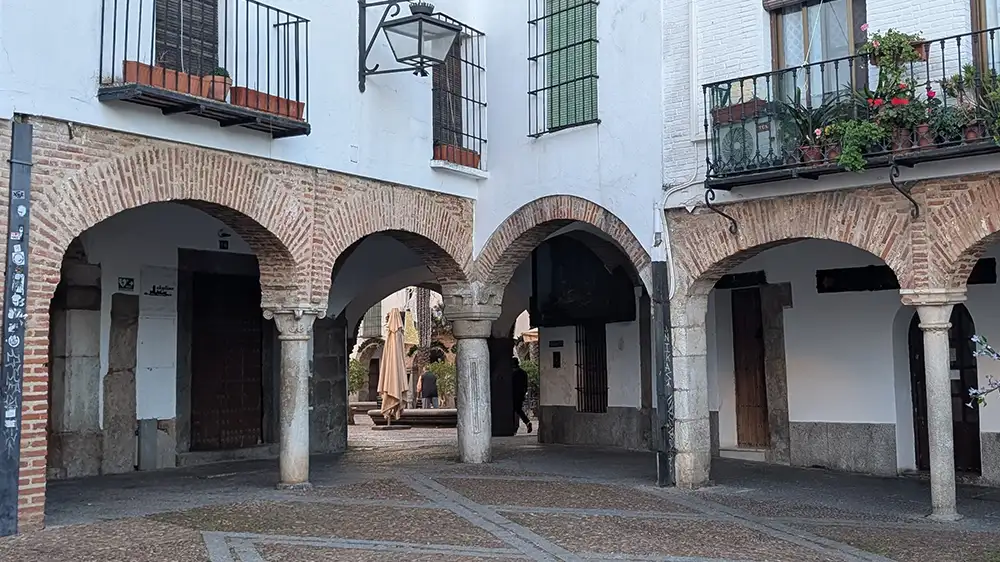
This small arch connects Plaza Grande to Plaza Chica and serves as a passage between the two. The name originates from the old bakeries that once occupied the area when trade was concentrated in this part of the historic center.
The Castilian Vara
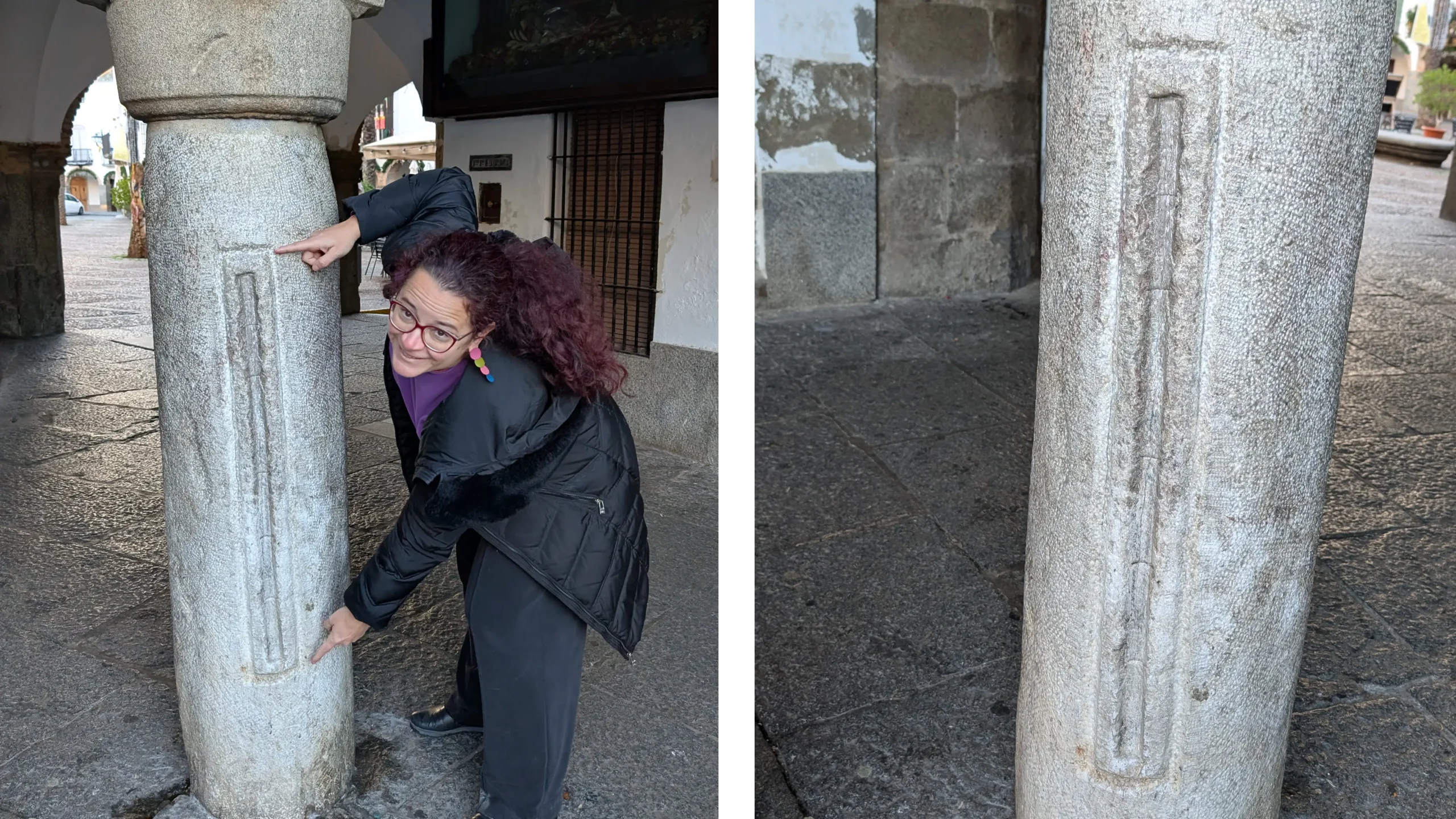
In Plaza Chica, one of the stone columns still bears the mark of the ancient vara castellana, used as a standard measurement in the Middle Ages. Measuring approximately 83 centimetres, it was used to verify the size of fabrics and goods sold at the local markets.
Atmosphere and Local Life
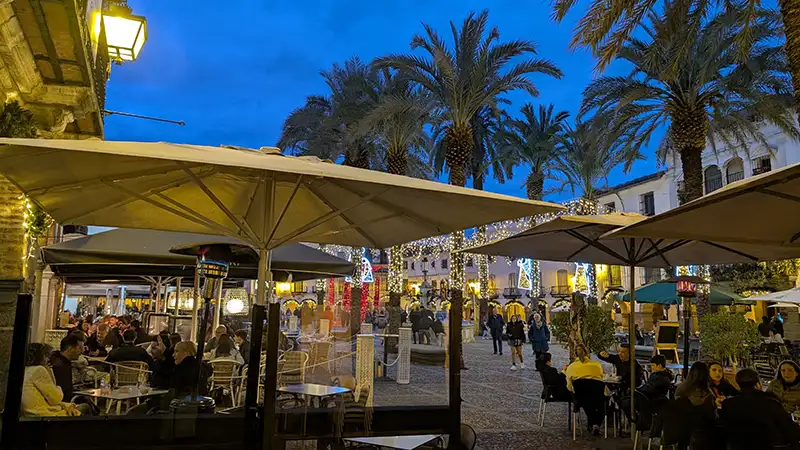
The archways surrounding the squares are full of bars, restaurants, and small shops. Tables take over the open space, making it easy to spend time there eating, drinking, or simply people-watching. The area becomes even more lively at night.
Local Gastronomy and Traditional Dishes
Iberian Pork
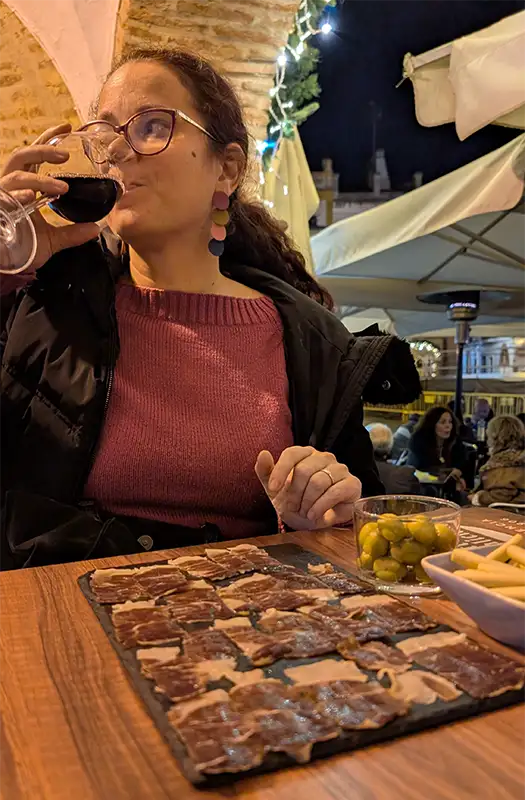
Zafra is in a prime Iberian pig-breeding region, so jamón (Iberian ham) and grilled meat cuts such as secreto, presa, and pluma are the mainstays of every menu. The quality of the meat is the central focus of these dishes.
Extremaduran Migas
This dish is somewhat similar to a savoury stuffing, made of breadcrumbs fried in olive oil with garlic and paprika. It is usually served with pork or chorizo. Once a staple for the region's shepherds, it is now one of the most traditional items on local menus.
Cheese and Wine
The sheep and goat cheeses produced in the surrounding countryside have intense flavours and are usually served as a starter. To accompany them, the local wines from the Ribera del Guadiana denomination of origin (D.O.) are the most common choice in local restaurants.
Lamb Stew (Caldereta de Cordero)
Lamb stew, known as caldereta, is one of the most traditional dishes of the region. The meat is slow-cooked with olive oil, garlic, and paprika, creating a thick, rich sauce. It is a rustic, hearty meal, typically found in restaurants that focus on traditional home cooking.
Where to eat in Zafra
Zafra is all about good food without any fuss. Most of the action takes place at the tables in the squares, where locals and visitors mix, but there are also plenty of excellent bars tucked away in the backstreets.
Bodega Bar El Taxi
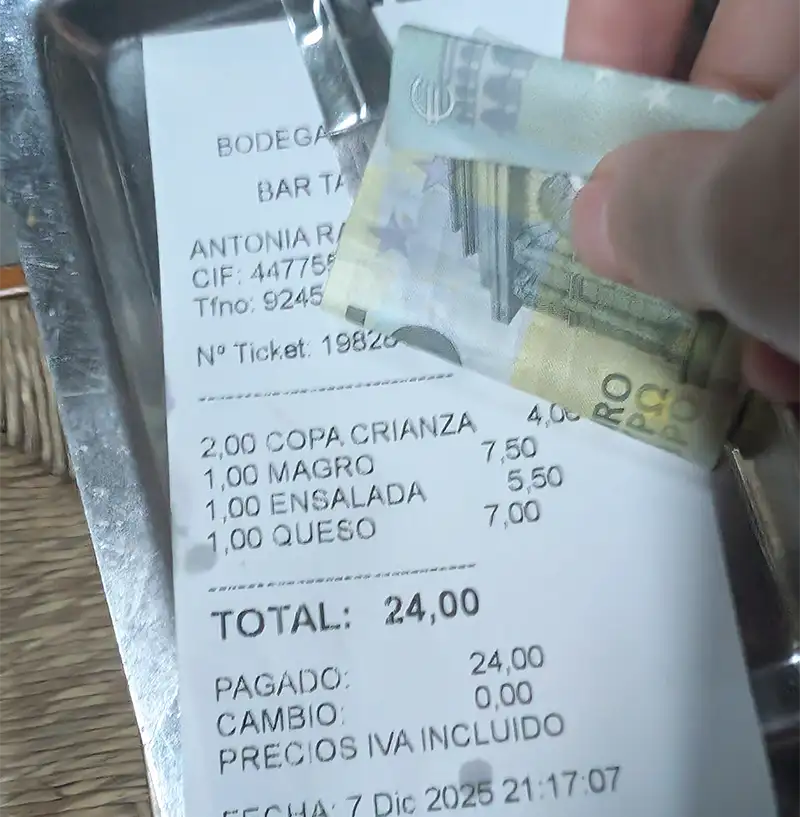
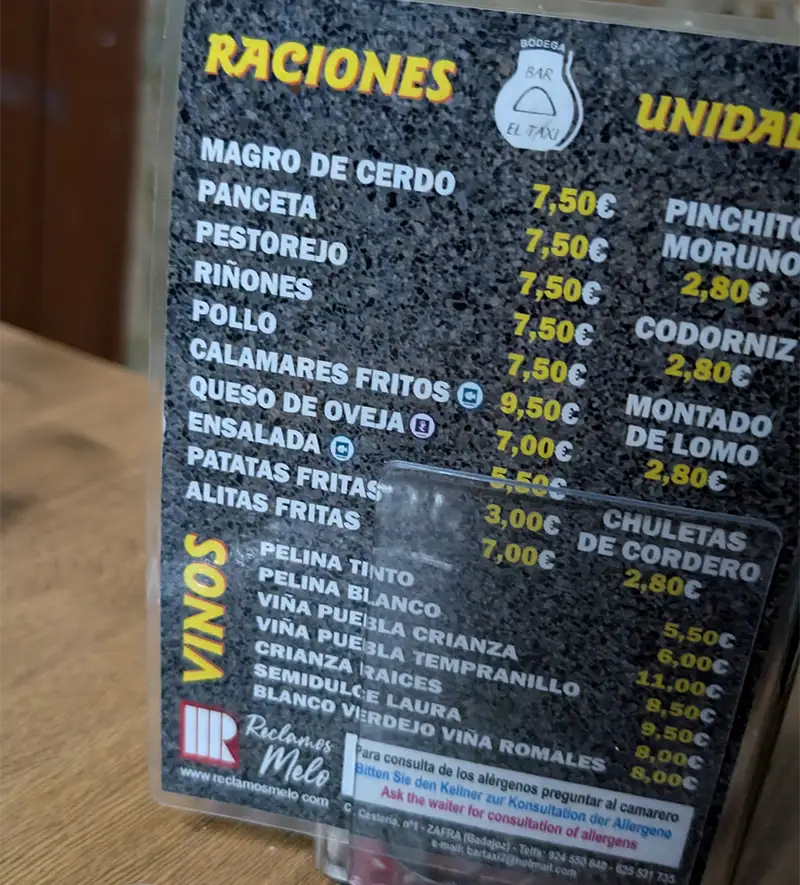
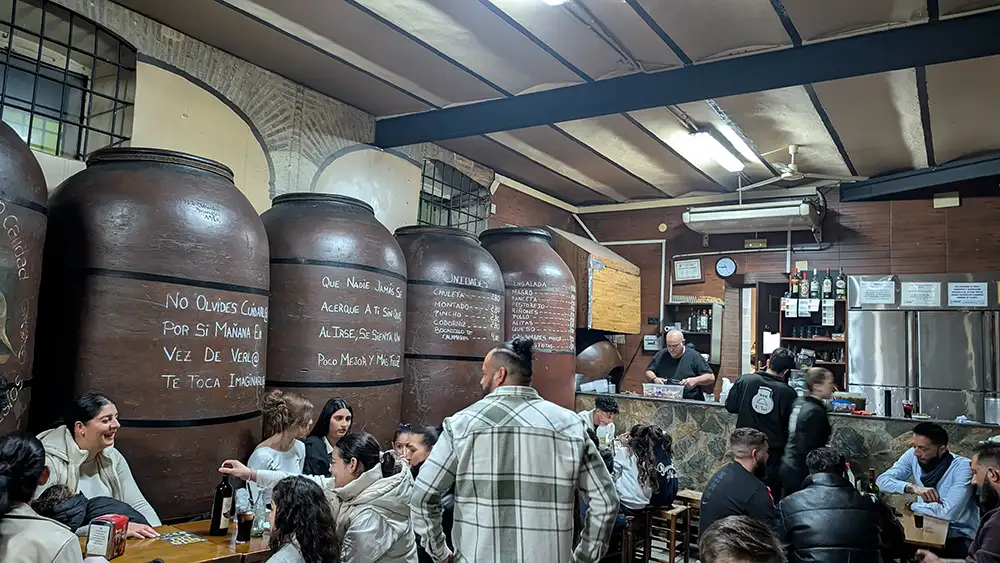
This is a proper, no-frills local bar. For around 24 euros, we ate very well and had some wine. The magro de cerdo (lean pork) is delicious and the cheese is sensational. Your best bet here is to stick to the meat dishes. The atmosphere is simple and it's mostly frequented by locals.
La Rebotica
This is a different kind of experience. La Rebotica is a small restaurant with only a few tables, located right next to Plaza Chica. The cooking is more sophisticated, especially meats and game recipes. It is not a place for a quick or cheap bite, and since space is limited, it is worth booking ahead to secure a table.
Arco Restaurante
Arco offers refined cooking with a small menu that changes with the seasons. The dishes are well-executed using high-quality ingredients, with meat and fish options designed for sharing. Prices are higher than in the local bars, but they reflect the standard of the kitchen. It is a restaurant for sitting down and eating well, rather than for something fast.
La Tertulia
The focus here is on well-made home cooking, with traditional regional dishes and local produce. Croquettes, migas, Iberian meats, cod, and stews feature heavily on the menu and are the most popular choices. Portions are generous and prices are in line with the town average. It is a great option for those who want traditional food without a high price tag.
How to get there and when to go
Getting there
Zafra is located right off the A-66 (Autovía de la Plata), so access by car is direct and very straightforward. If you aren't driving, there are frequent coach services (Leda or Alsa) and trains connecting the town to Madrid, Seville, and Badajoz.
Travelling by public transport?
Compare train and coach prices to Zafra and find the quickest option with our partner.

Best time to visit
Summer in this region is harsh, so the ideal time to visit is during spring or autumn. In late September and early October, the Feria de San Miguel takes place; it is the town's liveliest period, though also the most expensive and crowded.
ZAFRA ClimaZafra works brilliantly as a travel stopover. In just a few hours, you can see the historic centre, eat well, and continue your journey without feeling rushed. It is a compact, organised, and easy-to-understand town where almost everything happens around the squares. It is not a "checklist" destination for ticking off attractions, instead, it is for those who enjoy walking, watching the town go about its day, and sitting down for a stress-free meal. If you are crossing Extremadura or travelling along the Ruta de la Plata, it is well worth the stop.