Bodegas Portia is located in Gumiel de Izán, just a few kilometers from Aranda de Duero. It is the kind of place you notice even before you know what it is. The building blends into the hill where it was built, partially buried in the flat and open landscape of Castile. The structure naturally catches your eye. We drove past it several times during trips through the region and really wanted to see it up close.
Ribera del Duero has one of the most important designations of origin in Spain, famous for its Tempranillo red wines with great structure and aging capacity. The region follows the Duero River, mainly through the province of Burgos, and is home to dozens of wineries. Portia is one of the most visited, both for its wine and for being the only winery in the world designed by architect Norman Foster.
The visit lasts about two hours and includes a tour of the facilities and a guided tasting. It is an excellent experience for both wine experts and beginners. The explanations are great, the space is beautiful, and everything is highly organized. We left feeling like we learned a lot, which does not always happen on this type of tour.

The innovative architecture of Norman Foster
The Foster + Partners firm designed the building, which opened in 2010. The three-pointed star floor plan has a very clear function. Each arm handles a specific stage of production, and the design uses gravity to shorten the grapes' path during the process.
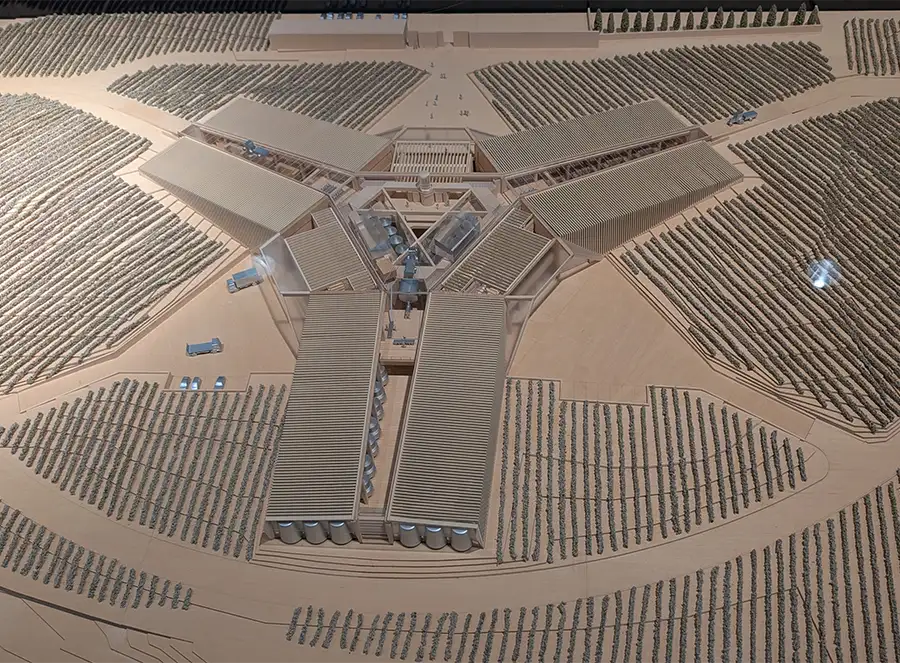
Since my husband is an architect, the visit had an extra layer of interest for us. Right at the entrance, the massive doors already show the care taken with the project's proportions. The result is a beautiful and extremely functional space.
What to expect on the Bodegas Portia tour

The tour begins in the lobby with an art exhibition and a red sculpture shaped like a wine drop. This space makes it clear that the winery prioritizes the visitor experience.
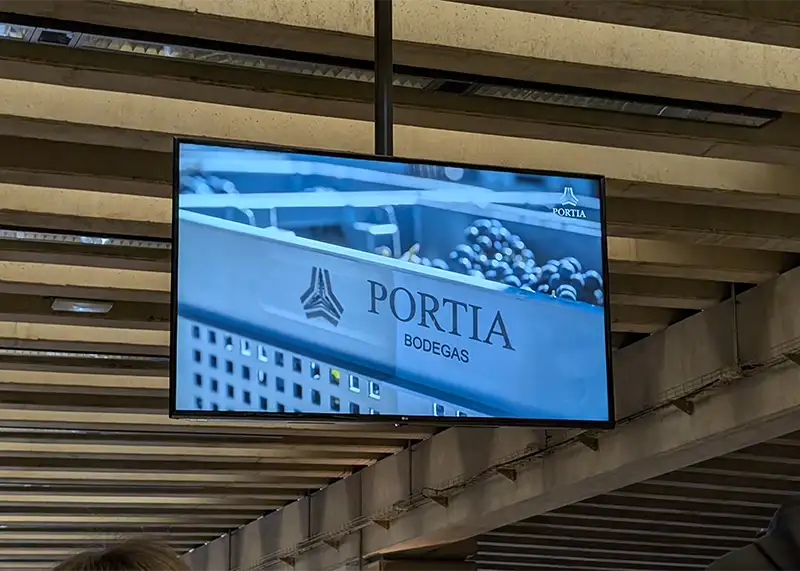
The group watches a video explaining the production process, from the vineyard to bottling. This really helps contextualize what you will see next.

In the fermentation area, we see stainless steel tanks of various sizes. Some are used temporarily while the wine waits for bottling or during barrel cleaning.
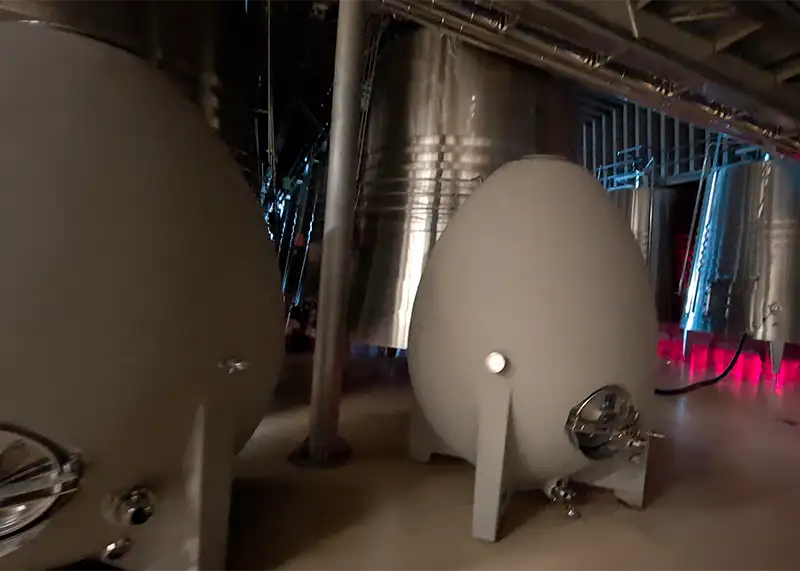
Among them, a concrete egg stands out. It is a winery test for an unreleased wine, using this less conventional shape.

The path continues through the bottling line, where we see the machinery at work, before reaching the resting rooms.
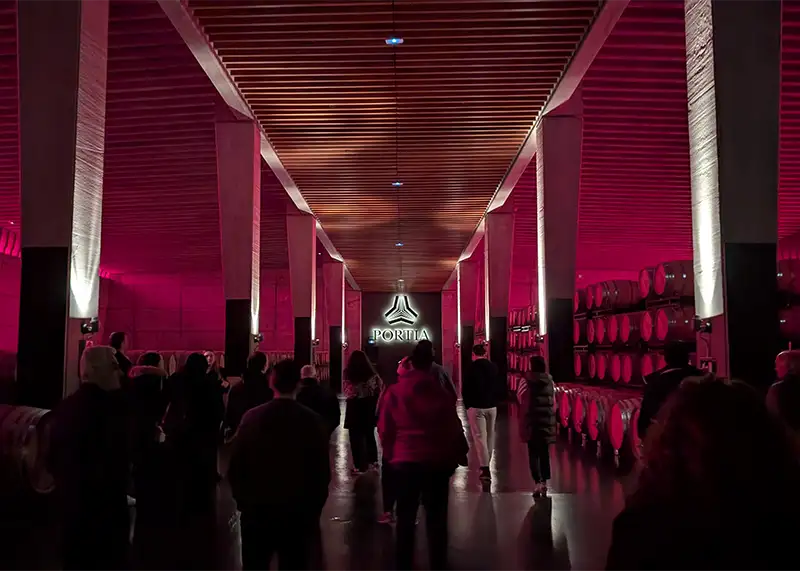
The barrel room is the visual highlight of the tour. The space has a cathedral-like aesthetic, with high wooden ceilings and lighting that bathes everything in pink tones. The inspiration came from a conversation with the winery owner. When Norman Foster asked what wine represented to him, the answer was that the drink was his religion.

The winery also has a private vault. There, clients store their own bottles under ideal temperature and humidity conditions. A curious detail is that the vast majority of the nameplates belong to Chinese business groups or individuals.
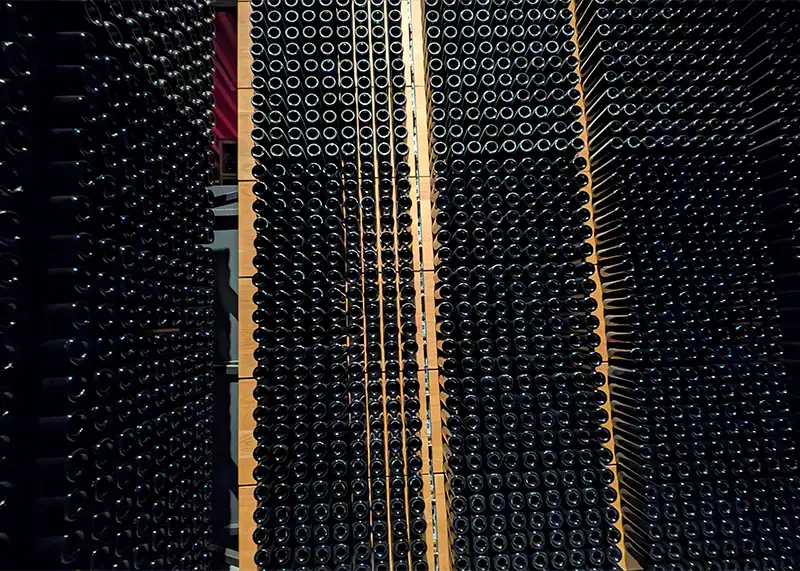
After the barrels, the tour moves to the room where the bottles rest. All are positioned with no visible labels, a decision by the architect to preserve the visual balance of the space.
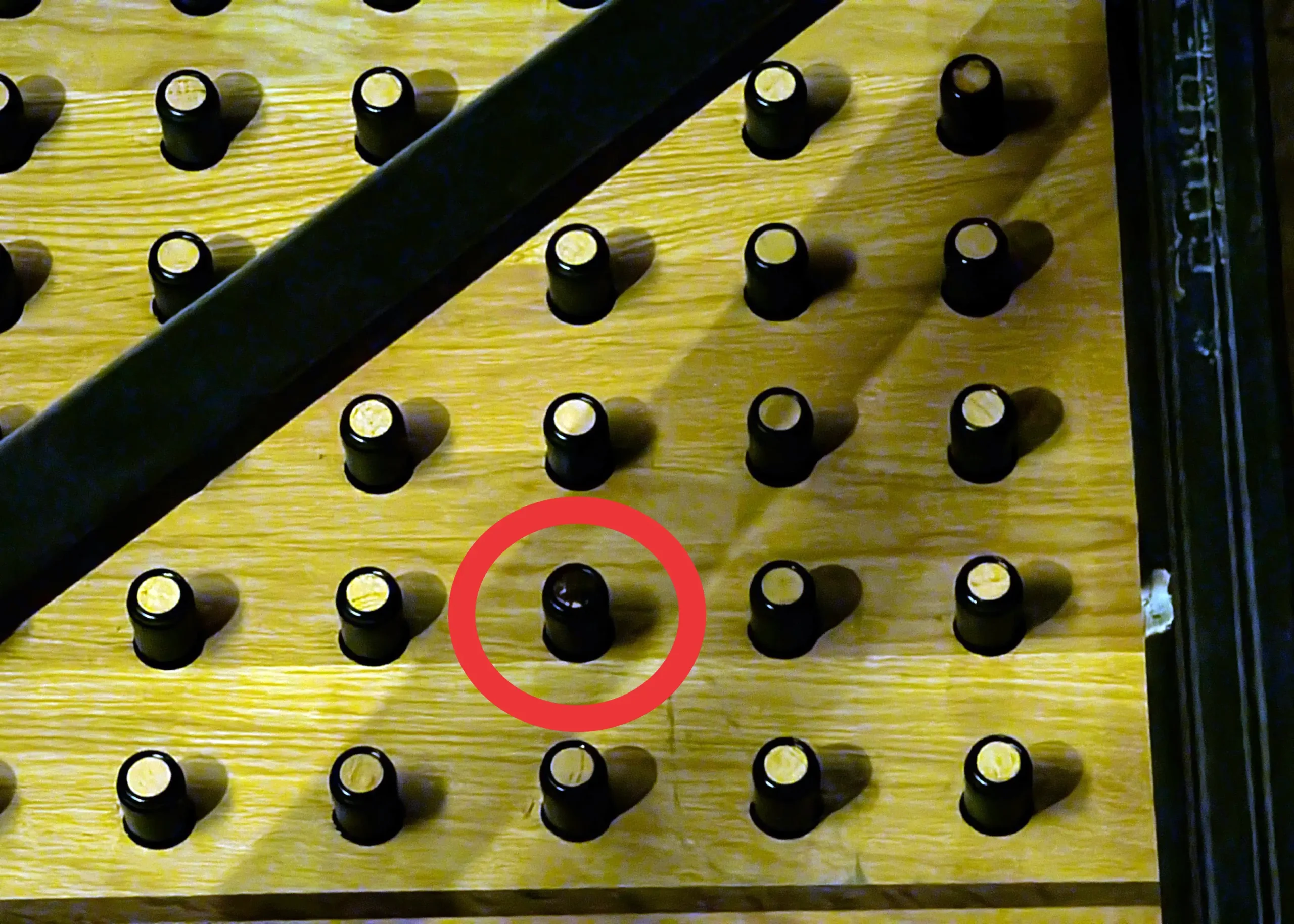
But this placement also serves a practical purpose. It allows you to check the corks condition. A dark cork is a sign that the wine has oxidized, and that bottle will be discarded.


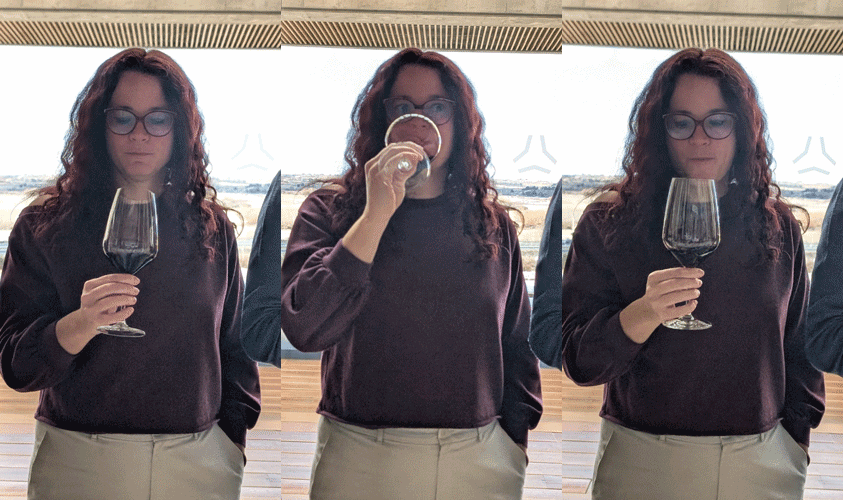
The wine tasting wraps up the tour and is very well conducted. The guide explains what to expect from each glass, how to observe the color, how the aroma changes when swirling the glass, and what to notice in the flavour. It was one of the best tastings we have ever done.
We tasted three wines. The first was the Verdejo Sobre Lías, a fresh white wine with good acidity produced in the Rueda region. Then came two structured red wines with a strong oak presence, the Portia Gala and the Portia Prima. The explanations really help in noticing the differences between them.
Ticket prices and how to book your visit
Booking: official website.
We recommend booking at least a week in advance, especially for the weekend. Spots are limited and time slots fill up quickly. Just a reminder that they offer tours in Spanish and English.
Some available tours
| Experience | Price |
|---|---|
| Tour + tasting (Spanish or English) | €35 |
| Tour + lunch at Triennia Gastrobar | (from) €66,50 |
They also offer other types of experiences, which are worth checking on the website to see if they fit your trip.
Como chegar à vinícola a partir de Madrid
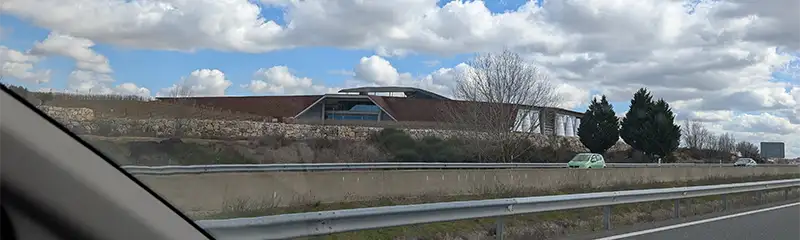
Driving is the most practical option. The winery is located on the N1 road, exit 171 of the A-1 highway, about an hour and a half from Madrid with no tolls. There is private parking on site.
A great combination is booking the morning tour and having lunch afterward in Aranda de Duero. It is just a few kilometers away and has excellent restaurants specializing in wood-fire roasted lamb.
Is it worth visiting Bodegas Portia?
It was one of the most complete and informative winery visits we did in Spain. The tour is well conducted, the explanations are clear and the space itself justifies the trip, even for those who are not from the wine world.
For those who like wine, it is a direct recommendation. The guided tasting teaches you to look at what is in the glass in a different way, and Portia's wines, quite structured and with marked tannins, clearly show what Ribera del Duero has to offer.
For those who appreciate architecture, Portia is a rare case of a winery where the building has as much weight as the product. Seeing the Norman Foster project from the inside, understanding the choices and walking through the spaces is worth the visit on its own.
An hour and a half from Madrid, without tolls and with easy booking on the website, it is a stop that makes sense for any itinerary in the region.