Forget the usual Christmas traditions you may be familiar with. Spain celebrates the season with its own rhythm, shaped by local customs, regional characters and a holiday calendar that works differently from many other countries.
You'll find illuminated streets, crowded markets, family meals that last for hours and a strong focus on nativity scenes rather than Christmas trees. For anyone used to a more standard European Christmas, Spain adds layers of folklore, food and rituals that make the season feel familiar yet distinctly different.
Key calendar
A festive calendar that stretches from 24 December to 6 January
Unlike in many countries where Christmas winds down after the 25th, Spain keeps the celebrations going for nearly three weeks. And here's the twist: presents are opened at the very end of the season, not on Christmas Day.
Nochebuena (24 December)
Christmas Eve is one of the most important family gatherings of the year. The highlight is a long evening meal shared at home, often considered the true Christmas celebration.
Christmas Day (25 December)
A bank holiday dedicated once again to family meals. For most children, this still isn't a gift-opening day. In many households, Christmas lunch brings together the extended family, grandparents, aunts, uncles and cousins.
Día de los Santos Inocentes (28 December)
Spain's version of April Fools' Day. It's a day of harmless pranks between friends and relatives, and even newspapers and TV channels join the fun. If you're in Spain on this date, take every headline with a pinch of salt.
Three Kings' Day (6 January)
The most anticipated day of the entire season. The tradition centres on the arrival of the Three Kings, who bring gifts to children on the morning of 6 January. It marks the end of the Christmas period and is the day when children actually receive their presents.
The lottery and the El Gordo tradition
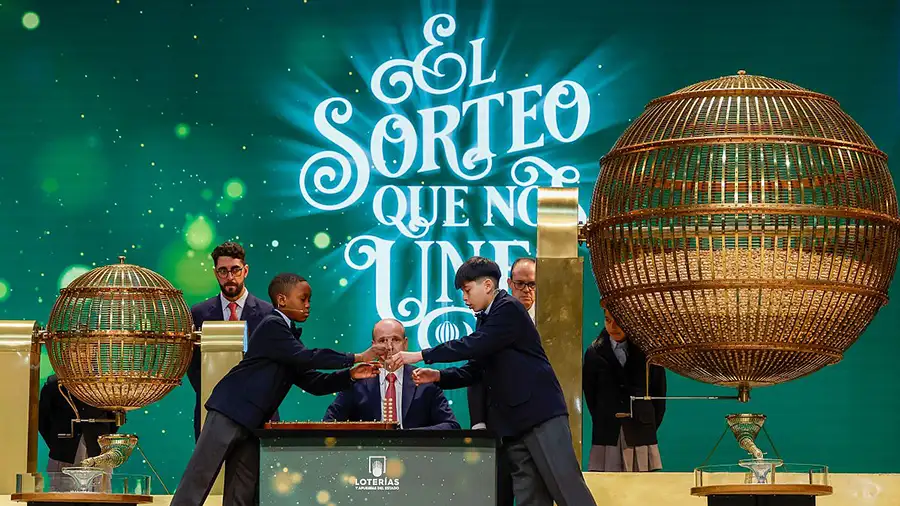
For many people in Spain, the Christmas season officially begins on 22 December, the day of the famous Christmas Lottery known as El Gordo. It is one of the biggest annual events in the country and almost everyone buys at least one ticket or shares it with friends, family or colleagues.
The top prize is four million euros for a full ticket, but numbers are sold in "one-tenth shares", so most winners take home a tenth of that amount before taxes. There are also many secondary prizes, which means thousands of people across Spain end up winning something every year.
The draw itself is quite a show. Children from a historic school in Madrid sing the winning numbers and prize amounts for hours in a ceremony broadcast live on national television. For anyone seeing it for the first time, it can feel unusual, but the entire country tunes in.
Who brings the presents in Spain
In Spain, the main gift-givers are not Santa Claus but the Three Kings. Santa does appear in some households, yet he plays a secondary role and most of the excitement is saved for 6 January.
In many families, 25 December comes and goes without presents. The real anticipation builds for Epiphany morning, when children finally open their gifts. On the evening of 5 January, towns and cities host the Cabalgata de Reyes, a large parade where the Kings arrive and throw sweets to the crowd. It is one of the most festive moments of the season and marks the countdown to gift day.
Although the Three Kings are the main tradition, different regions also have their own local characters linked to Christmas and the giving of presents.
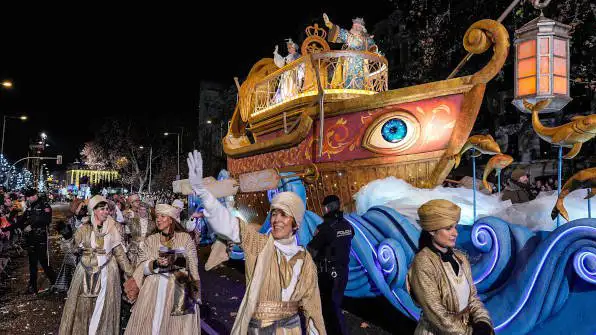
Photo: esmadrid.com
Curious regional Christmas traditions
Although the Three Kings are the main Christmas tradition across Spain, the country has a wide range of regional characters and customs that appear during the season. Many of them have deep historical or folkloric origins and give each region its own identity during Christmas.
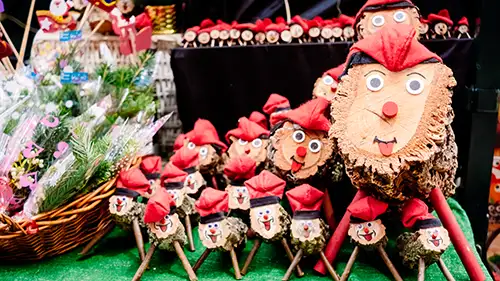
In Catalonia, children look after the Tió de Nadal, a painted wooden log wearing a traditional hat. Throughout December they "feed" it, and on Christmas Eve they hit the log with sticks while singing a rhyme so it "poops" sweets and small gifts.
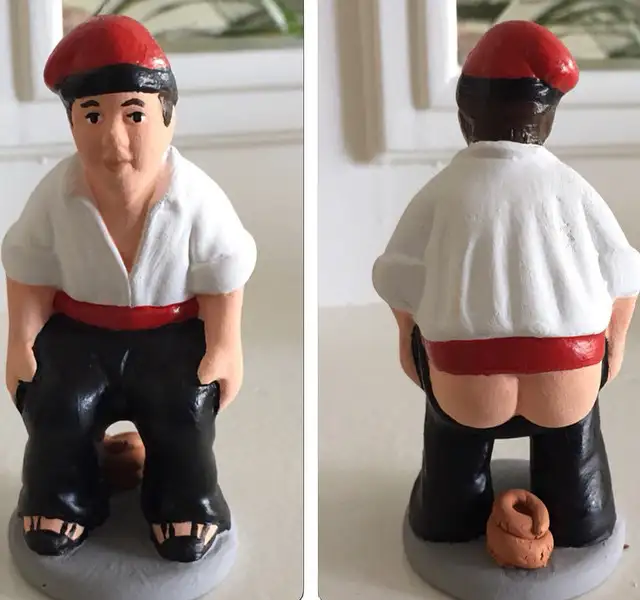
There is also the Caganer, a tiny figure hidden in Catalan nativity scenes. It looks surprising at first, but it is considered a symbol of good luck and prosperity for the coming year.
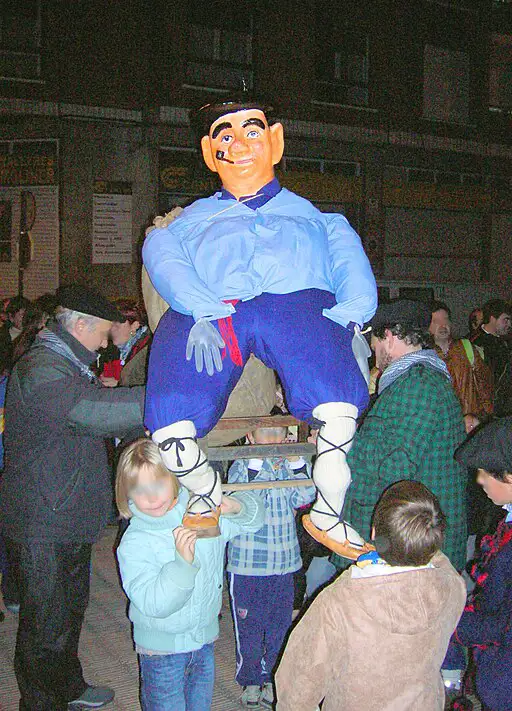
In the Basque Country and Navarra, the traditional character is Olentzero, a charcoal burner who comes down from the mountains to deliver gifts on Christmas Eve. His story is rooted in pre-Christian legends and remains a very popular figure in the region.
These are the best-known examples, but Spain has many others. Galicia has the Apalpador, and Asturias has the Angulero, among others. If you enjoy exploring local culture, Spanish Christmas folklore is full of interesting regional traditions.
What do people eat at Christmas in Spain?
Food is at the heart of Spanish Christmas traditions, and meals are often the main event of the season. Dishes vary a lot from one region to another, so there is no single national Christmas menu or a main dish that is everywhere.
Christmas Eve dinner and Christmas Day lunch
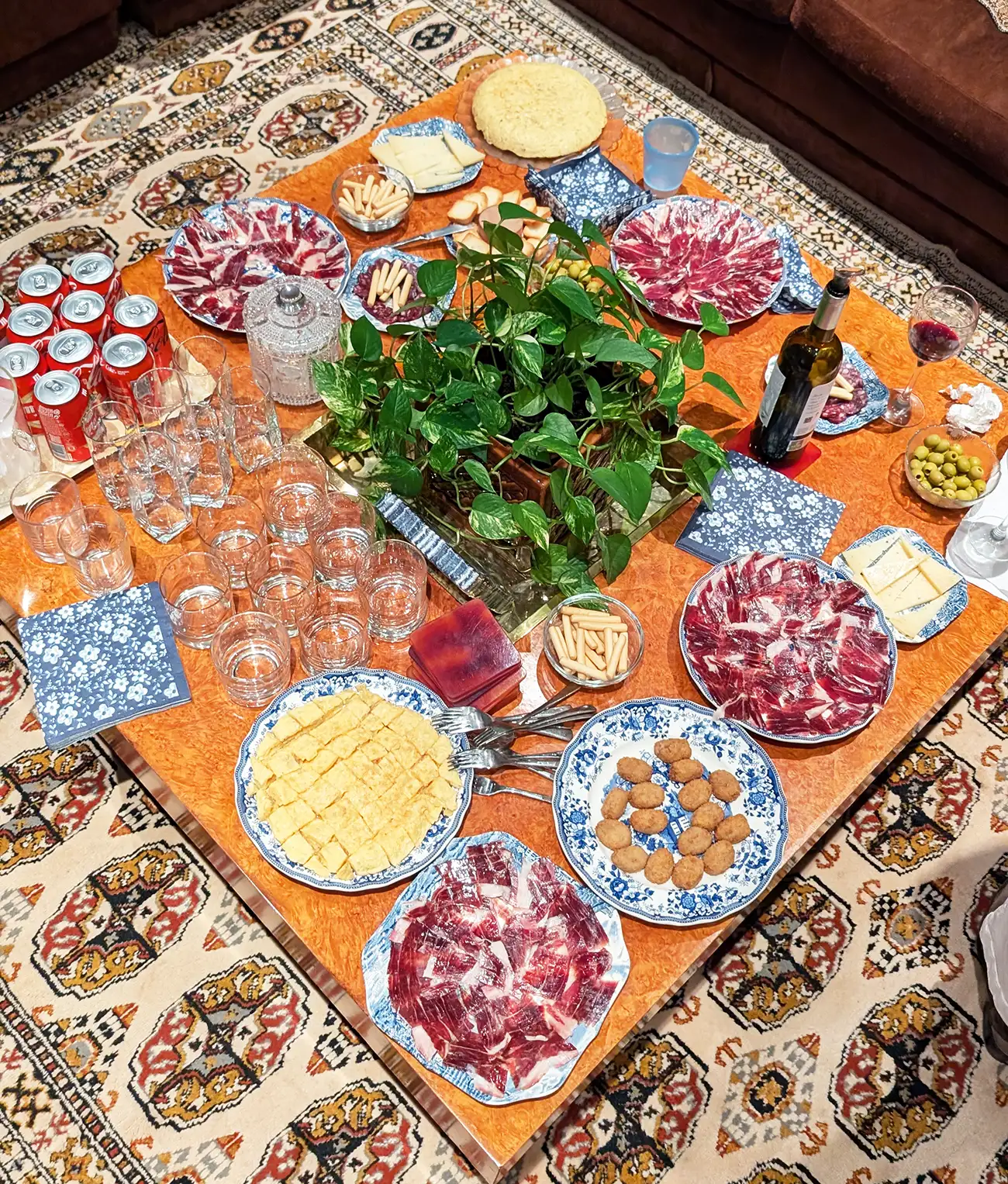
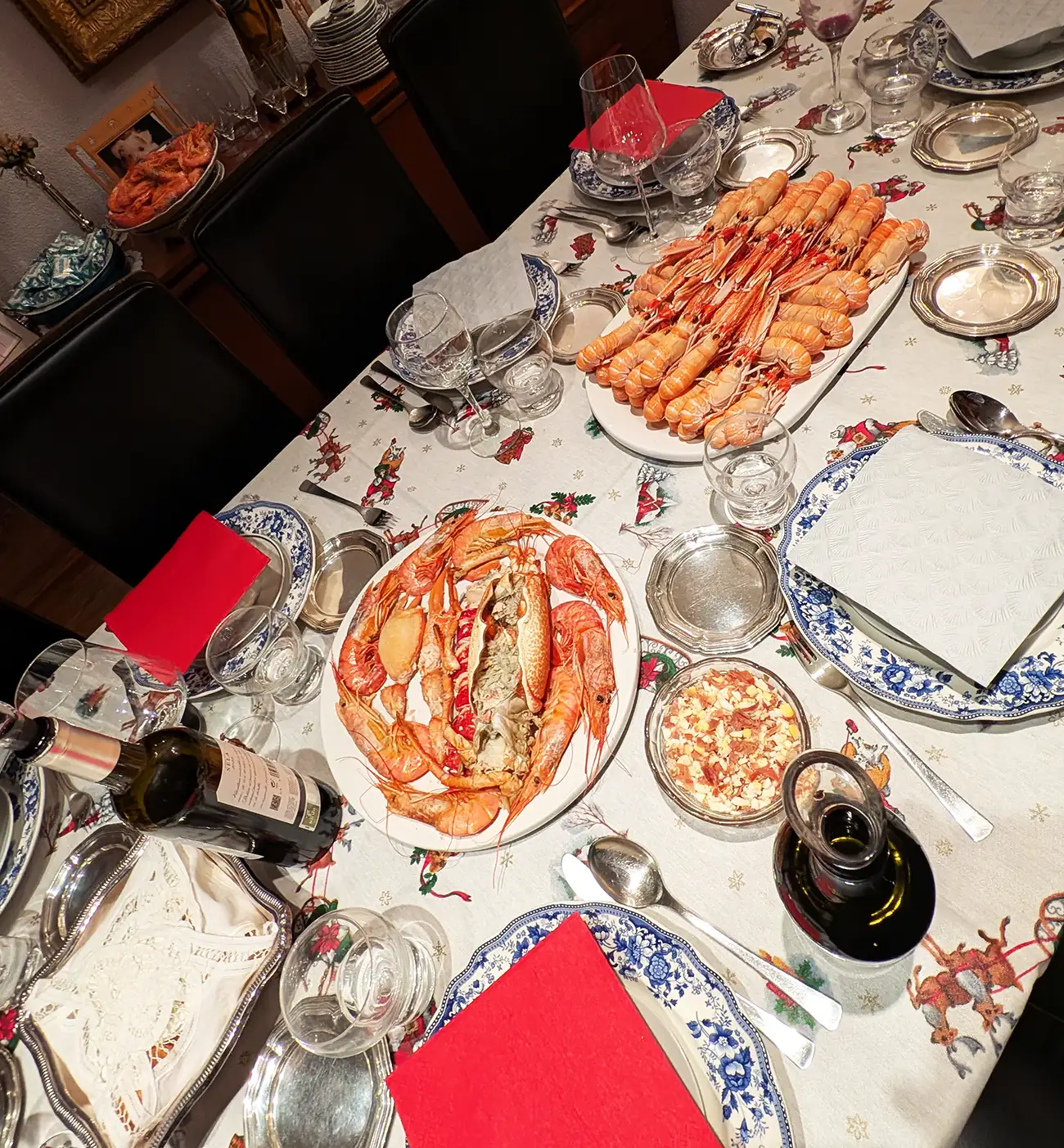
The most important meal is Christmas Eve dinner on 24 December. There is no set dish, but it is common to see prawns, lobster, roasted meat or premium fish on the table. It is usually a more refined meal rather than a large spread with many different options. Before the main dishes, there are always small bites such as jamón ibérico, cheeses and tapas.
Christmas Day lunch is quieter and more relaxed, often shared with extended family.
Traditional Christmas sweets
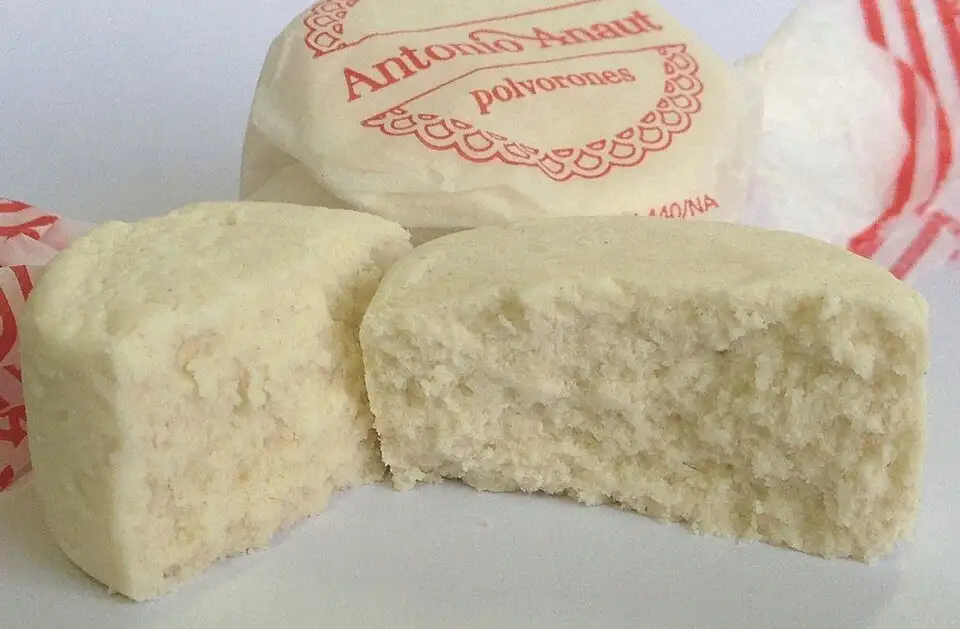
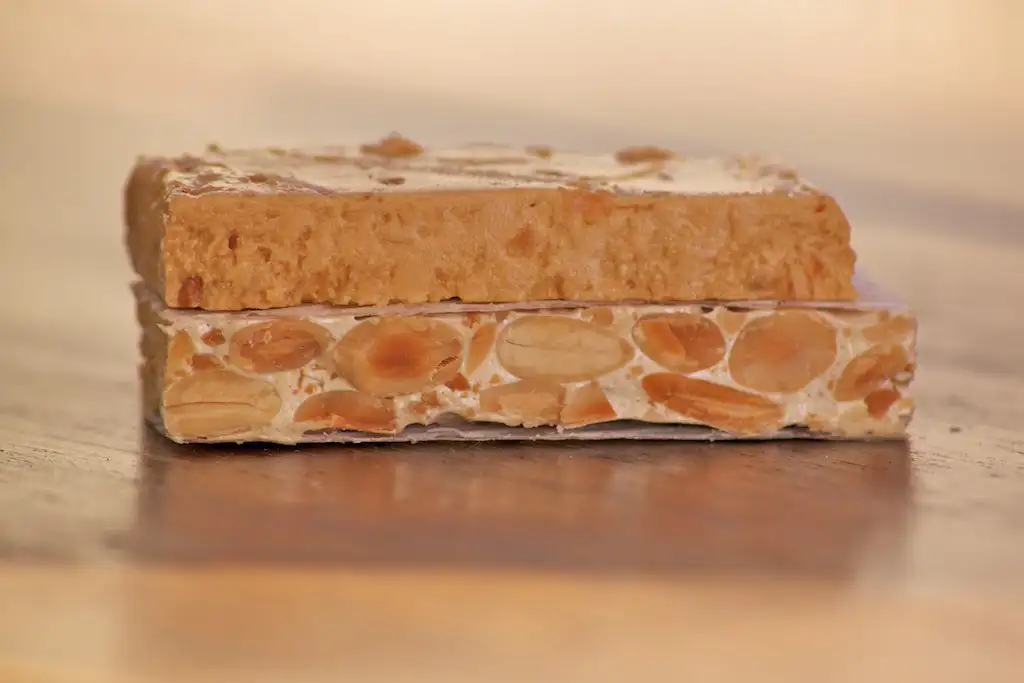
Christmas time in Spain comes with a huge variety of sweets. The most typical ones are turrón (a nougat-style bar that can be hard or soft), mazapán (small almond pastries) and polvorones (crumbly butter biscuits). These sweets start appearing on the table from early December and stay throughout the whole season.
Roscón de Reyes (The Kings Bread)
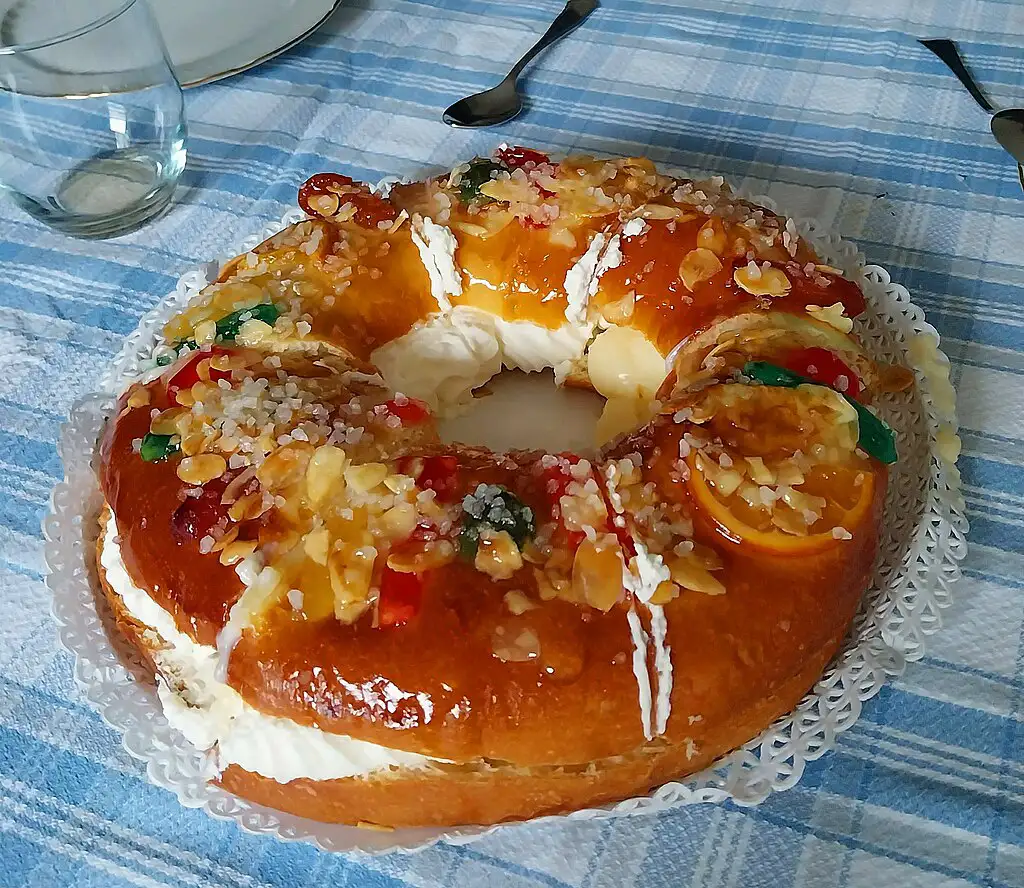
The Roscón de Reyes is the sweet that closes the Christmas season in Spain. It is traditionally eaten on 6 January, Three Kings' Day. It's a soft, slightly sweet bread shaped like a ring, decorated with candied fruit and often served with whipped cream and thick hot chocolate.
Inside the roscón you will find a small figurine and a dried broad bean. Whoever gets the figurine becomes the "king" or "queen" of the celebration, while the unlucky person who gets the bean is expected to buy next year's cake.
The Nativity scene (Belén) is a huge deal
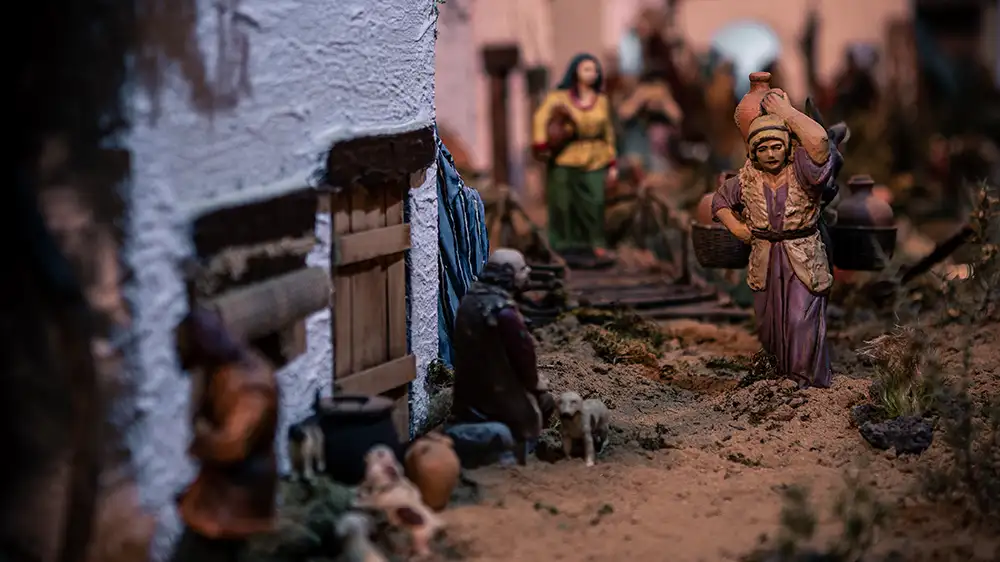
Nativity scenes are one of the most important Christmas traditions in Spain and, for many families, they matter more than the tree itself. They go far beyond the Holy Family. People recreate rivers, bridges, workshops, markets, animals and everyday scenes, turning entire towns into miniature landscapes.
There are specialised Christmas fairs dedicated exclusively to selling figurines and accessories. The level of detail is striking. I have literally seen families debating which miniature sausage stall would look best on the "main street" of their Nativity scene… and yes, those stalls do exist.
Alongside the scenes people set up at home, many cities display large public versions in churches, squares, cultural centres and indoor markets. Some are huge and attract thousands of visitors. It is common to see queues forming to visit the most famous ones, which change themes every year and have become an essential part of Spain's Christmas outings.
Christmas markets
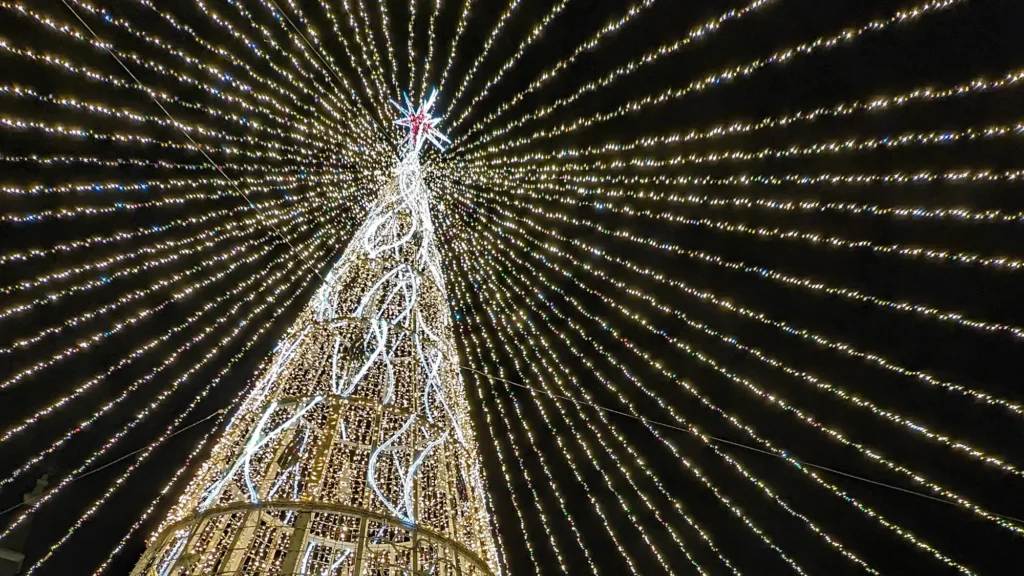
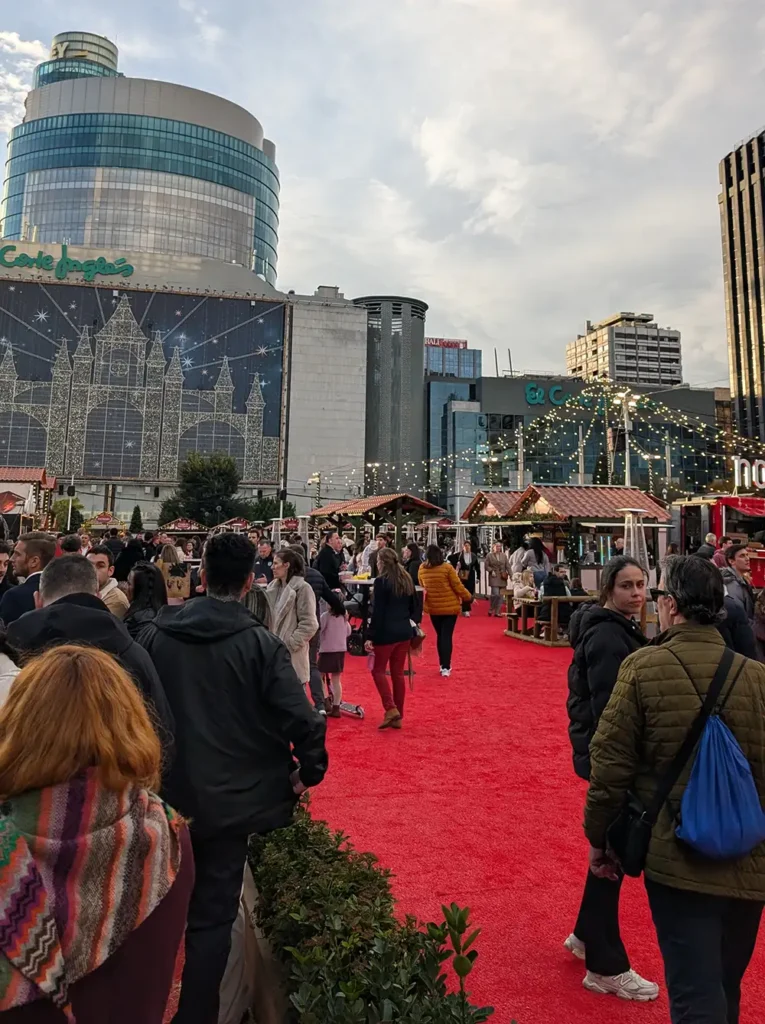
Christmas markets are one of the best parts of the season. Cities look beautiful once the Christmas lights come on, giving the streets that warm, festive feeling even on the coldest days. These markets are set up in dedicated squares and pedestrian areas, turning them into small winter villages.
You'll find stalls selling handmade crafts, tree decorations, nativity figurines, candles, toys and regional products. My favourite part, though, is always the food. There are churros, roasted chestnuts, Christmas sweets and, in many cities, food trucks where you can grab something warm to eat while wandering around.
We love visiting these markets. In Madrid, the most traditional ones are in Plaza Mayor and Plaza de España, and we always stop by the market set up outside El Corte Inglés (Castellana). Other cities also host well-known Christmas markets, such as the Fira de Santa Llúcia in Barcelona, the Feria del Belén by Seville Cathedral and the festive market in Plaza de la Reina in Valencia, all popular with visitors from across Spain.
Spain's Christmas season blends long-standing traditions with local character, and the result is a festive atmosphere that takes over streets, markets and public squares throughout December and early January. Between the lights, the nativity displays and the regional customs, it is a time of year that feels unmistakably Spanish.
If you are in the country between December and early January, it is well worth taking advantage of this, even if it is just to enjoy the atmosphere of the lights coming on in the late afternoon and try some traditional sweets at a market. It is a busy, beautiful time of year, full of little rituals that make the Spanish winter seem lighter.
Images
(1) TJ DeGroat
(2) Javier Mediavilla Ezquibela, CC BY 2.5, via Wikimedia Commons
(3) Arturogastro, CC BY-SA 3.0, via Wikimedia Commons
(4) Jonathan Pincas from Leon, Spain, CC BY 2.0, via Wikimedia Commons
(5) Zarateman, CC0, via Wikimedia Commons