I have put this guide together with care as someone who has walked these streets more times than I can count, combining my favourite spots with the logistics that actually work. Madrid has a compact and charming centre where everything is close by, where a historic square, a centuries-old tavern, or a monumental building appears at every corner. It is the type of city that rewards those who take it slowly.
This is the itinerary I use whenever friends and family visit me here. And today it is your turn! While you can see the essentials in a single well-spent day, my heartfelt recommendation is to split it into two days. Not because it is mandatory, but because Madrid deserves to be lived, not just seen.
On Day 1, we dive into the "Madrid de los Austrias". This is the historic heart, featuring centuries-old taverns, the grandeur of Spanish royalty, and the most beautiful sunset in the city.
On Day 2, the pace changes. You will find elegance on the grand avenues, the best museums in the world just a few metres from each other, and a picnic in the Retiro that will instantly become a cherished memory.
Let's go!
DAY 1 - Historic Madrid: from Salt Cod Tapas to an Egyptian Sunset
(1) Plaza de Callao - The Perfect Starting Point
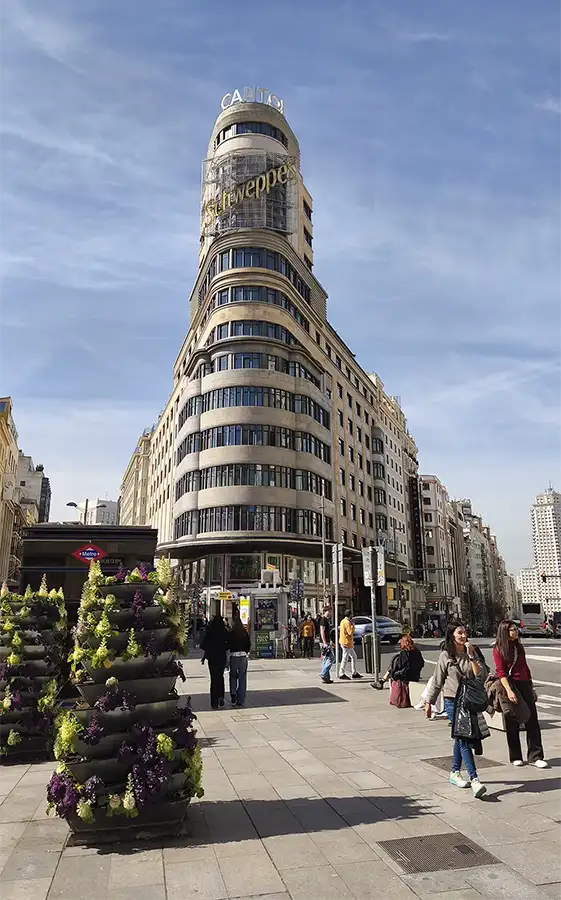
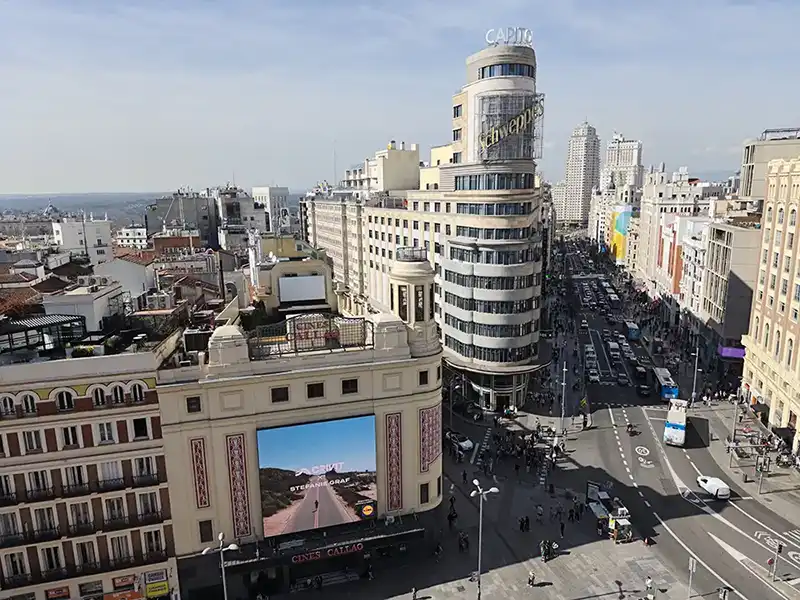
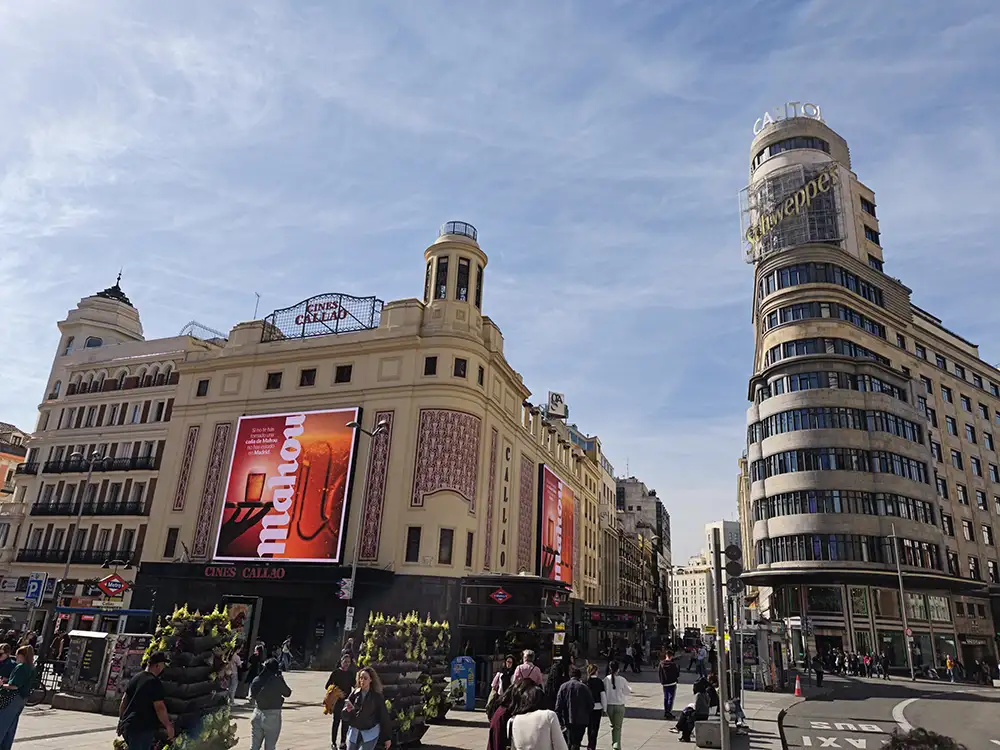
Start at Plaza de Callao, right on Gran Via, where the energy of Madrid hits you straight away. Beyond the bustle and the imposing architecture, take a look at the Carrion Building (the one with the Schweppes sign) and the Cine Callao. Here is a top tip: head up to the top floor of the El Corte Ingles in Callao. The view of Gran Via from up there is free and absolutely stunning. It is a discreet and incredible way to start your day.
Distance to the next stop: ~around 350 metres via Calle Preciados | ~4 minutes on foot
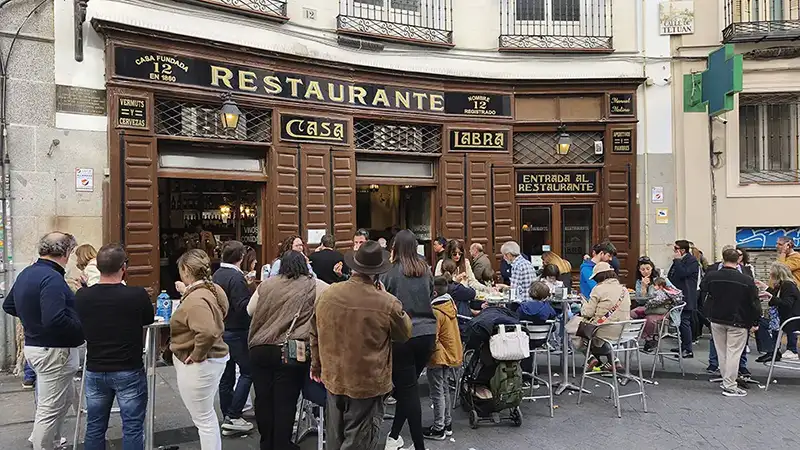
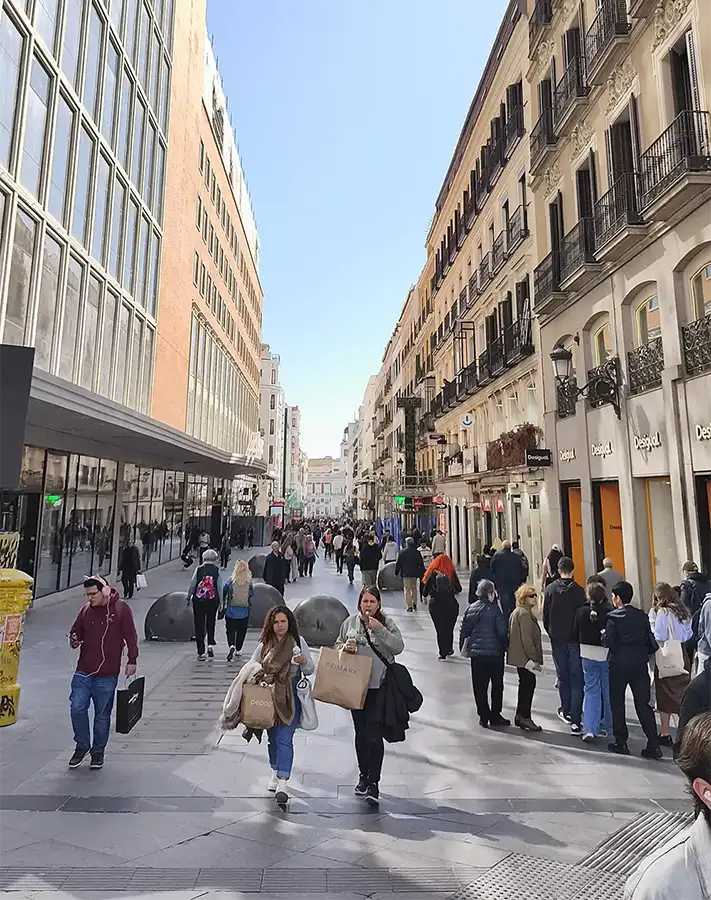
(2) Calle Preciados and (3) Casa Labra - The First Tapa is Sacred
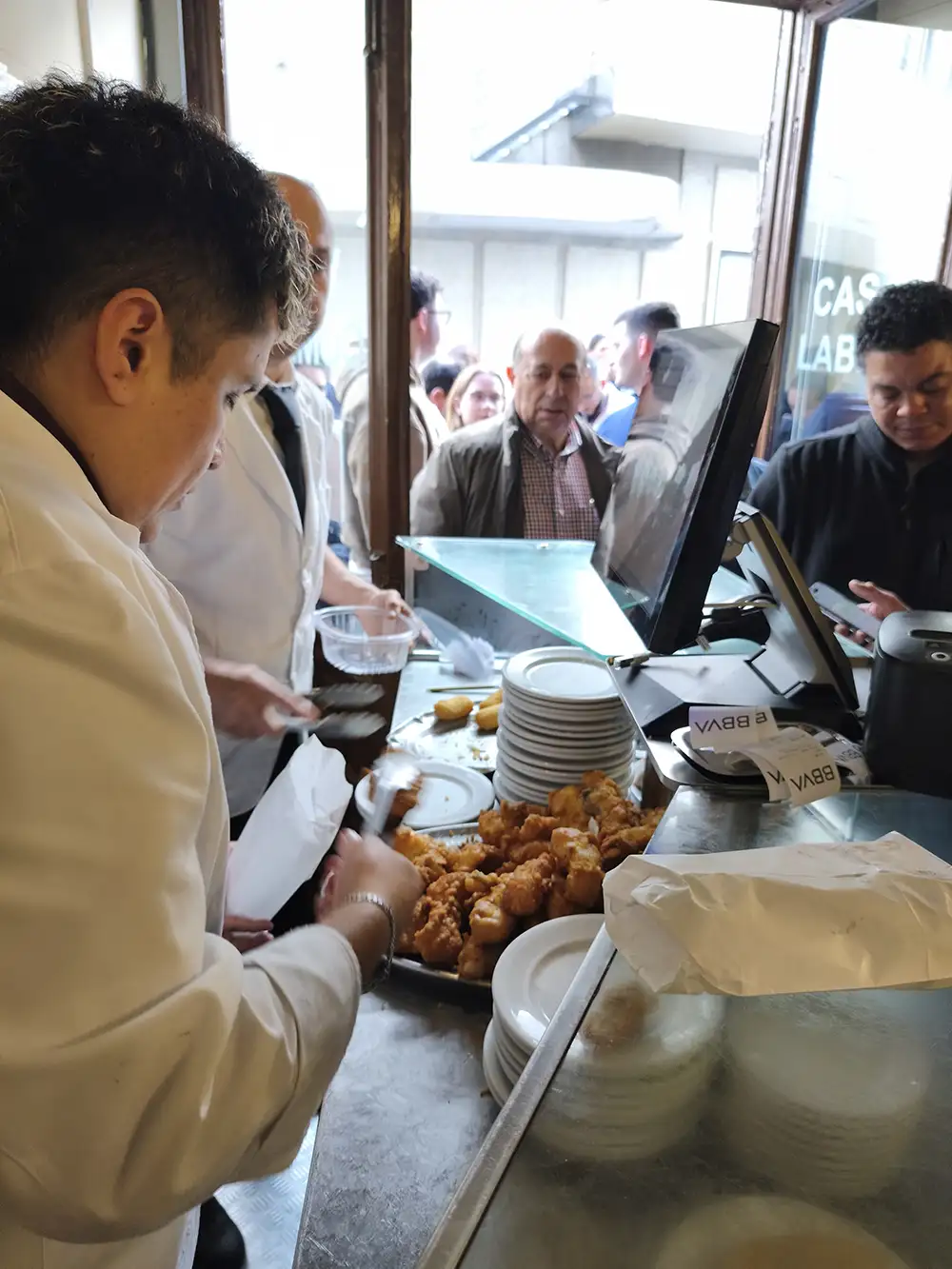
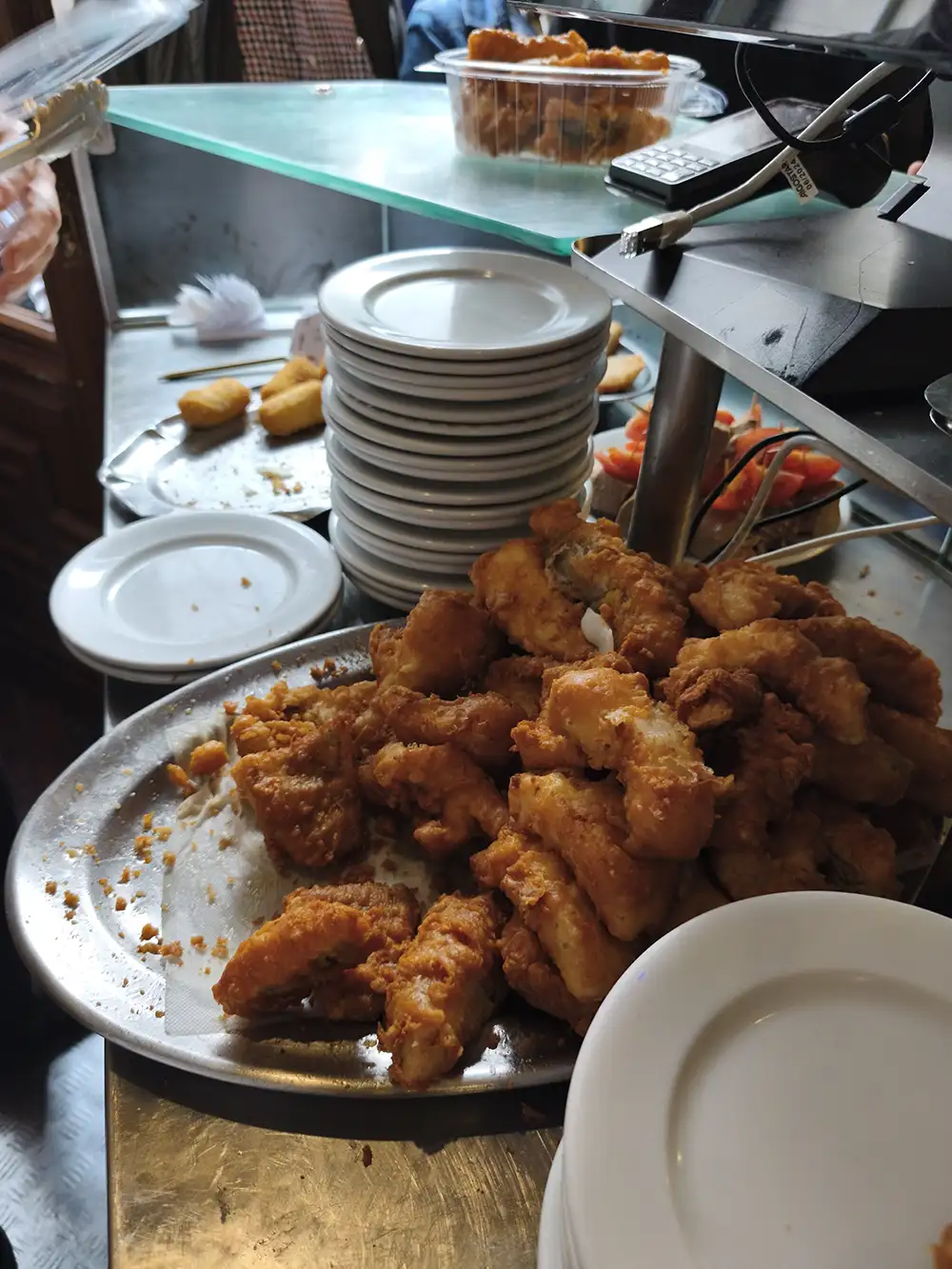
Walk down Calle Preciados, one of the busiest pedestrian streets in Spain, towards Puerta del Sol. Before you reach the square, do yourself a favour and stop at Casa Labra, founded in 1860. This is not just any tourist spot, it is a legendary tavern frequented by locals for over a century. The order is mandatory: a soldadito de bacalao (fried cod) or a cod croquette (ideally one of each) eaten at the counter as tradition dictates. Simple, historic and delicious.
Just try to get there early. The closer it gets to lunchtime, the longer the queue will be.
Distance to the next stop: ~140 metres | ~2 minutes on foot
(4) Puerta del Sol and (5) Spain's Kilometre Zero
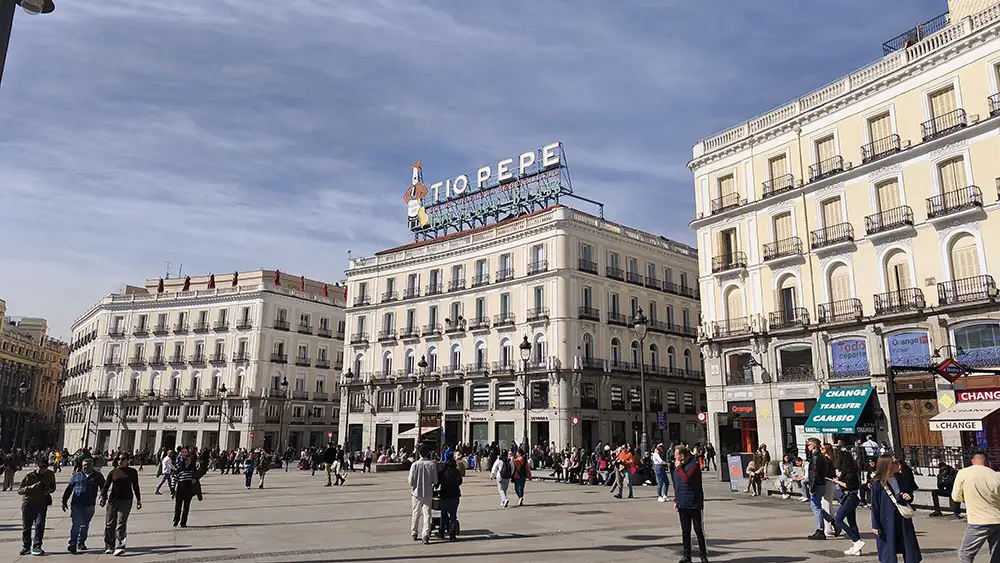
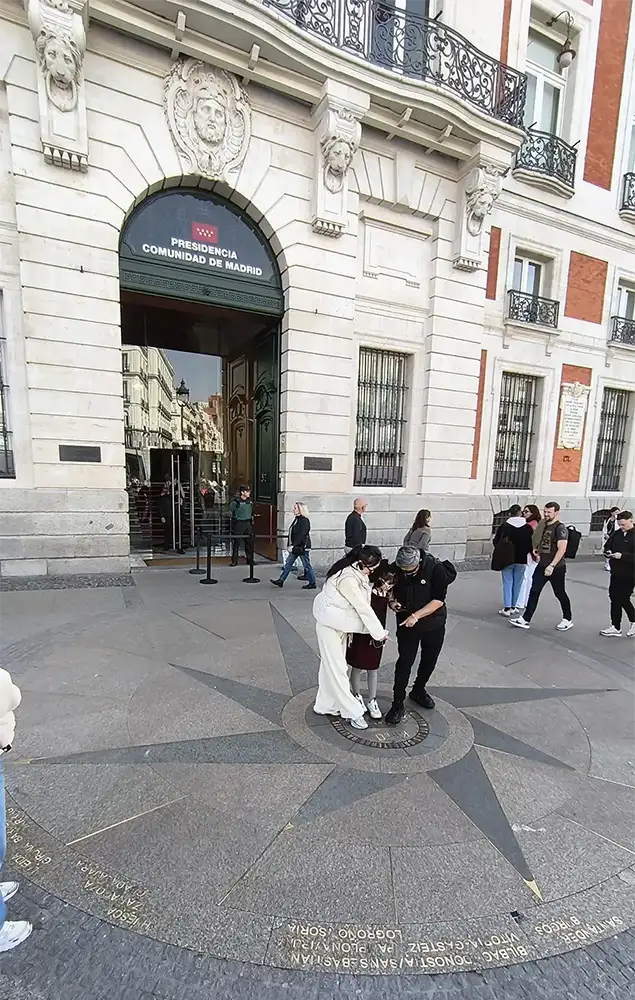
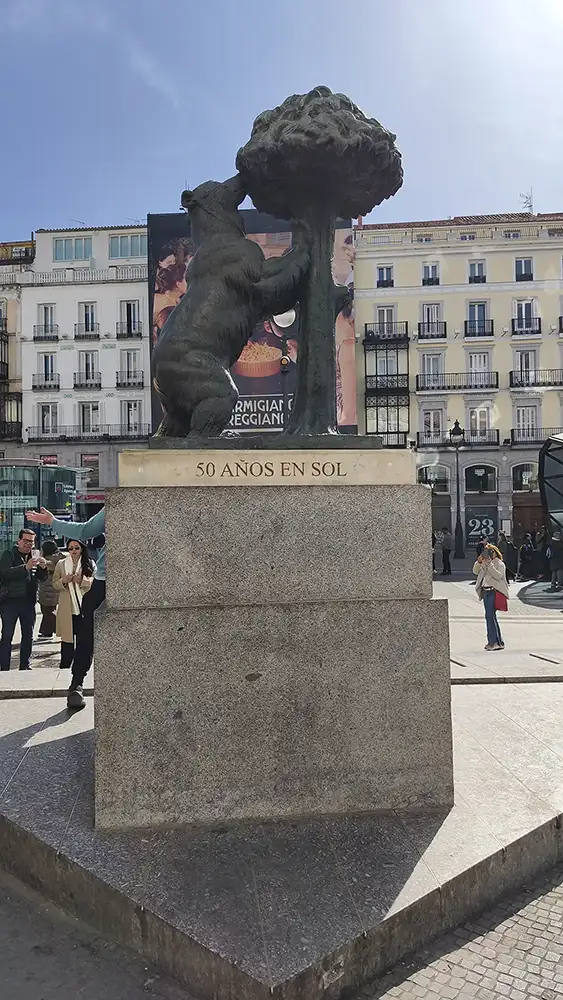
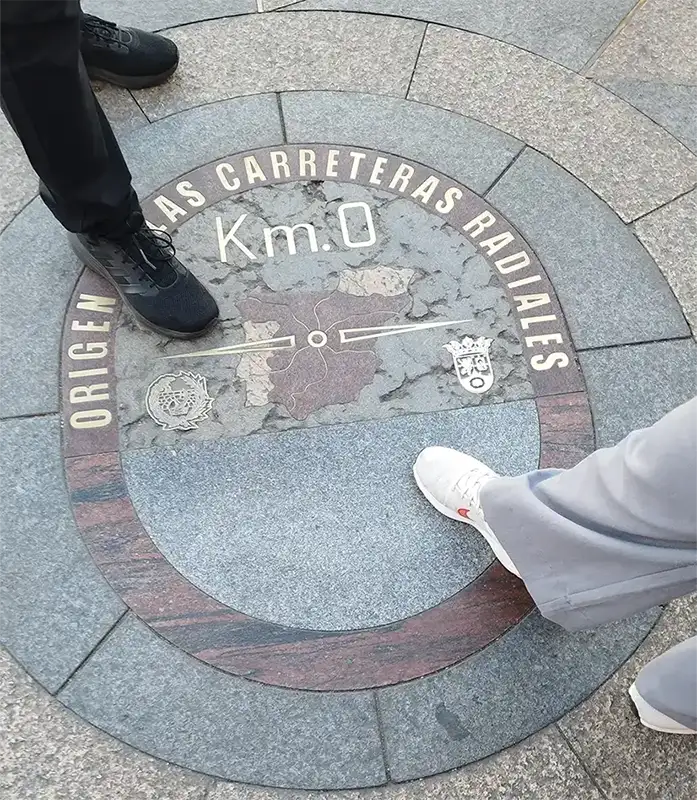
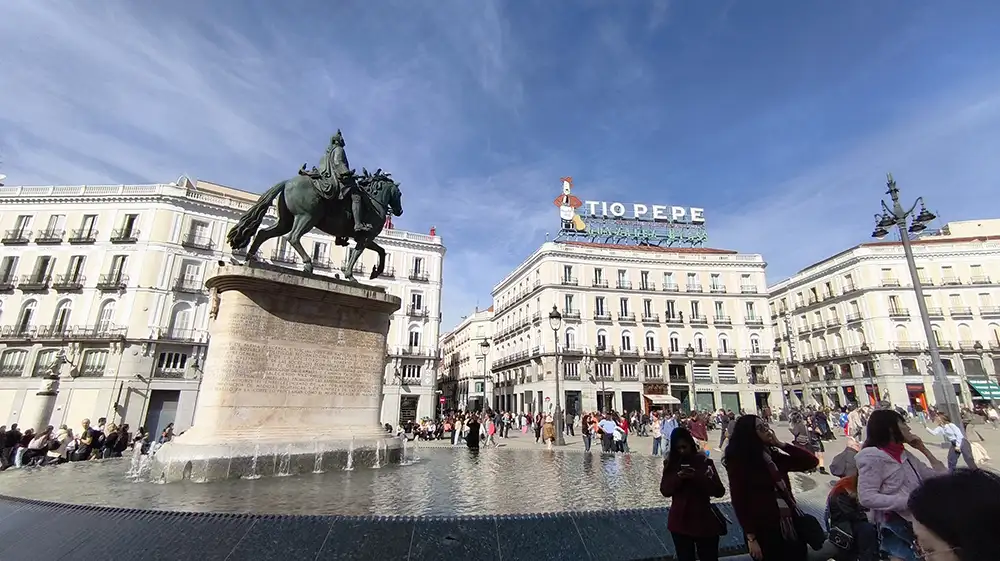
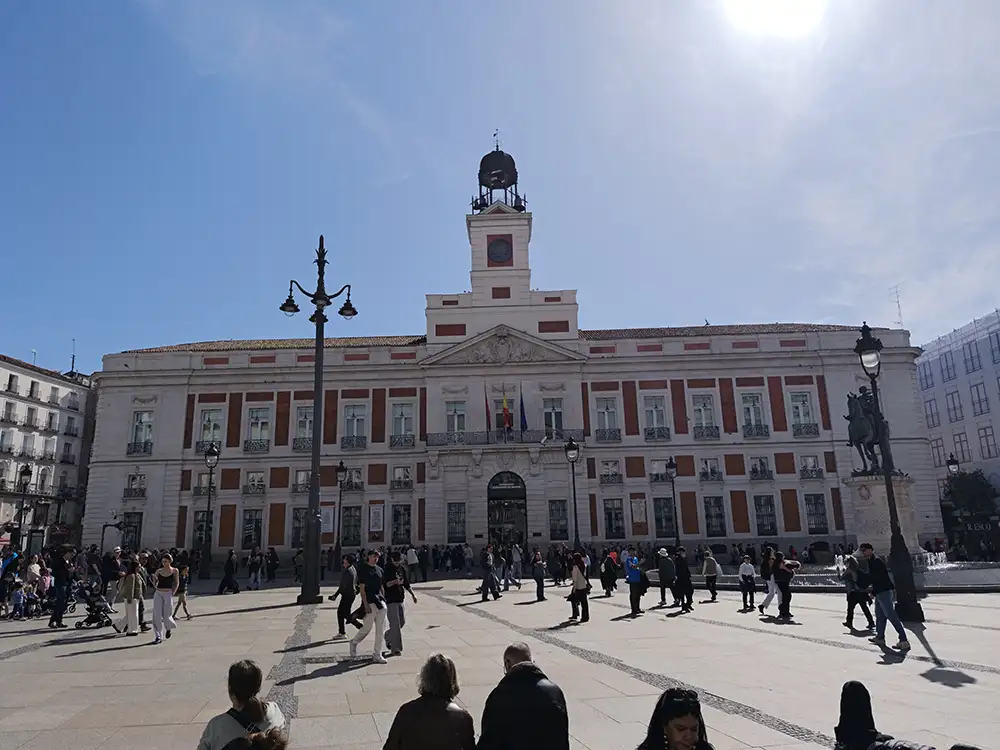
Turn the corner and you are already in the heart of the country. Puerta del Sol is the point from which all roads in Spain are measured. It is there that you will find the point zero that marks the distances between Madrid and the main Spanish cities. Look for the famous statue of the Bear and the Madroño Tree (the symbol of the city) and take a look at the clock on the Real Casa de Correos. This is the same clock that broadcasts the twelve chimes on New Year's Eve to the entire country.
Distance to the next stop: ~400 metres | ~6 minutes on foot
(6) Plaza Mayor - Architecture and History
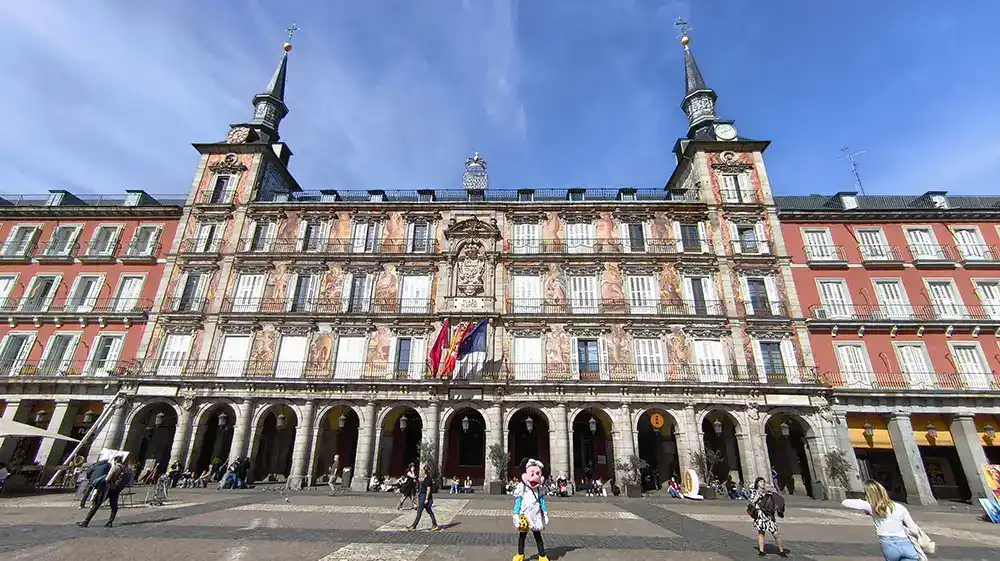
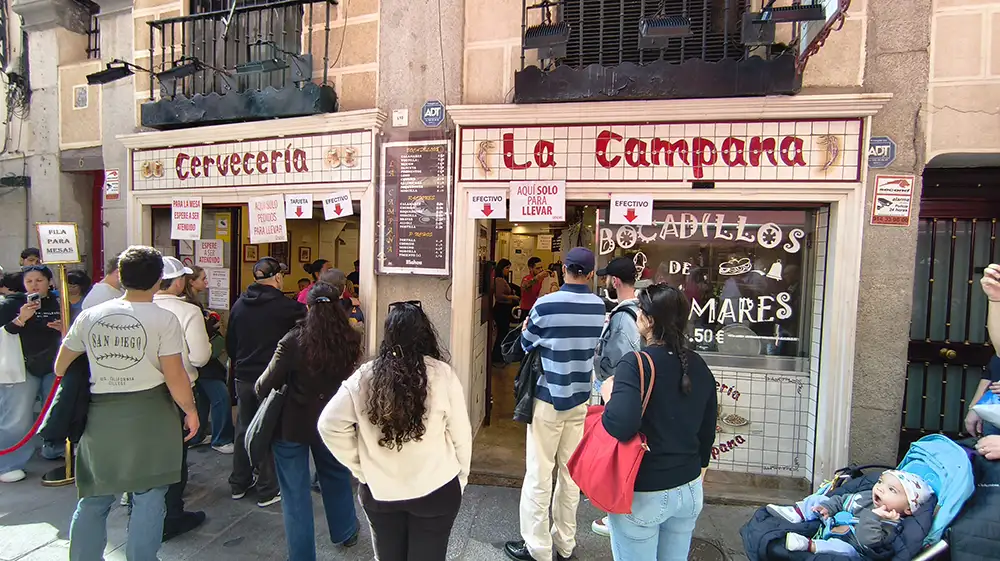
Follow Calle Mayor or Calle de Postas to reach the majestic Plaza Mayor. Stroll under the arches and admire the paintings on the Casa de la Panaderia. In many places, you will find recommendations to try a "bocadillo de calamares" (a squid sandwich) in one of the taverns in the side streets, as it is one of the most traditional dishes in Madrid and it is quite cheap. The most famous one there is from La Campana.
Now, I will give you my personal opinion. I love fried squid, but fried squid inside dry bread does not really appeal to me. However, everyone has their own view, so it might be worth a try. Alternatively, save some space for other tapas, such as the stuffed mushrooms nearby at Meson del Champinon, or wait for something that catches your eye at the next stop.
Distance to the next stop: ~100 metres | ~1 minute on foot

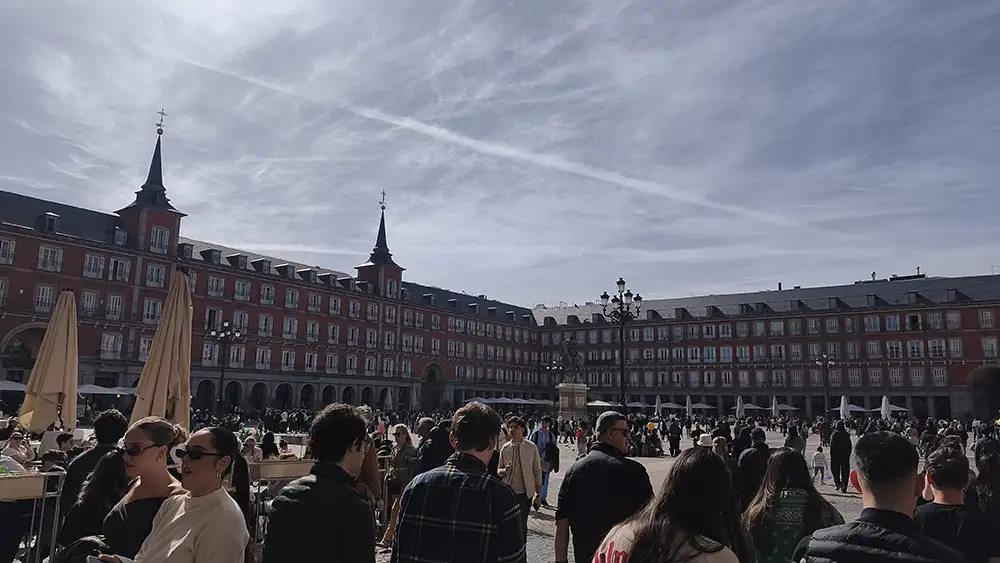
(7) Mercado de San Miguel - Art, Iron and Tapas
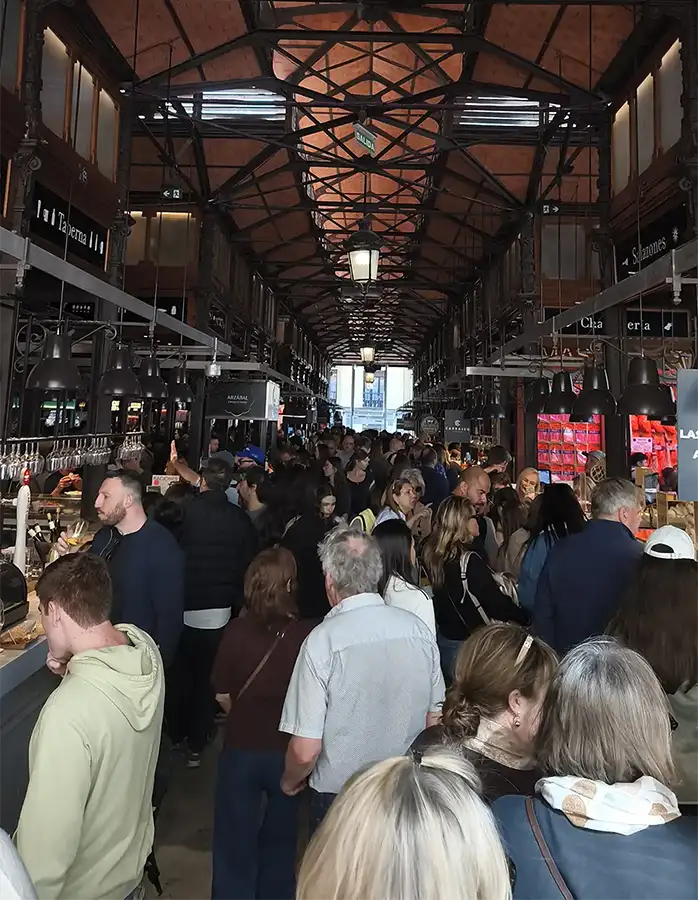
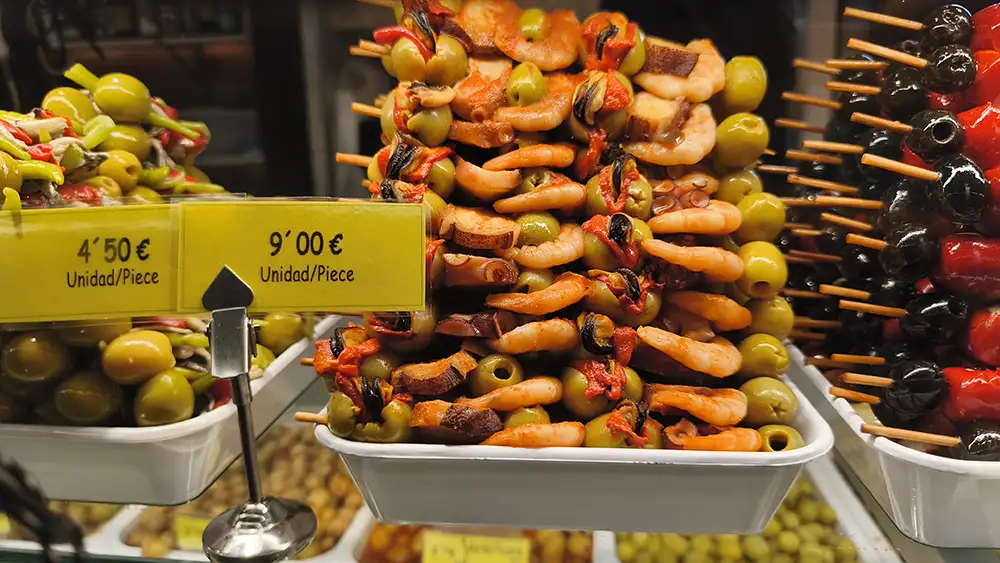
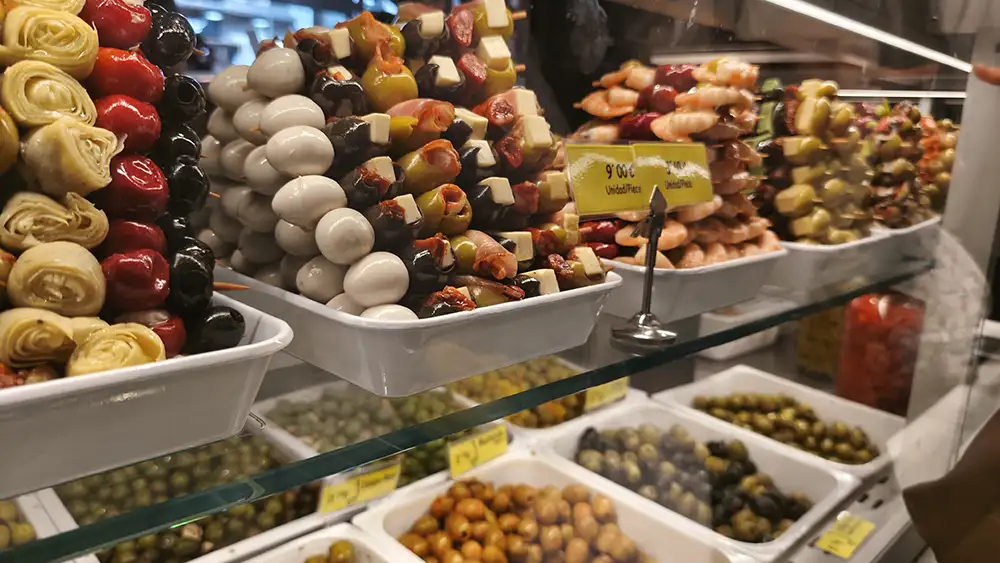
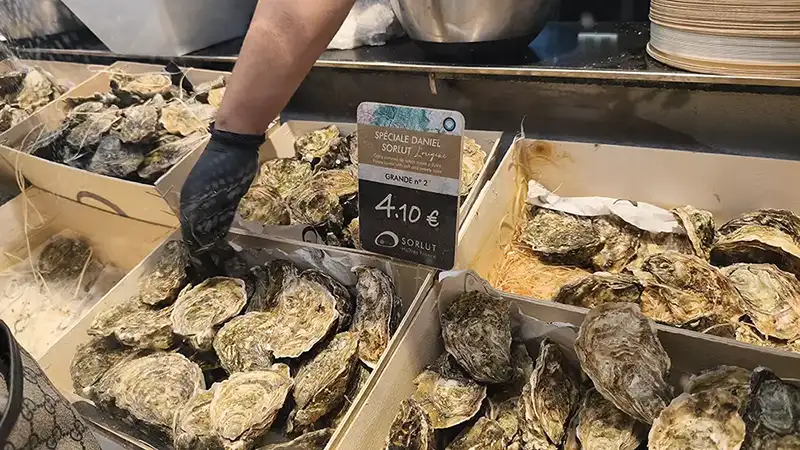
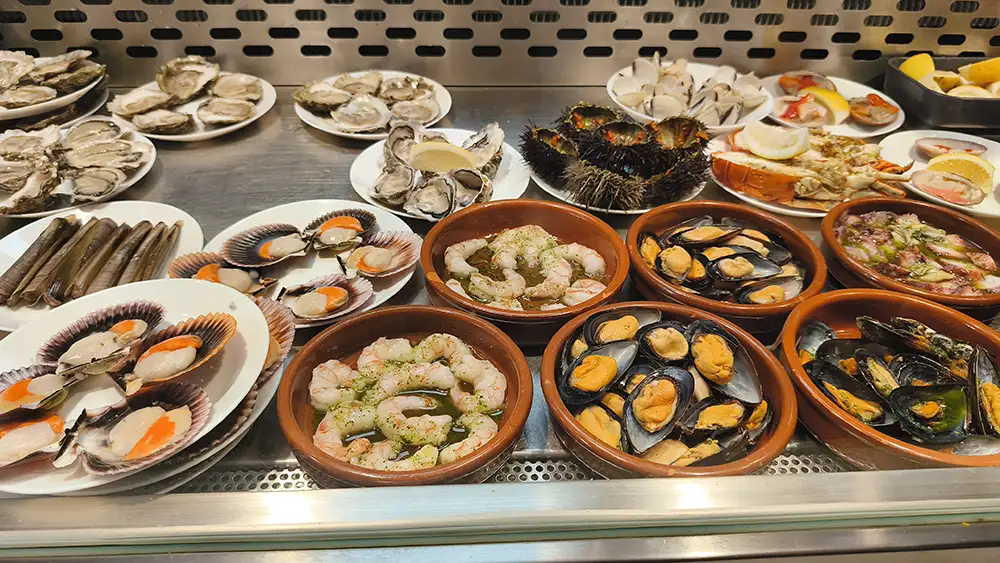
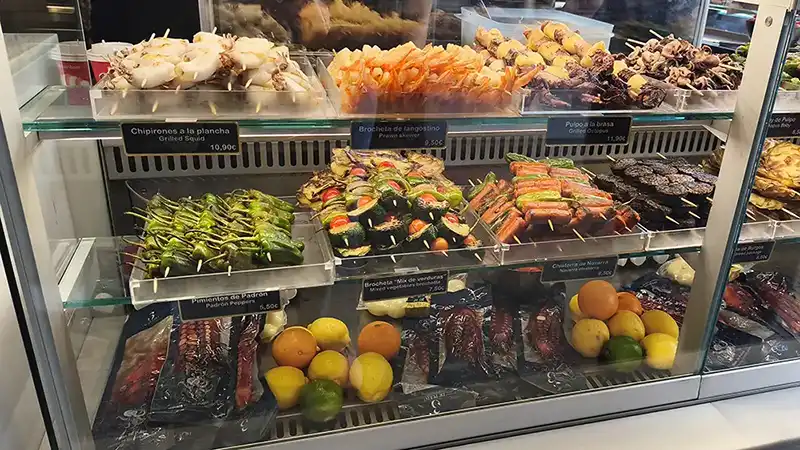
Just outside Plaza Mayor lies the Mercado de San Miguel, a jewel of early 20th-century iron architecture. Even if you do not have lunch there because the prices are quite touristy, it is worth going in just to see the beauty of the space and the incredible variety of tapas on display. It is essentially a food museum.
Distance to the next stop: ~180 metres via Calle Mayor | ~2 minutes on foot
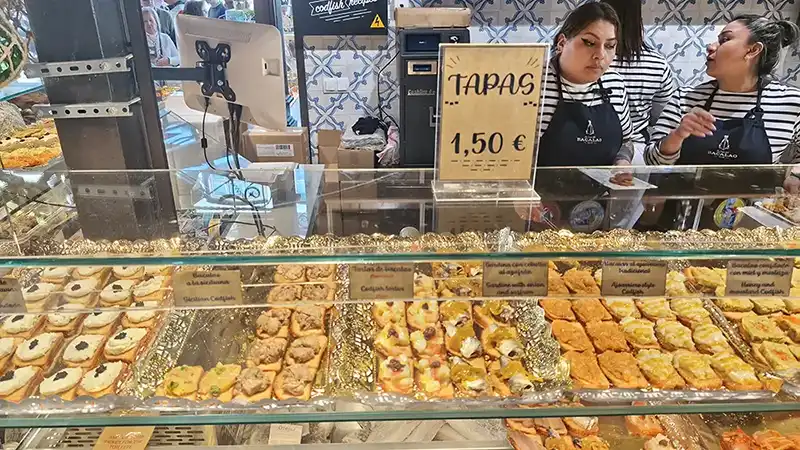
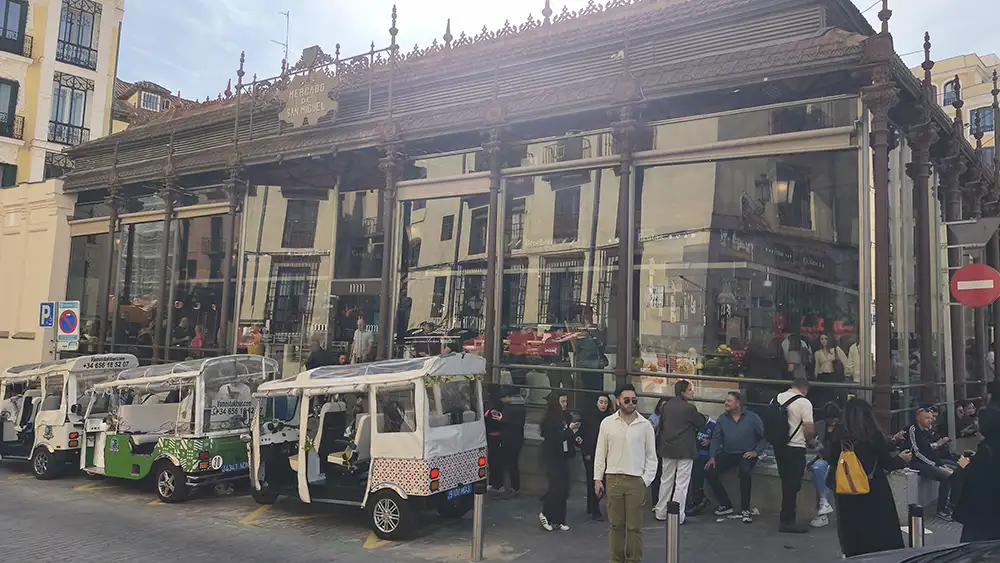
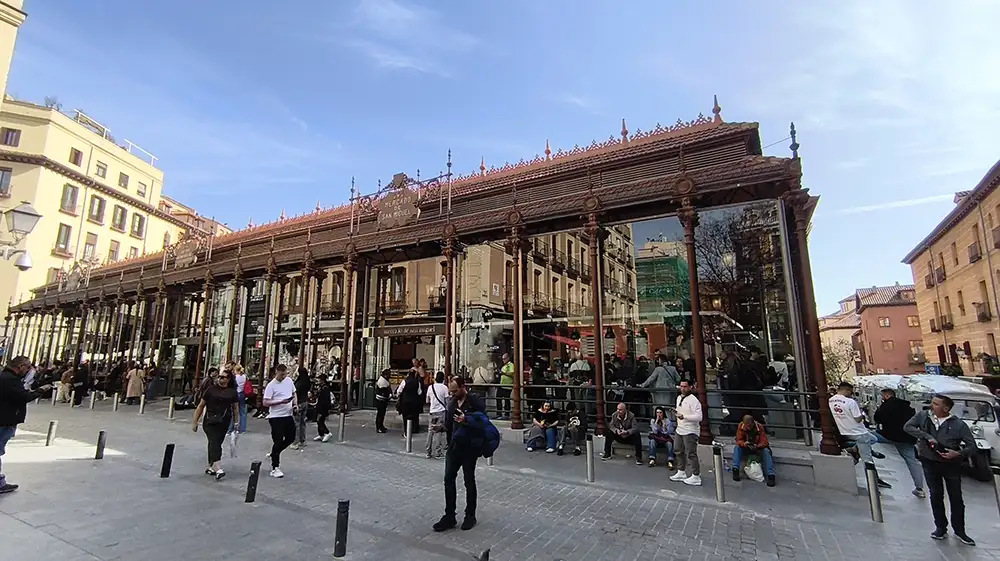

(8) Plaza de la Villa - The Medieval Madrid That Time Forgot
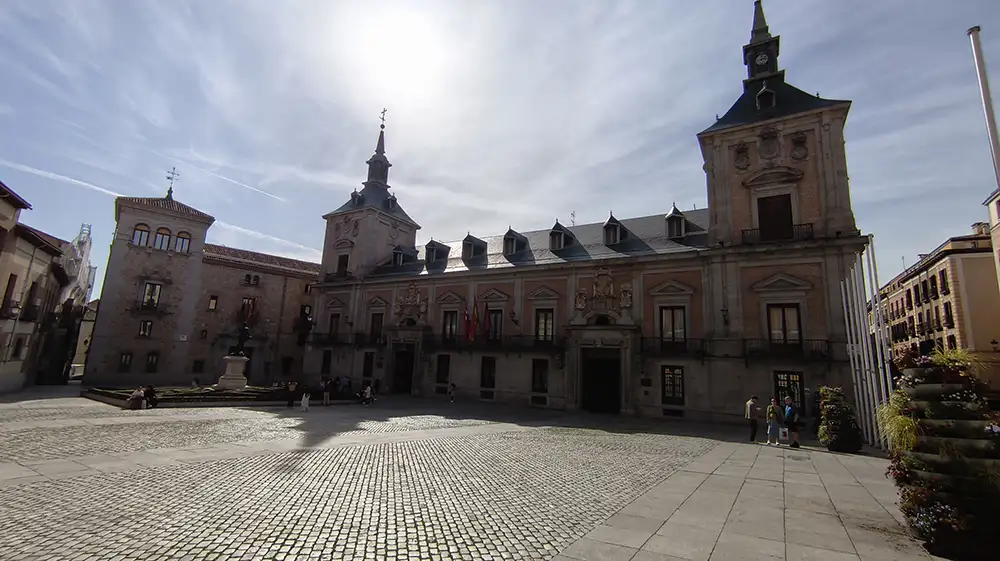
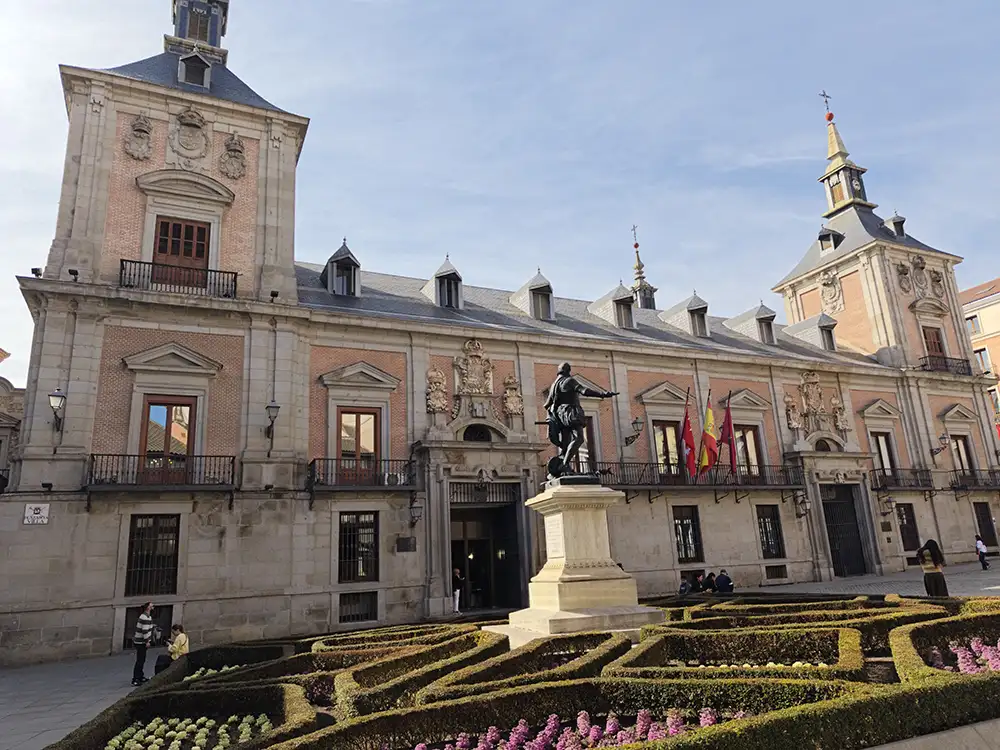
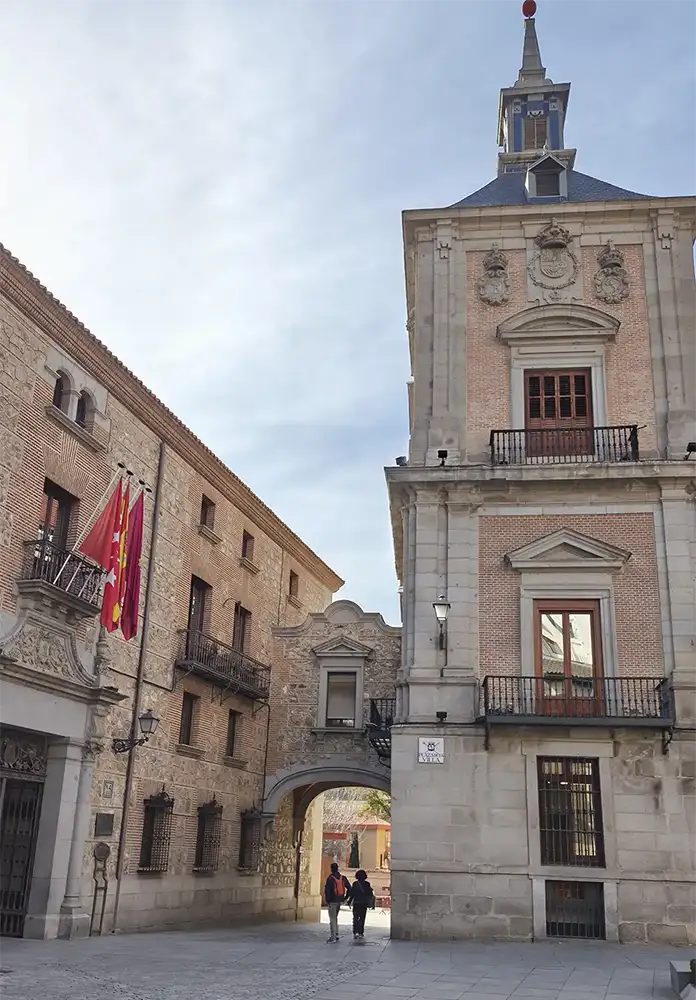
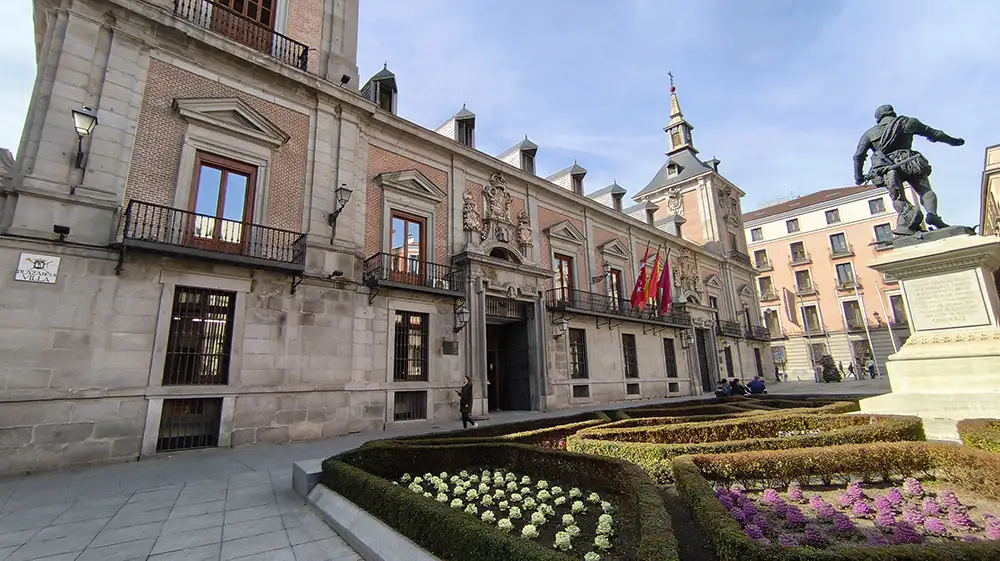
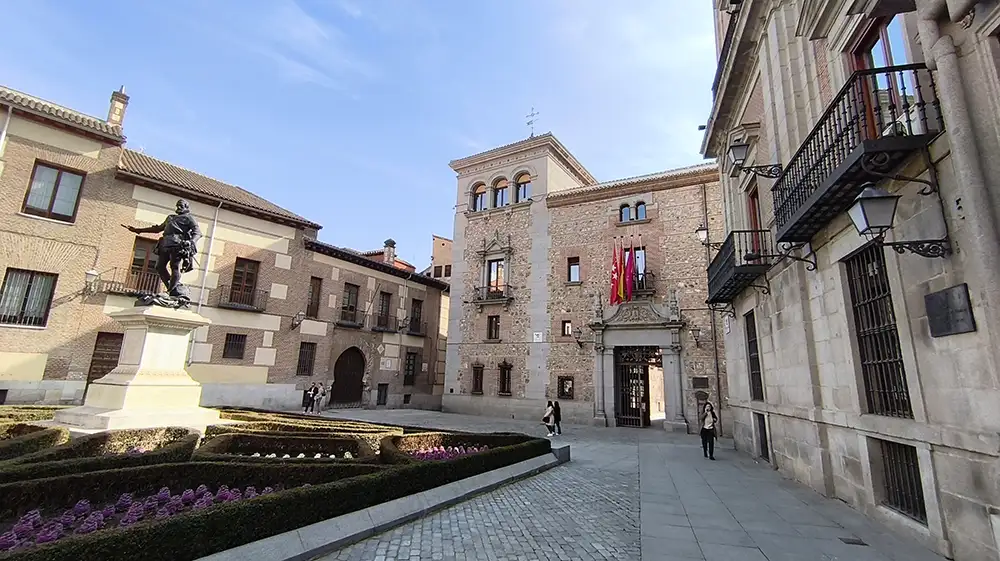
Just a few steps from the market, Plaza de la Villa is one of those spots often overlooked when talking about the city's landmarks. Here, time seems to have stood still in the 15th century. The old Madrid city hall, the medieval buildings and the silence offer a sharp contrast to the bustle of the nearby streets. It is a discreet refuge that most tourists walk straight past without stopping. Do not make that mistake.
Distance to the next stop: ~150 metres | ~2 minutes on foot
(9) El Vecino Curioso - The Statue and the Superstition No One Tells You About
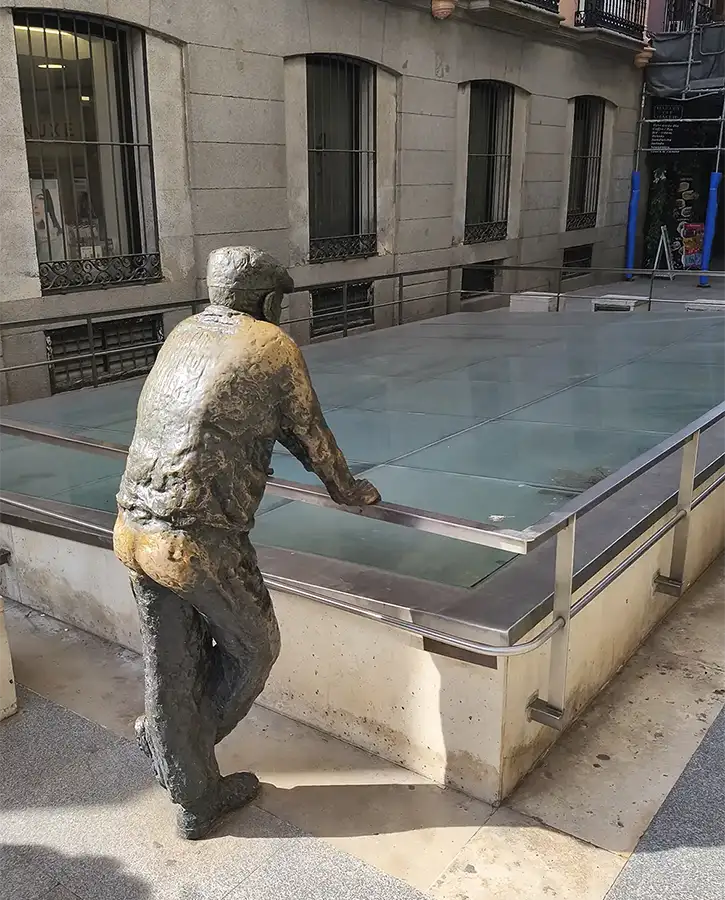
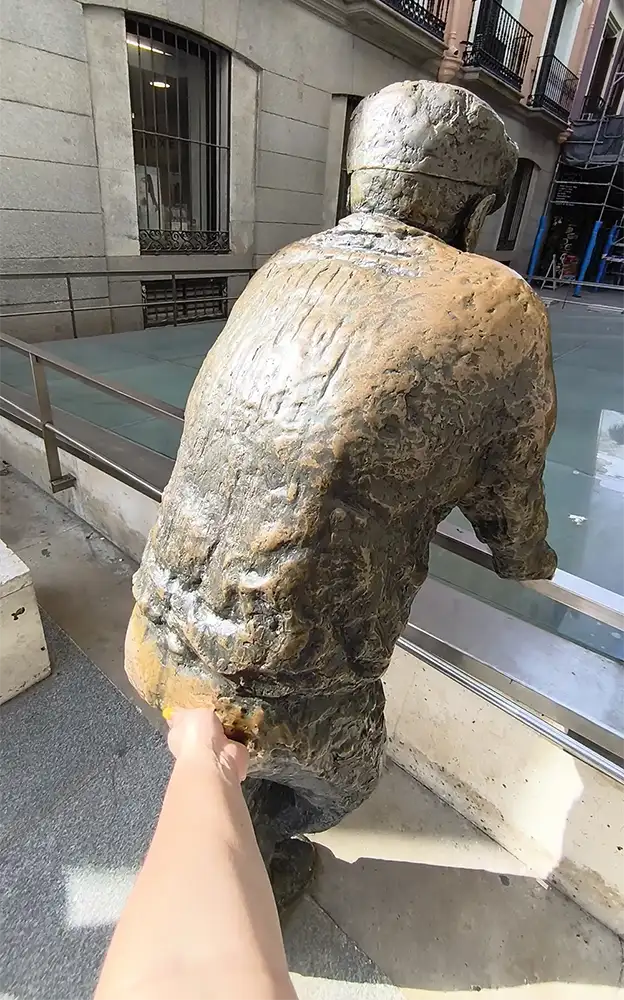
Almost at the corner of Calle Mayor and Calle de la Almudena, you will find one of the most amusing stops on the route: a bronze statue of a man leaning over, looking down. He is watching the ruins of the old Santa Maria de la Almudena Church, the oldest in Madrid, which were discovered during excavations. The spot where the bronze statue shines the brightest says it all. According to legend, anyone who strokes the statue's bottom is guaranteed to return to Madrid. I never miss a chance and I make all my relatives and friends give it a little rub so they visit me more often. Consider yourselves warned!
Distance to the next stop: ~200 metres | ~3 minutes on foot
(10) Almudena Cathedral - The Church That Took 110 Years to Finish
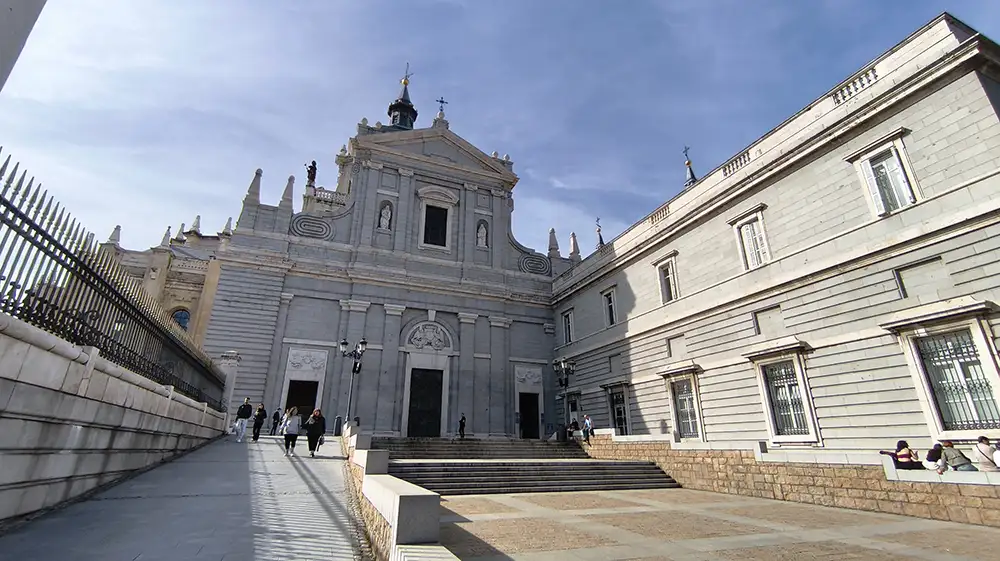
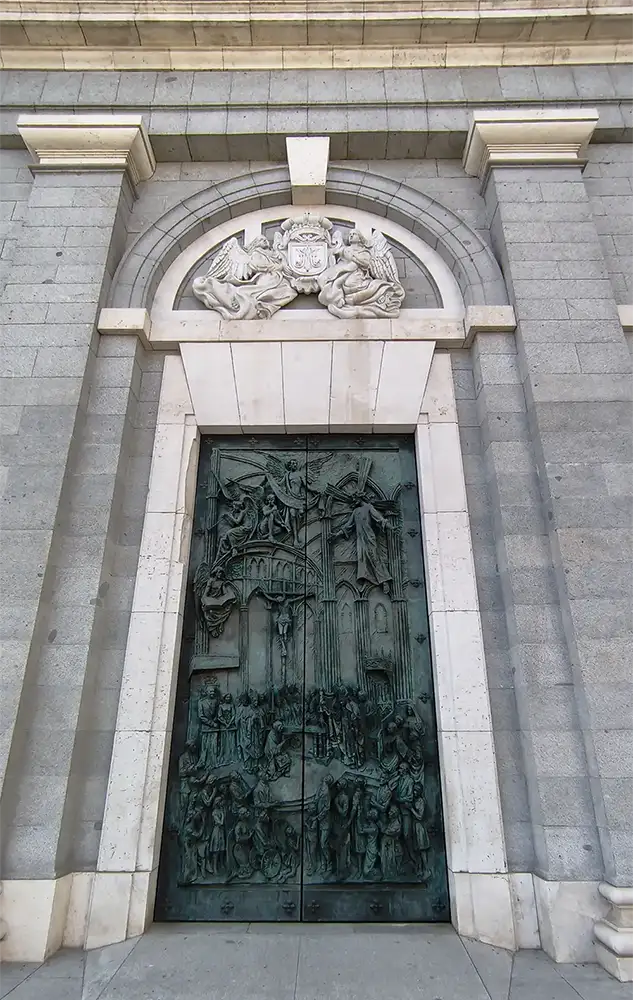
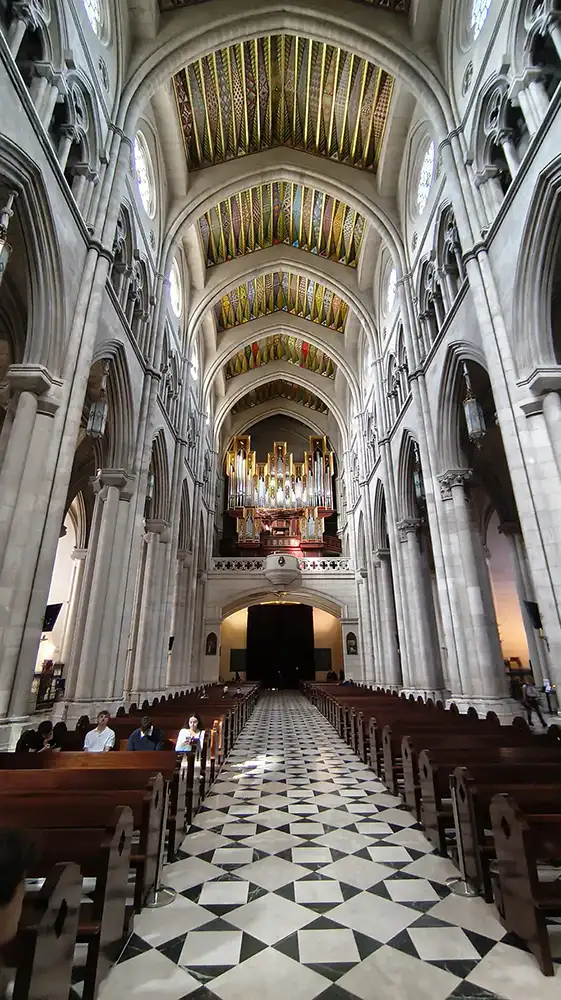
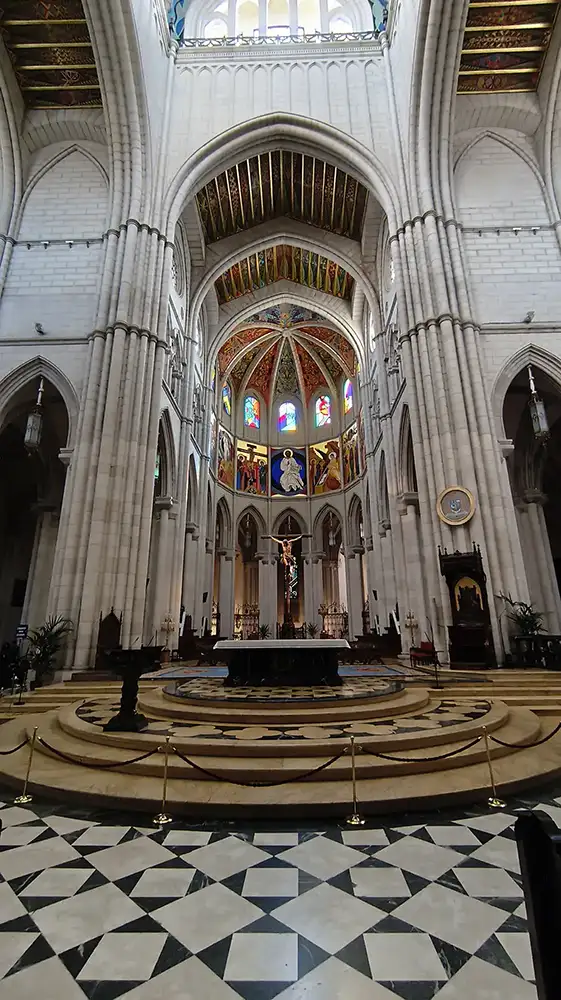
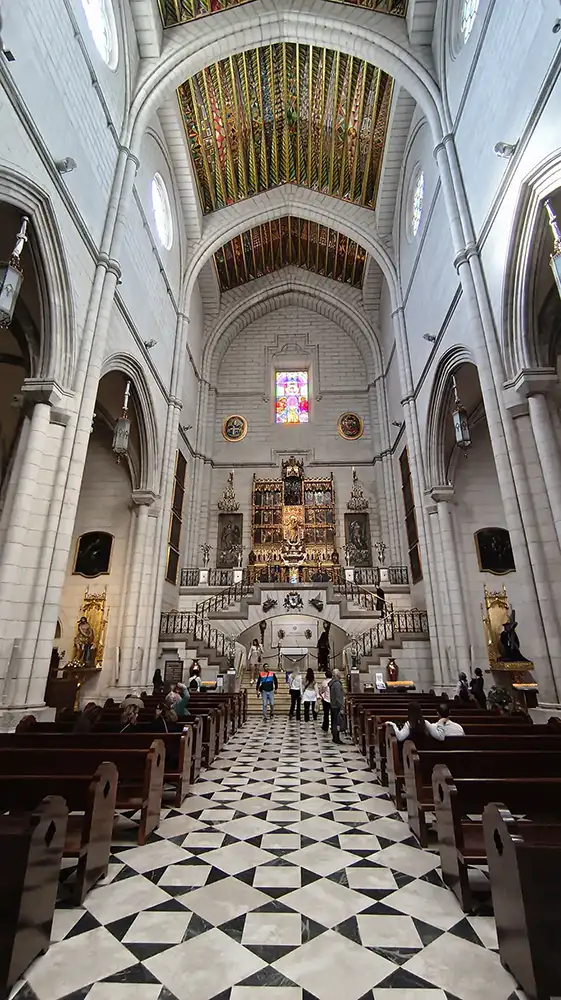
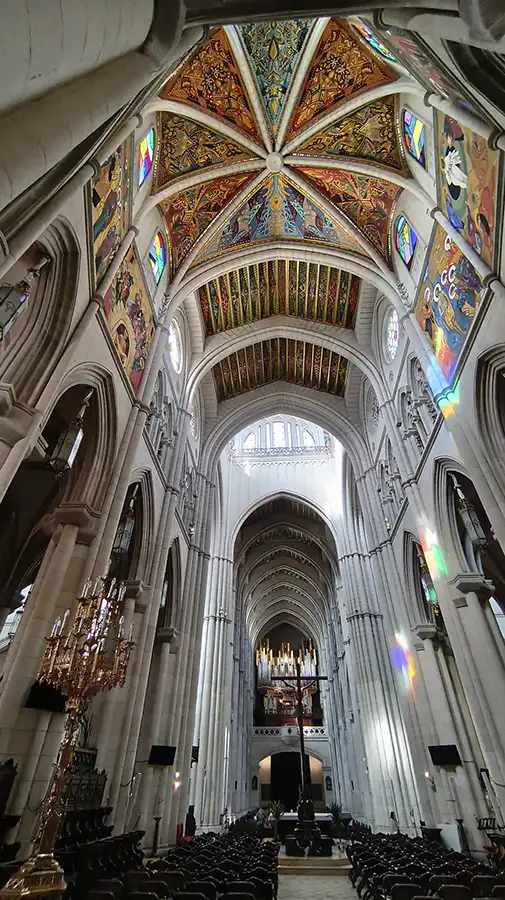
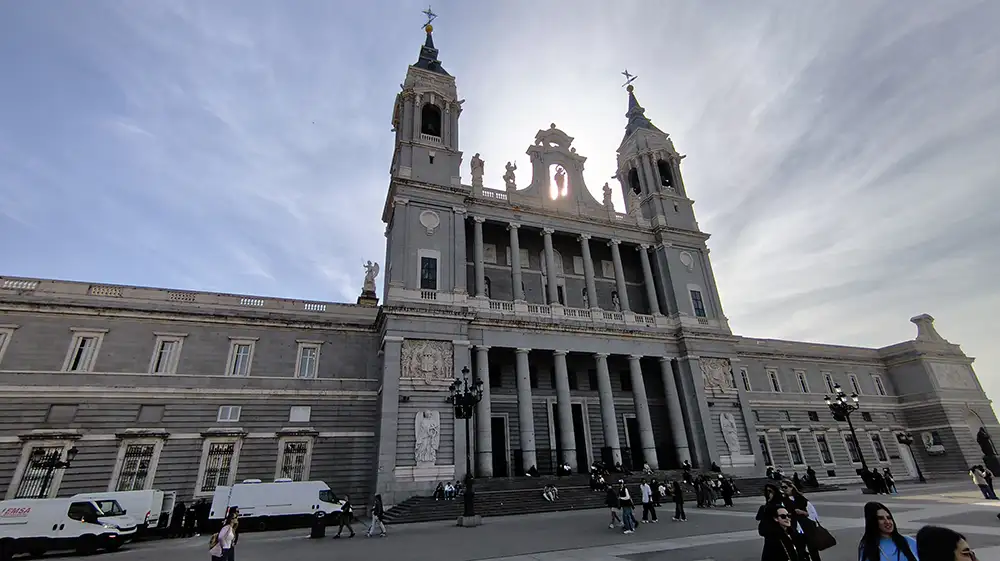
The Almudena Cathedral has a curious history. Work began in 1883 and only finished in 1993, representing one hundred and ten years of construction. From the outside, the Neo-Gothic facade is austere and imposing. Inside, the interior was completed in the 20th century with colourful vaults in shades of blue, pink and yellow that you would not expect to find in a cathedral like this. Some people find it strange, but I think it is brilliant. Entry is free so it is well worth seeing.
Distance to the next stop: ~100 metres | ~1 minute on foot
(11) Royal Palace - The Palace That is Almost Too Big to Be True
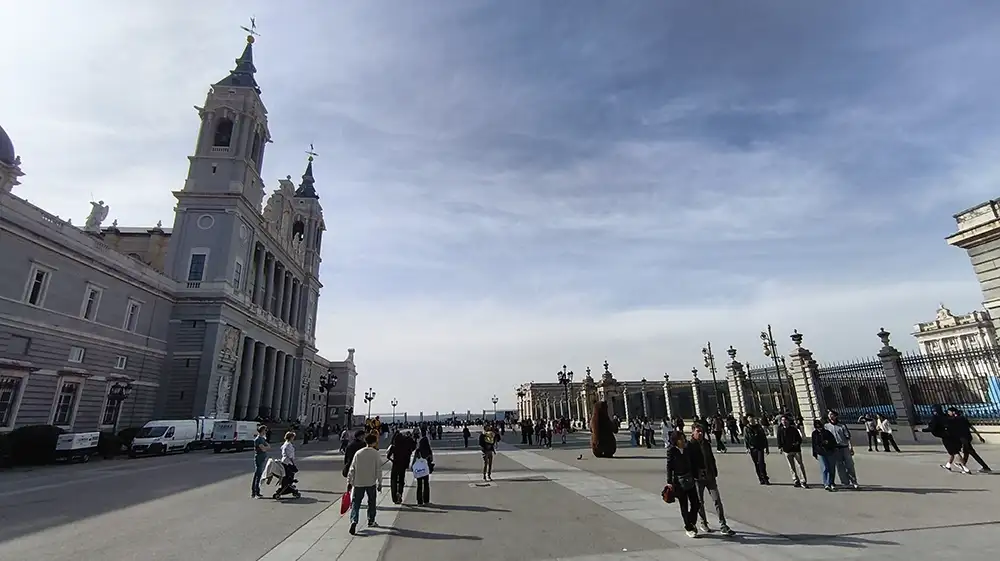
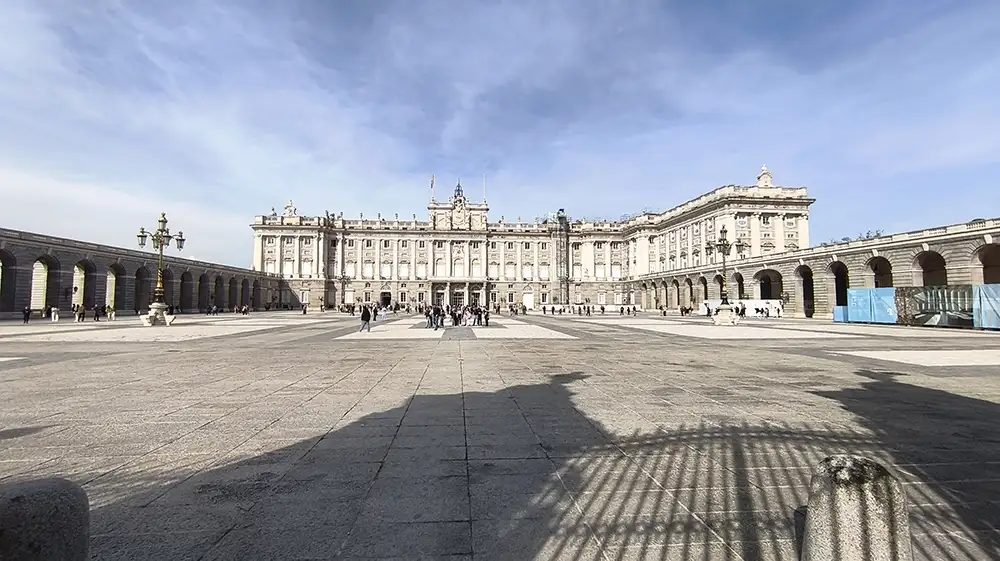
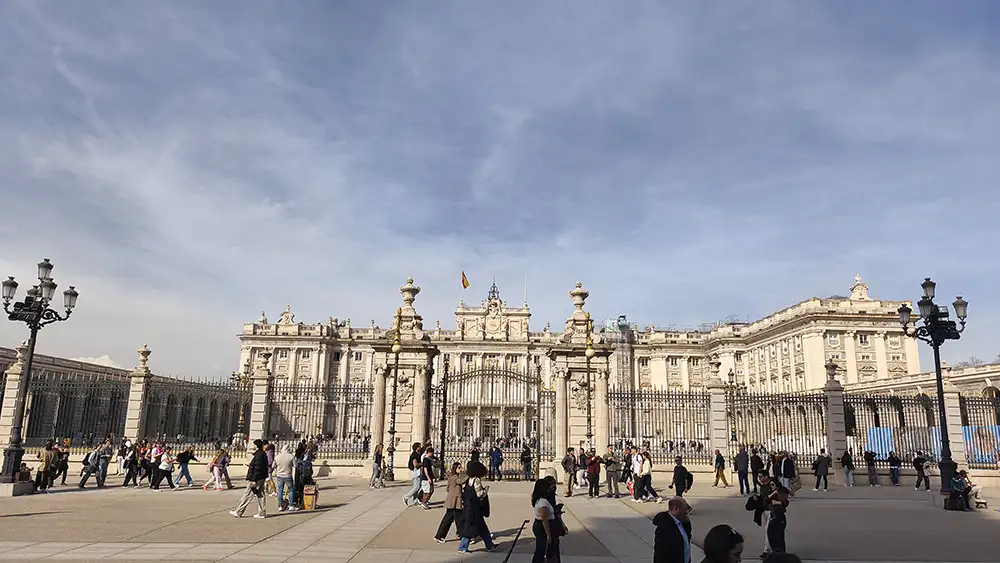
With 3,418 rooms, the Royal Palace of Madrid is the largest royal palace in Western Europe. It is larger than Buckingham Palace (and in my opinion, more beautiful) and larger than Versailles. The facade is so long and symmetrical that your first reaction is to stop in the middle of the esplanade and look from side to side, trying to fit it all into your field of vision.
Today it is used only for official ceremonies, but it is open to visitors. Even those who do not go inside will be impressed. The esplanade connecting the Palace to the Cathedral is one of the grandest spaces in Madrid and offers a beautiful view of Casa de Campo.
Distance to the next stop: ~200 metres | ~3 minutes on foot
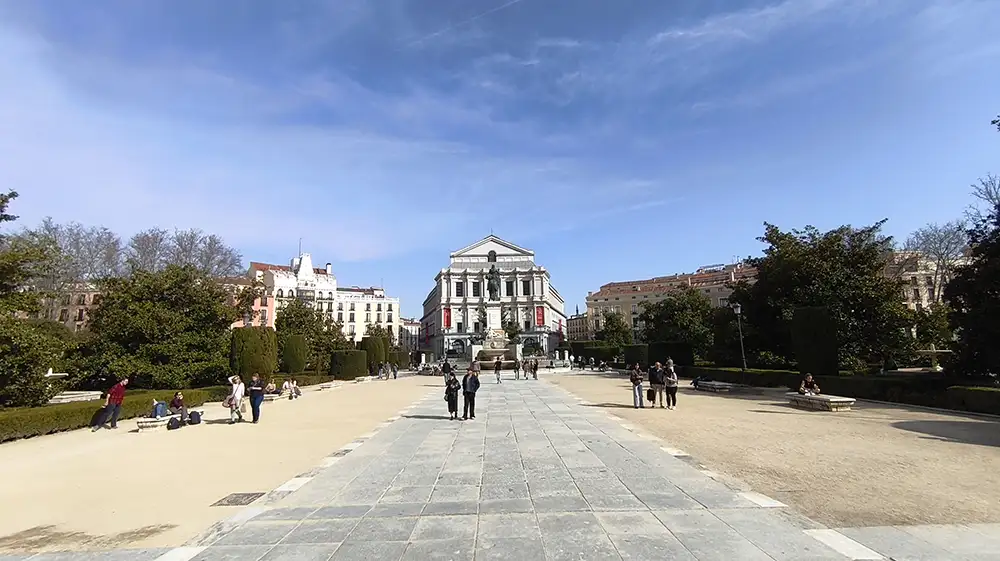
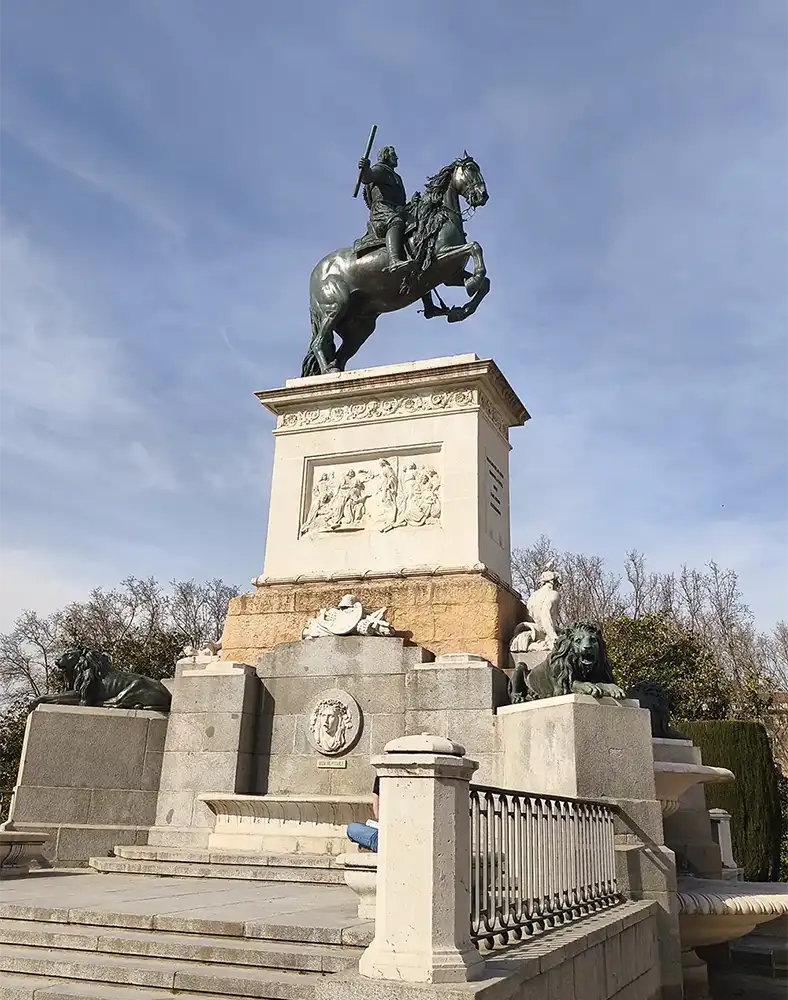
(12) Plaza de Oriente - The Most Elegant Square in Madrid
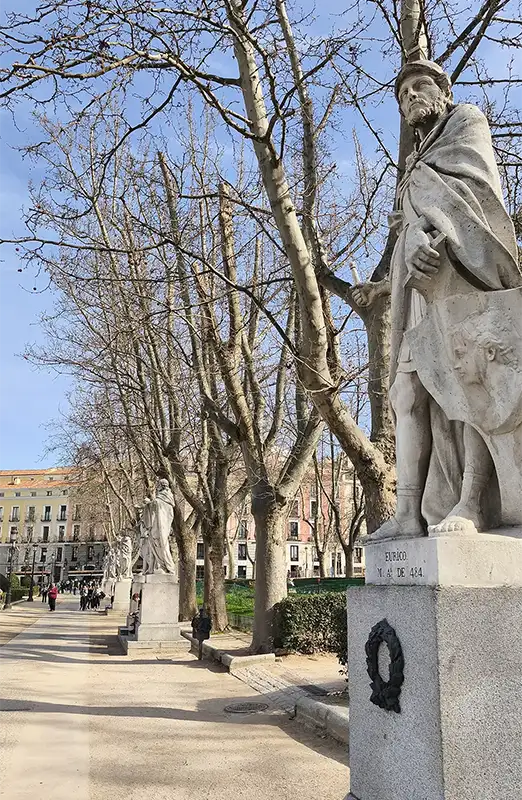
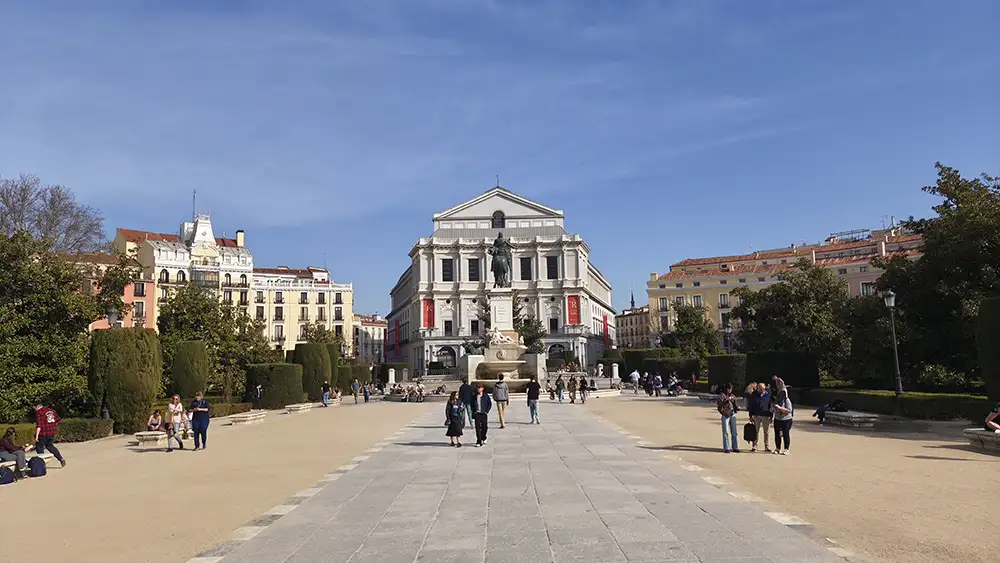
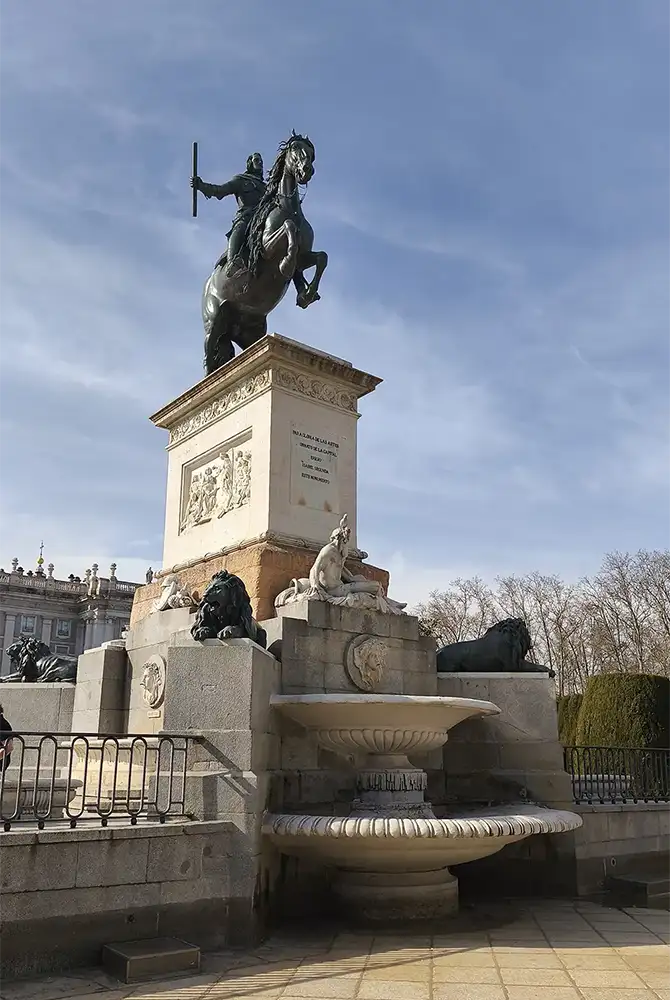
Saindo do Palácio Real, não vá direto embora, logo ao lado está a Plaza de Oriente. É uma daquelas praças que te faz parar no meio e só... respirar. Geométrica e rodeada de estátuas dos reis de Espanha, ela tem uma elegância quase intimidante para estar bem no centro de uma capital movimentada. No meio da praça fica a estátua equestre de Felipe IV, considerada uma proeza de engenharia da época por se equilibrar apenas nas patas traseiras do cavalo. Ao fundo, o Teatro Real fecha o enquadramento como se tivesse sido desenhado especificamente para aquela vista. E provavelmente foi. Tira uma foto, senta num banco por cinco minutos e aprecia. Esse é o tipo de lugar que as pessoas passam correndo sem perceber o que estão perdendo.
Distance to the next stop: ~200 metros | ~3 minutos a pé
13) Sabatini Gardens and the Rest Your Day Deserves
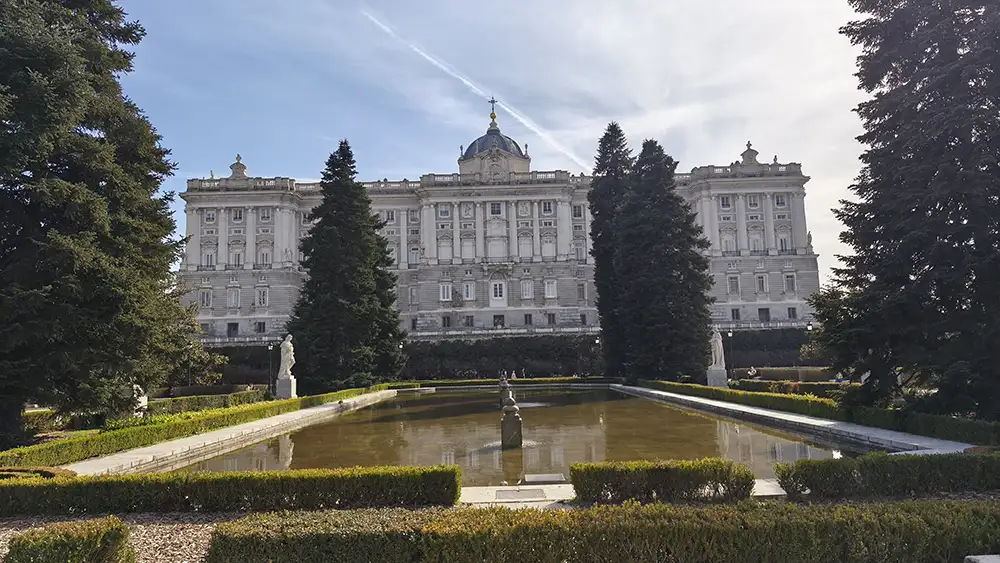
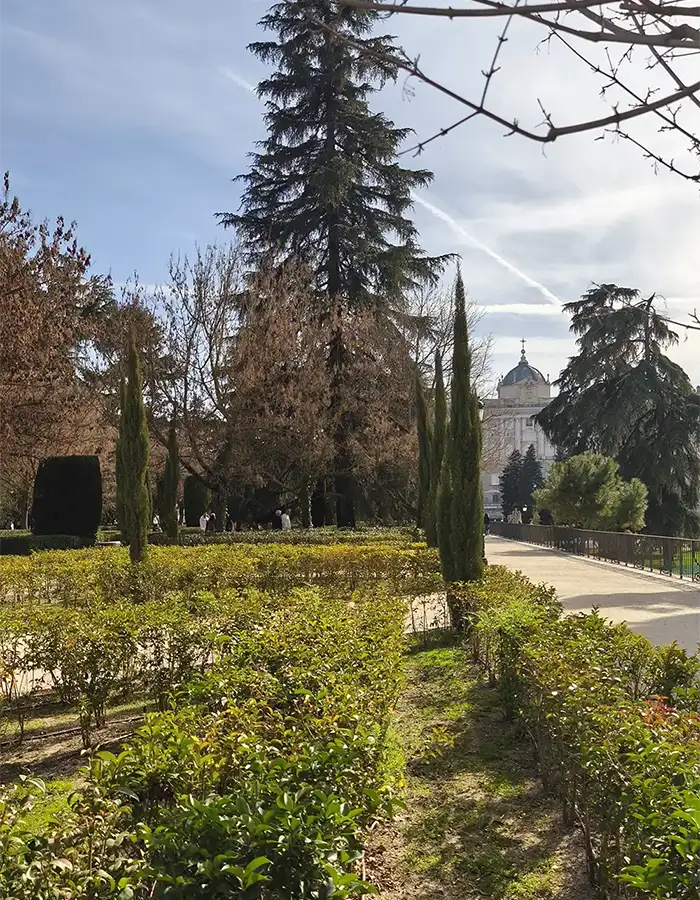
Walk down the north side of the Palace to find the Sabatini Gardens. These recently renovated geometric gardens frame the facade of the Royal Palace, providing one of the most beautiful and least photographed views in Madrid. Entry is free, the area is stunning, and it is the perfect spot to recharge before the final stretch of the day.
Distance to the next stop: ~400 metres via Calle de Bailen | ~5 minutes on foot
(14) Plaza de Espana and the (15) Riu Azotea for a View of Madrid at Your Feet
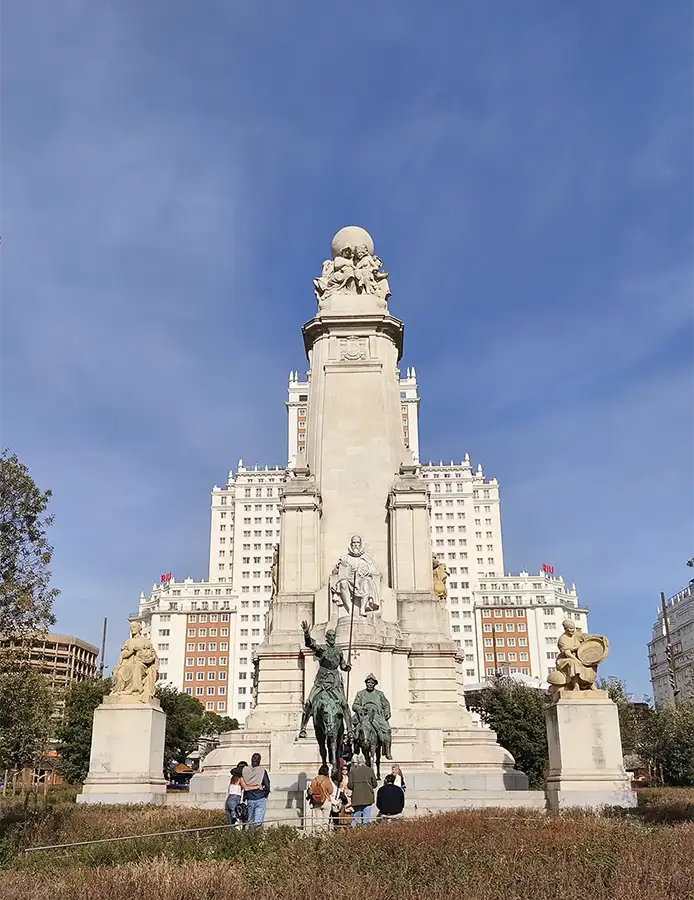
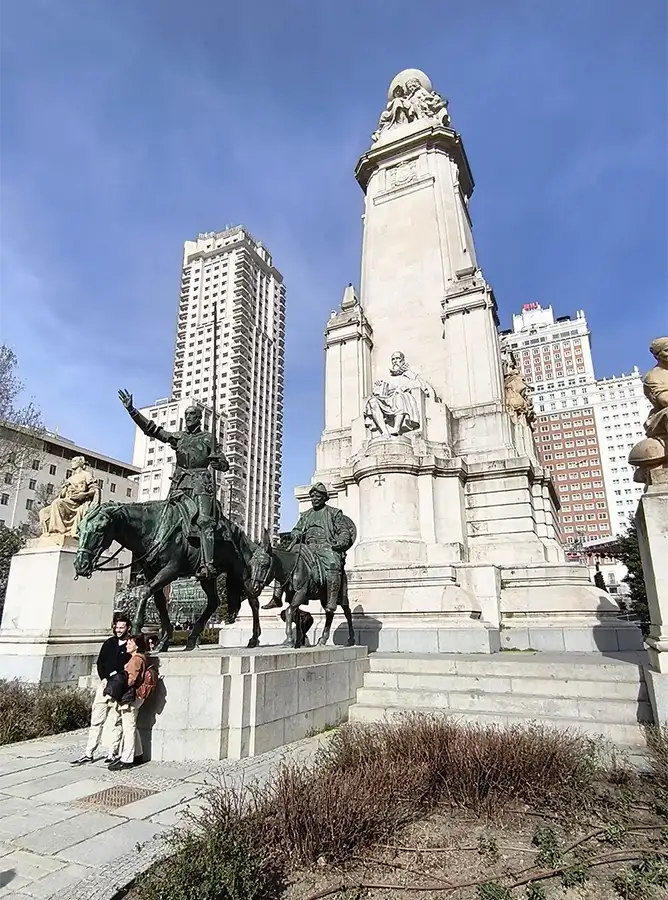
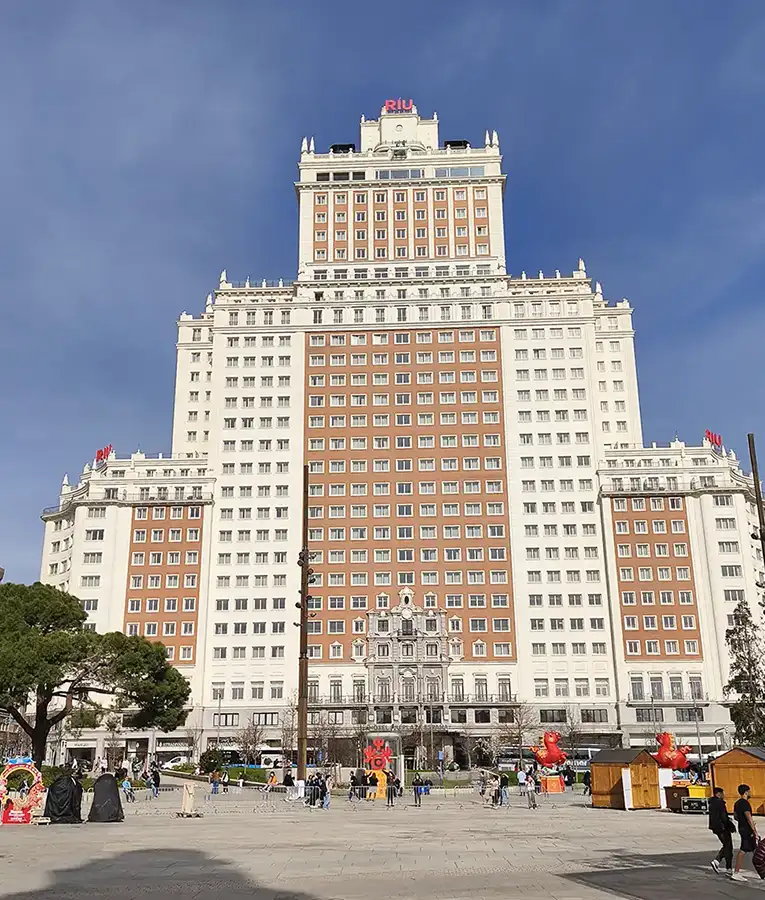
Plaza de Espana is one of the largest open spaces in the city centre. In the middle of the square stands the Cervantes monument, where the author watches over his most famous bronze creations, Don Quixote and Sancho Panza. If you still have time before sunset, you can head to the Hotel Riu Plaza Espana. The 360-degree terrace features a glass walkway where you literally walk over the void with the entire city beneath your feet.
Distance to the next stop: ~500 metres | ~7 minutes on foot
(16) Temple of Debod for the Best Sunset in Madrid
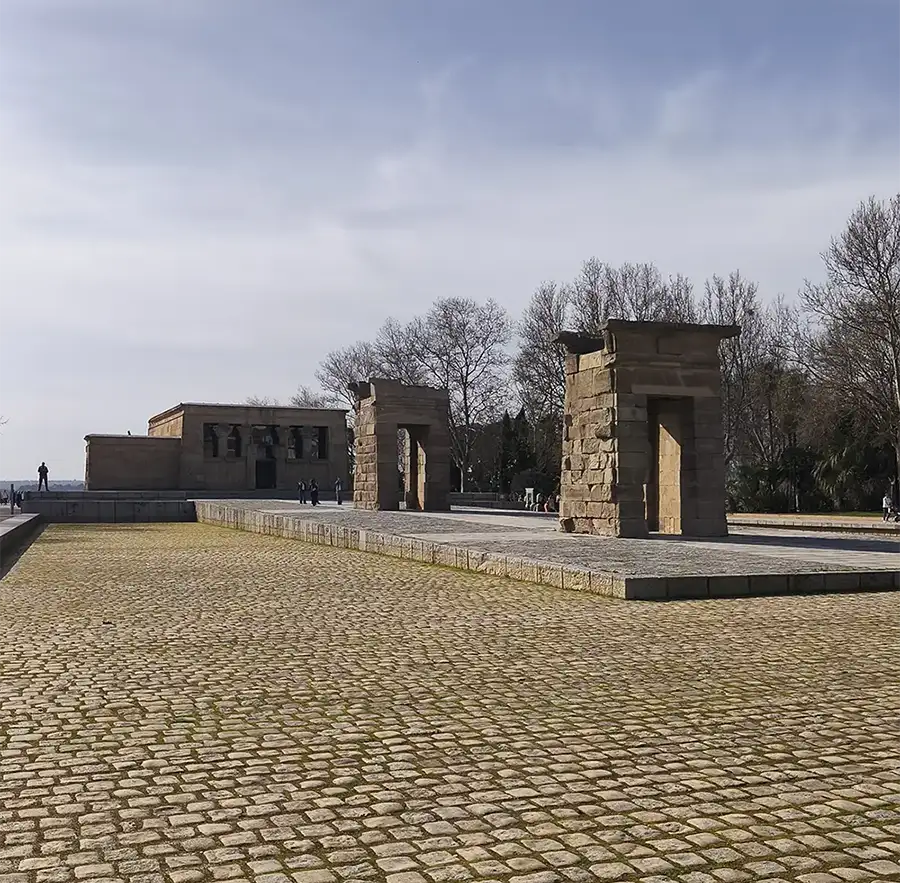
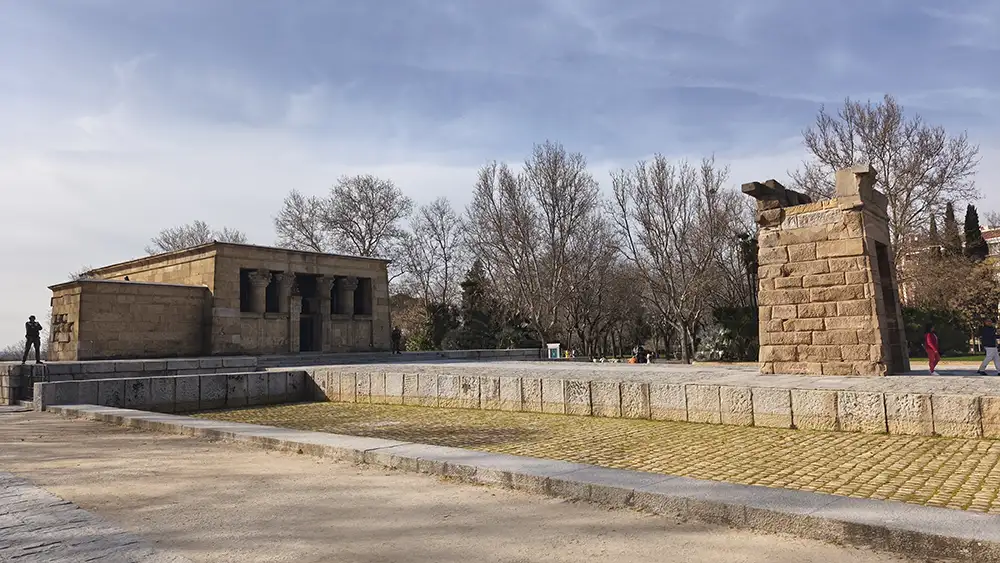
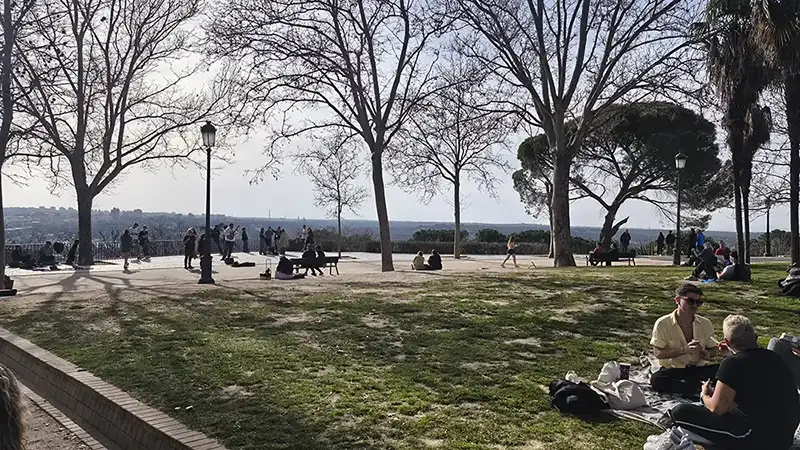
This is the best place to end the first day of your itinerary. The Temple of Debod is an authentic Egyptian temple, gifted by Egypt to Spain in the 1960s as a token of gratitude for helping save monuments threatened by the Aswan Dam. Positioned on a hill with views over the Royal Palace and Casa de Campo, it is the prime spot in Madrid to watch the sun go down.
Arrive a bit early, especially in the summer, because the area gets busy. However, it is worth every minute of the wait, and you will usually find some local music to set the mood.
Logistical summary for Day 1
- ~3.2 km in total
- Low to moderate effort
Including stops for photos, tapas, and viewpoints, allow between 5 and 7 hours.
The actual walking time is less than 1 hour, the rest is pure pleasure.
DAY 2 - Art, Elegance and a Picnic in the Retiro
(1) Puerta del Sol to (2) Calle de Sevilla - The Quiet Luxury of Madrid
The second day begins in Sol once again but takes a different direction towards Calle de Sevilla, the artery of new Madrilenian luxury. You will pass the Canalejas complex, a gallery with a glass dome, and the imposing Four Seasons, which looks especially beautiful during the Christmas season. It is just a few minutes of walking surrounded by neoclassical architecture that makes you feel as if you are inside a film set.
Distance to the next stop: ~600 metres | ~8 minutes on foot
(3) Metropolis Building and (4) Circulo de Bellas Artes - The Living Postcard
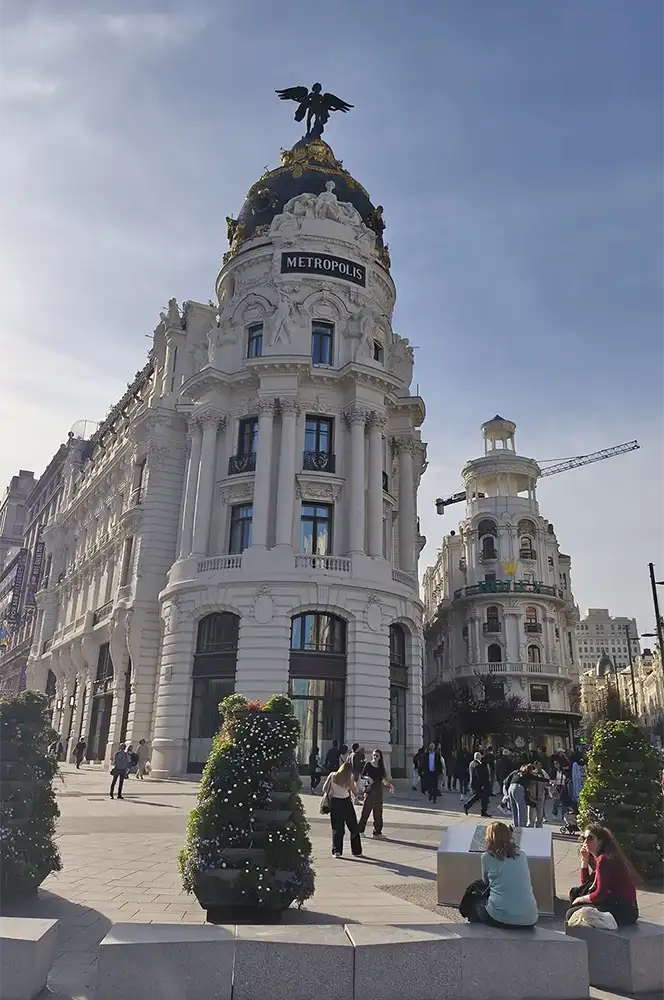
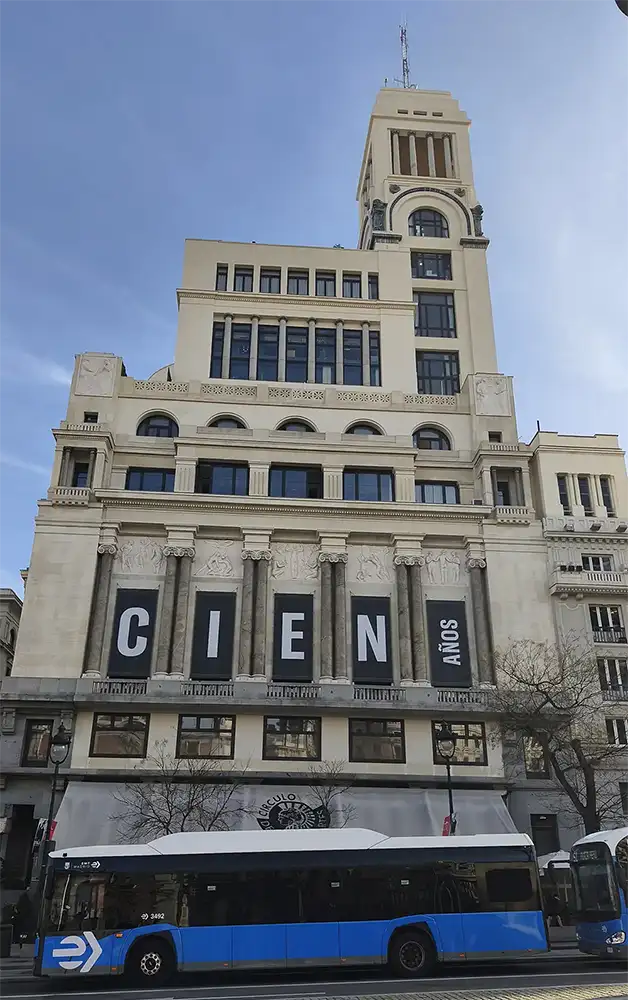
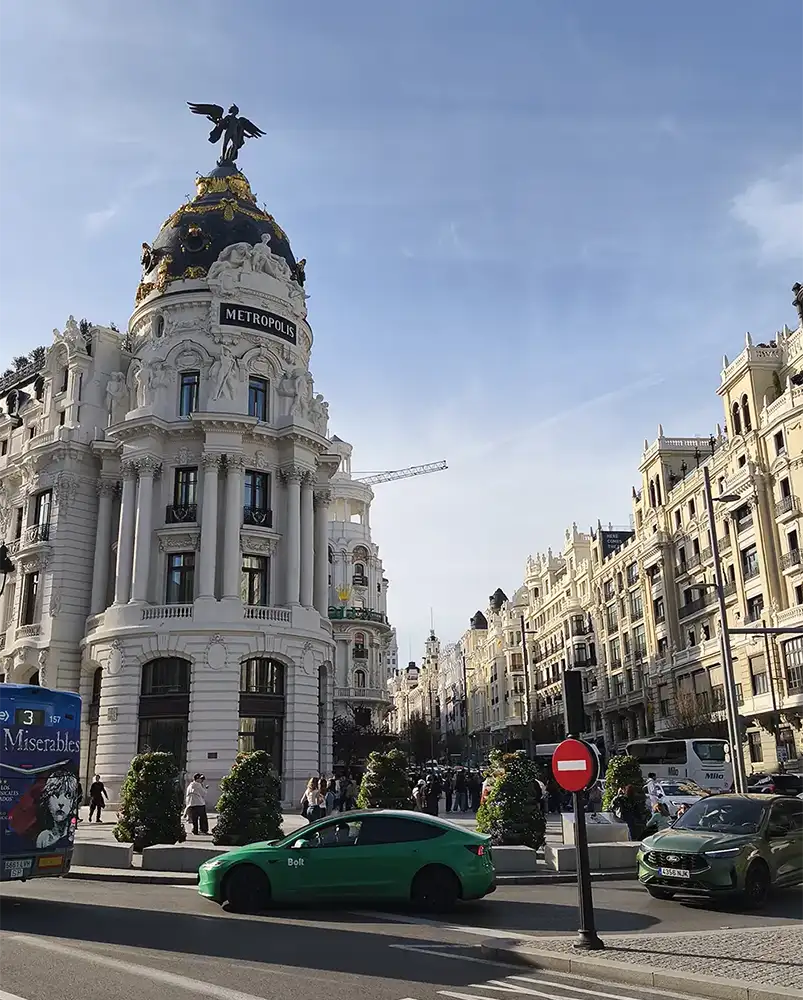
When you reach the corner with Calle de Alcala, the scene opens up and you immediately realise why this is the most photographed corner in Madrid. The Metropolis Building, with its 24-carat gold dome, is simply stunning. Right next door, the Circulo de Bellas Artes has a paid terrace known as an azotea that offers the most iconic view of Madrid from above, with the rooftops, the domes, and the entire city spread out before you.
Distance to the next stop: ~250 metros | ~3 minutos a pé
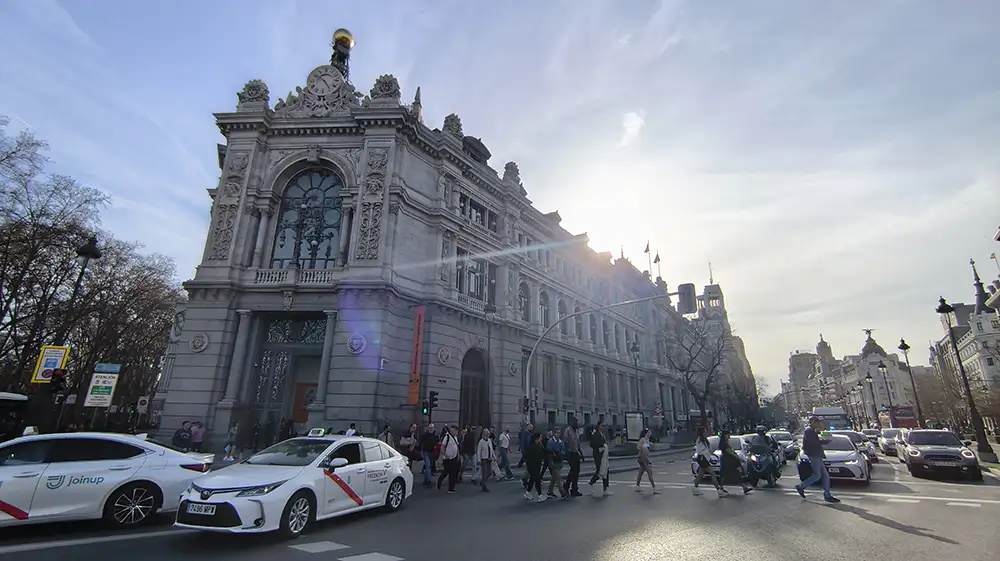
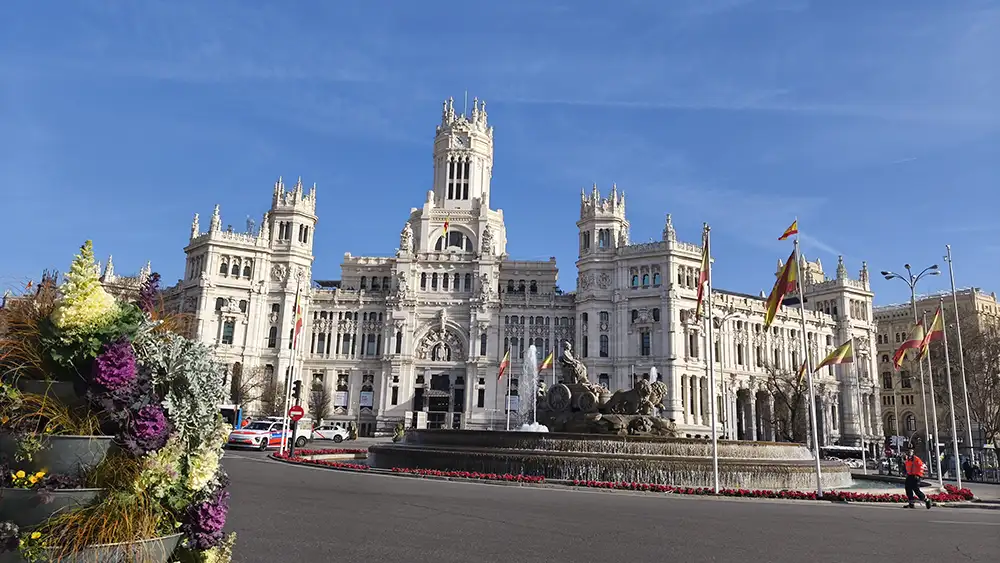
(5) Bank of Spain, (6) Cibeles Fountain and (7) Cibeles Palace - The Heart of Bourgeois Madrid
Continue towards Plaza de Cibeles, where everything pushes you to make you stop and look around. The Bank of Spain has a fortress-like facade that is impressive. The Cibeles Fountain, where Real Madrid fans gather to celebrate their titles, is such a powerful symbol of the city that it has been reproduced in several cities around the world. And the Cibeles Palace, the current seat of the Town Hall, is of such exaggerated beauty that it seems unreal. You can enter the atrium for free to admire the interior architecture and make the most of it, as inside you will usually find an exhibition.
PS. And it is a great place for a quick stop to use the toilet before heading to the Retiro;
Distance to the next stop: ~200 metres | ~2 minutes on foot
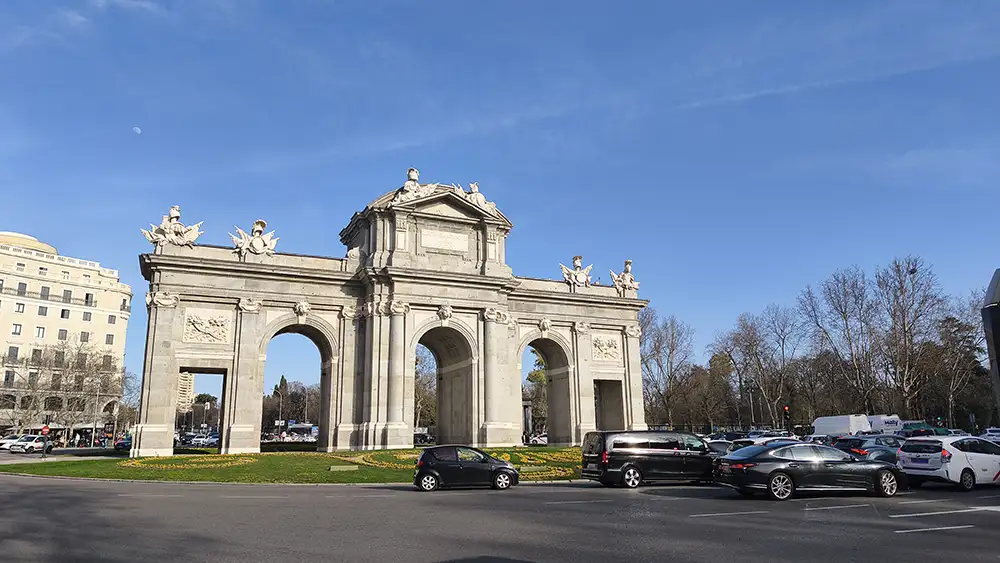
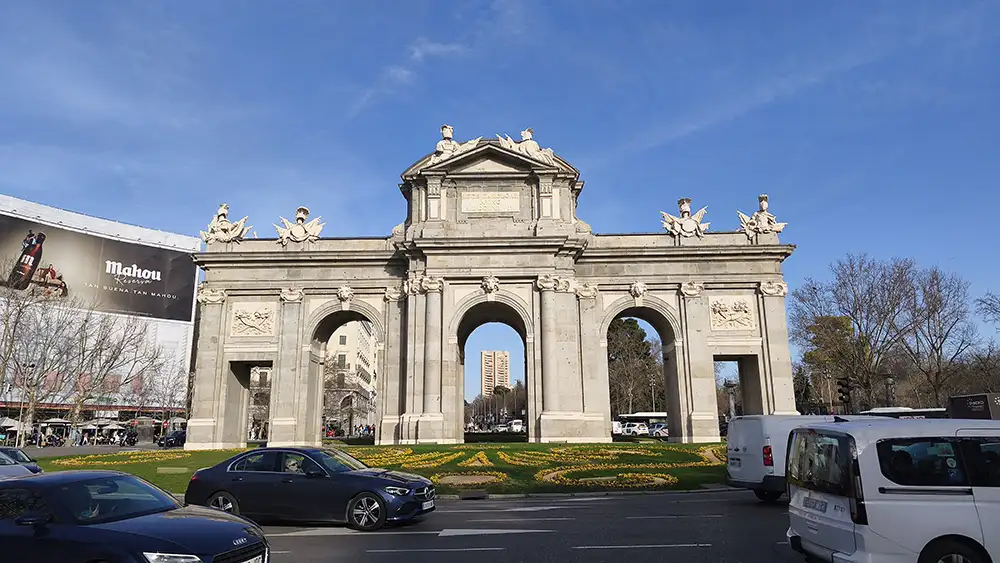
(8) Puerta de Alcala and Preparing for the Picnic
Puerta de Alcala is one of the most photographed monuments in Madrid, an old 18th-century royal gate that marked the entrance to the city. This is where the preparation begins for one of the parts I like most in this itinerary: the picnic in the Retiro.
You have two good options to put together your perfect kit: walk about 10 minutes to (9) Mercado de la Paz (Calle de Ayala, 28), where you will find the best Jamon Iberico, cheeses and artisanal olives in Madrid (I recommend this one if you have time), or drop by a supermarket nearby for a quicker and also good version. If you do not want to have a picnic, no problem, the park has food options and plenty to do.
My picnic would be: Jamon Iberico, Manchego cheese, olives, a baguette, strawberries (if in season, make the most of them) and something to drink. If you want to take alcoholic drinks, such as the famous Spanish wines, the refreshing tinto de verano or the classic national sparkling wine, cava, keep an eye out, as technically, consuming alcohol in public places is prohibited, so this could result in a fine and a headache; so prefer non-alcoholic options.
Distance to the next stop: ~100 metres | ~1 minute on foot
(10) Retiro Park - The Green Soul of Madrid
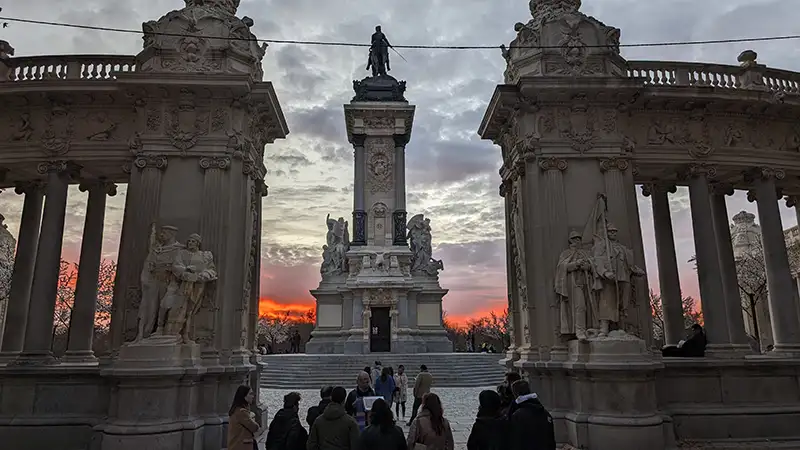
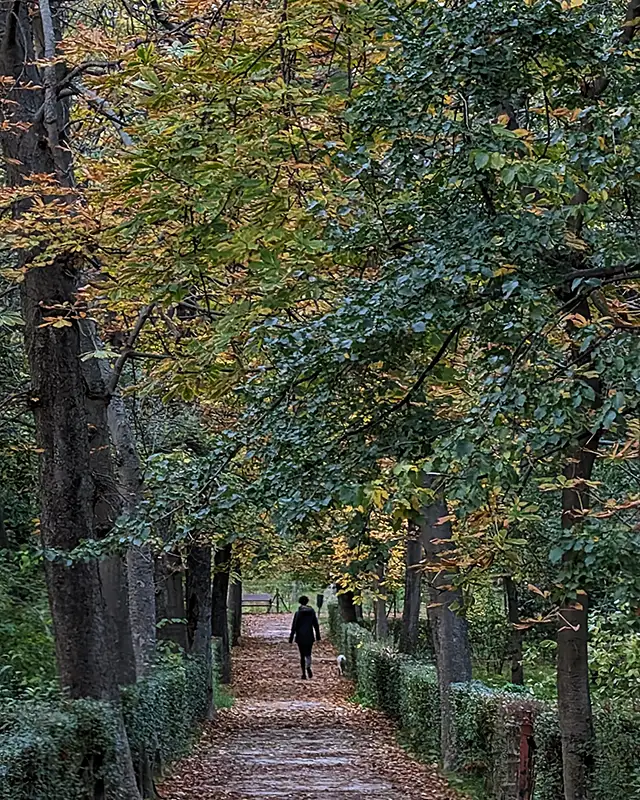
Enter the Retiro through the main gate and look for a spot near the (11) Crystal Palace or the Great Lake to spread out your blanket. This park is one of the most beautiful in Europe; it is huge, free and full of unexpected corners. Retiro Park is my favourite place in all of Madrid and even though I have been many times, I always see something new and charming.
The lake with its fish and ducks, the couples or friends taking boat trips, the occasional musician who is always around to provide a soundtrack to these moments of contemplation, the Crystal Palace and its exhibitions, the rose garden which looks indecently beautiful in the spring, and so on. It is a place to enjoy every single bit.
Note on the Botanical Garden: It is right next to the Retiro and there is an entry fee. With all due respect to plant lovers, as you have the massive and free Retiro right next door, it is not worth spending money on the Botanical Garden unless you are a fanatic enthusiast for some specific botany. The Retiro offers all the nature and peace you will need.
The Art Triangle - Some of the Best Museums in the World, Side by Side
After recharging your batteries in the park, it is time for the most cultural part of the itinerary. Madrid is absurdly lucky to have three of the best museums in the world concentrated within a few minutes' walk of each other.
(12) Thyssen-Bornemisza Museum
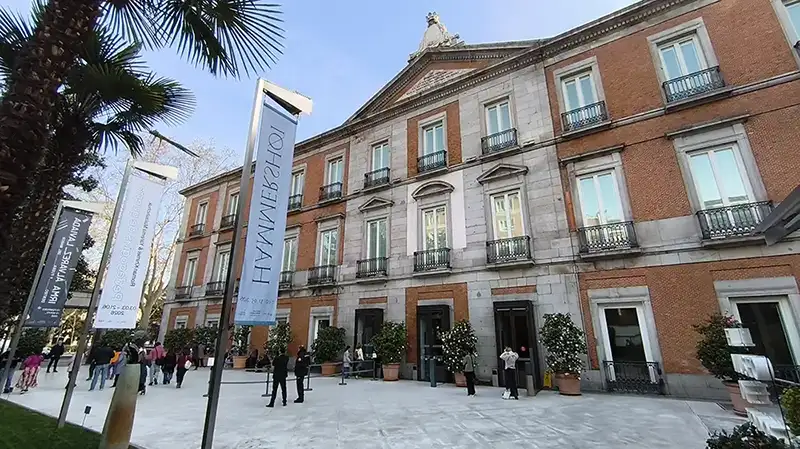
It has an extraordinary private collection that serves as a panoramic summary of art history, from Gothic to Pop Art. It is the most "agile" of the three to visit.
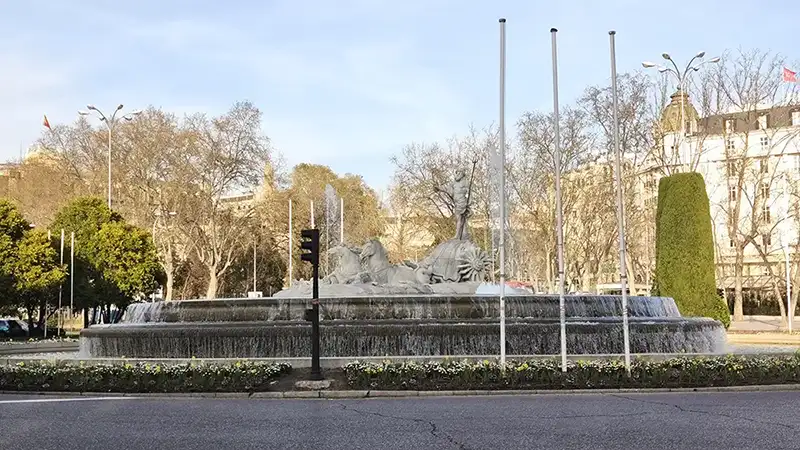
PS. If I do not mention this in this text, I will get a divorce before I even get married! Haha. But in front of the Thyssen Museum is the roundabout with the (16) Neptune Fountain which, besides being beautiful, is the place where Atletico de Madrid celebrates its victories. Just as Real Madrid celebrates at Cibeles.
(13) Prado Museum
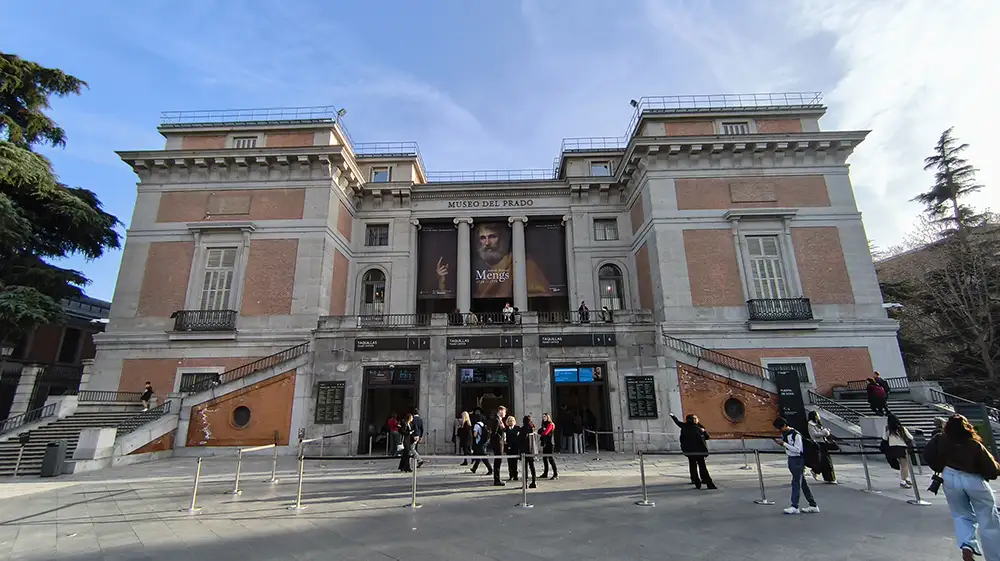
The big star. Focus on the works of Velazquez, especially Las Meninas, and Goya. It is a museum that requires time and emotional stamina; do not try to see everything in one visit.
(14) Reina Sofia Museum
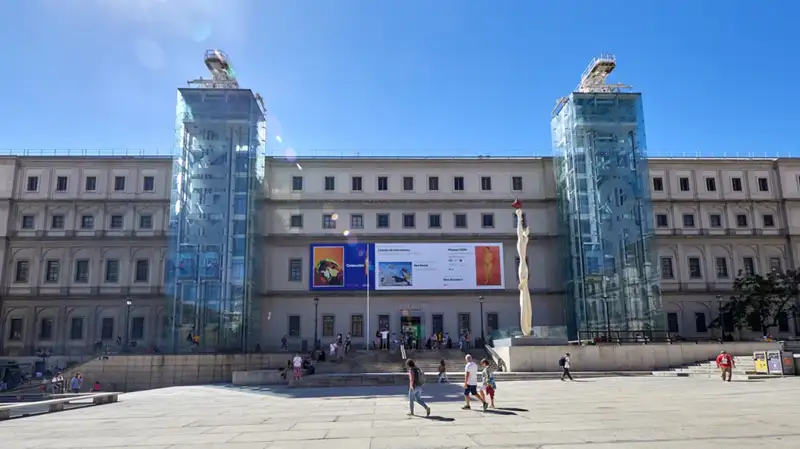
A modern art museum. The centrepiece is Picasso's Guernica, one of the most powerful works I have ever seen in my entire life. Prepare to spend a good amount of time standing in front of it.
EXTRA - (15) Naval Museum
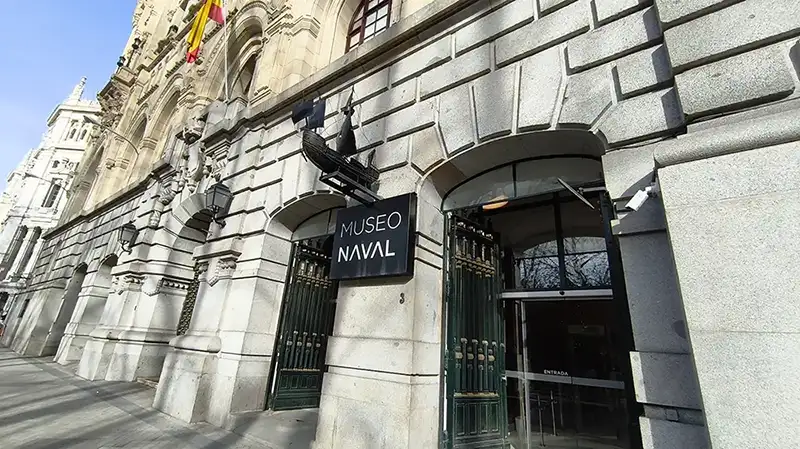
It is on the way between the Thyssen and the Prado. It is a hidden gem that tells the story of Spain as a sea power, with maps, ship models and fascinating artefacts. Entry is free (a voluntary donation of 3 euros is requested). It is quick to visit and well worth it.
EXTRA - CaixaForum
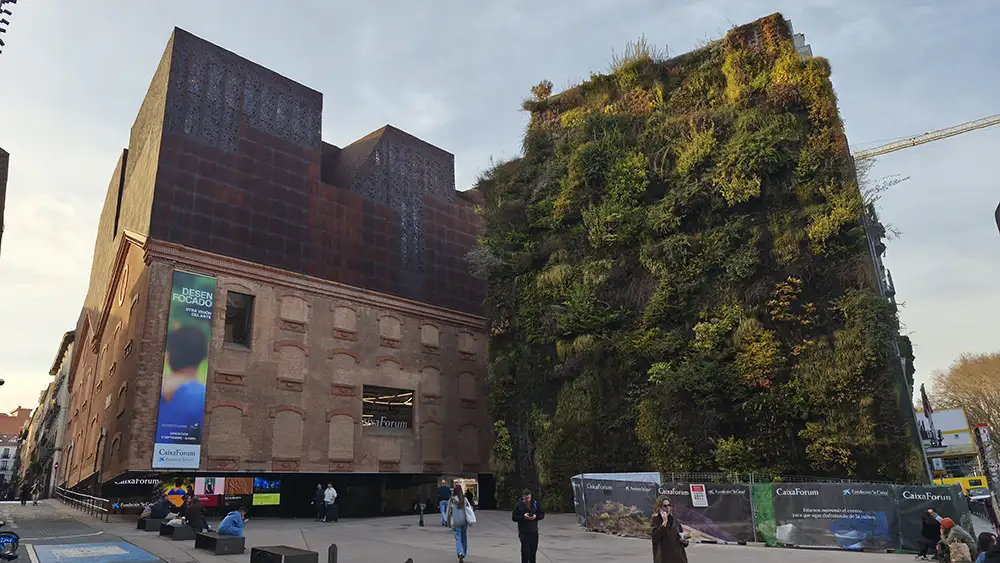
On the same avenue as the Naval Museum, you will also find CaixaForum, which always has exhibitions and cultural activities.
Choice tip
If you do not want to visit them all, which is perfectly understandable as it would be exhausting, my recommendation is: Prado + Naval Museum for those who prefer classical art and a quick historical bonus, or Reina Sofia on its own for those who want to focus on modern art. Many museums have free entry during the last 2 hours of the day, so check the opening times before you go.
Day 2 Logistic Summary
- ~2.5 km of walking - plus whatever you cover inside the Retiro and the museums
- Low effort
This is an extremely pleasant area for a stroll, with plenty of shade, cafes and benches.
The Grand Finale - A Tapas Route and the Illuminated Gran Via
After two incredible days, what is missing? Only the perfect ending for each of them.
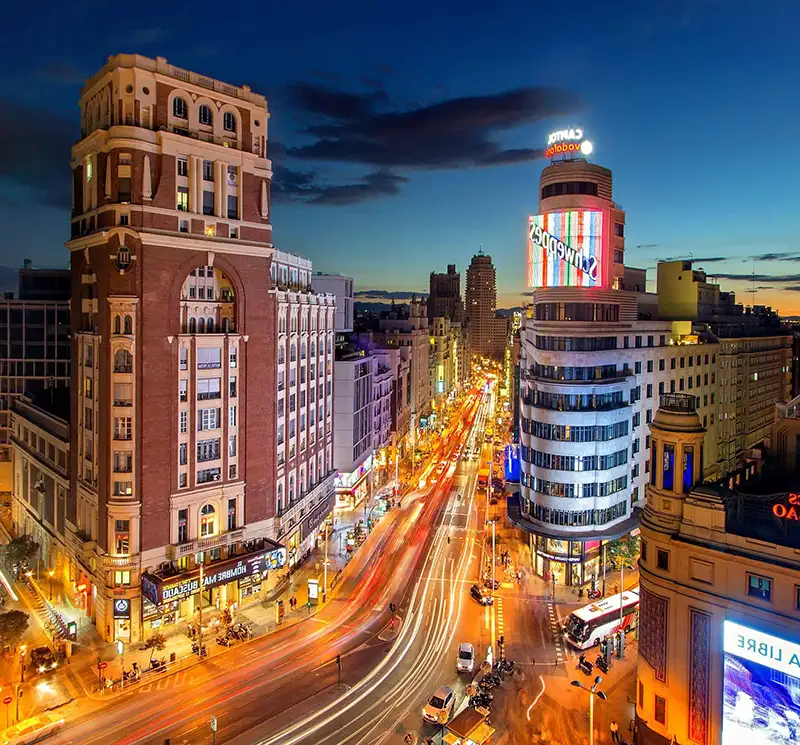
To finish in style, there is no better way than a tapas route combined with a stroll along Gran Via once it is all lit up. When the sun goes down and the lights come on, Gran Via becomes something completely different. The historic buildings take on a new dimension, the theatre signs flash and dazzle us, and the bustle of the city reaches its most lively and infectious peak.
Start the tapeo between Callao and Red de San Luis, where there are dozens of classic taverns and modern bars where you can try patatas bravas, jamon, croquetas or a good vermouth with anchovies. Go from bar to bar without rushing, just as the Madrilenians do. With no fixed schedule and no mandatory list. Just good food, good company and a city that is now yours.
And remember to look up every now and then. The Metropolis in the distance, the imposing Telefonica building, the facades that look like opera sets - everything is even more dramatic and beautiful at night, with the light casting shadows on the cornices and domes. It is the Madrid you do not find in generic guides. It is the Madrid you feel, and for which you now know the way.
Final Tips - The Things I Tell You as a Friend

Forget the touristic bus. Seriously, this is my firmest advice in the entire guide. These two itineraries are 100% doable on foot or by metro, which is not only much cheaper but often faster anyway. Many of the most beautiful spots on this route are in narrow backstreets where the bus simply cannot go. You would have to get off and walk regardless, so save your money and walk from the start. This is how you discover the real Madrid.
If you have mobility issues, the best alternative I know is the tourist tuk-tuk. The electric tuk-tuks that roam central Madrid can enter the narrow alleys of the historic district, stopping wherever you like and allowing you to see all these places without covering long distances. It is a much more flexible and far more fun option than the tourist bus.
The Underground is your best friend when your legs have had enough or when you need to get back to the hotel after a long day. The network is excellent, cheap and reaches almost everywhere that matters. The Santiago Bernabeu (Real Madrid stadium) and Casa de Campo (where the Madrid Amusement Park is located) are usually on the visit lists and both have stops just a few metres away.
Comfortable footwear is mandatory. Madrid has many uneven cobbled streets, especially in the historic centre from Day 1. This is not the time to break in new shoes or parade around in stilettos.
Carry your own water bottle. Madrid's tap water is considered some of the best in Europe and you will find several fountains along the way to refill and stay hydrated. This is especially important on hot days, which can get truly roasting here.
Pick a good time of year to visit Madrid. In the height of summer, it is practically impossible to be outside, let alone walk a lot. The best times to visit are spring and autumn, when the temperatures are milder and the weather is more stable.
Go into the taverns that look old. The more forgotten the facade looks, the more likely it is to have 100-year-old recipes and prices from another era. It is a rule that rarely fails.
Getting lost is part of the plan. Between one square and another, Madrid treats you to handmade shops, local grocers and alleys that do not appear on any map. If something catches your eye, go in. The itinerary can wait.
Watch your phone and bags. While it is a considerably safe city, you cannot afford to be careless. Avoid carrying your phone in your pocket and choose bags with internal zips or those that are difficult to open.
Do you have questions about the itinerary, the museums or where to eat? Drop us a message and we will be delighted to help!