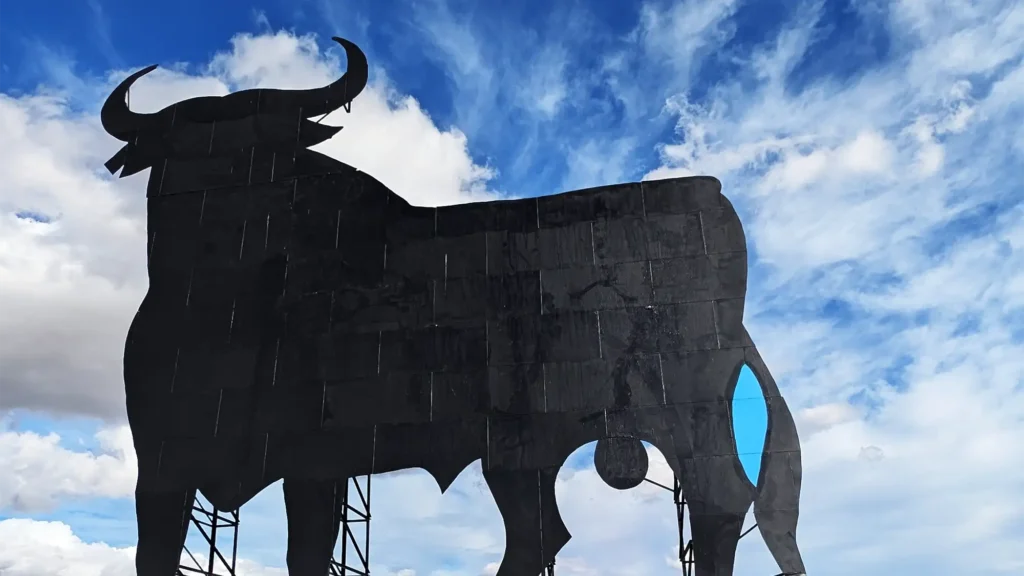
Anyone travelling along Spain's roads will inevitably come across the giant silhouette of a black bull standing against the horizon. What many visitors do not realise is that these 14-metre-tall figures were not installed by the Ministry of Tourism, but by a drinks company. What began as a marketing strategy in the 1950s eventually became one of the most curious cases of cultural survival in Europe.
The presence of these giants still sparks debate today. For some, the bull represents tradition and national identity; for others, it is simply the leftover trace of an old advertising campaign. What is undeniable is that the bull outlived both time and legislation, stopping the sale of brandy to become a visual icon that now forms part of the experience of crossing Spain by road.
The origin of the Osborne Bull as a brandy advertisement
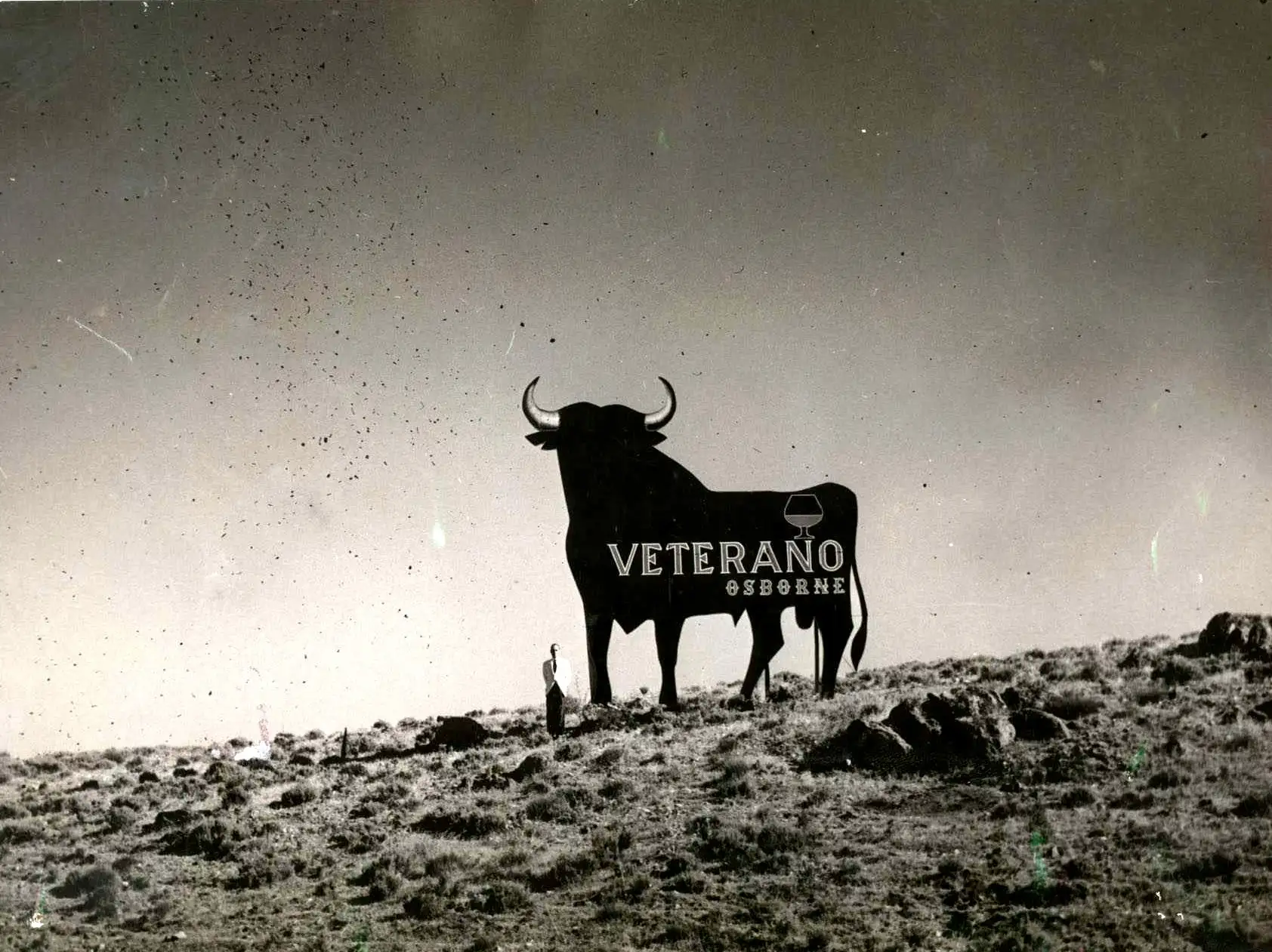
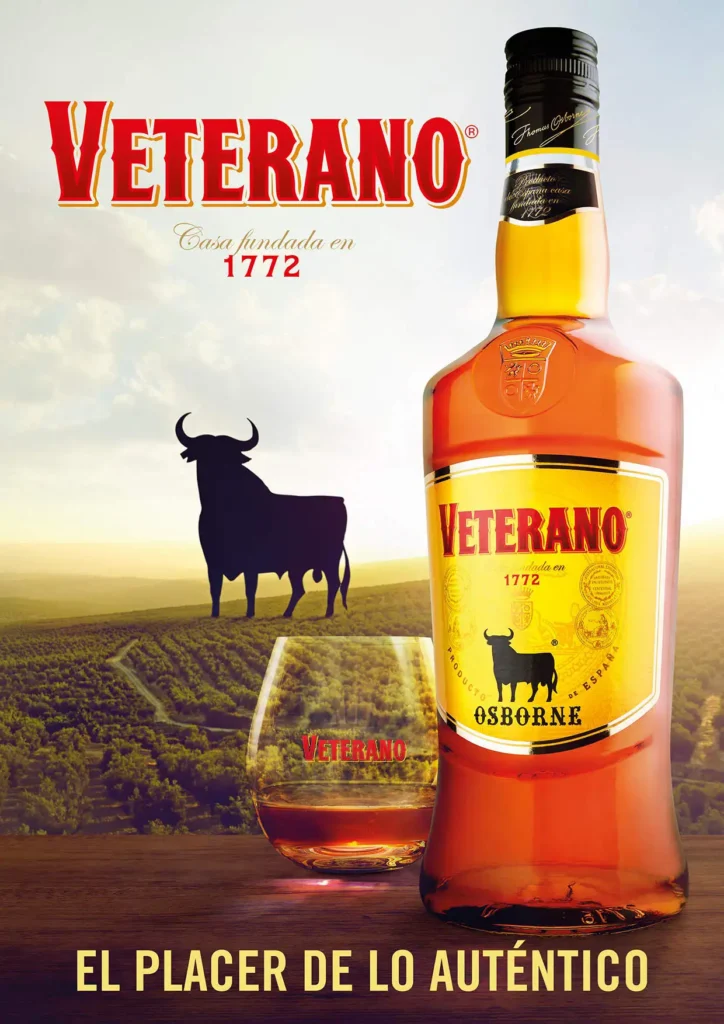
The most recognisable symbol on Spain's roads began as an advertising campaign. In the 1950s, the Osborne Group was looking for a way to promote its Veterano brandy along the country's roads and commissioned the designer Manolo Prieto to create a silhouette that was simple, strong and easily recognisable from a distance.
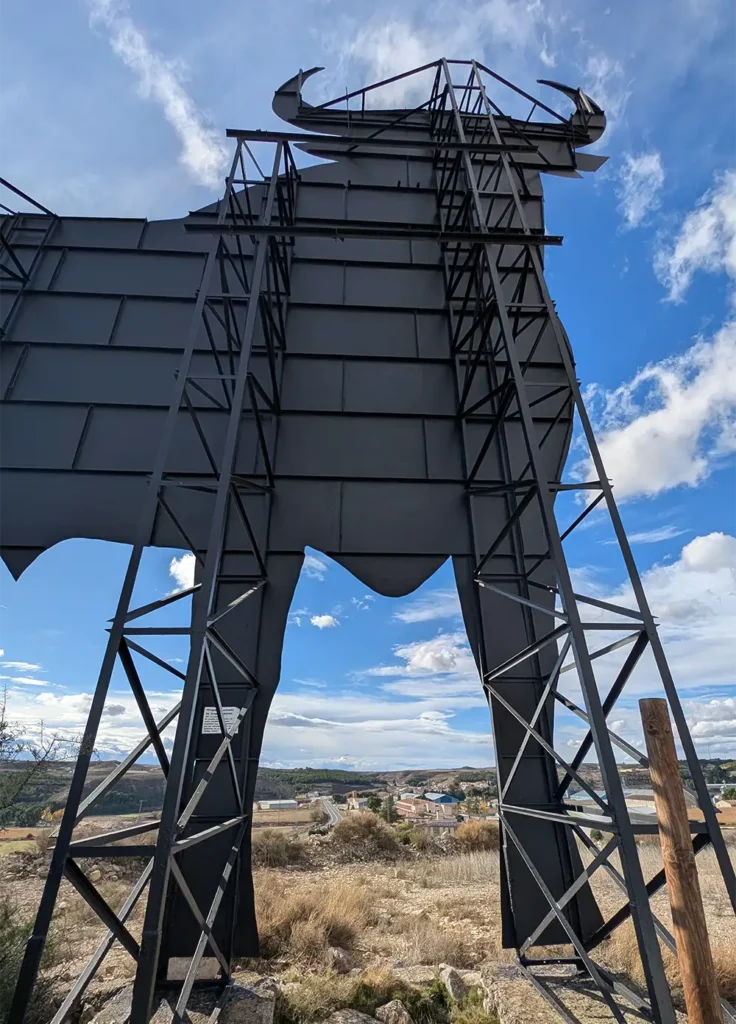
The first bulls were made of wood and stood around 4 metres tall. Constant exposure to sun, rain and winds caused them to deteriorate quickly. To solve this problem, the company replaced the material with steel plates, using structures weighing around 500 kg, and increased their height to 14 metres.
The aim was to create an advertisement that could not be ignored from the road. The black silhouette could be seen from far away and helped associate the strength of the bull with the product. In the original version, the brand name and the product were part of the structure and clearly visible from the road.
Why the Spanish government tried to remove all the bulls
The war against the bulls truly began in 1994. The Spanish government passed a new Roads Act that banned any form of advertising visible from the country's roads. The aim was to clear the landscape and reduce distractions for drivers.
Under the new law, the authorities ordered the removal of all the silhouettes from the roadsides. What followed was a reaction few had expected. Artists, writers, journalists and ordinary citizens spoke out in defence of the bull, arguing that it had become part of Spain's shared landscape. To many, the metal figure was no longer seen as advertising, but as something tied to the identity of rural Spain.
The case eventually reached Spain's Supreme Court. In a ruling that surprised the legal world, the judges decided that the bull could stay. The judgement recognised that the silhouette had gone beyond its commercial function and had acquired cultural and aesthetic value of its own. Its survival, however, came with a clear condition. The Osborne brand name and any reference to brandy had to be completely removed. What remained was only the black silhouette cut against the horizon.
Where to find the surviving bulls during your trip
Today, around 90 Osborne Bulls remain scattered across Spain's road network. Most of them are concentrated in Andalusia, Castile and León, and Castile-La Mancha. Anyone driving south from Madrid is likely to encounter several along the way. They are consistently positioned on hills or elevated ground to ensure maximum visibility.
There are also regions where you will not see any at all. In Catalonia, the last bull was pulled down during protests and was never put back up. The same applies to Cantabria and Murcia, where the structures simply do not exist.
For those who want to see how they originally looked, there are two examples that still retain the brand name. They are located at the Bodegas Domecq facilities, within the airport grounds at Jerez de la Frontera. As this is private land, the road legislation that required all other bulls to remove the name "Veterano Osborne" does not apply there.
The Osborne Bull in Monegros and its connection to cinema
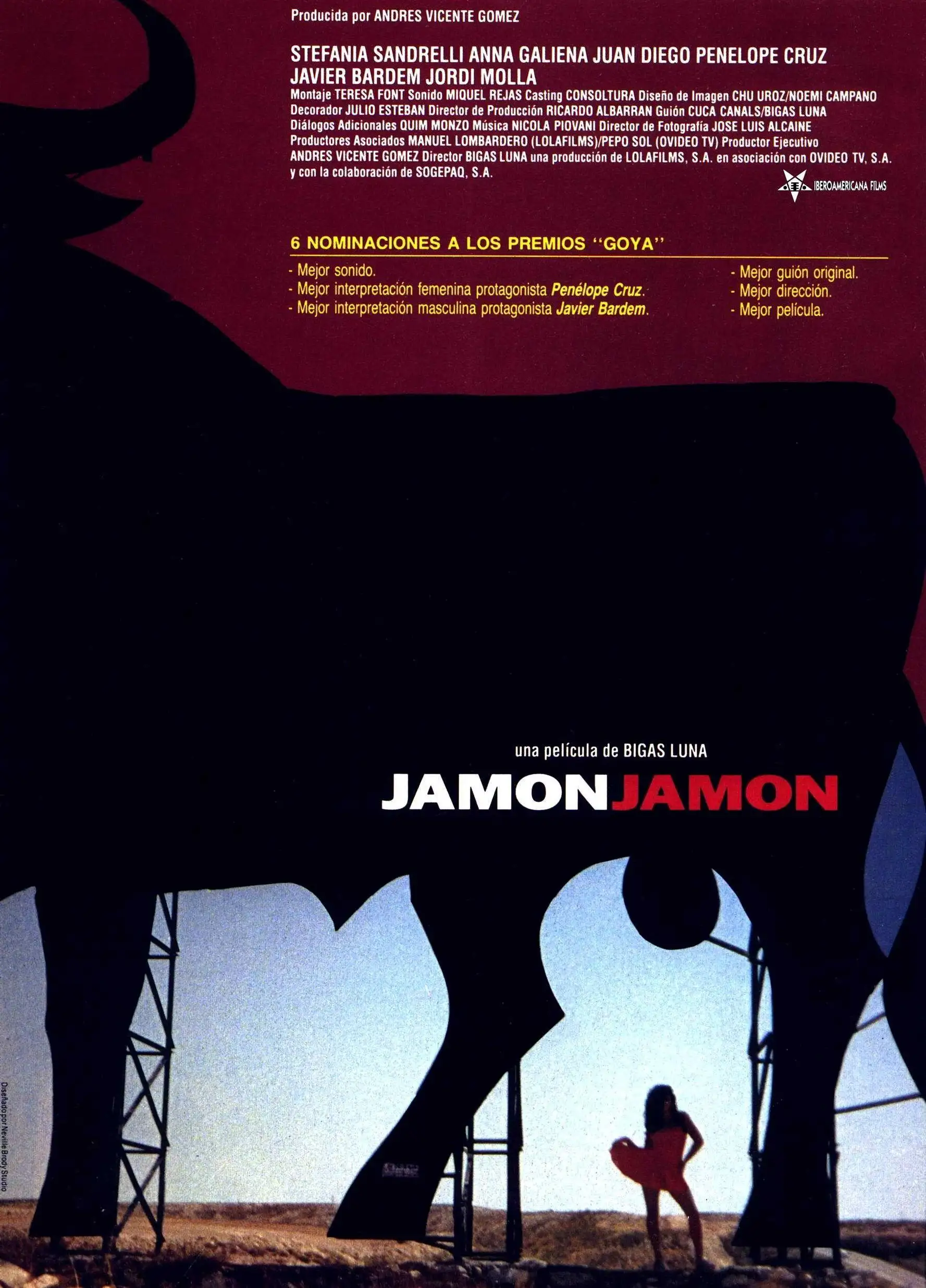
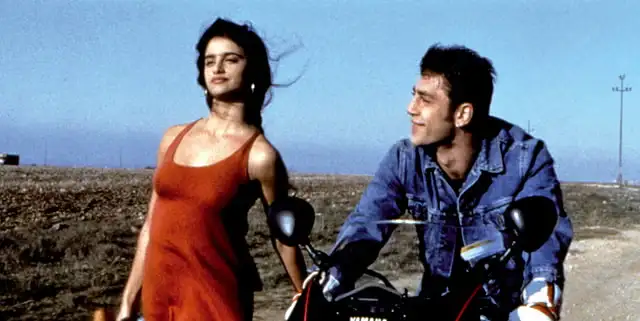
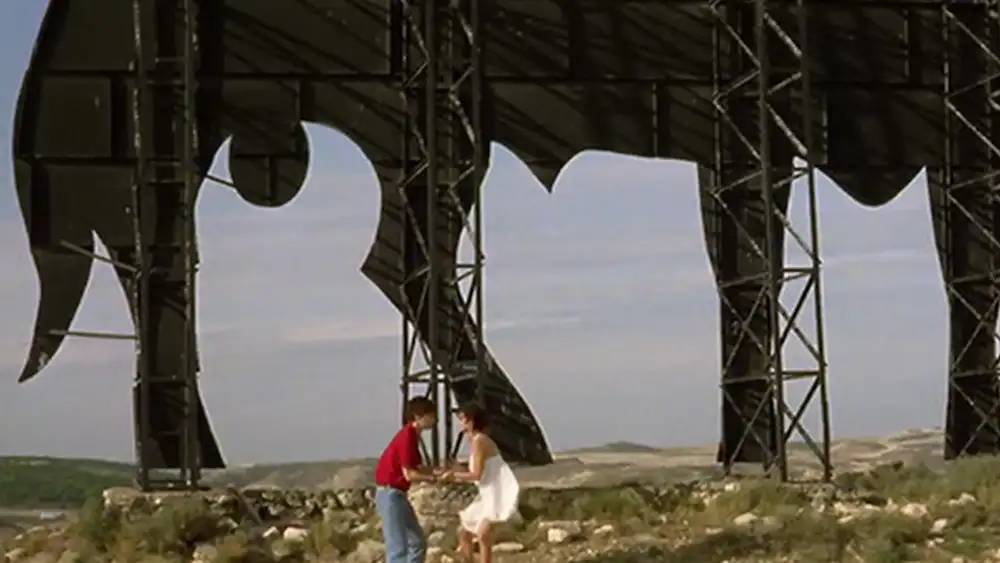
This bull in the Aragonese desert became a pop icon because of the film Jamón, Jamón (1992). It was here that director Bigas Luna brought together Javier Bardem and Penélope Cruz before they became international stars. The bull appears repeatedly and is treated almost like a character, closely associated with the harsh, dry landscape of rural Spain.
This is also one of the few Osborne Bulls that can be visited up close. There is parking directly below the structure, a petrol station nearby and easy access from the road. For anyone travelling through the Monegros region, it makes for a quick stop that is more interesting than it might seem at first. The bull is located at kilometre 390 of the N-II road, in the middle of the Monegros desert.