We had a perfect plan. Cadiz. Sea. Sun. That epic birthday dive into the Atlantic waters I'd been picturing for weeks. The campervan was ready, the mood was great, the road trip playlist was spot on.
But halfway there, glancing at the map, we came across a name that caught my eye: Merida.
My first reaction was completely rational and very mature, worthy of my 38 years completed that very day: "Wait. Merida? Like the Disney princess?"
Indeed. For those who don't remember, Merida is the protagonist of the film Brave (2012), that red-haired Scottish girl with a bow and arrow who refuses to marry and spends the entire film arguing with her bear mother. But this Merida has nothing Scottish about it, nothing of a princess, nothing of red curly hair.
This Merida is a Spanish city in the region of Extremadura, and it has a far more impressive résumé than any animated heroine.
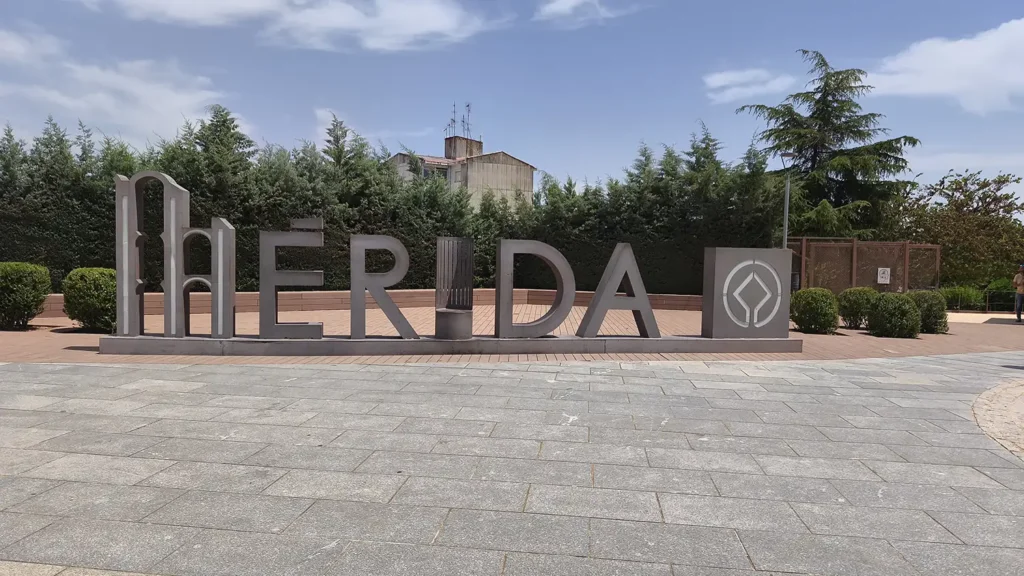
Merida
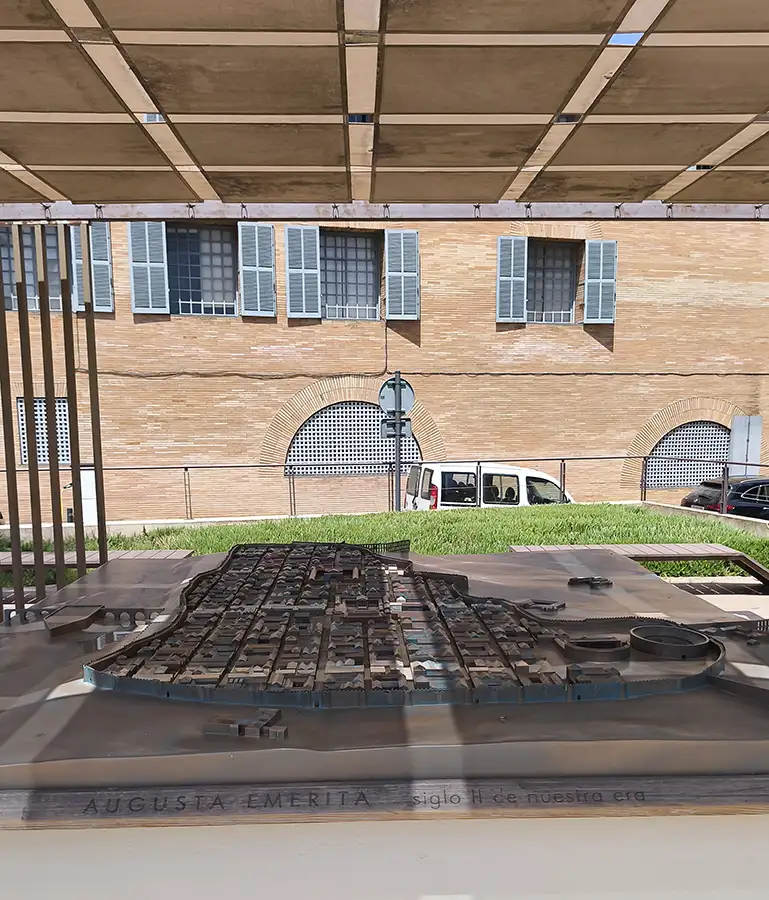
Emerita Augusta (Merida's ancient name) was founded in 25 BC by Emperor Augustus to house veteran soldiers, hence the name, which comes from the Latin Emerita, "the retired one". A city built for retirees. With two millennia of history, that explains quite a lot.
It became the capital of Roman Lusitania, has been a UNESCO World Heritage Site since 1993, and to this day you stumble upon ruins right in the middle of the historic centre. Theatre, amphitheatre, aqueduct, temple, bridge. All together, all enormous, all real.
We were just passing through, with the sea waiting for us in Cadiz. But how do you ignore a city like this? There was simply no other option: we stopped.
And since we had little time, we ended up focusing our visit on the city's main attraction: the Roman Theatre and Amphitheatre.
The Roman Theatre
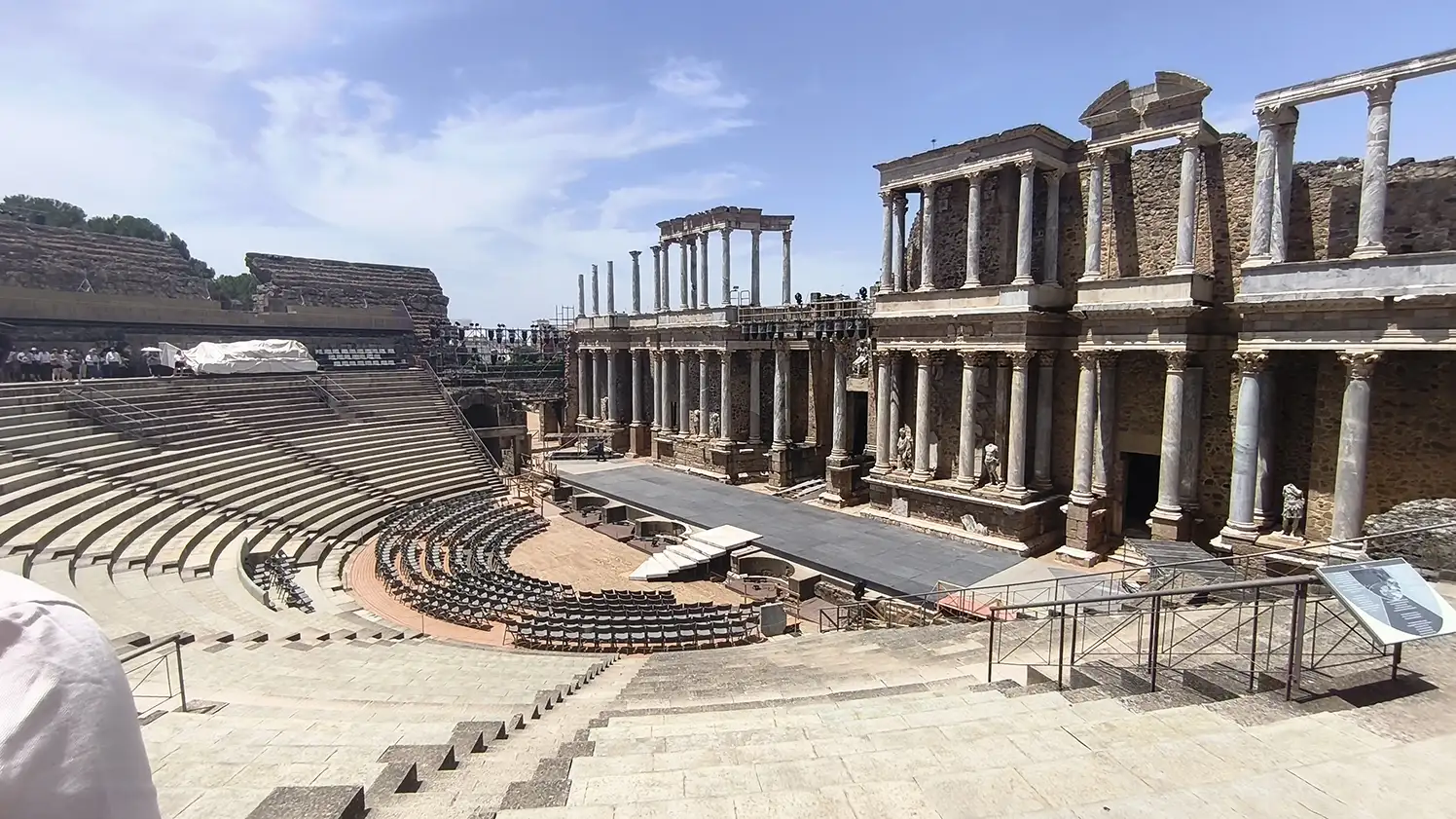
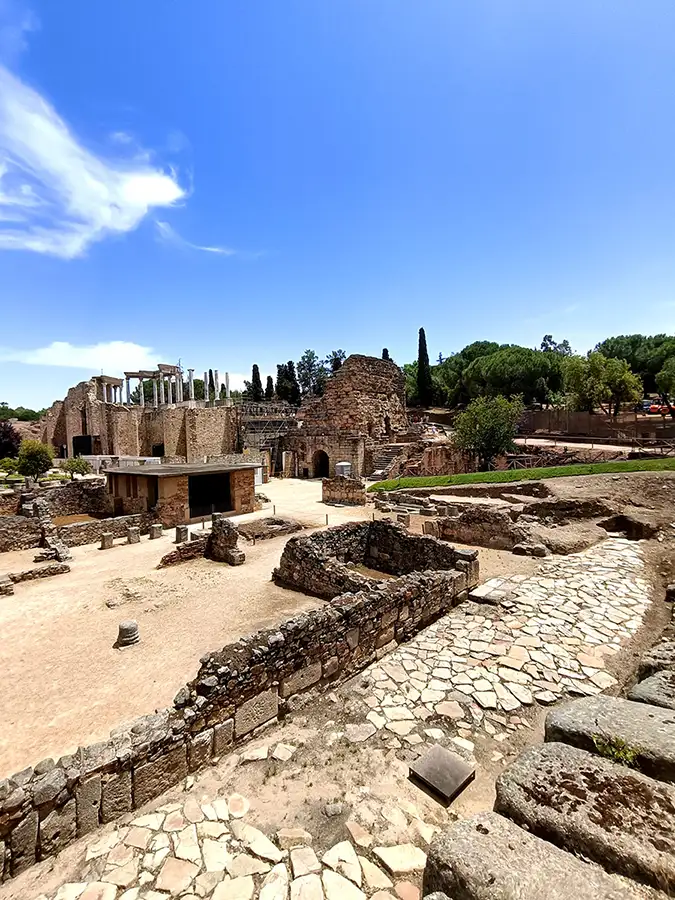
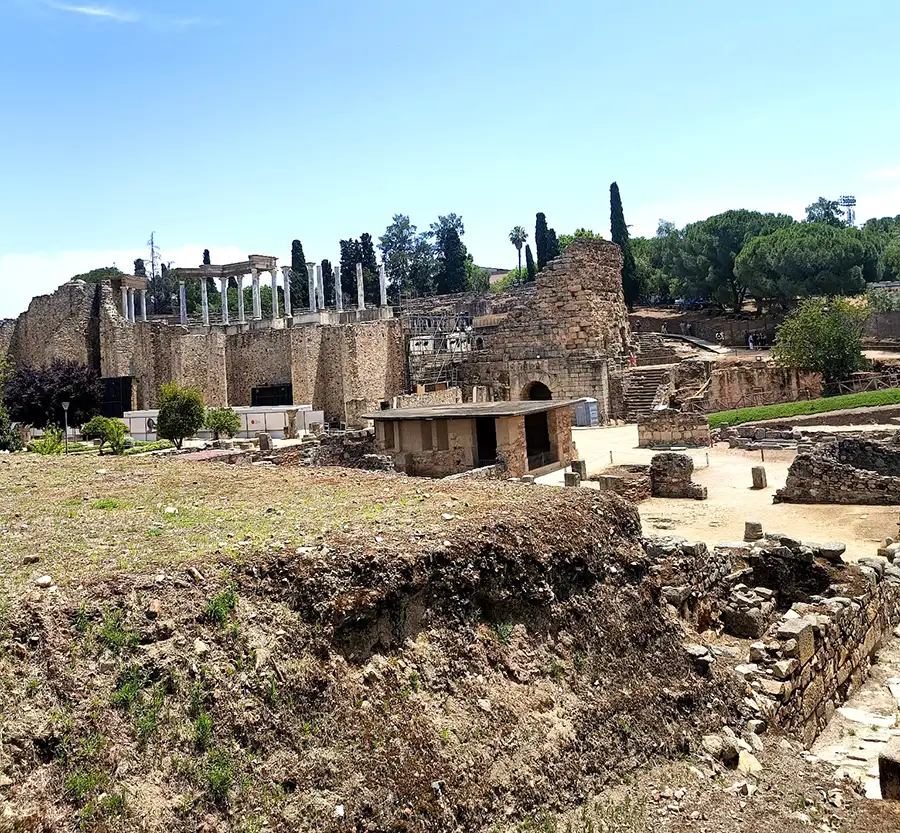
Built around 16 BC with a capacity of 6,000 people, the Roman Theatre is the crown jewel of Merida. It was buried for centuries, excavated in the early 20th century, and has never stopped since. It still hosts performances to this day.
What strikes you most upon entering is the scaena: the stage facade. Two rows of marble columns, statues between them, all carefully restored. You look at it and cannot tell whether you are on a film set or have simply travelled back 2,000 years in time.
Six thousand people. In a structure with no reinforced concrete, no modern engineering, none of what we consider indispensable today. Just stone, ingenuity, and a great deal of slave labour, let's be honest.
Think about it: a Roman theatre that still functions as a theatre. This is living history, not history locked behind glass in a museum.
The Roman Amphitheatre
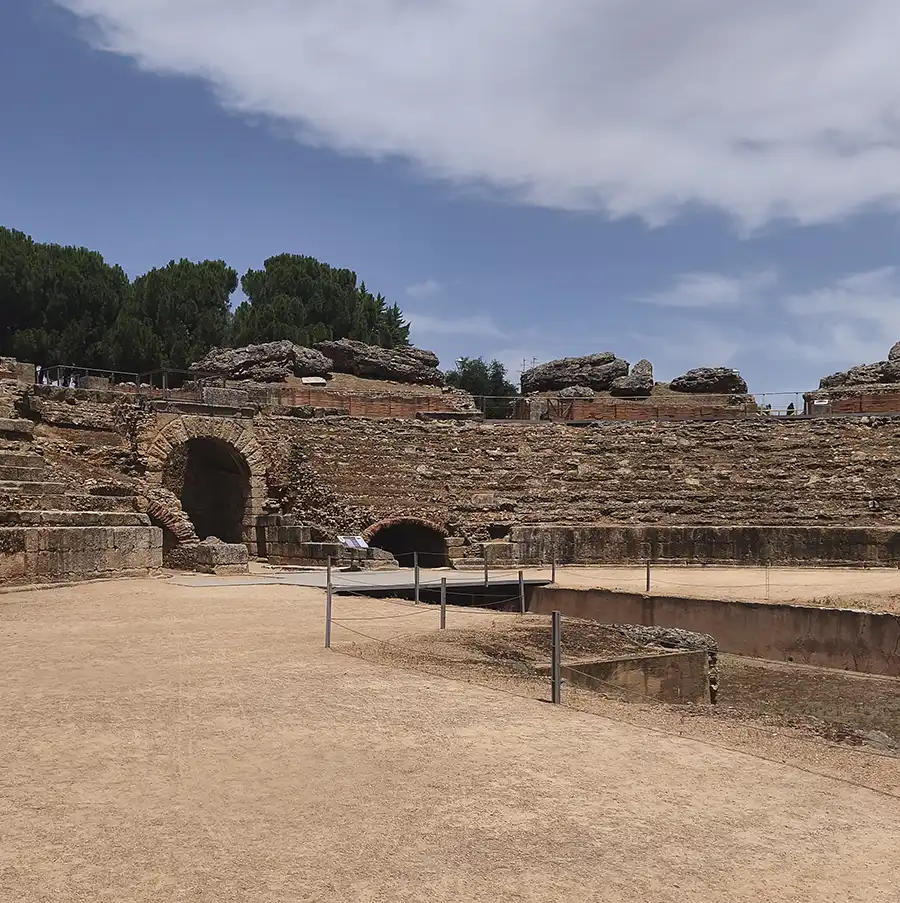
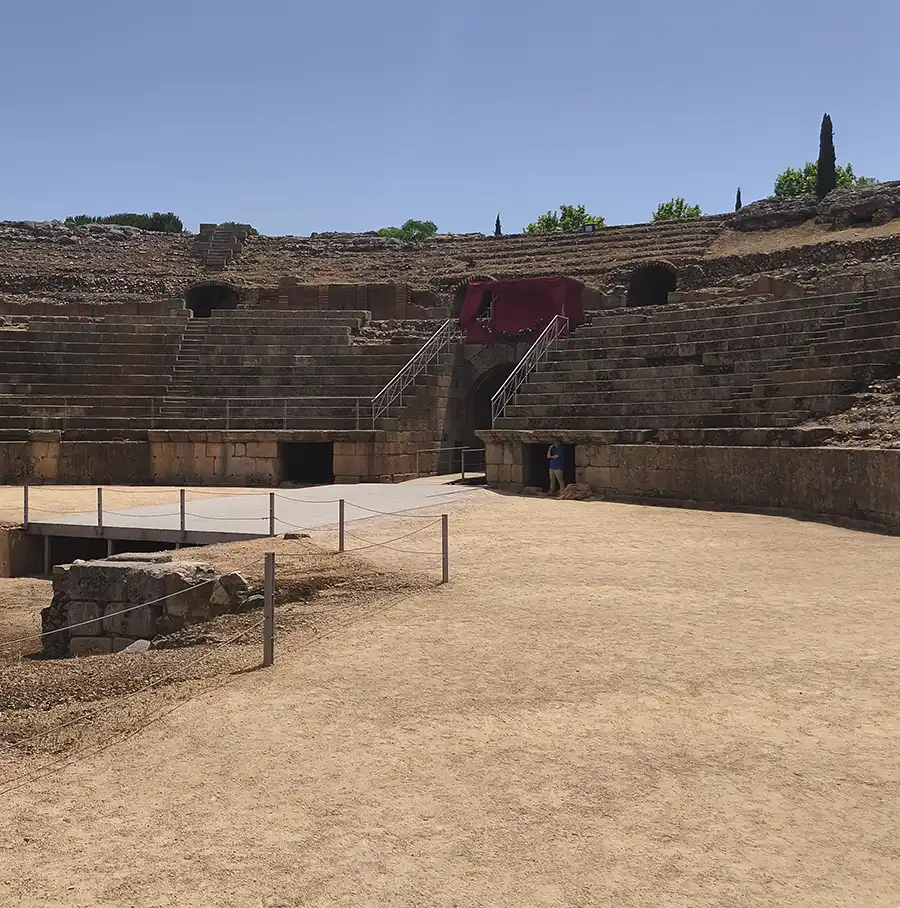
Right next door, separated by a walkway, stands the Roman Amphitheatre, and if the theatre is elegant, the amphitheatre is visceral.
Inaugurated in 8 BC, it held 14,000 people and was the stage for gladiator fights and wild beast hunts. Fourteen thousand people. In a Roman amphitheatre in a city in inland Spain. That is larger than many football stadiums.
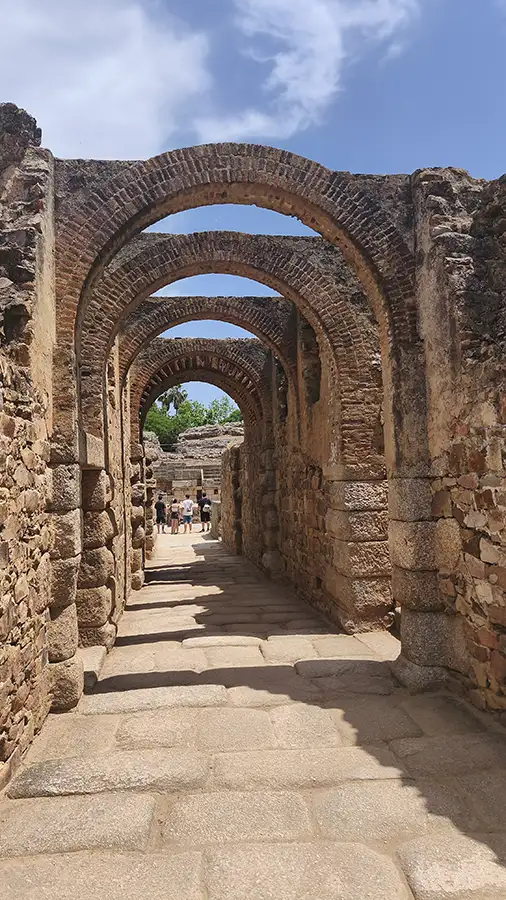
Walking through the tunnels where gladiators prepared to enter the arena is an experience in itself. You walk through that dark, narrow corridor, and when you step out into the light of the arena... you can almost hear the crowd in your head. It is impossible not to get swept away.
Practical information for your visit
Tickets
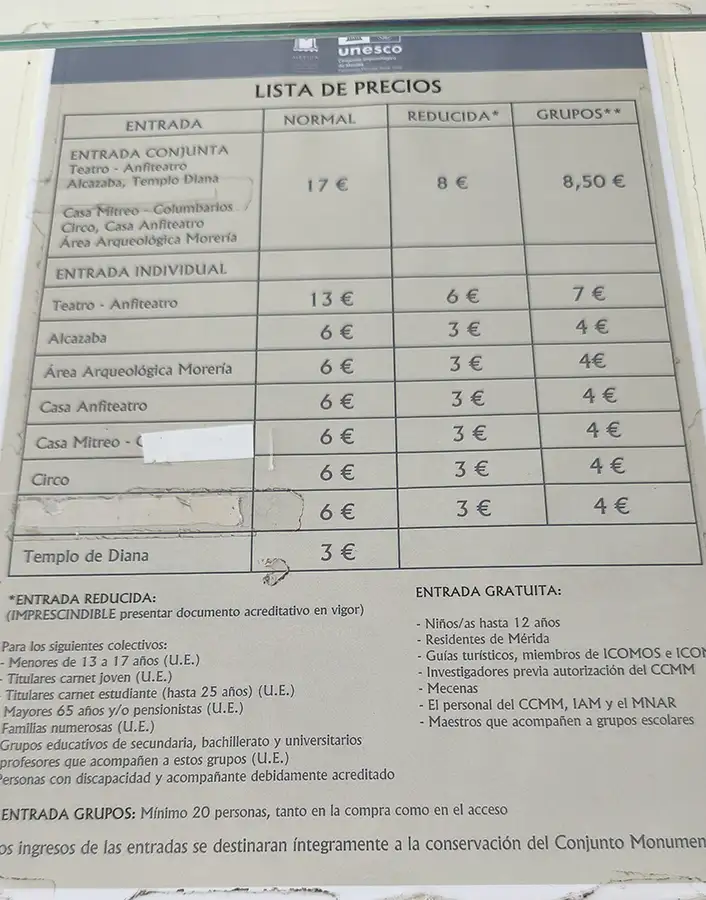
- Combined ticket (Theatre + Amphitheatre): €13
- Additional guided tour (in Spanish): +€5 (total €18)
- Combined ticket for 6 monuments in the city (includes the Alcazaba, Casa del Mitreo, Roman Circus, among others): €17 (well worth it if you have the time)
- Reduced and group tickets are also available.
- Top tip: If you plan to visit more than two sites in the city, the combined ticket pays for itself straight away.
Getting there
Merida sits in the heart of Extremadura, almost halfway between Madrid and the Portuguese border. By car, it is straightforward and well indicated. The main routes are the A-5 and A-66. There are also coach connections via the Avanza company.
Opening hours
These vary by season, but they generally open at 9:30 or 10:00. Check the official website for up-to-date information.
Night visits: There is a night visit option available for groups of at least 20 people. The ruins lit up at night must be something else entirely. Well worth considering.
How long to allow
1.5 to 2 hours is enough to cover both monuments. With a guided tour, you will get much more out of the visit.
Parking
There are options in the centre. Arriving before 10:00, you can usually find spaces nearby.
Important tips
Extremadura in summer is no joke. Temperatures regularly climb above 40°C and the ruins are entirely open-air with zero shade. Water, a hat, and sun cream are non-negotiable.
The theatre's scaena is your best photo opportunity. That facade of columns and statues looks stunning in any light, but early morning is particularly good.
Wear comfortable shoes. The ground is uneven and you are walking on genuine Roman stone throughout. Heels are a terrible idea.
If you can, try to time your visit around one of the events held there. It completely transforms the experience.
Main events
Visiting these monuments as a regular tourist is already impressive enough. But picture what happens when the lights come on, the stands fill up, and those ancient stones go back to doing what they were built for. Merida is one of the few places in the world where the historical heritage does not just frame the experience, it is the experience.
Merida International Classical Theatre Festival
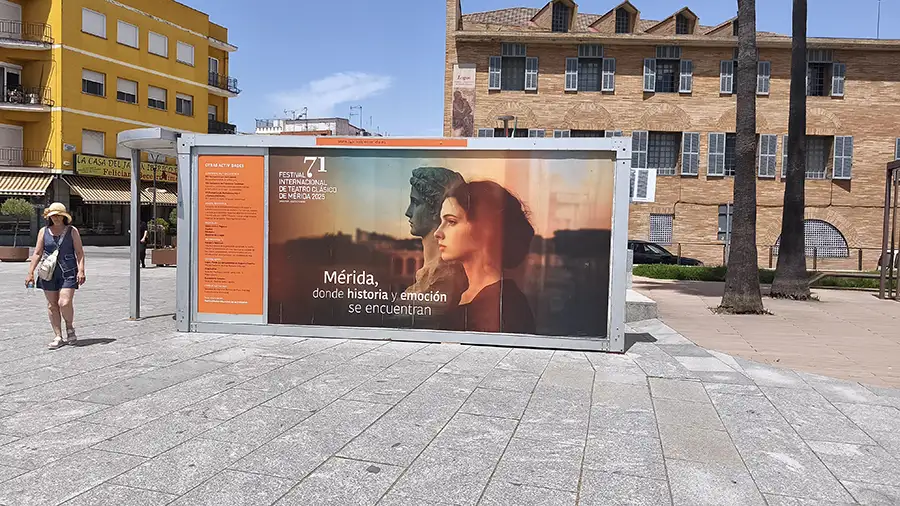
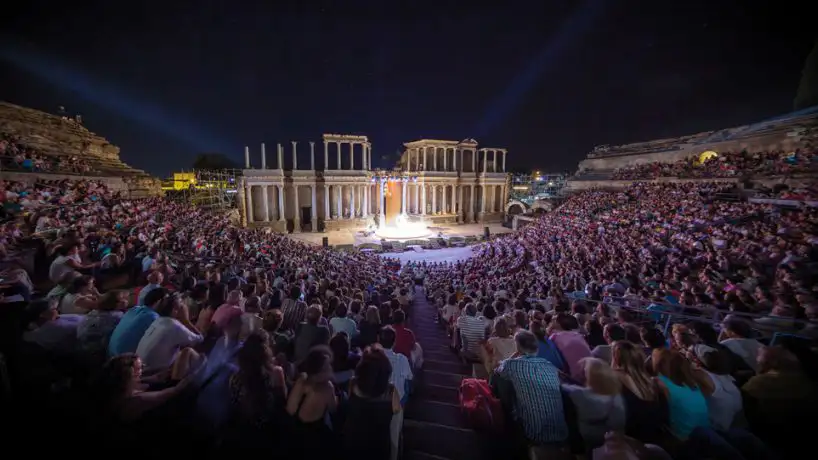
The oldest and most prestigious classical theatre festival in Spain has been running every summer since 1933, right on the stage of the Roman Theatre. From July to August, the theatre hosts works by Sophocles, Euripides, Aristophanes and other Greco-Roman playwrights, performed by top national and international companies. The 2025 edition, the 71st, featured 10 productions including 7 world premieres. Watching a Greek tragedy in a 2,000-year-old theatre under the open night sky of Extremadura is the kind of thing you do not forget. Check the programme on the festival website.
Holy Week and the Via Crucis in the Roman Amphitheatre
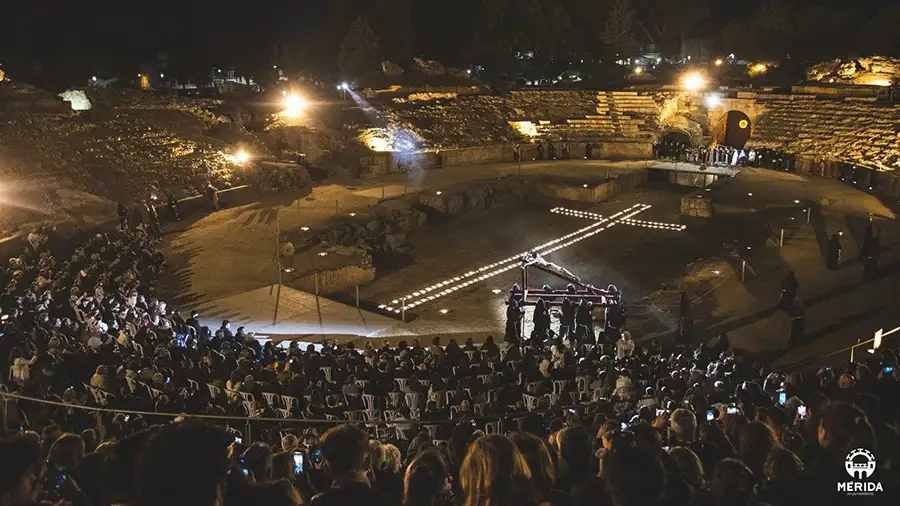
Merida's Holy Week holds the title of Festival of International Tourist Interest, and it earns it. The most extraordinary moment of the entire week happens in the early hours between Good Friday and Holy Saturday: the Via Crucis inside the Roman Amphitheatre, centred around the Cristo de la O, the oldest religious carving in the city (14th century). The procession moves through the city's historic monuments before entering the arena, where the 14 Stations of the Passion are recited to chants from the Hispano-Visigothic liturgy. Torches light the amphitheatre, the silence is complete, and the atmosphere carries a weight that goes well beyond the religious. Pope Francis himself called Merida's Holy Week "unique in the world".
Stone & Music Festival
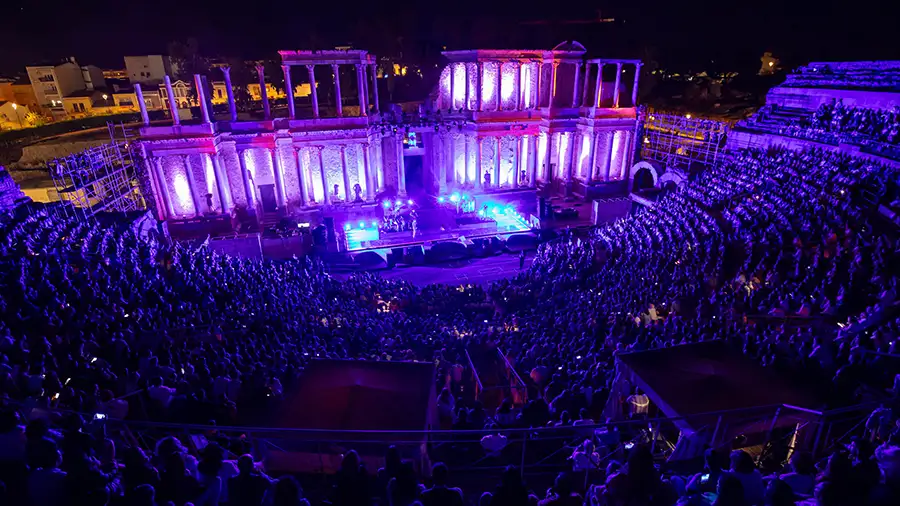
When the classical theatre season ends, rock and pop move in. Founded in 2016, Stone & Music brings major concerts to the Roman Theatre, which has the largest stage opening in Spain. Over ten years, the line-up has included Alejandro Sanz, Manuel Carrasco, Pablo Alboran, Andrea Bocelli, Scorpions and Il Divo, among many others. Hearing live music with Roman columns as your backdrop is something very few festivals anywhere can offer. It generally runs between June and September. Full programme on the festival website.
Emerita Lvdica
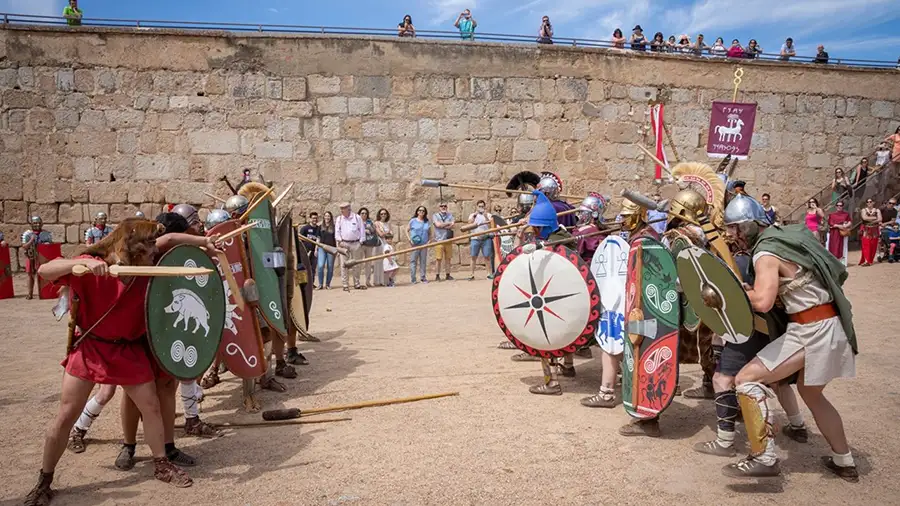
Every May, Merida goes back to the first century AD. The streets fill with historical recreations featuring period costumes, rituals, scents and objects from the era. Chariot races take place in the Roman Circus. The Amphitheatre stages gladiator fights with full protocol, including the Pompae Gladiatoria, the ceremonial procession that preceded the bouts. There is a Roman market, period theatre, a mock slave auction, a torchlit procession through the city at midnight, and even gladiatorial training sessions for children. The 16th edition took place in 2026. It is hands-on, participatory history, and genuinely great fun.
What else is there in Merida?
(what we did not manage to see)
With the clock ticking and Cadiz on the horizon, we left after the Theatre and Amphitheatre. Merida has plenty more to offer, though the heat that day (a proper "why did I ever leave the house?" kind of heat) had taken the edge off our appetite for more open-air monuments.
That said, here is what you should not miss if you have more time:
Temple of Diana
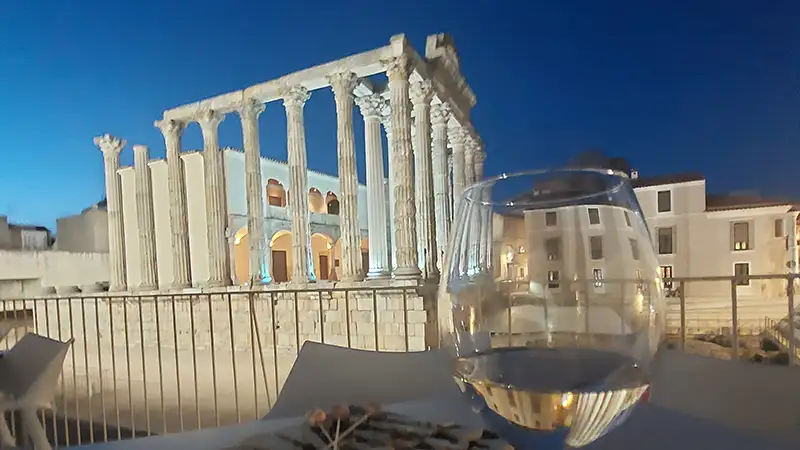
Right in the middle of the old town, genuinely integrated into the surrounding street. You turn a corner and there it is: a 2,000-year-old Roman temple standing between modern buildings.
Roman Bridge over the Guadiana
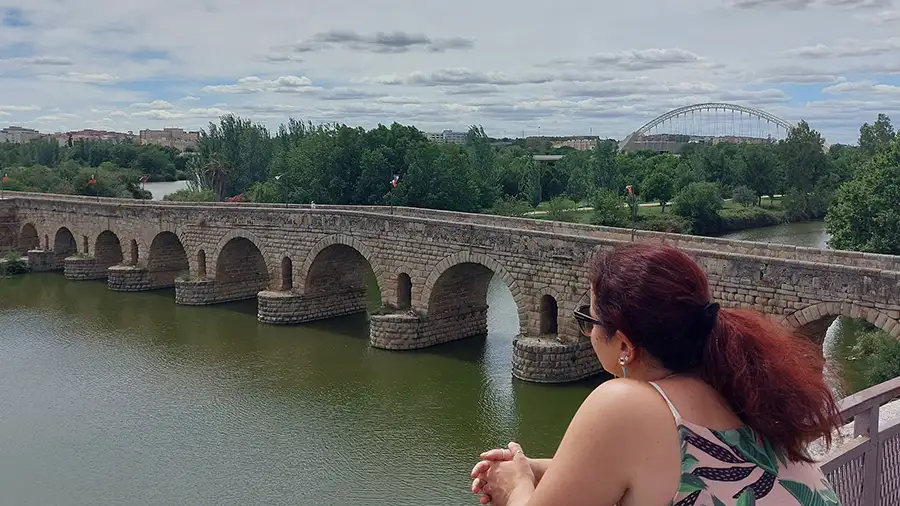
60 arches, 792 metres long. The longest on the Iberian Peninsula and one of the best-preserved Roman bridges in the world.
Aqueduct of the Miracles
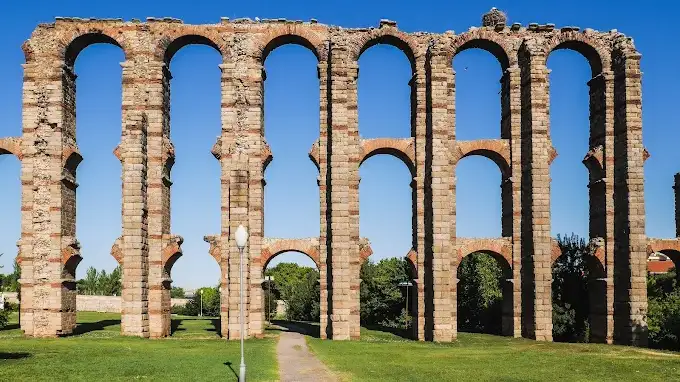
Around 800 metres of intact structure, originally part of a 10 km system. A great spot for stork-watching as an added bonus.
Arab Alcazaba
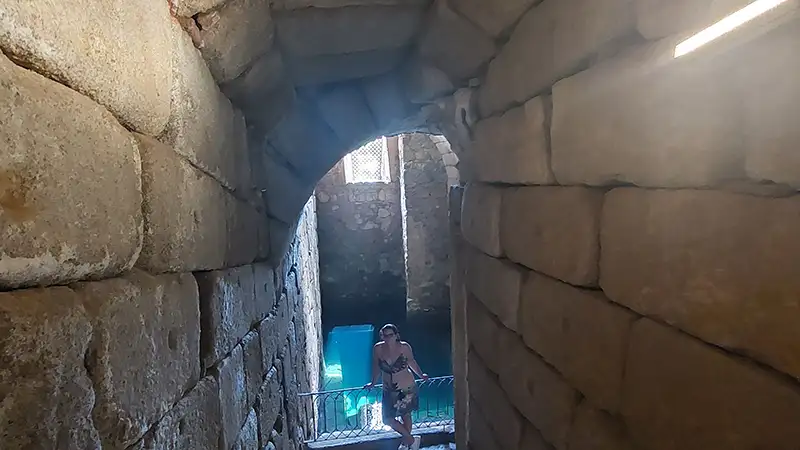
A 9th-century Muslim fortress that reminds you Merida was not always Roman. The view from the top of the walls over the River Guadiana makes the climb worthwhile.
National Museum of Roman Art
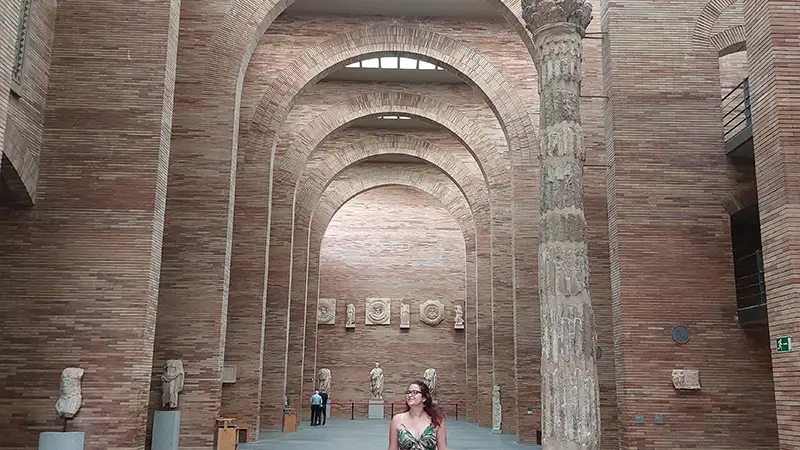
Widely regarded as one of the finest Roman museums outside Italy. If you like context before or after the ruins, this is essential.
Casa del Mitreo
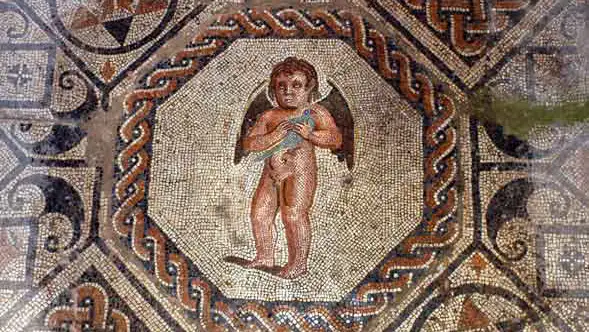
Remarkable mosaics from a Roman residence, including the famous "cosmological mosaic" depicting the ancient Roman vision of the universe. Essential for anyone with a serious interest in the period.
Final verdict
Merida was not on the itinerary. It was a passing stop, a name on the map that conjures Disney princesses but delivers Roman ruins that genuinely stop you in your tracks. We left with our heads full of history, sunburn on our skin, and that particular feeling of having stumbled onto something wonderful where we least expected it. We want to go back, ideally for an event at the Roman Theatre, and ideally when it is considerably cooler.
The swim in Cadiz came afterwards and was every bit as good as planned. But honestly? The stop in Merida may have been the highlight of the whole day, birthday and all.
If you are crossing Extremadura on your way anywhere, do yourself a favour: pull over, buy a ticket, and let the Romans do the rest. Every minute is worth it.