Doñana National Park lies in Andalusia, in southern Spain, and is a UNESCO World Heritage Site. Its marshes, dunes, beaches and woodland attract migratory birds, and it is one of the places where the Iberian lynx lives, which is why many people book a tour there.
Here we explain what Doñana is, describe our own tour from El Rocío and set out what to expect at different times of the year, so you can choose the right tour and the right time to go.
What is Doñana National Park
Before describing our tour, it helps to explain what Doñana is. It is a nature reserve in Andalusia, in southern Spain. It is internationally known among birdwatchers because it lies on the route of birds migrating between Europe and Africa, but there is more to it than that.
The national park covers more than 50,000 hectares between Huelva and Seville and has existed since 1969. In 1980 it was also designated a Biosphere Reserve and, in 1994, a UNESCO World Heritage Site, so it has three layers of protection.
Doñana can be roughly divided into three main ecosystems.
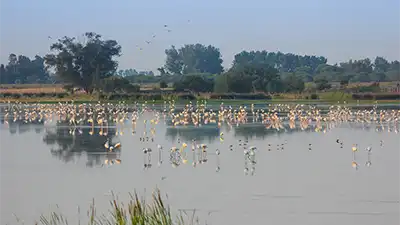
Marshland
The marisma, or marshland, is a plain that floods with rainwater and water from the streams. It is the main place to spot birds.
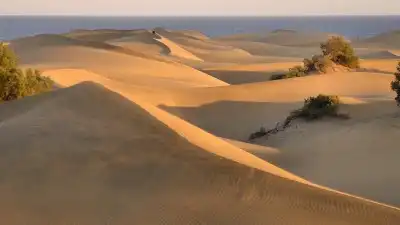
Beaches and dunes
These run along the coast. Small lagoons appear and disappear between the dunes with the rain.
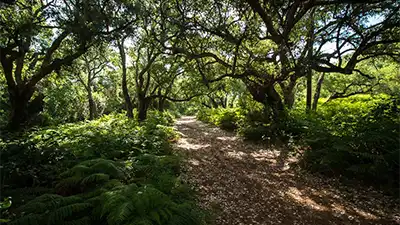
Woodland
Cork oak and pine woods with thick scrub, a good place to spot animals such as deer and rabbits.
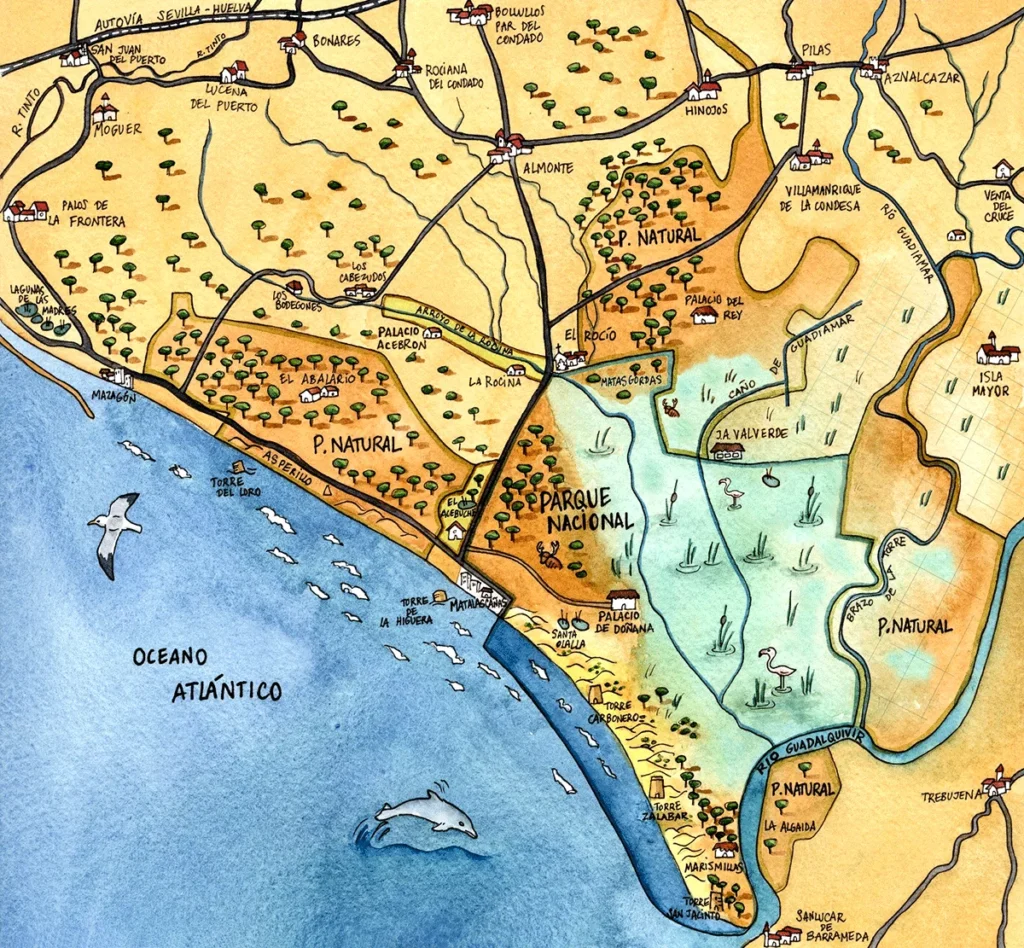
Our experience on the 4x4 tour from El Rocío (with lots of photos!)
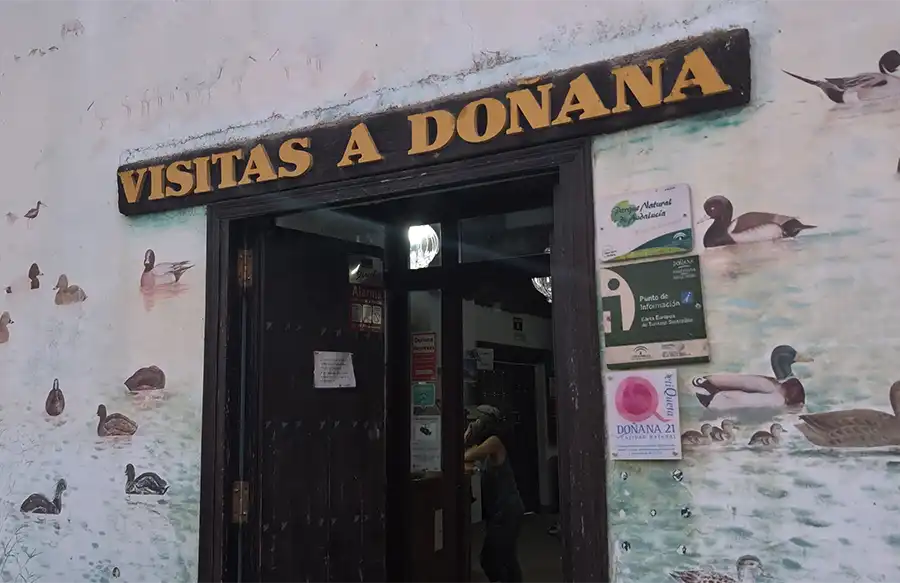
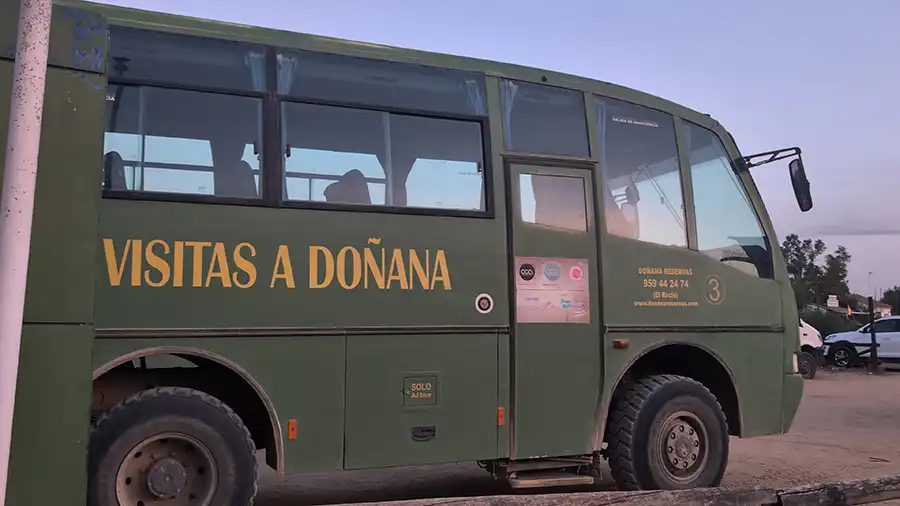
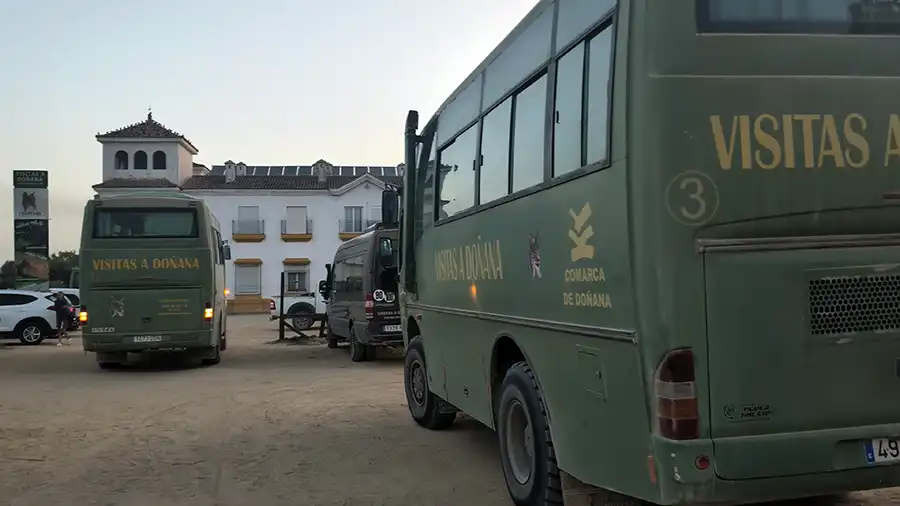
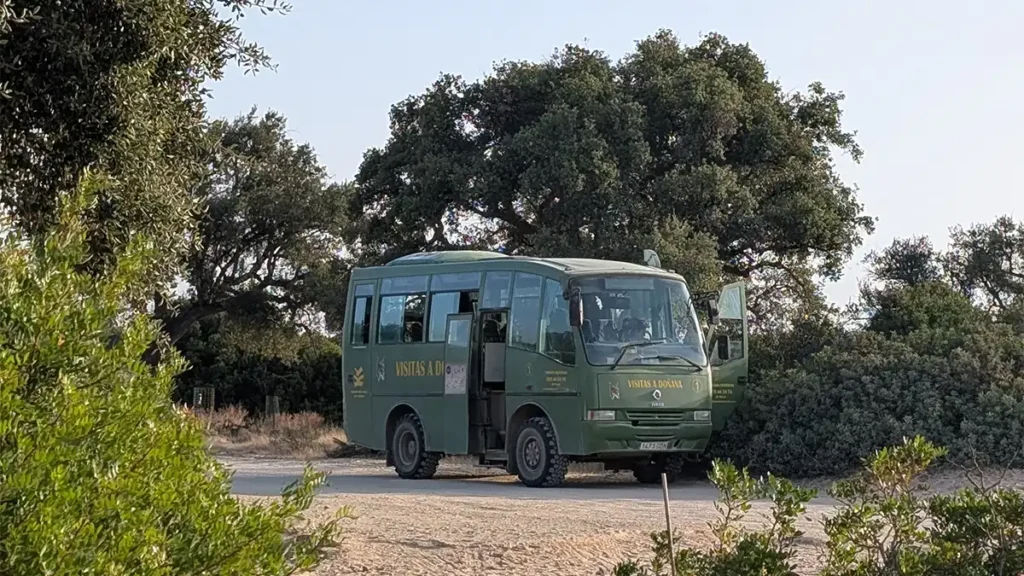
We chose the morning tour with Doñana Reservas y Visitas, which leaves from El Rocío. We arrived very early at the agency office to exchange our tickets and wait for boarding, as the departure was at 8.00 am. There is a cafe open almost opposite where you can have a quick coffee before leaving. The 4x4 buses were already parked in the square in front of the shop.
Boarding follows the order in which tickets are exchanged, so whoever exchanges theirs first gets on first, and our bus was full, with twenty-odd people on board. Our guide, Sonia, spoke both Spanish and English. Before entering the park, the bus drives through the streets of El Rocío, where they explain a little about the religious brotherhoods and the tradition of devotion to the Virgin.
We then took a dirt track towards the park, and this is where the frenzy begins, with everyone glued to the windows looking for animals.
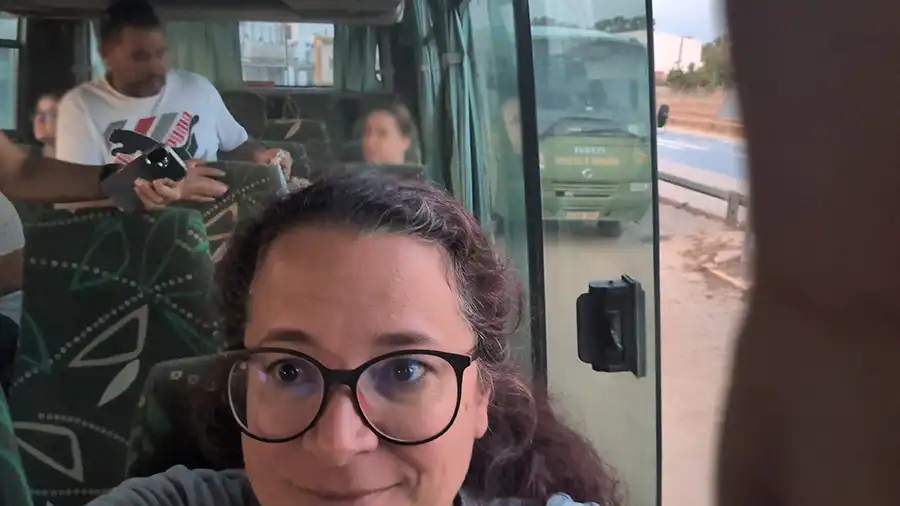
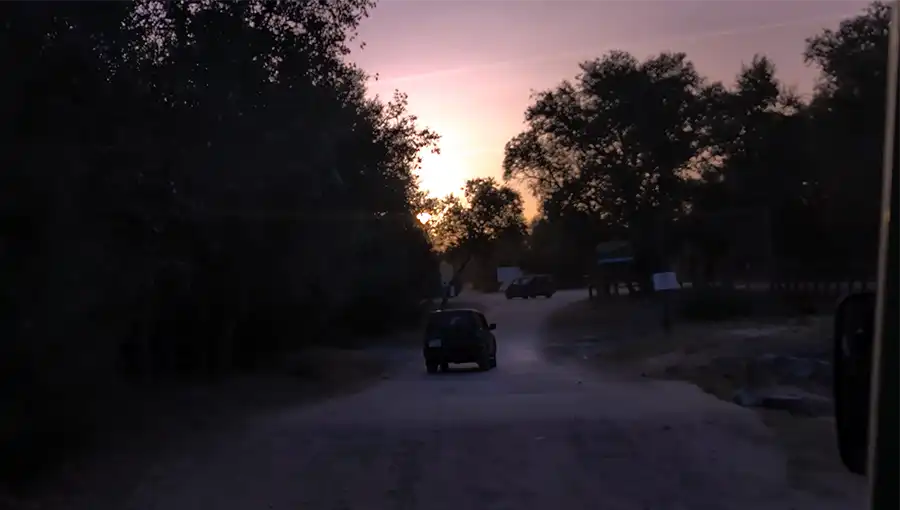
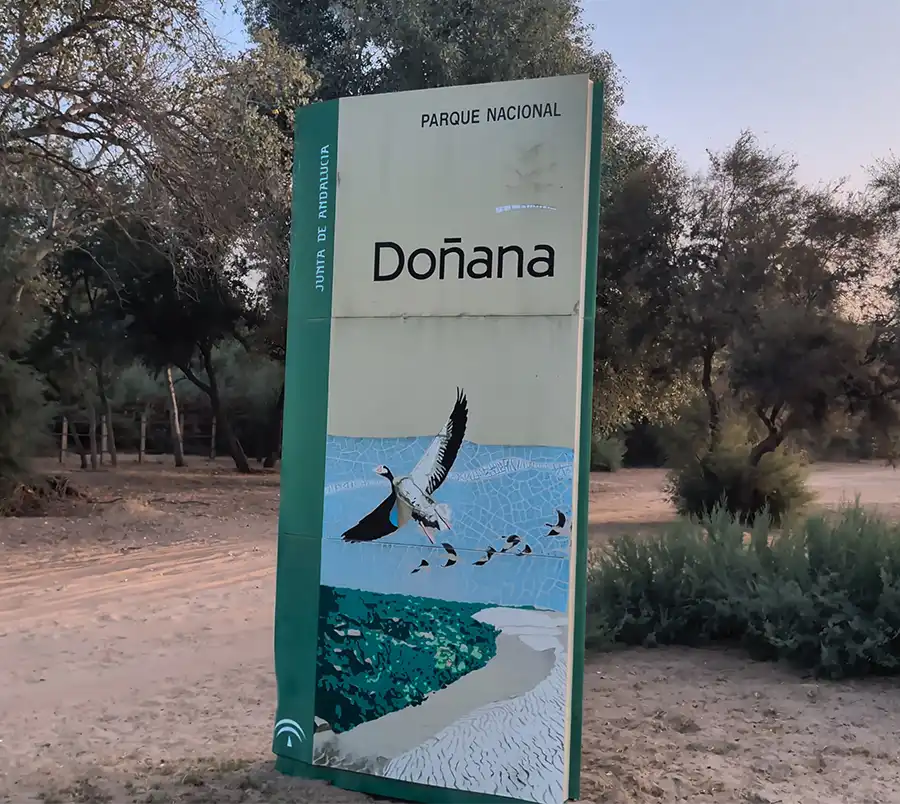
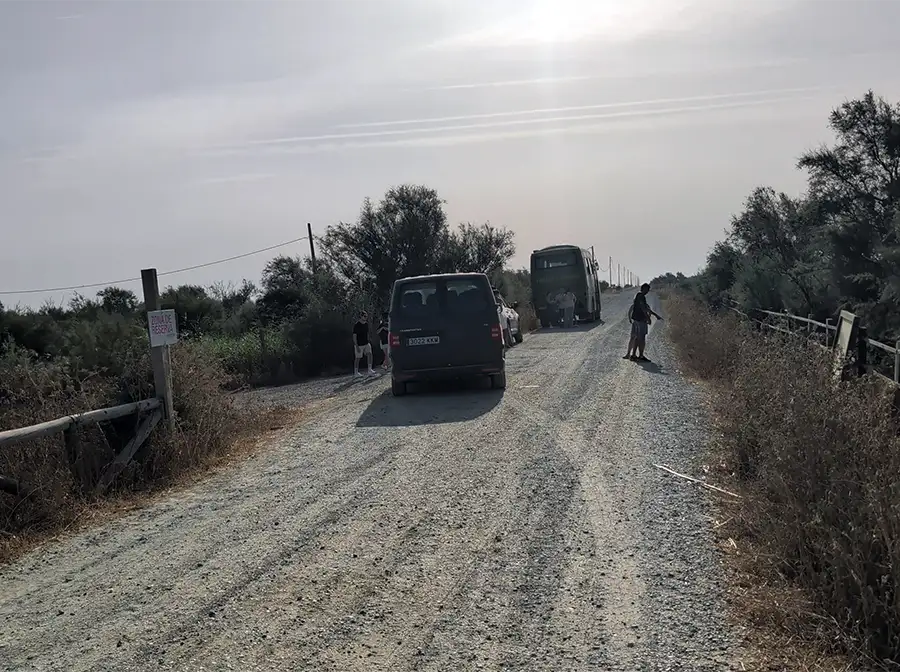
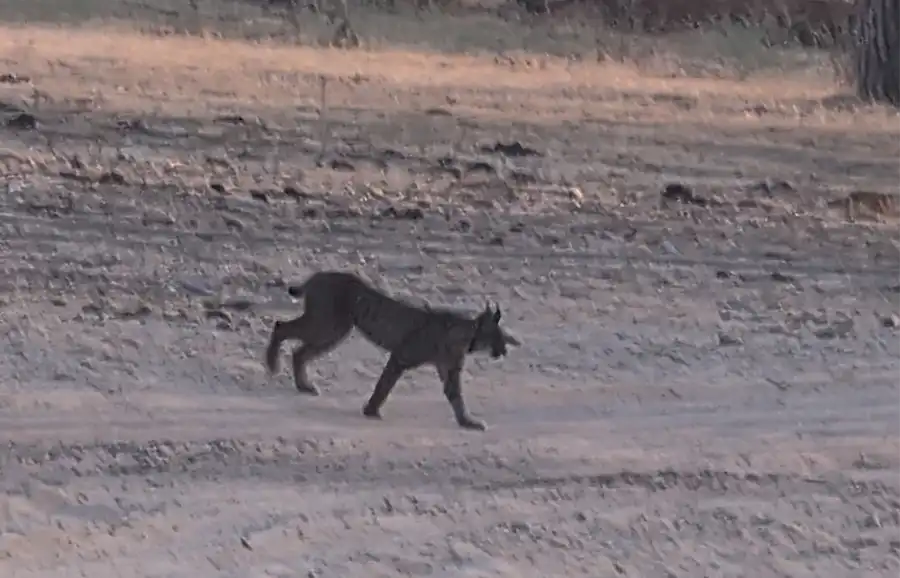
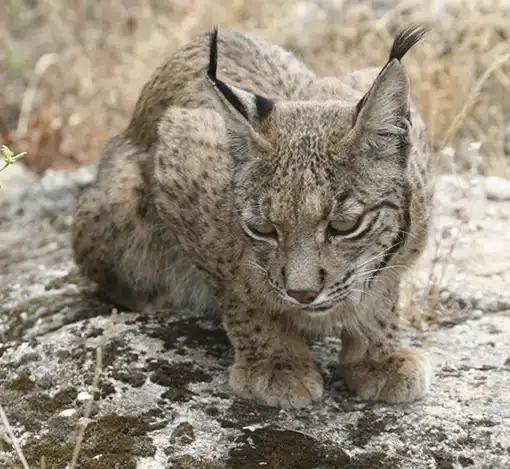
During the tour we saw deer, rabbits, quail and, yes, the famous Iberian lynx!
We were lucky straight away, on the way in. The guides from the different operators keep in touch with each other, and one of them let everyone know that a lynx had been spotted. All the vehicles began circling the area, and that was how we saw a female cross the road. We managed to photograph her from inside the bus, and it was thrilling!
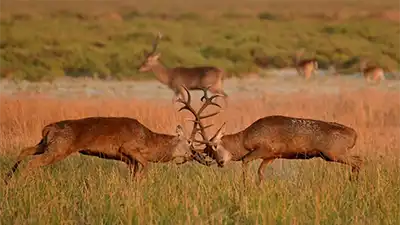
Furthermore, the deer were in their rutting season, and the males were bellowing so loudly that they could be heard from far away. It was fascinating to see, because the young were already quite big, so the families were venturing out together while the stags bellowed. It was quite an experience.
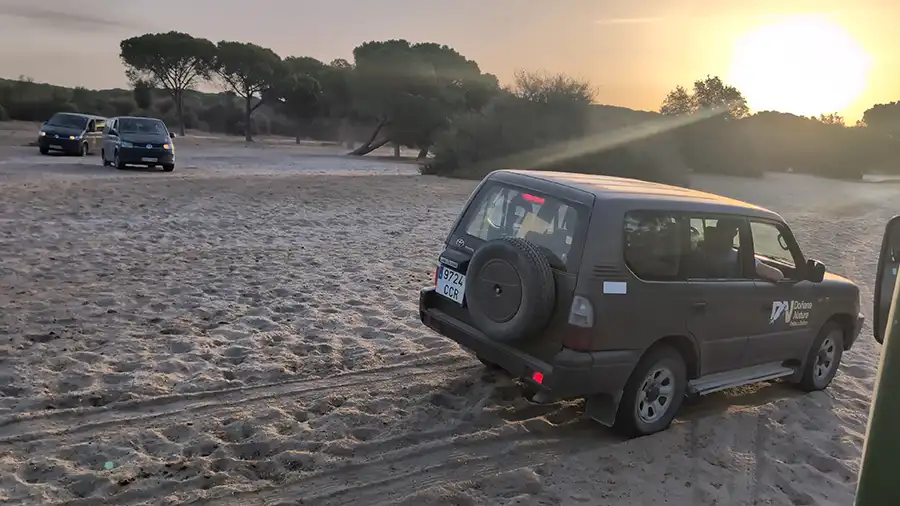
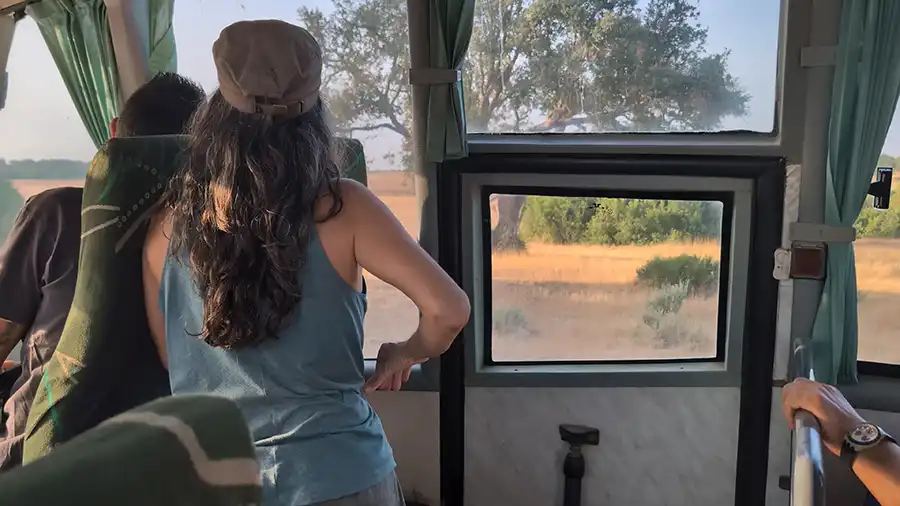
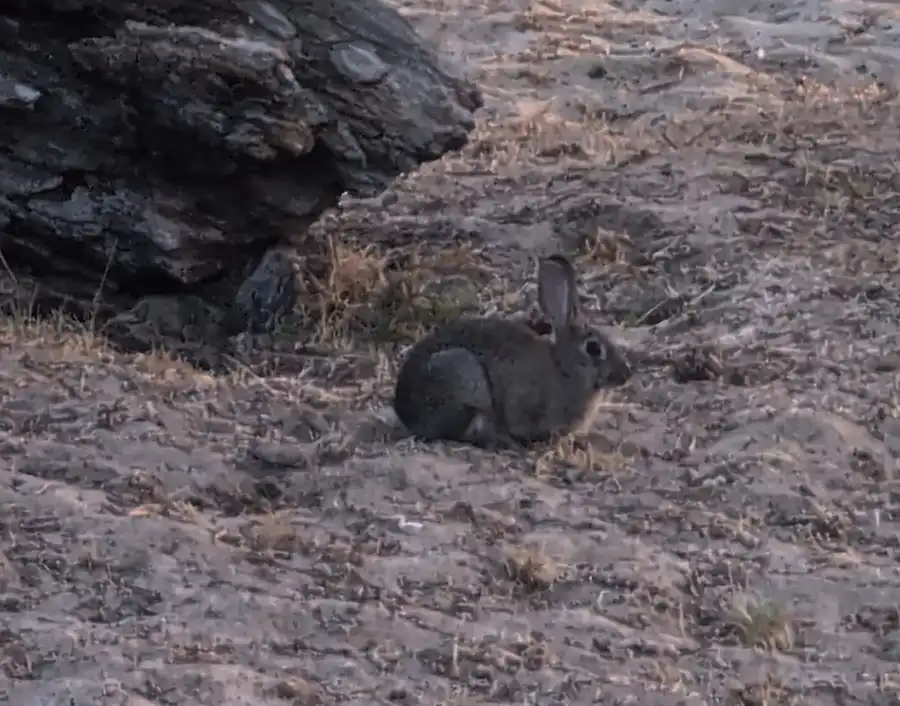
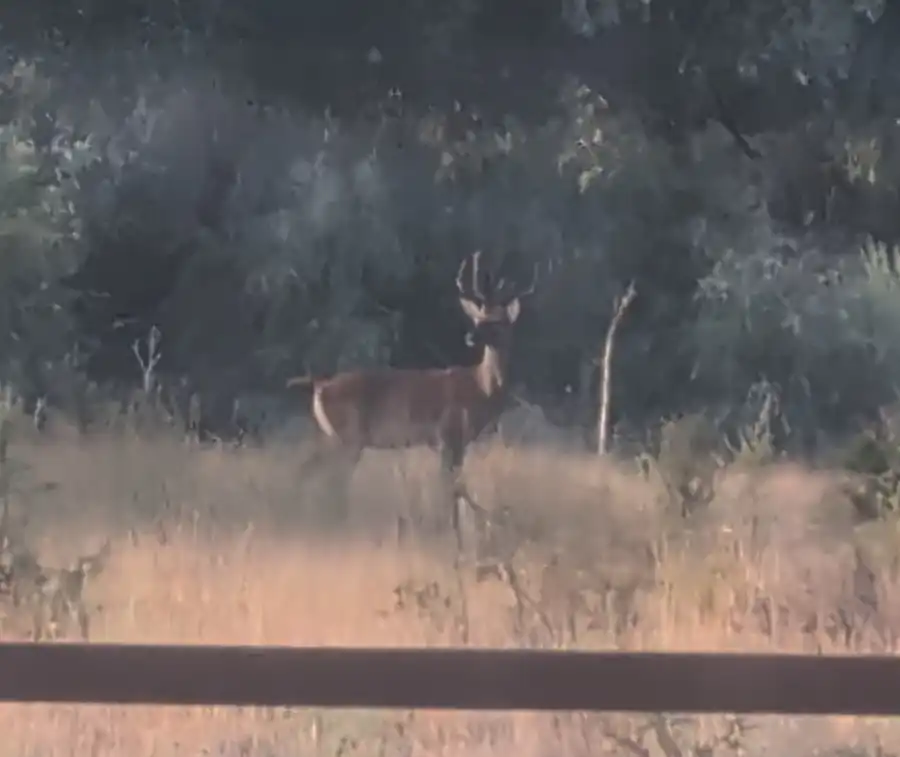
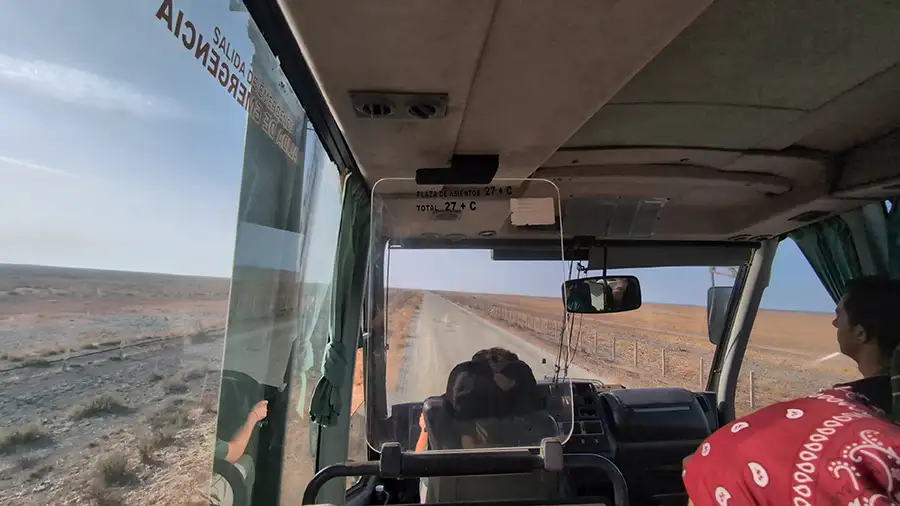
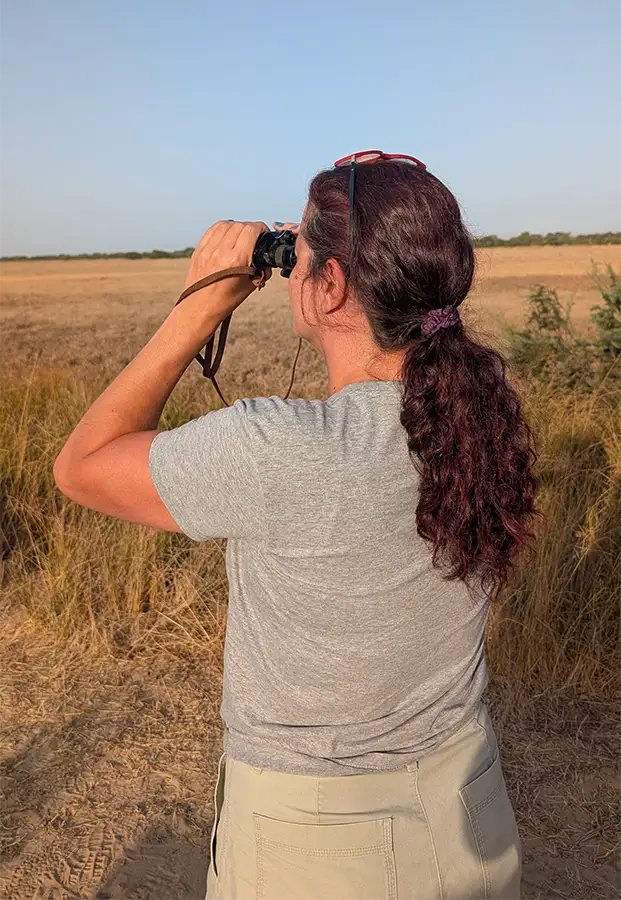
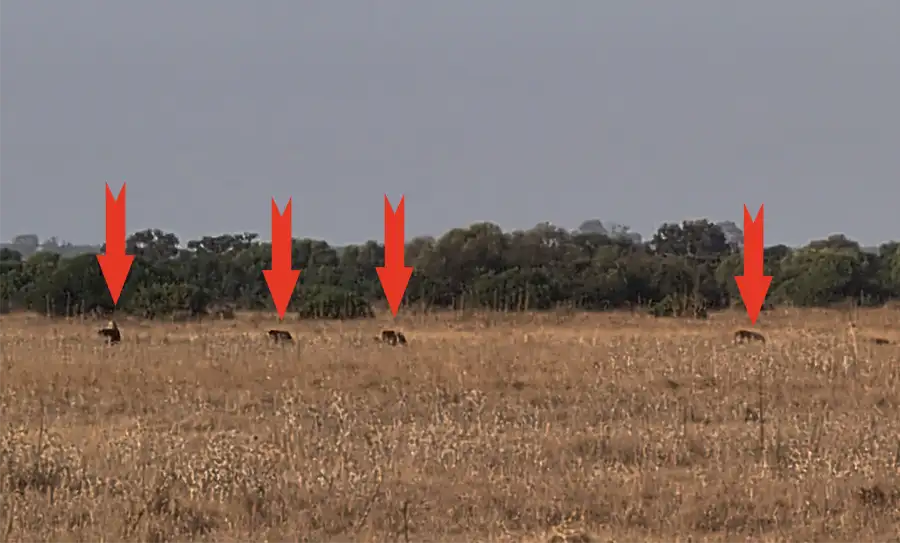
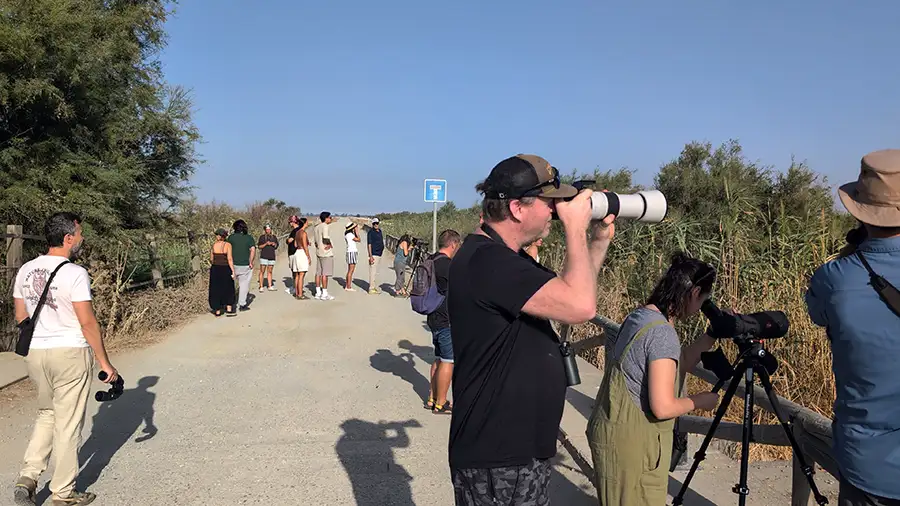
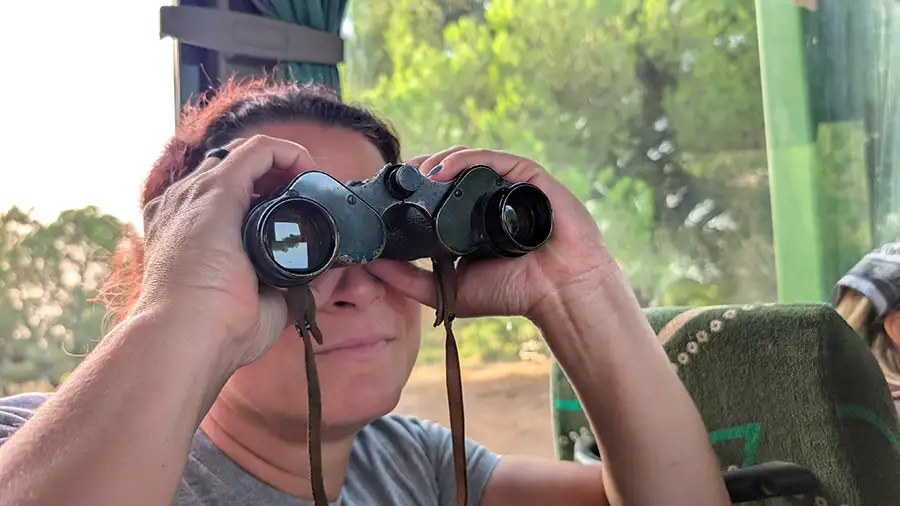
The tour made three stops along the way. The guide brought a telescope, which let us see the animals up close, down to details such as the deer's coats and the birds' feathers. We had our own binoculars with us too, but to be honest the animals were still a bit too far away.
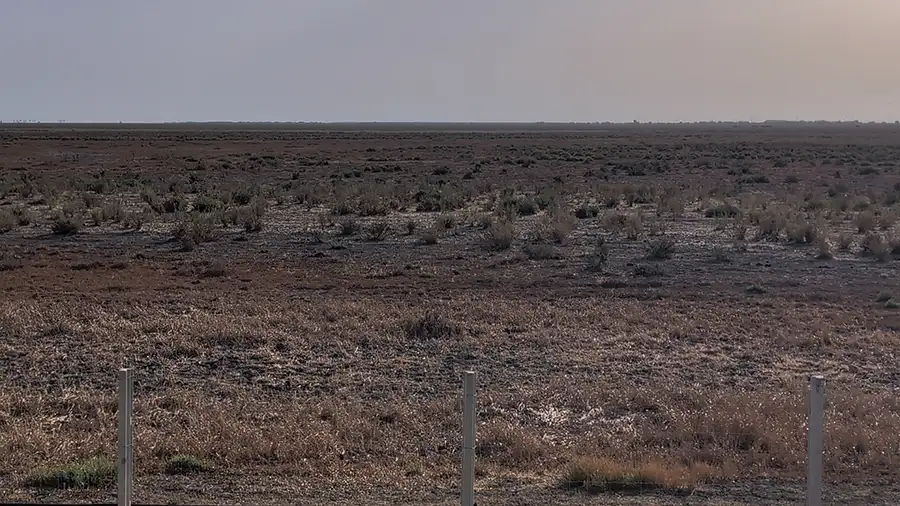
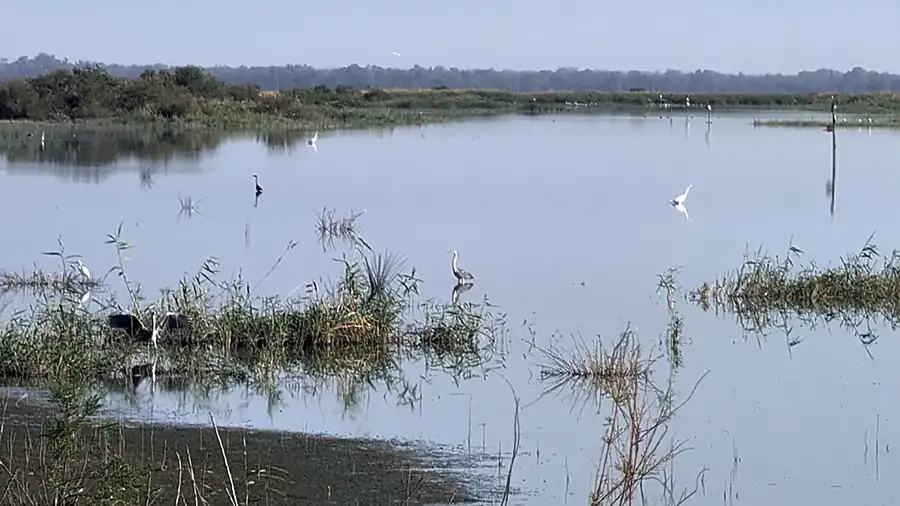
When we went, in September, the marshland was dry and there was not much to see. It makes up more than half of the tour and is the high point of the park, with plenty of migratory birds enjoying of the pools that form there. We found only dry ground that seemed to stretch on forever, and we spent a long time on the bus without much to look at. We still managed to spot a few birds in a nearly dry lagoon halfway through, but it was nothing like what we had imagined.
Overall, we saw more animals on the way in than on the way back, and the lynx was by far the highlight.
Practical information for planning your visit
The restricted areas of the park can only be visited on guided tours, in 4x4 vehicles or adapted buses. Tours leave from three different places, and each covers a different part of the park.
- El Rocío (northern route): The tour we did, with Doñana Reservas y Visitas. It costs €35 per adult and lasts 3 to 4 hours.
- El Acebuche (southern route): Covers beaches, dunes, the vera (where the woodland meets the marsh) and the southern marshland, with Doñana Visitas. It costs from €35 and lasts about 4 hours.
- Sanlúcar de Barrameda: Starts at Bajo de Guía beach, crosses the Guadalquivir on a traditional barge, tours the park by 4x4 and returns by boat along the river, with Doñana Visitas. It costs from €50 and lasts about two and a half hours.
There's also a combined tour of the northern and southern routes for €62 per adult, and you can do both on the same day or on different days.
It is worth checking each company's website, as they all offer other kinds of tour, such as private visits and smaller vehicles, as well as the ones listed here.
Doñana at different times of the year
The park changes a great deal over the course of the year, and each season offers something different. Because the animals are free to roam, you need to be in the right place at the right time to see any of them.
Spring
Birds that spend the summer in Doñana arrive from March and stay until the end of August, and many of them breed there. March and April are high season. Lynx give birth during this period, but the cubs stay hidden.
Summer
Expect dry marshland and few birds. By September the lynx cubs are bigger and more active, and the deer rut begins.
Autumn and winter
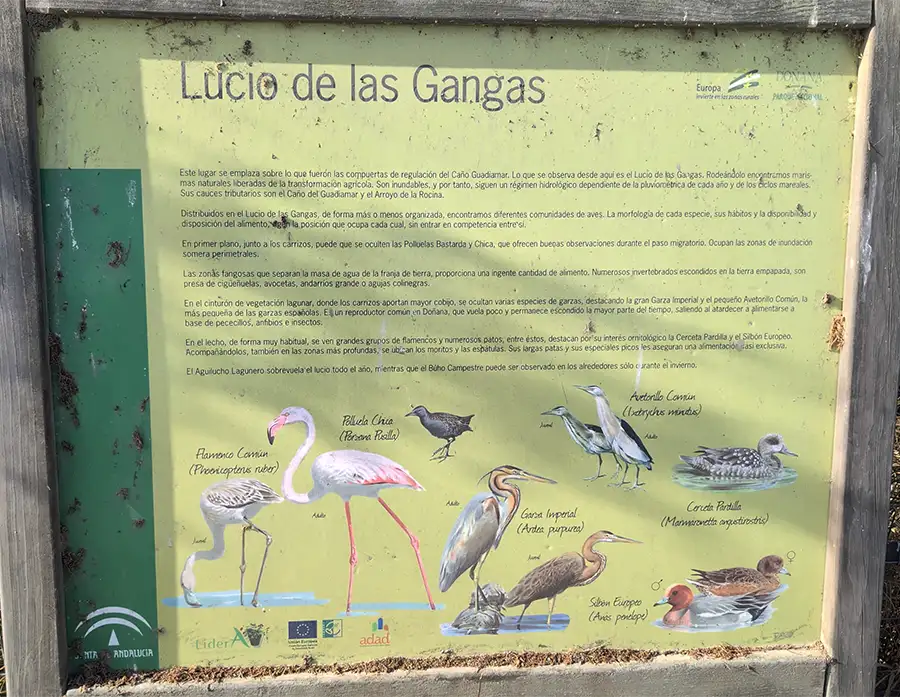
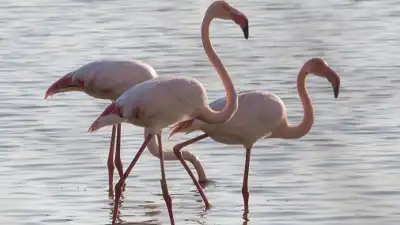
With the rains, the marshland floods and begins to look like a lake, where flamingos and other birds appear. Wintering birds stay from October to February, and in a single winter it is possible to see around 200,000 birds in Doñana.
The Iberian lynx in Doñana and the conservation project
The Iberian lynx is a medium-sized wild cat found only on the Iberian Peninsula. It came close to extinction, with fewer than 100 animals recorded in 2002. To reverse this, Spain and Portugal launched conservation programmes, and there are now more than 2,600 lynx across the two countries. Around 130 live in Doñana and the surrounding Aljarafe area.
Lynx conservation draws on several public projects, developed over more than 30 years by the governments of Spain, Portugal and the Spanish autonomous communities, with the involvement of NGOs and universities.
The projects work on four fronts:
- Captive breeding: Lynx are bred in centres, such as the one at El Acebuche in Doñana, and released into the wild. The centres have already released more than 400 lynx born in captivity.
- Rabbit and habitat recovery: The aim is to increase the rabbit population, which is the lynx's main food source, and to improve the areas where the lynx live.
- Connecting areas and reducing road deaths: Being hit by vehicles is now the leading cause of death for lynx. The European LIFE Lynx-Connect project links the areas where they live and puts up road signs to warn drivers.
- Awareness: Working with hunters and local communities to show the benefits of the lynx, as illegal hunting is still a threat.
Is it worth it? Expectations and tips
After doing the tour, we think Doñana is worth it, but it depends on what you hope to see. The park is very beautiful, but the tour is expensive, so it is best to go knowing what to expect.
The lynx is usually the animal people want to see the most, but relatively few live in the area, and they roam free, with no scheduled time to appear. If that's your only reason for going, you risk coming back without seeing one. We spoke to quite a few people who had been there and saw nothing at all.
Rabbits, deer and similar animals are the most common sightings, which is already worthwhile if you are not used to seeing them in the wild. If you would like to see lots of animals up close, there're other options in Spain, such as Parque da Natureza de Cabárceno, in Cantabria.
The time of year changes what you can see, so choose with care. We went in September, when the lynx cubs were already big and moved around a lot, which makes them easier to spot. The marshland, however, was dry and we saw hardly any birds. If birds interest you most, go in autumn or winter, when the marshland floods and the wintering birds arrive, or in spring, when they breed. Decide beforehand whether you want to see lynx or birds.
We would go back at a different time of year to see different things. Before you go, it is worth bearing a few tips in mind:
- Pick your dates carefully: The best season for lynx is not the best season for birds, so decide which you want most before you book.
- Arrive early: The first people to collect their tickets board first and get the pick of the seats.
- Book ahead: Especially in the high season. Departures have set times and spaces are limited.
- Bring water: There is nowhere to buy anything inside the park. On our tour, the visitor centre was closed.
- Bring binoculars: They help you see animals in the distance.
- Clothing and repellent: Wear comfortable clothes and shoes and make sure to take insect repellent with you.
- Uneven terrain: The tour is not recommended for pregnant women or people with neck or back injuries.
- Children and pets: The vehicles do not have child seats, and dogs and cats are not allowed to enter the park.