In Haro, in the heart of La Rioja's wine region, Spain hosts one of its most original and chaotic festivals every year. Thousands of residents and tourists dress in white, climb a hill, and wage a "war" where the only ammunition allowed is thousands of liters of red wine.
But how did this unique tradition start? What are the rules, and how can you join in? This straightforward guide covers everything you need to know about the famous Haro Wine Battle, from its origins to practical tips for experiencing it firsthand.
What is the Haro Wine Battle?
The Haro Wine Battle happens every June 29 at the top of Riscos de Bilibio, a mountainous area about 7 km from Haro's center.
The festival's roots, however, lie in religion, not battle. It's actually a romería (festive pilgrimage) honoring San Felices, a hermit who lived there in the sixth century. The wine battle started by accident during lunch after mass. With abundant La Rioja wine and a festive mood, pilgrims began playfully staining each other with wine using traditional wine skins.
Nobody expected this to stick. Early twentieth-century newspapers actually criticized the prank as "brutal," worried it would ruin people's clothes. But the tradition won out. What started as spontaneous fun became the main event, officially named "Batalla del Vino" in 1949.
Practical guide to attending
Thousands show up to this small city, so planning matters. Organization keeps things smooth and fun. Here's everything you need to know, straight and simple:
When does the Wine Battle happen?
The date is fixed and sacred: the battle always takes place on the morning of June 29th, Saint Peter's Day, regardless of the day of the week. We recommend arriving in Haro the day before, on June 28th.
For those with more time, it is worth knowing that the festivities in the city begin almost a week earlier, so arriving on the 27th or before is also a great option to live the complete experience.
Where does it happen?
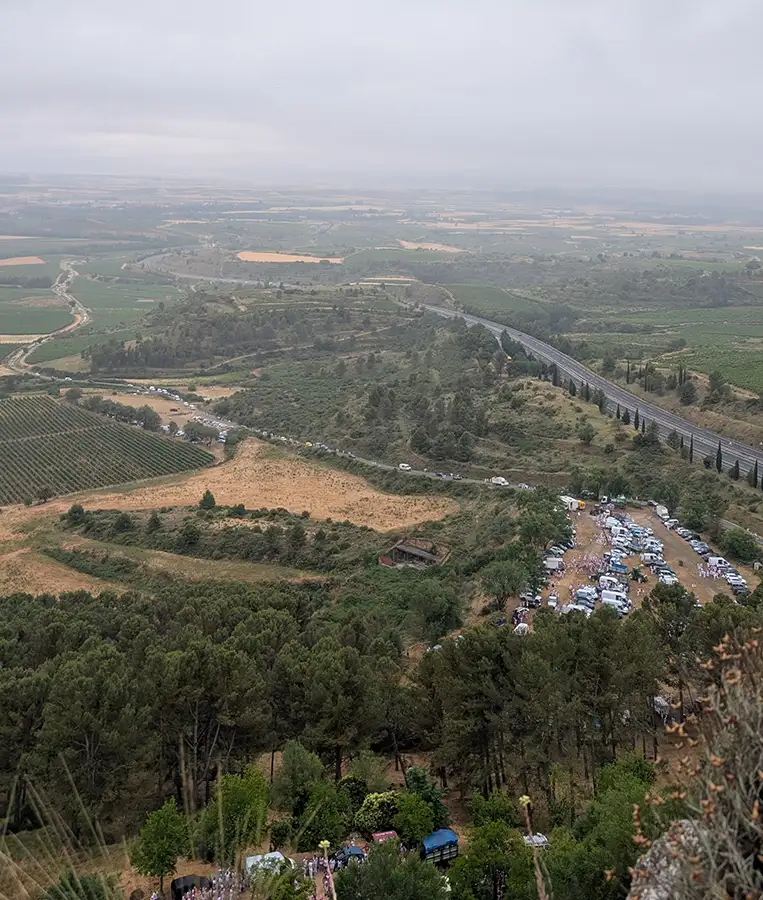
The battle doesn't happen in the city itself. In fact, throwing wine at people in town is forbidden. It all happens at Riscos de Bilibio, a park area on top of a hill 7 km from Haro.
Riscos de Bilibio is a mountainous complex with open spaces and picnic zones. The Chapel of San Felices sits at the top and is the region's highest point, offering sweeping views across the entire valley.
The day's schedule
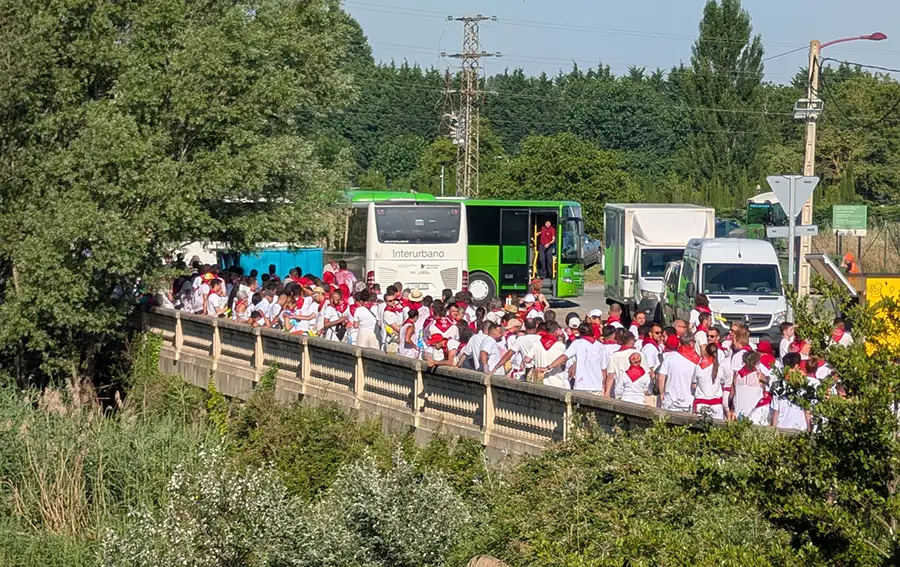
- 6:30: First buses leave from the parking area near the Oja-Tirón river bridge (the camping entrance esplanade). Buses depart every 30 minutes and the ride takes 7 km. Service runs until 8:30.
- 8:00: Mass at the Chapel of San Felices.
- 10:00 a 11:30: Buses return participants to the city.
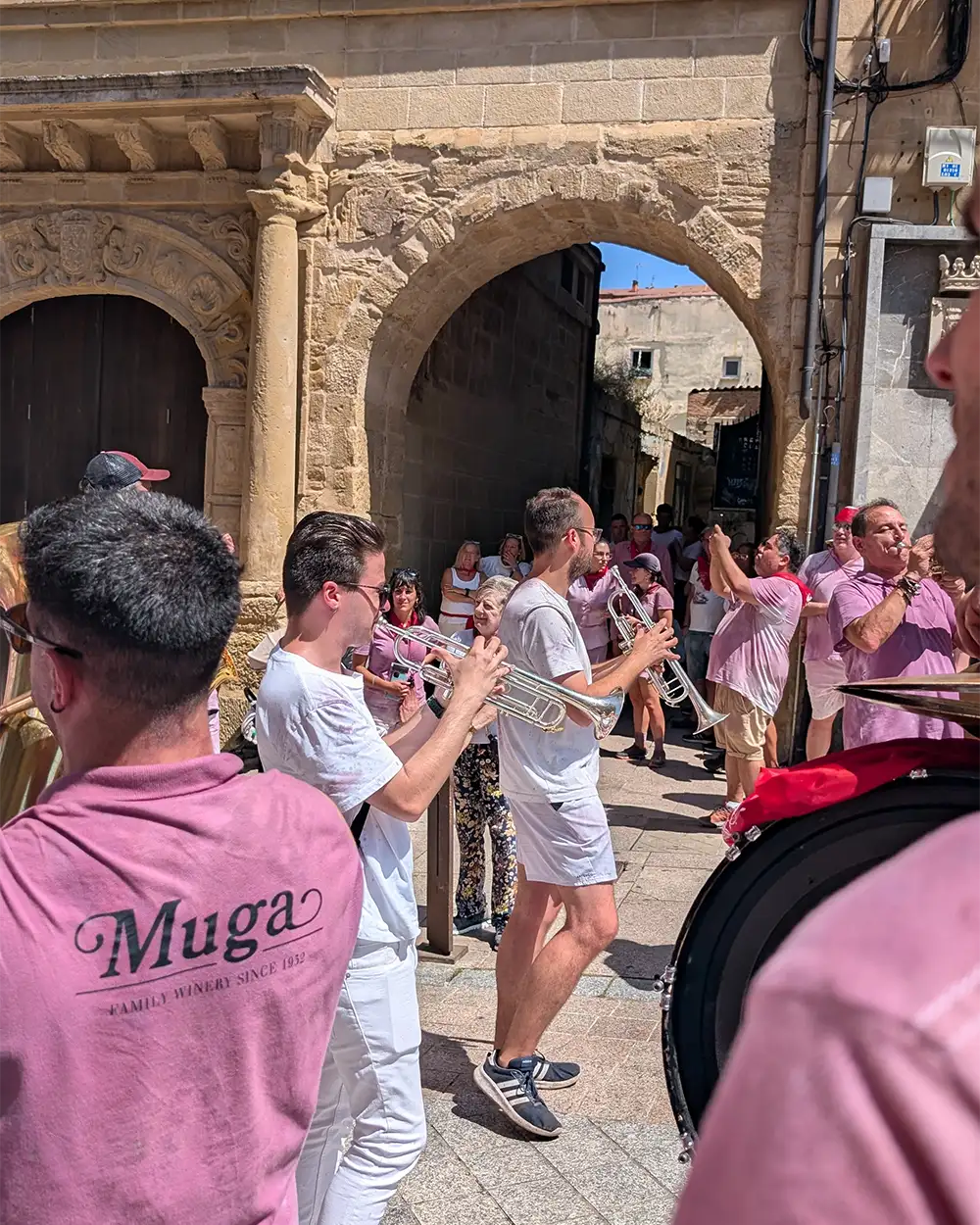
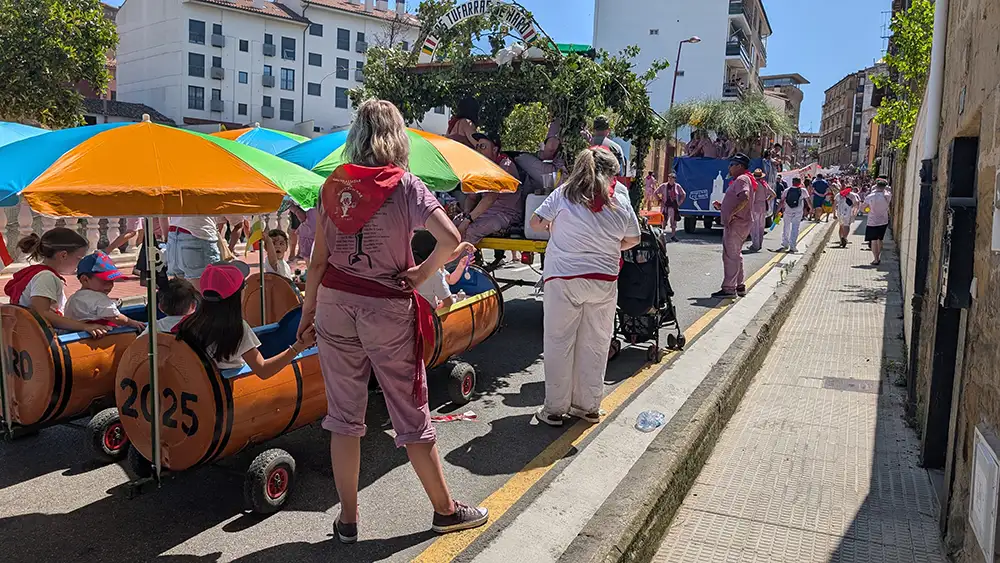
- 12:00: Everyone arrives at Plaza de la Paz in convoy, then processes with bands through to Plaza de Toros.
- Afternoon: Music events scattered throughout the city.
- 00:00: The festival ends with the traditional Toro de Fuego, a bull with fire on its horns (it's not a real bull).
Check the official program when it's released, as times can change.
Important: Peak madness hits around 9 a.m. when crowds reach their maximum. From 10 a.m. onwards, things start clearing out significantly.
Getting to the battle location: the bus service
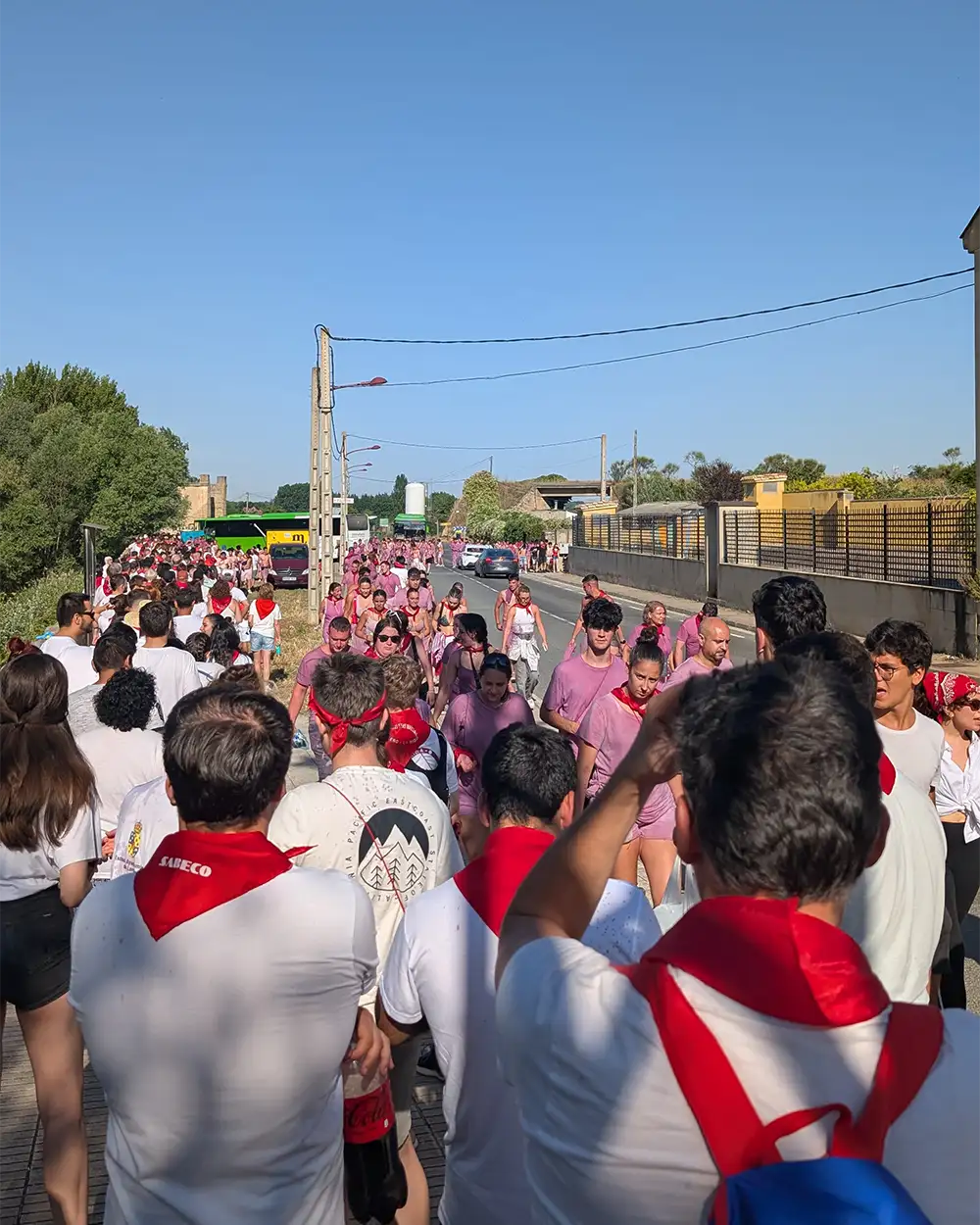
A dedicated shuttle service runs from the parking area near the Oja-Tirón river bridge (camping entrance esplanade). People line up starting at 5 a.m. and buses start at 6:30, departing every 30 minutes. Queues run long, expect a realistic wait of 2 to 3 hours. That's why we really recommend not arriving much later than 5 a.m. if you want to catch the festival at its peak.
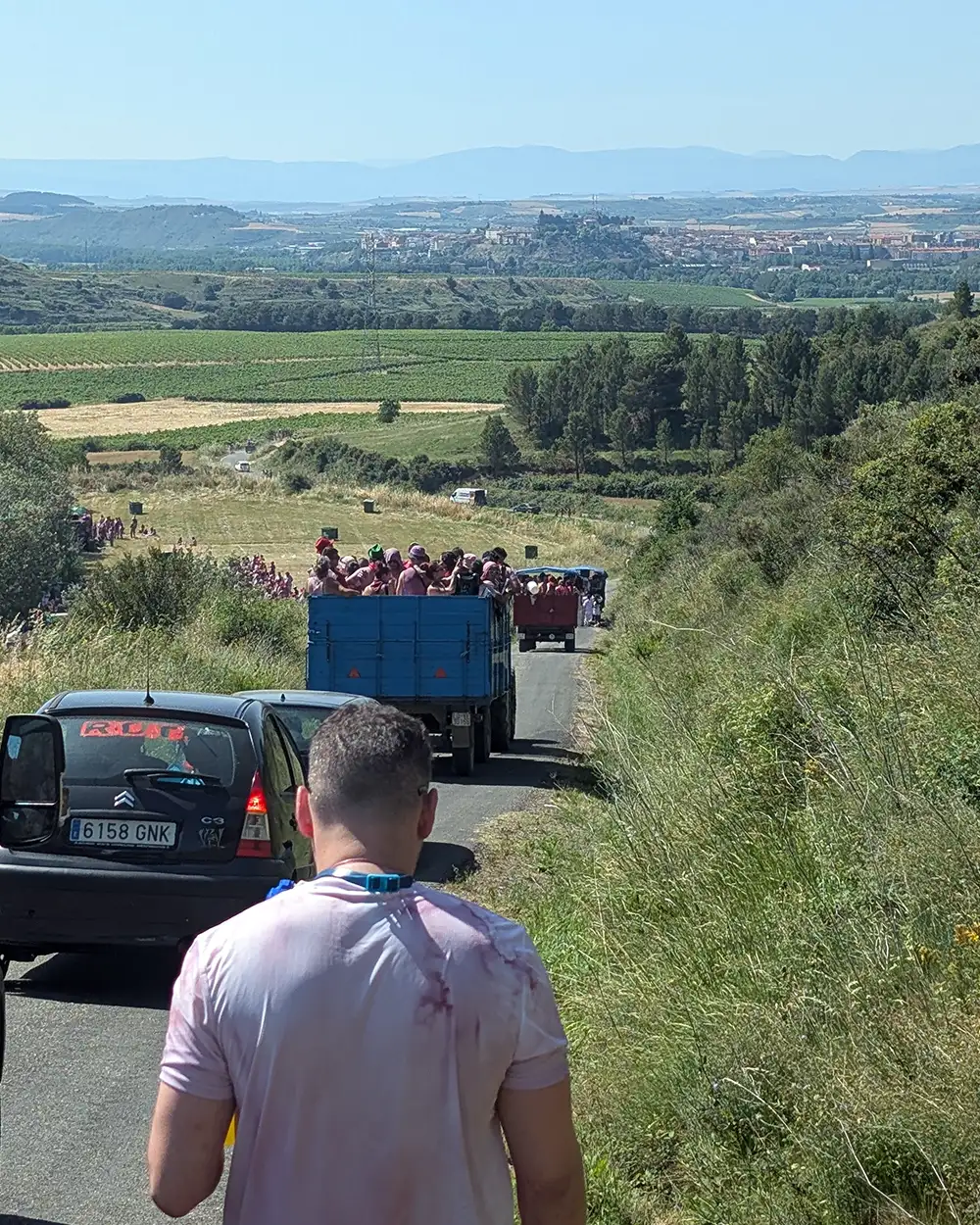
When it's time to head down, if you can't snag a bus seat for some reason, know that the walk is long. Consider asking one of the peñas or wineries for a ride down. They typically haul trucks and tractors absolutely packed with people. We saw they're usually really friendly and, if they have space, they'll let you ride with them.
Parking at Riscos de Bilibio
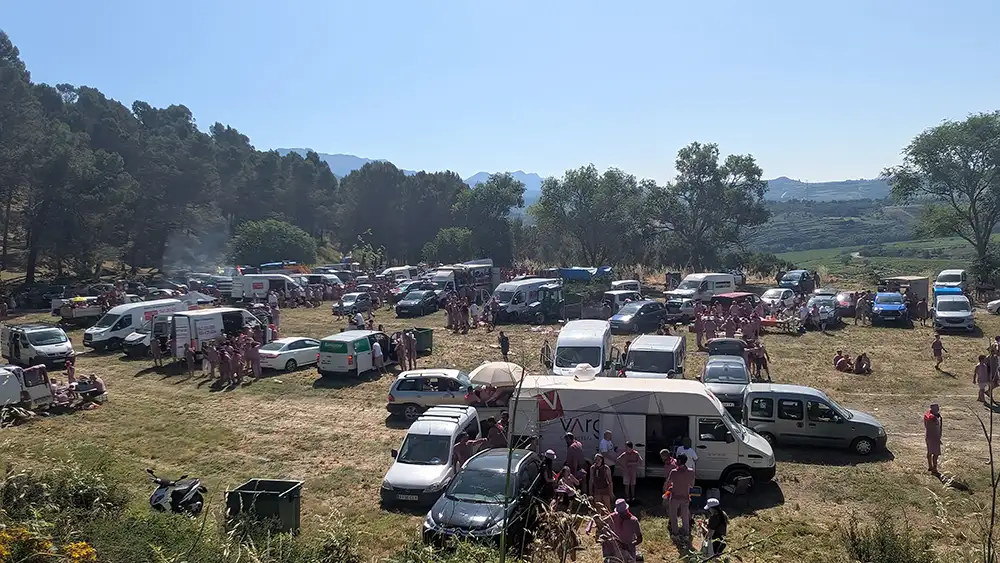
If you plan to drive and park at the battle site (Riscos de Bilibio), you need to request authorisation in advance. You'll need to fill out a form from Haro's town hall and send it to their email contact.
If you can't get authorisation, a car park is available for participants who arrive without permission. The conditions at this car park can vary, so confirm the details beforehand.
Important information:
Where to request: Centro Municipal de Cultura - Palacio de Bendaña
Timeline for requesting: Check the official festival programme (usually a month in advance)
What to wear and bring to the battle?
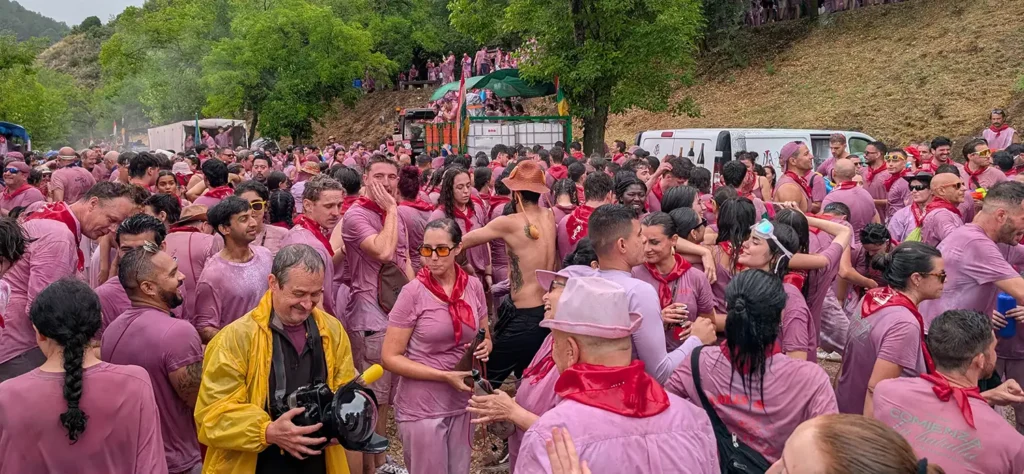
- White clothes: This is the unofficial uniform. Wear white clothing, preferably old pieces, as they'll get permanently stained purple.
- Closed, comfortable shoes: You'll walk on uneven, wet and slippery terrain. Old trainers are your best bet. Avoid flip-flops or sandals.
- Red scarf: Many participants wear a red scarf tied around their neck, the traditional pañuelo rojo from Spanish festivals. You can buy a cheap one in Haro.
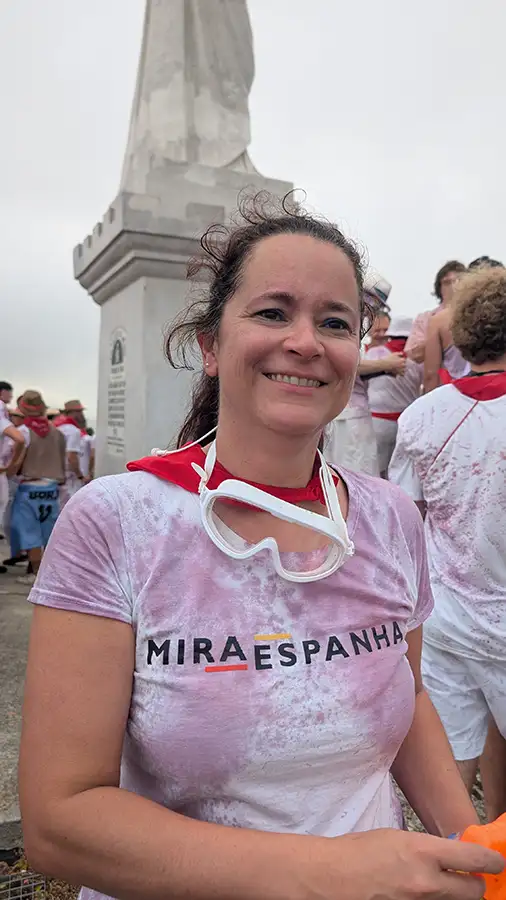
- Swimming goggles: It might sound excessive, but this is the most valuable tip. Wine in your eyes stings, and goggles let you participate in the "war" much more comfortably.
- Sunscreen: Bring some and apply it before you go, even if the day looks cloudy. You'll spend hours outdoors.
- Phone and camera protection: If you're bringing your phone, use a waterproof case. A GoPro or similar action camera works best for photos.
- Cheap wine: Bring cheap red wine to use as "ammunition". It doesn't need to be good quality since you'll be throwing it at others. Local wineries bring A LOT of wine to the battle and you can always ask them to refill your weapons.
- A bucket or wide-mouthed container: The wineries' taps are large and a wide container makes refilling easier.
- Wine to drink: If you want to drink good wine during the event, bring some from home in a non-glass container, as the wine available at the site is quite poor quality.
The "weapons" allowed at the battle
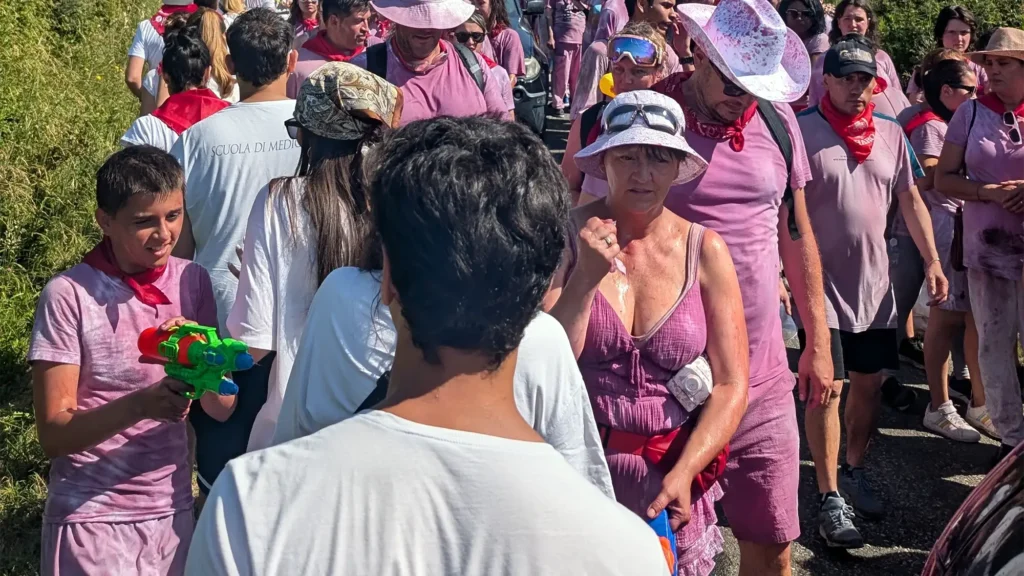
Any container that helps you throw wine is valid, except glass bottles for safety reasons. The most common "weapons" are:
- Wine skins: The most traditional and authentic option.
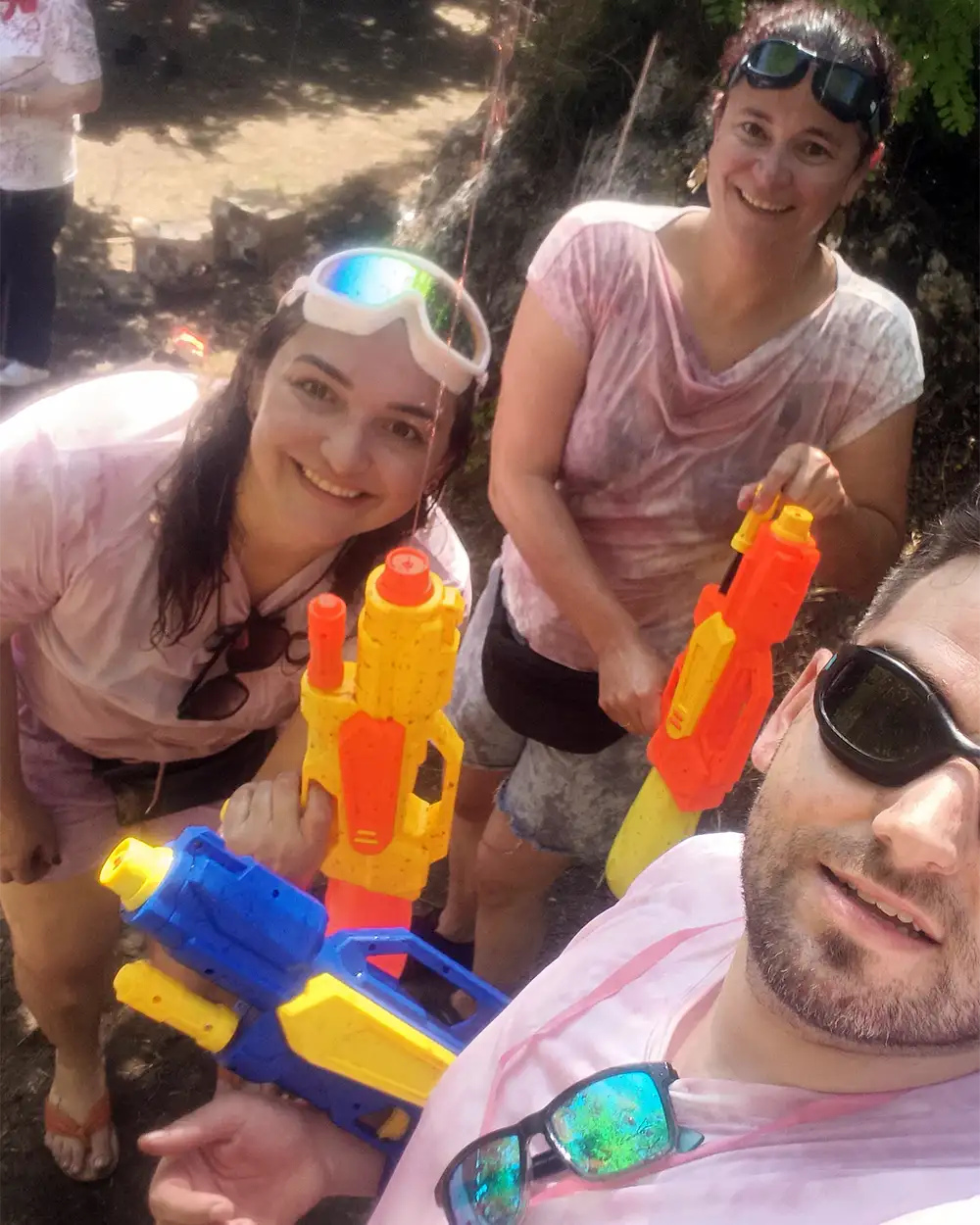
- Water guns: Efficient and very popular.
- Buckets and plastic bottles: For mass attacks.
- Garden sprayers: Used to cause maximum purple "damage".
You can buy these items at shops in the city in the days before the festival.

How to get to Haro?
By plane: The nearest airports are Bilbao (BIO), about 1 hour by car, and Logroño (RJL), 40 minutes away. Madrid airport (MAD) is an option for international flights, but it's about 3 hours 30 minutes by car.
By car: You can explore La Rioja's wineries and villages freely in the days before or after the festival. However, to reach the battle area on the 29th, the road access to Riscos de Bilibio closes early. If you're not among the firsts ones to arrive, you'll need to park further away and walk up or take a bus.
By bus or train: Buses (mainly the ALSA company) are usually the most straightforward way to reach Haro from cities like Bilbao, Logroño and Madrid. The train (Renfe) is also an option. For both, you must buy your ticket well in advance, as tickets for the festival date sell out quickly.
We recommend checking our partner OMIO, which lets you compare all transport options.
Where to stay in Haro?
This is perhaps the most critical part of your entire planning. Haro is a small town with limited hotels that sell out incredibly quickly for the festival date.
Our recommendation is to book your accommodation between October and December of the previous year. This isn't an exaggeration. If you leave it any later, you'll almost certainly find no available rooms in the town. If you can't find more hotels in Haro, look for accommodation in nearby towns within a short drive, such as Logroño, Vitoria-Gasteiz or Miranda de Ebro.
To search and secure your place in advance, we recommend using our partner Booking.com to compare prices and see hotel locations on the map.

The Complete Experience
We arrived early to experience the festival properly. We managed to be there around 8am to attend the mass at the San Felices chapel, which was already packed when we got there! The chapel is tiny and can't fit many people, so if you really want to see the mass from inside, arrive at least 20 minutes early. But even so, it's absolutely worth climbing the endless steps to get up there, because the chapel sits at the top of the hill with views across the whole region and you can even go to the very top, where Saint Felices' statue stands.
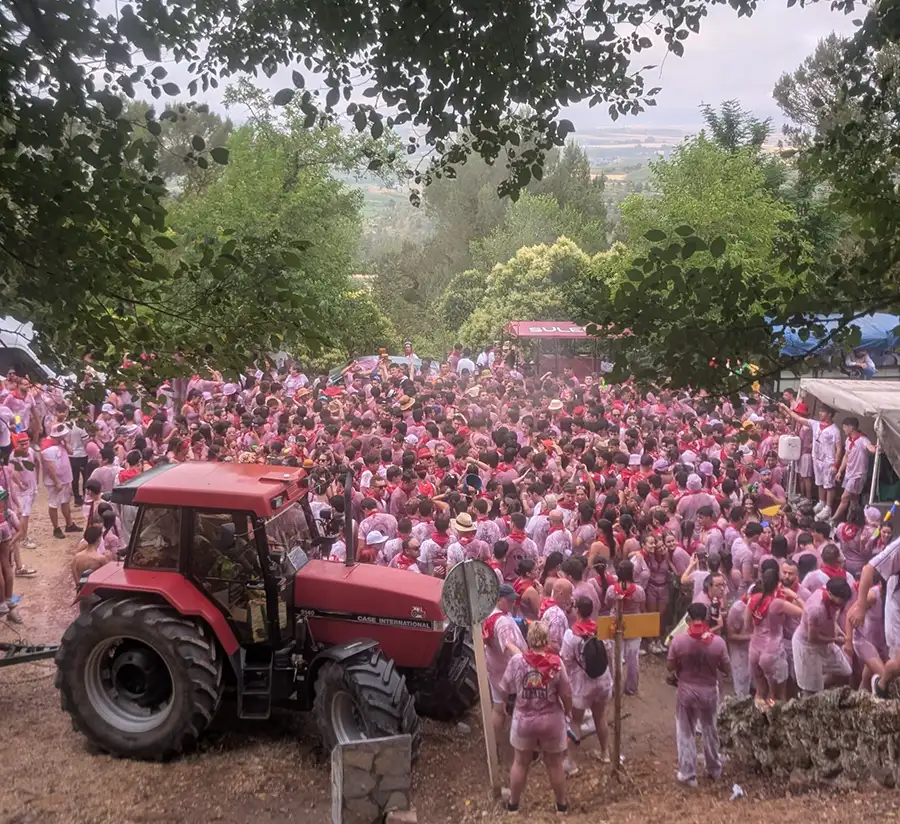
Technically the battle should only start after the mass, but the truth is people already start throwing wine beforehand, on the way to the chapel. We arrived at the top already quite soaked.
The festival reaches its peak around 9am, when the crowd hits maximum chaos. The fiesta is genuine, the energy is contagious and you really feel what makes this event special. Beyond the battle between participants themselves, the wineries throw wine at people by the bucket, it's absolute madness. One winery even set up an irrigation sprayer, the kind you use for crops, to create a constant rain of wine. There are also lots of bands and music, it's tremendous fun. People dancing in a wine shower!
Local wineries bring wine, but the dynamic is more about sharing amongst friends than open distribution. If you arrive and ask for wine, you'll usually get some, but the vibe isn't "come and help yourself freely". Each group has their own thing going on.
Is it worth it? The answer is an emphatic yes. Actually participating, arriving early and feeling the festival at its peak, is a memorable experience you won't forget. The collective energy, the joy and the organised chaos make this festival something truly special. If you're the type who loves street celebrations, doesn't mind the mess and wants to experience something unique, the Haro Wine Battle is absolutely worth it.