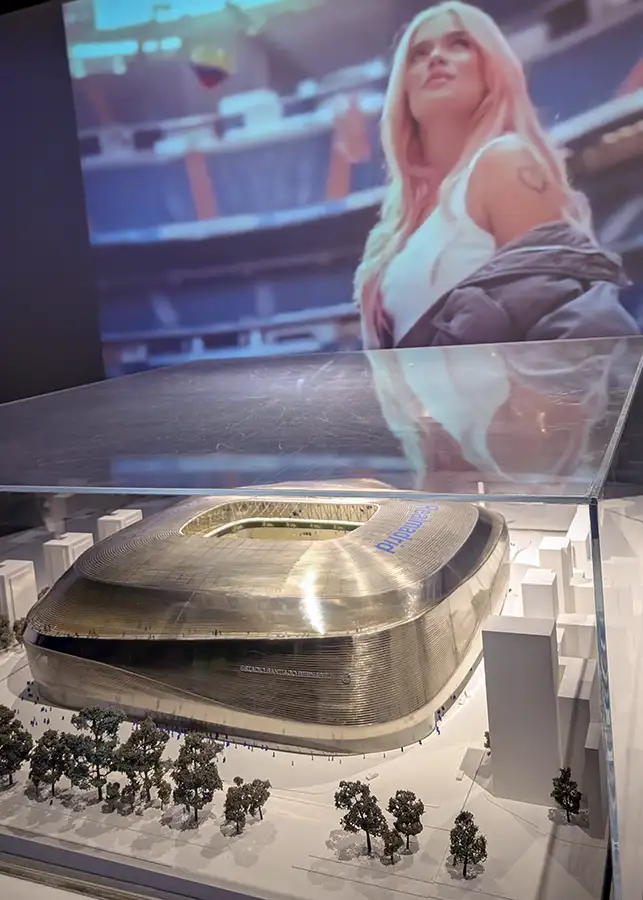
I'm not much of a football fan, but when your husband is a Real Madrid supporter, this stadium visit becomes MANDATORY. The Bernabéu attracts over a million visitors a year and is one of the most popular attractions in Madrid, alongside the Prado and the Reina Sofía. I went in with low expectations, knowing little about Real Madrid beyond the name, and left with an experience that had genuine surprises and a few "oh, okay then" moments. If you're thinking of going, here's what's actually waiting for you inside.
What is the Bernabéu Tour
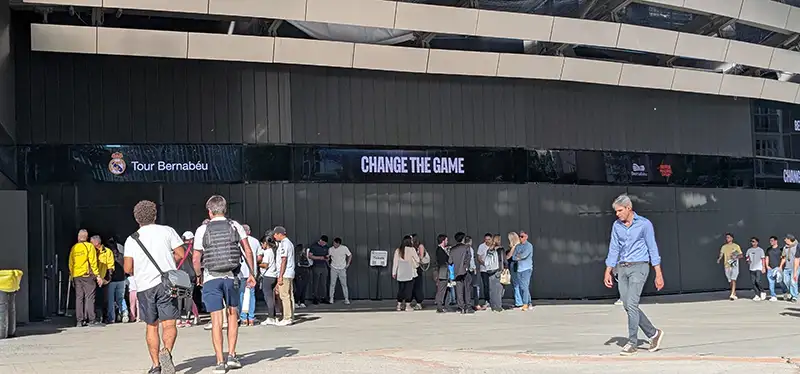
The Bernabéu Tour is a self-guided visit to the Santiago Bernabéu Stadium, home of Real Madrid. You explore at your own pace, following the marked route, without a guide. Yes, for a €35 ticket, the audio guide costs extra, which was one of the first not-so-pleasant surprises of the visit.
The route ends at the official Real Madrid shop, one of the largest club shops in the world, covering over 2,800 m². Worth knowing: you can visit the shop without doing the tour, with direct access from Avenida Concha Espina.
The Classic Tour includes:
- Real Madrid Museum
- Panoramic view of the stadium interior
- Changing rooms and dugouts
- Press room visit (subject to availability, it wasn't accessible on the day we went)
There are other options available on the official website, including guided tours and flexible entry times.
Allow at least two hours to get round comfortably. It's far more walking than it looks. If you want to extend the visit, there's a food court and a few bars inside the stadium. It's pricey, but it's not every day you eat inside a stadium like this one.
How to buy tickets
Tickets are purchased online and start from €35 depending on the type of tour. You can buy them through the official Real Madrid website. You choose the date and time, pay, and receive a QR code by email.
There's no need to print anything, just have the code on your phone. The entrance is on Avenida Concha Espina, with no need to queue at the box office. Keep your ticket throughout the visit, as it's scanned on both entry and exit.
Opening hours
Monday to Saturday: 9am to 7pm
Sundays and bank holidays: 9:30am to 6:30pm
Closed only on 25 December and 1 January
Things to know before you go
- Prices may vary depending on events at the stadium
- On match days and the day before, the changing rooms are closed
- Madridista Platinum and Premium members get a discount on tickets
- Tickets are valid only for the selected date and time
The Real Madrid Museum
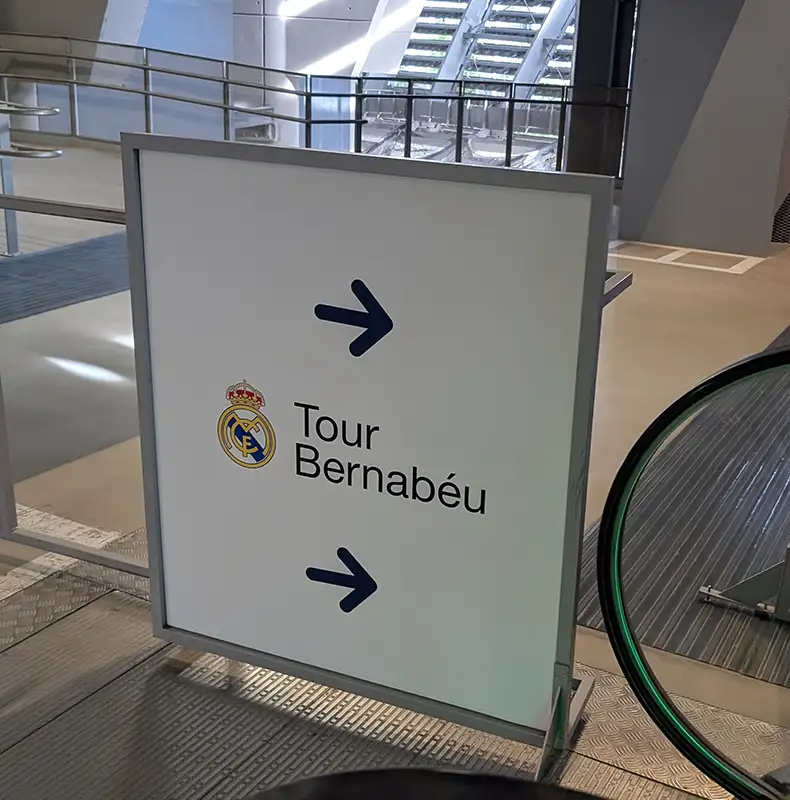
The visit starts with a climb. You walk in, hop on the escalators and ride up several flights to the very top of the stadium. That's where the route properly begins.
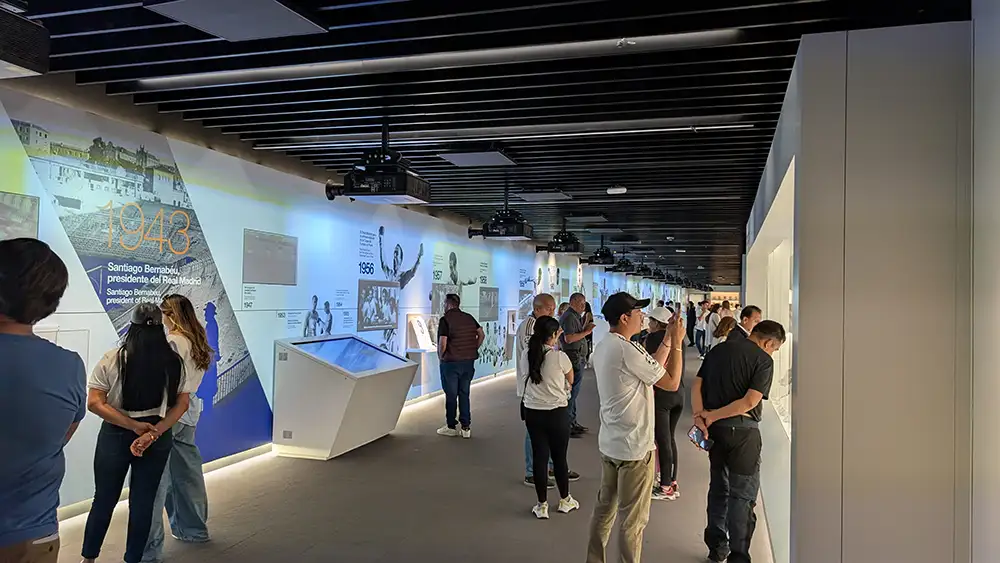
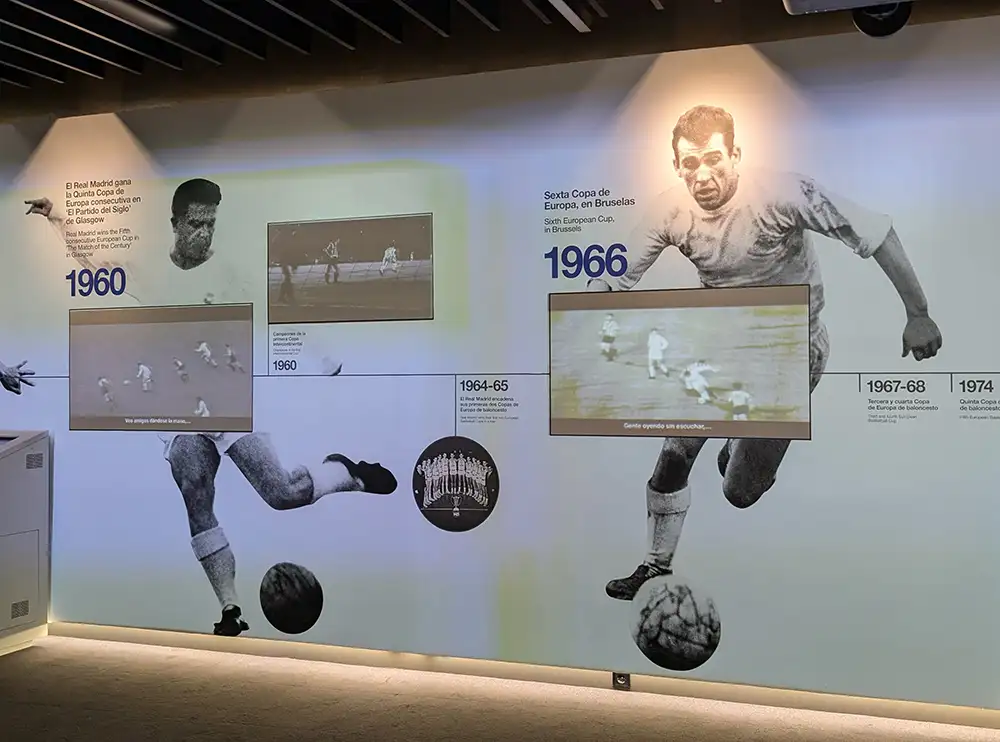
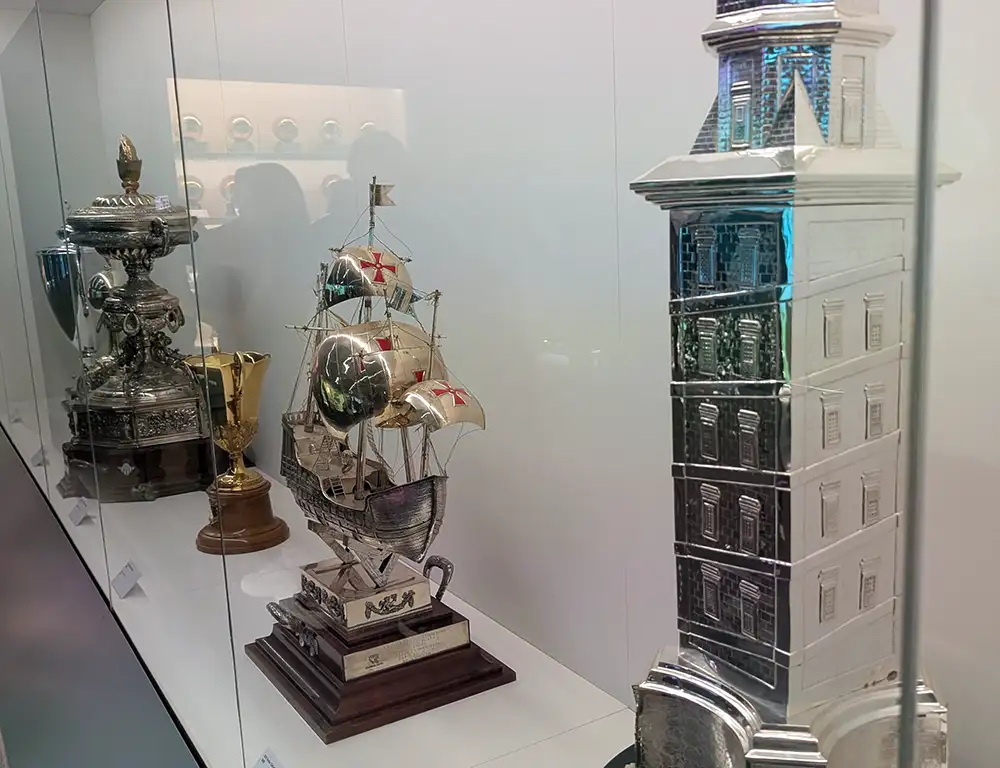
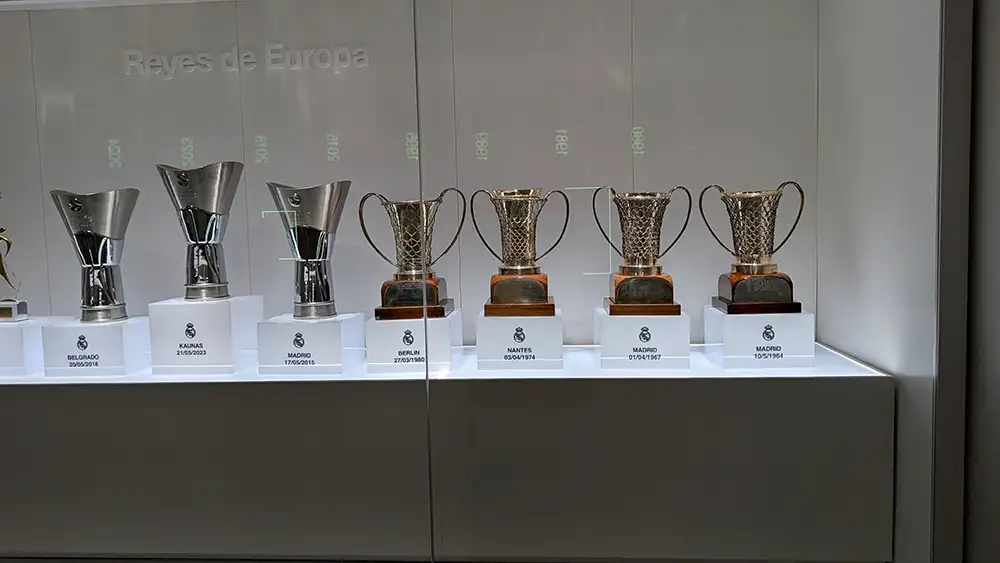
The first section is dedicated to the club's history, founded in 1902. It's a museum in the most traditional sense, with panels, screens showing historic goals and victories, and trophies from different eras. Some trophies look like they weigh a tonne, a few so large it's hard to imagine players lifting them. There's also the full collection of Ballon d'Or awards won by players at the club over the years, including those of Ronaldo Nazário, Zidane and Cristiano Ronaldo.
I really enjoyed the amount of interactive content. The screens featuring historic club moments make the experience far more dynamic than a standard museum. But if you're expecting a tour more focused on the stadium itself, this section might feel long. I came expecting more stadium and found much more museum.
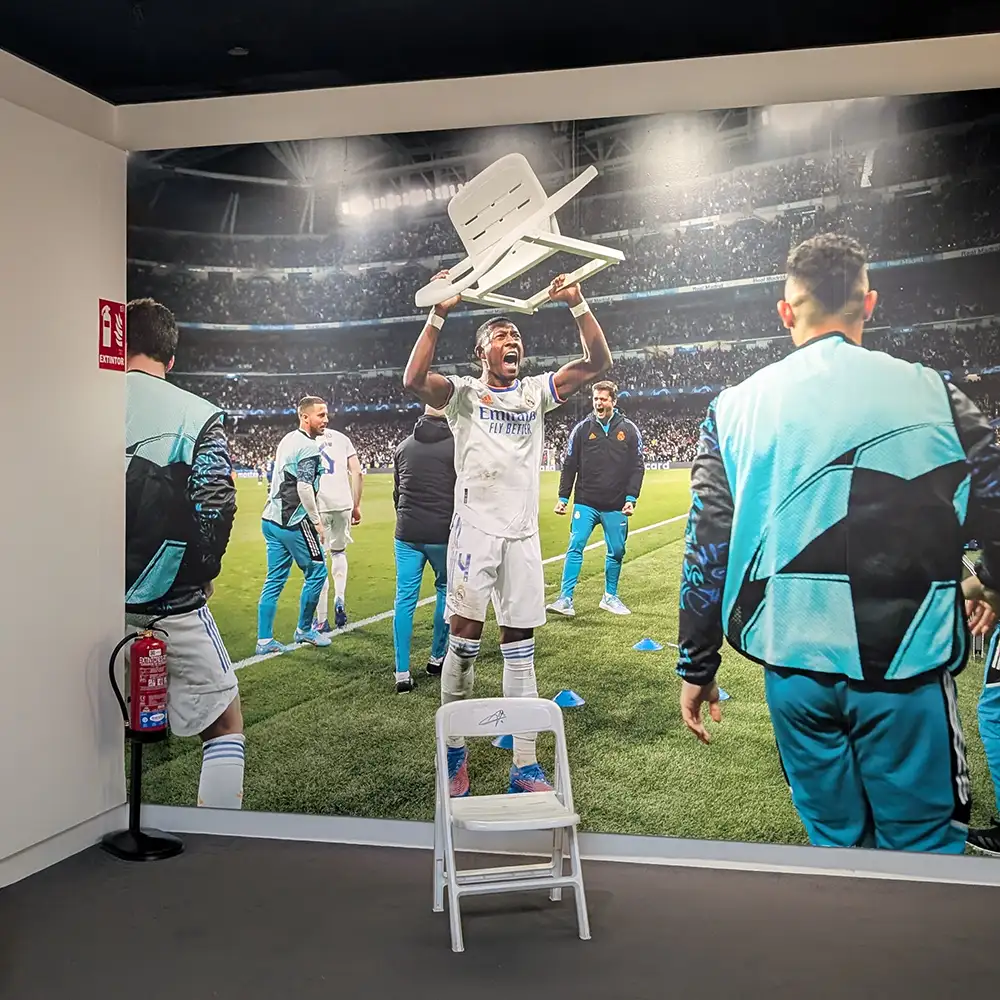
At some point along the route you'll also come across the chair that David Alaba lifted during the famous comeback against PSG in the 2022 Champions League, one of the most iconic moments in the club's recent history. Any visitor can try to lift it too.
One of the most interesting rooms comes just before the Champions room. It's filled with life-size screens showing the current squad, where you can compare your height to theirs. Vinícius Jr. is 1.76m tall and looks shorter than his teammates when you're standing next to his screen.



The Champions Room
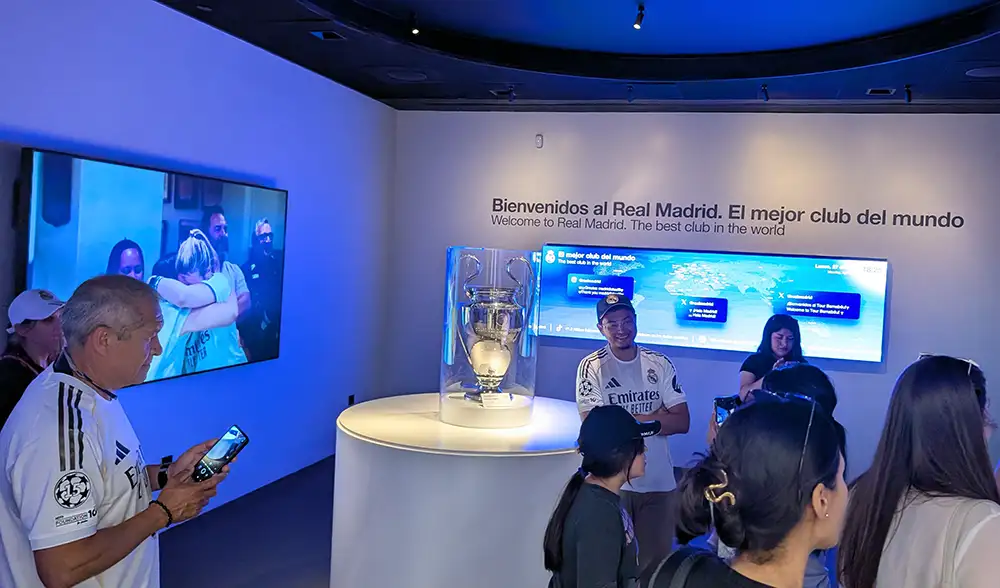
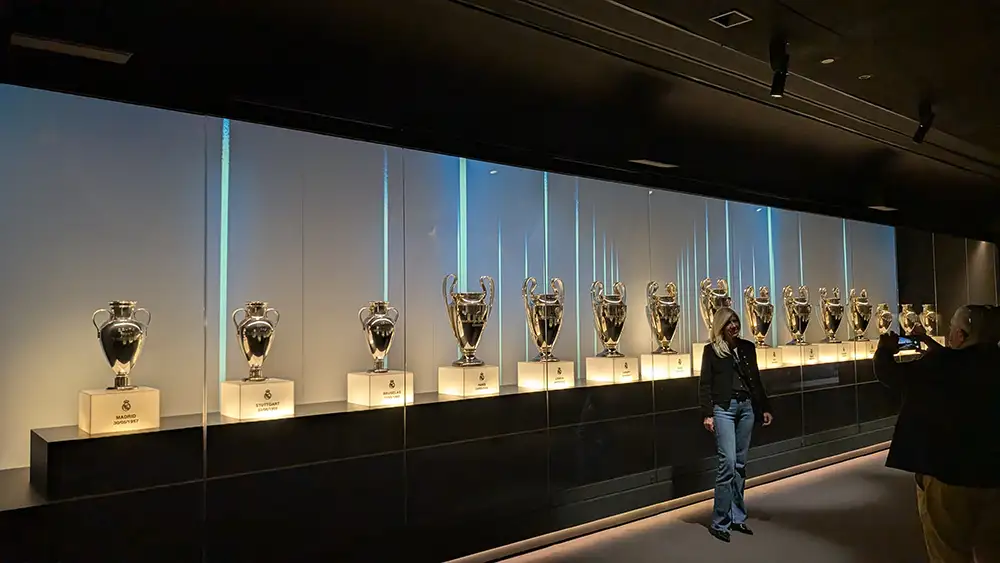
This is, without question, one of the most striking parts of the tour. Seeing all 15 Champions League trophies side by side in a single room is hard to remain indifferent to, even if you don't support Real Madrid.
A tip: the staff working in this area are excellent photographers. One of them picked up two phones at the same time and delivered some of the best photos we took during the entire visit.
The panoramic view of the stadium
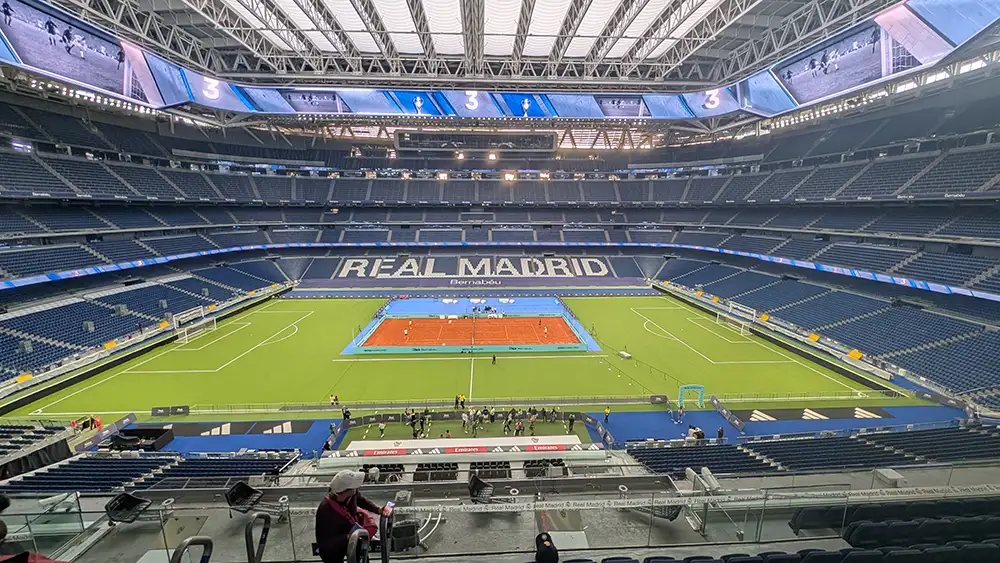
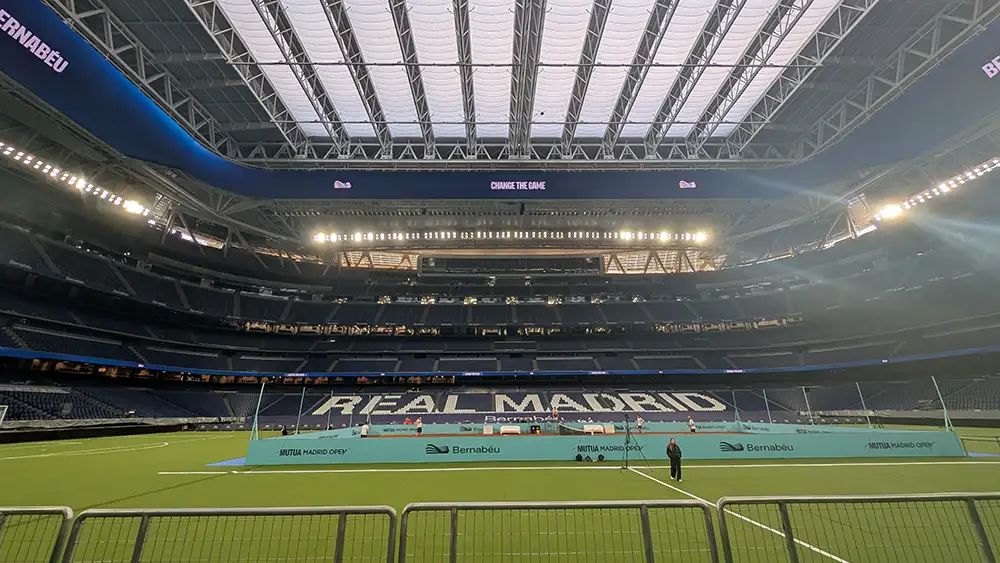
Before heading down to the changing rooms, the route takes you to the highest point of the stadium, where you can look down over the entire Bernabéu. What strikes you is how vertical it is, the stands rise in a way that feels more like a skyscraper than a football ground.
This area is also where you'll find the photo opportunity with your favourite player, a digitally edited montage made on the spot. It's optional and costs extra.
The changing rooms and dugouts
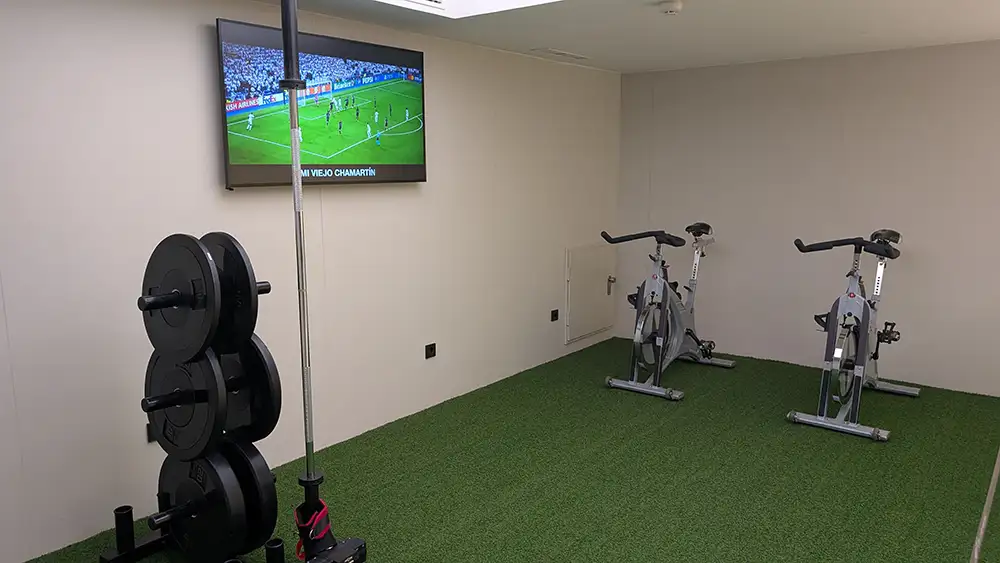
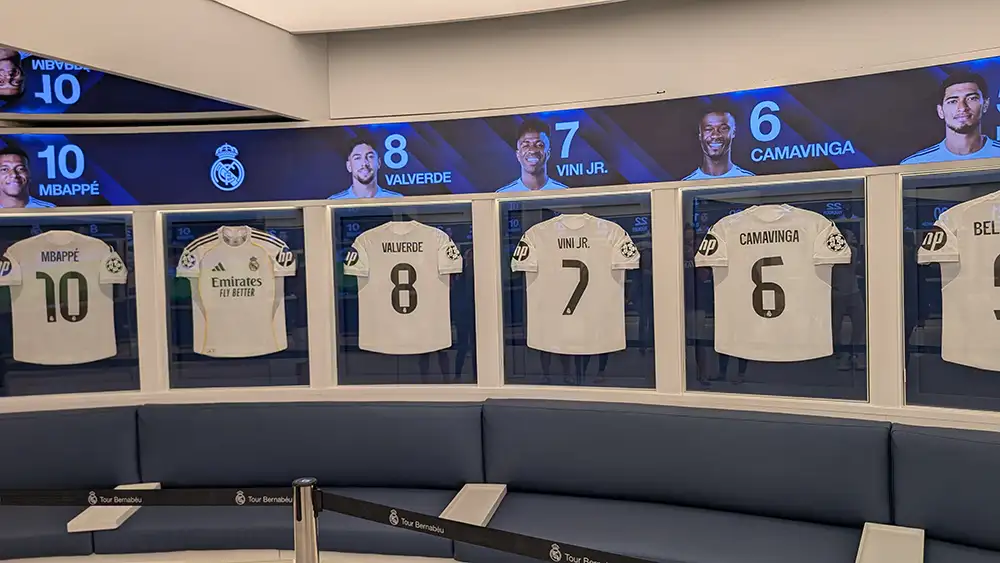
This is one of the best parts of the tour. You walk through the massage room, the shower area and the concentration room, with a circular sofa running around the space. In the first team's changing room, the current players' shirts hang with their names above each one, giving a very real sense of the club's day-to-day life.
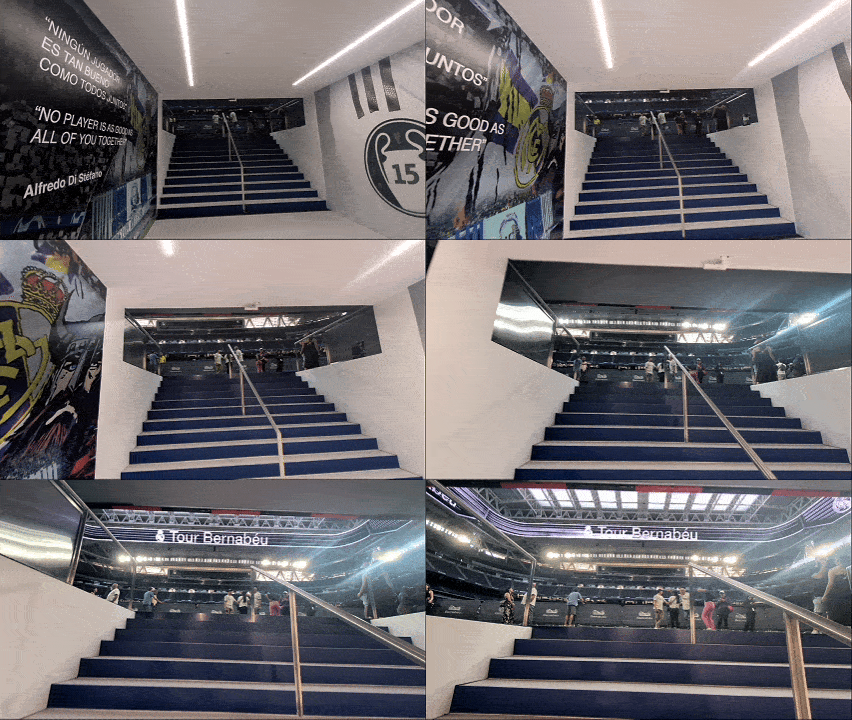
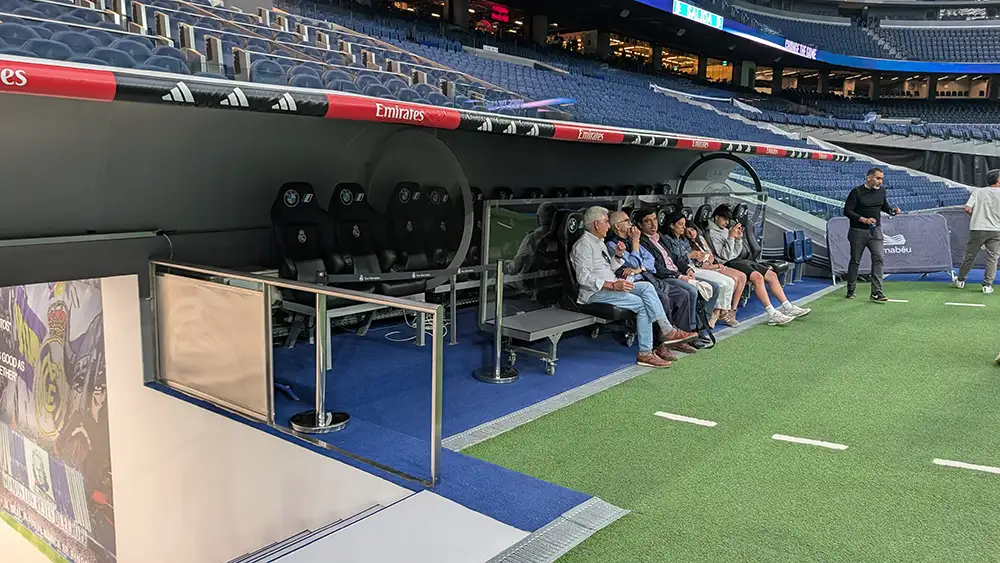
The most remarkable moment is the walk out to the pitch. You leave the changing rooms through the same tunnel the players use. It's impossible not to imagine what they feel in that moment, walking down that corridor with a full stadium roaring outside.
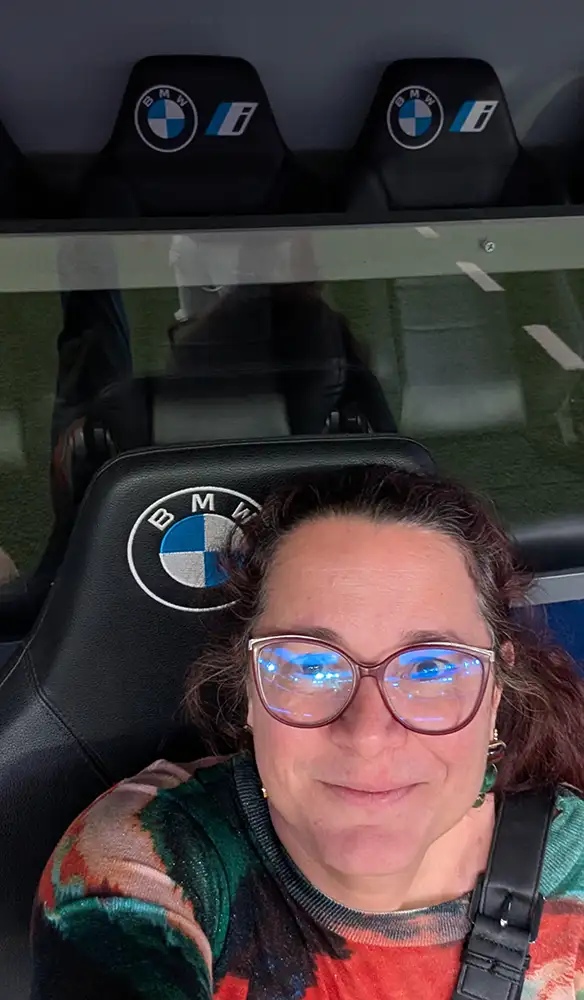
The dugout seats are BMW and far more comfortable than you'd expect. Sitting there, you have exactly the same view the manager and substitute players have on match day, a perspective no standard ticket will ever give you.
It's worth checking in advance whether the changing rooms will be open on the day of your visit. On match days and the day before, they remain closed, which could be frustrating if that's a key reason for going.
The press room
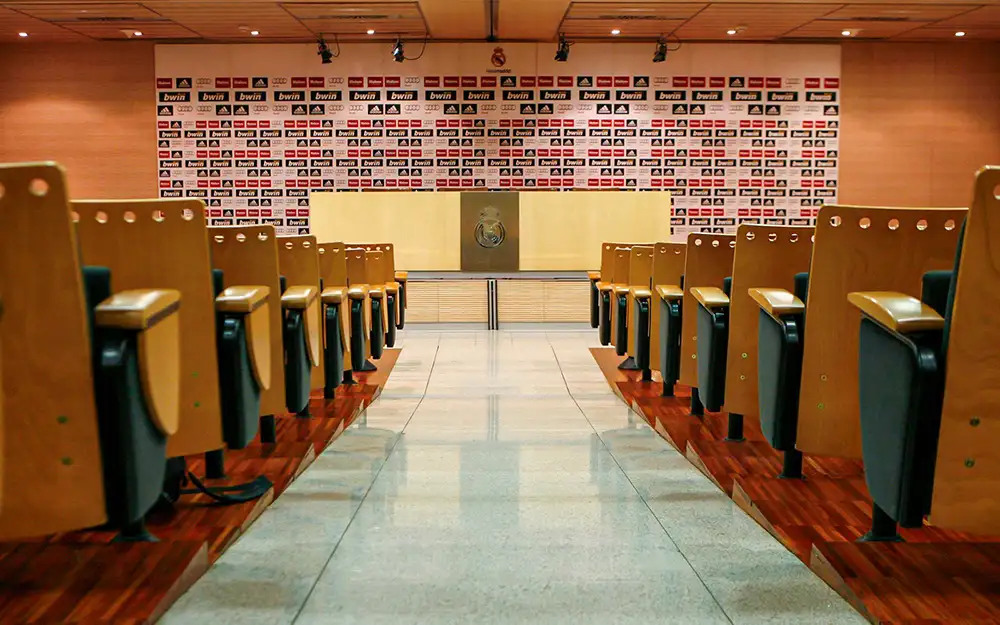
The press room is part of the official route, but access is subject to availability and may not be open on the day you visit. In our case, it wasn't. It's the space where players and managers give post-match press conferences, with the sponsor board and club crest in the background, a backdrop familiar to anyone who follows European football.
There are no publicly available criteria explaining when it's accessible and when it isn't. If this matters to you, it's worth contacting the stadium directly before buying your ticket.
Other highlights of the tour
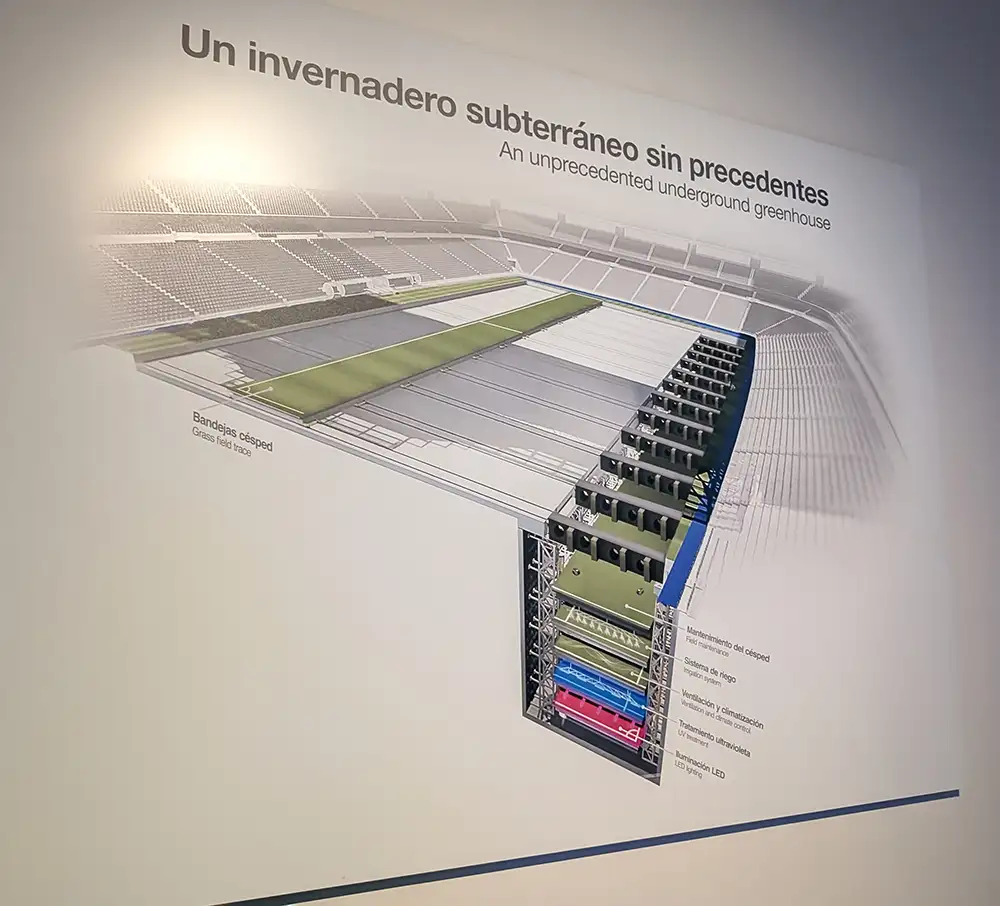
The Bernabéu underwent a massive renovation between 2019 and 2024 and is now a genuinely 21st-century stadium. It has a retractable roof, 360-degree LED screens at the top and a retractable pitch stored underground when not in use, rising to the surface only on match days. At one point on the route there's a video explaining all of this in a visual and well-produced way, giving a real sense of the engineering involved. For anyone interested in architecture or technology, this is one of the most surprising parts of the visit.
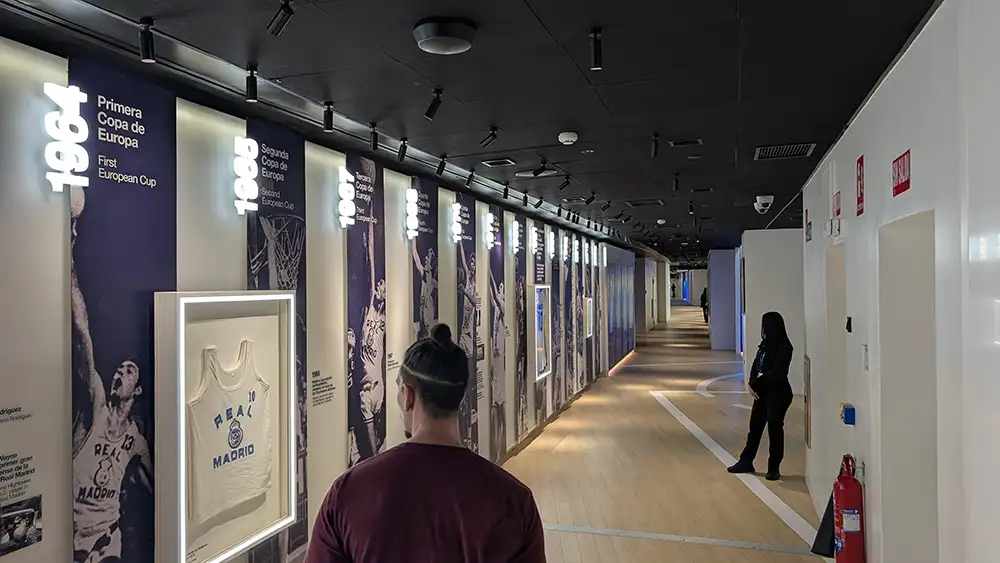
The tour also goes beyond men's football. There's a section dedicated to basketball, covering Real Madrid's history in the sport, and another dedicated to women's football, featuring the players of the first team squad. These are parts most visitors don't expect to find.
For the detail-oriented, the display of boots and kit from historic players is worth a look. It's fascinating to see the size of some older boots up close, some look enormous. These small details make the walk more interesting along the way.


How does the Bernabéu's retractable pitch work?
Is the Bernabéu Tour worth it?
It depends very much on what you're expecting to find. If you're a Real Madrid fan, the answer is yes without hesitation. The Champions Room, the changing rooms, the players' tunnel, all of it carries a different weight when you support the club.
For non-fans like me, it's more mixed. There are genuinely impressive parts, but a good portion of the route is a traditional museum covering club history, and if you don't have much context about Real Madrid, some rooms may feel long. On top of that, the €35 price tag is steep for what's on offer, especially since things most museums include as standard, like an audio guide, aren't included here. If you happen to visit during an event at the stadium, it can cost even more and the route may be altered, as happened to us during the Madrid Open, when we paid €45.
The shop sits at the end of the route and everyone ends up walking through it. It's large, well put together and clearly designed to empty your wallet before you leave. A supporter's shirt costs €115, the player version €190, a rucksack €55, a scarf around €30, a cap €23 and the keyring, the cheapest thing I spotted inside, €12.
That said, the Bernabéu is one of the most visited stadiums in the world for a reason. Allow at least two hours, take your time and make use of the food court and bars inside the stadium if you want to extend the visit. It's a worthwhile experience, as long as your expectations are in the right place.