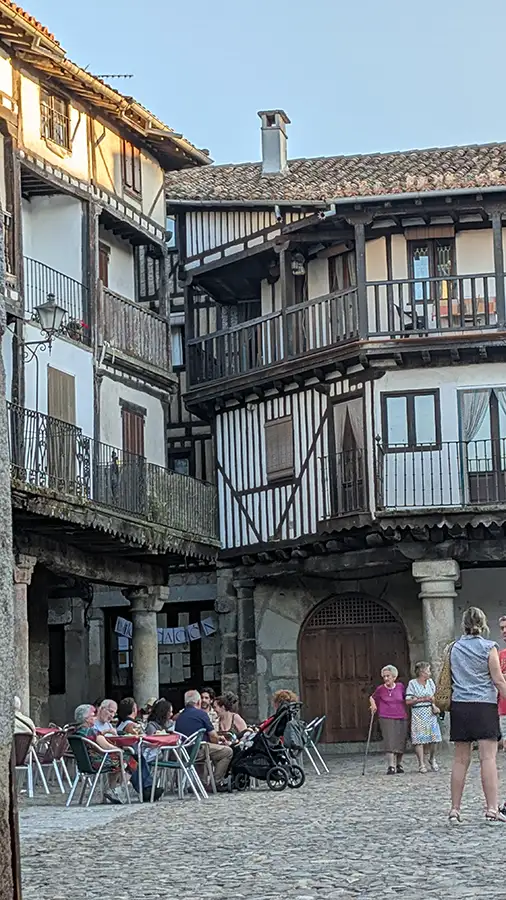
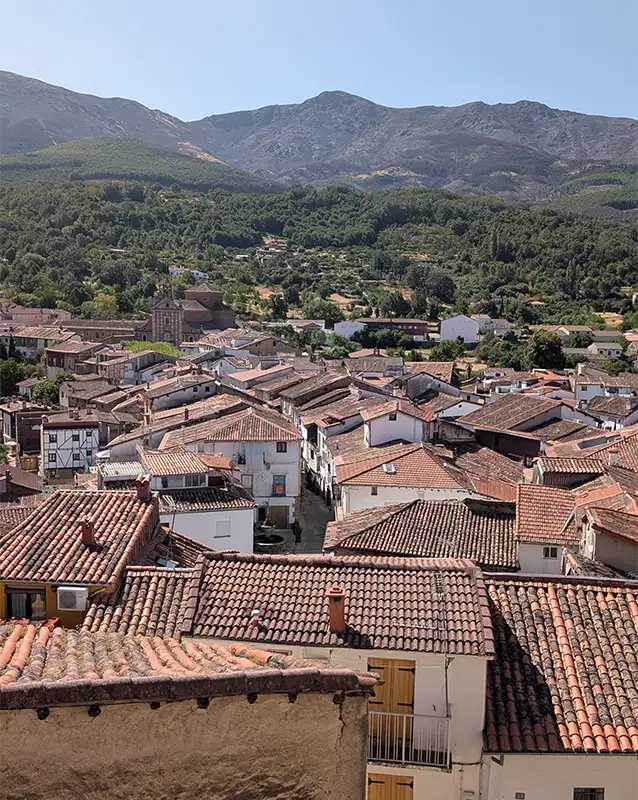
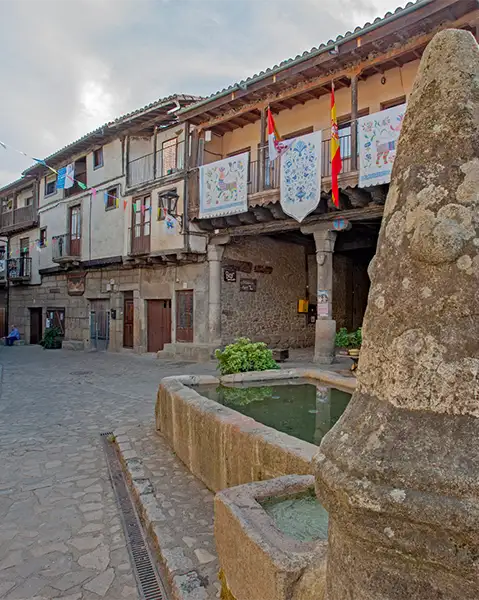
La Alberca is in the Sierra de Francia, in the south of the province of Salamanca, close to the border with Extremadura. It was the first village in Spain to receive the title of Conjunto Histórico-Artístico (Historic-Artistic Site), in 1940, and this helped preserve its mountain architecture to this day. The stone houses with exposed timber framing, along the narrow streets of the old town, look as though they were taken straight out of a fairy tale.
We arrived on the eve of a public holiday, with the village full of people and the bars packed, and it was easy to see why the place draws so many visitors. In this guide, we've put together our experience with tips on where to eat, what to see and the neighbouring villages worth visiting.
What to see in La Alberca
We arrived in La Alberca the day before a public holiday and found the village full of people, with packed bars and a lively atmosphere in the streets. Even so, we still managed to enjoy a good walk around the old town.
Plaza Mayor
The centre of the village, surrounded by houses with timber balconies and arcades held up by granite columns. In the middle of the square stands a stone cross from the 18th century. It's the best spot to sit at one of the bars and watch the world go by.
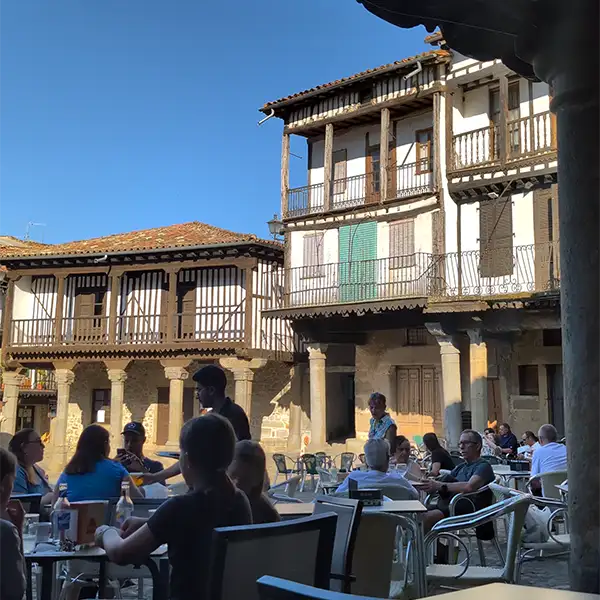
Mountain architecture along the streets
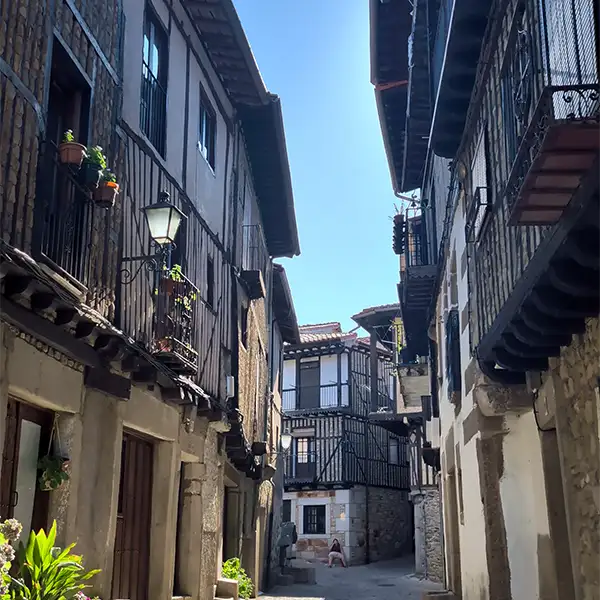
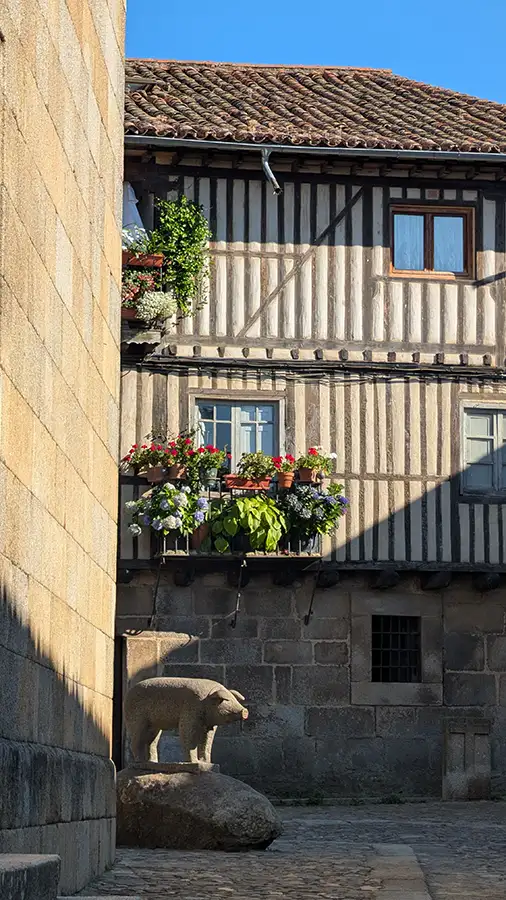
The stone houses with exposed timber framing are the village's main draw. Many have their construction date carved above the door, and the upper floors jut out over the lower ones, so that the roofs of houses facing each other almost touch.
Church of Nuestra Señora de la Asunción
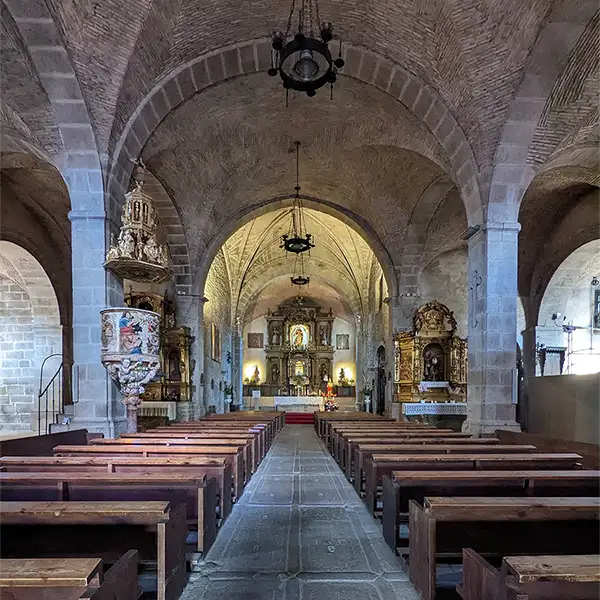
Built in the 18th century, it stands right next to the Plaza Mayor. The outside is plain, without much decoration. On the façade there's a small niche with two carved skulls. It's linked to the tradition of the Moza de Ánimas, when a woman used to go out at dusk ringing a bell and praying for the souls in purgatory. Inside, the decorated altar and an old organ that still works with a bellows stand out.
Marrano de San Antón
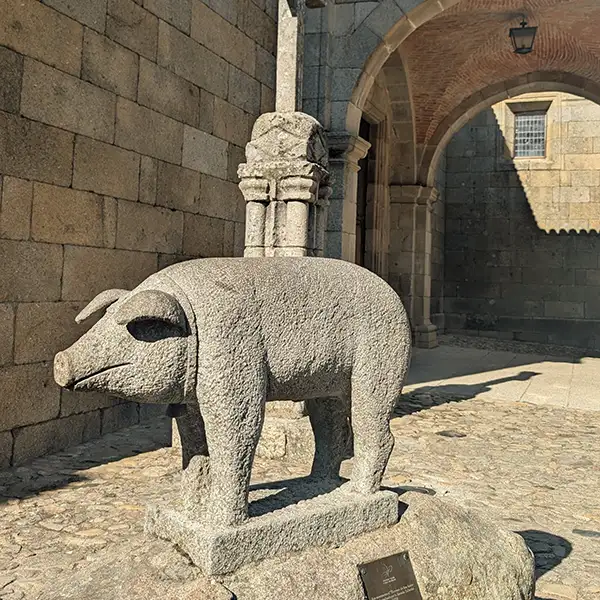
Next to the church stands the statue of a pig, symbol of one of the village's best-known traditions (more on this below).
Casa Museo Satur Juanela
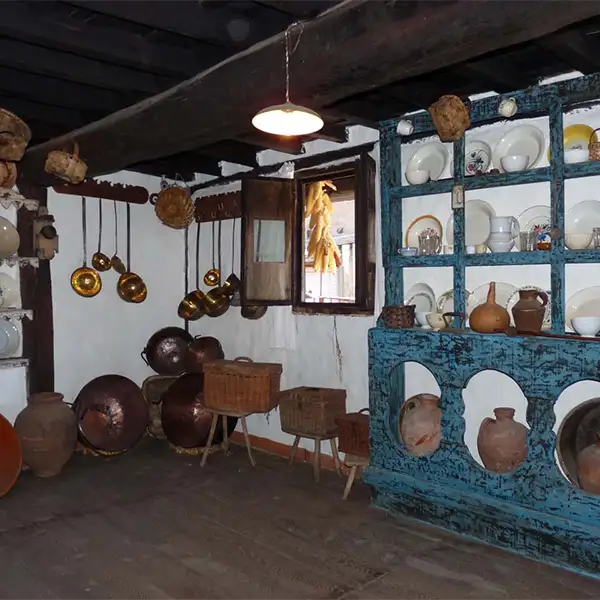
An old family home turned into a museum, showing what life was like in a traditional Albercan house. The visit costs €2.50 per person.
Where it is and how to get there
La Alberca is in the Sierra de Francia, in the south of the province of Salamanca, close to the border with Extremadura.
By car
This is the most practical way to get there, since public transport is limited. We drove there as part of a trip around the Sierra de Francia, and the road to the village is worth the journey on its own, with bends winding through the mountains and green scenery the whole way.
From Madrid
About 3.5 hours, roughly 250 km, via the A-6 with a detour at Béjar.
From Salamanca
About 1 hour and 20 minutes, roughly 80 km, via the SA-201.
Where to park
The streets in the old town are narrow and don't allow parking. It's best to leave the car in one of the car parks at the entrance to the village and walk into the centre.
By bus
There's an Autocares Cosme line linking Salamanca to La Alberca, though with few departures a day and different timetables on weekdays, Saturdays and Sundays. Worth checking the current timetable before you go, as it can change.
| Route | Mon to Fri | Saturday | Sunday |
|---|---|---|---|
| Salamanca to La Alberca | 13:30 e 18:00 | 14:00 | 10:00 |
| La Alberca to Salamanca | 7:30 e 15:20 | 8:45 | 18:20 |
This same line continues on to other villages in the Sierra de Francia. Timetables subject to change. Always check the official line's website before travelling.
A bit of history
The name La Alberca comes from the Arabic al bereka, which roughly means place of waters, a reference to the streams in the area. The earliest traces of settlement are prehistoric, but the area was resettled in a more organised way between the 12th and 13th centuries, by order of King Alfonso IX. Among the new settlers were French colonists, which is how the Sierra de Francia got its name.
In 1434, the image of the Virgin of Peña de Francia was found in the nearby mountains, and the sanctuary built on the site became a place of pilgrimage, including for pilgrims on the Camino de Santiago. The episode became so well known that it was even mentioned by Cervantes in Don Quixote.
The narrow, maze-like streets of the old town are reminiscent of a former Jewish quarter. Jewish communities lived there until they were expelled in the 16th century. In 1940, the village became the first Conjunto Histórico-Artístico in Spain, a title that helped preserve its architecture to this day.
Marrano de San Antón
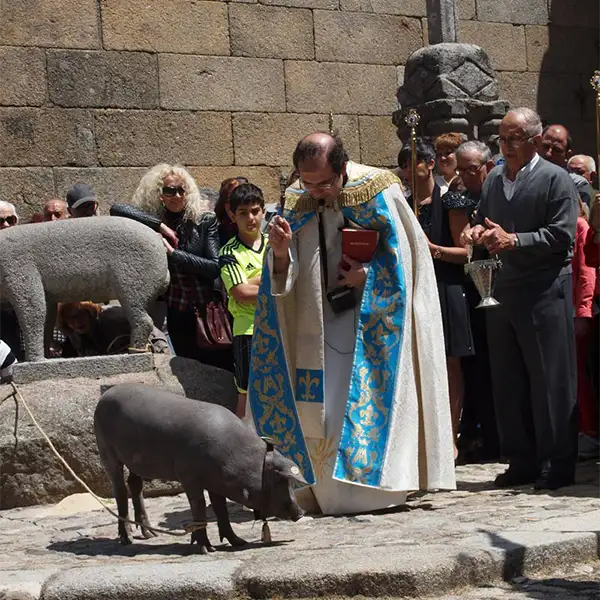
Every 13th June, the feast day of St Anthony of Padua, residents release a pig into the streets after blessing it and putting a bell around its neck. It roams free until 17th January, the feast of San Antón, fed and sheltered by the neighbours themselves over the months.
The tradition dates back to the time of the Inquisition, when Jews who had converted to Christianity would raise and publicly raffle off a pig to prove they ate pork.
Nowadays, the pig is raffled off among residents, and the money raised goes to social causes or local charities. Next to the church, a stone statue represents the tradition for anyone visiting outside that time of year.
Where to eat in La Alberca
Restaurante Ibéricos Doña Consuelo
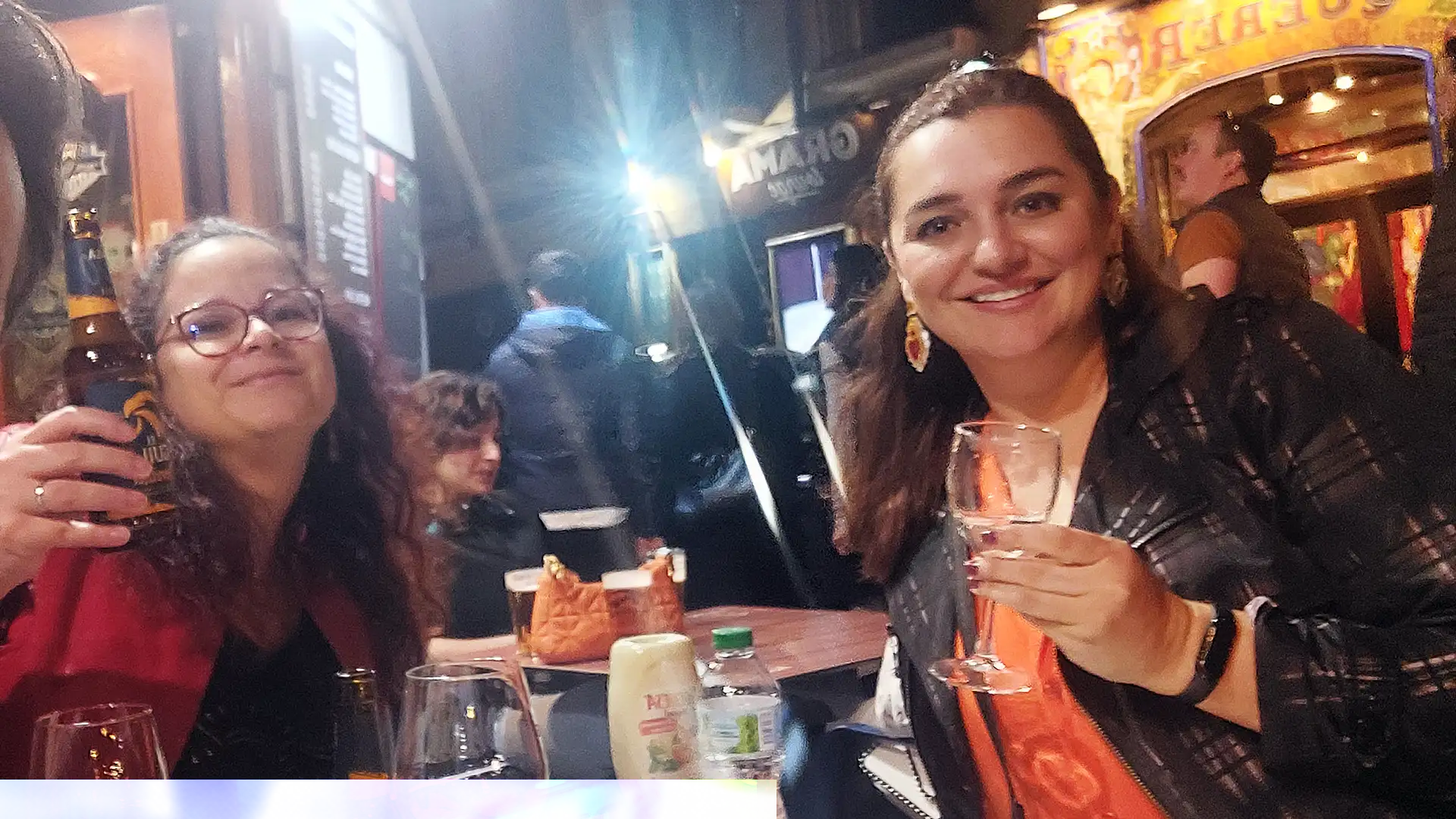
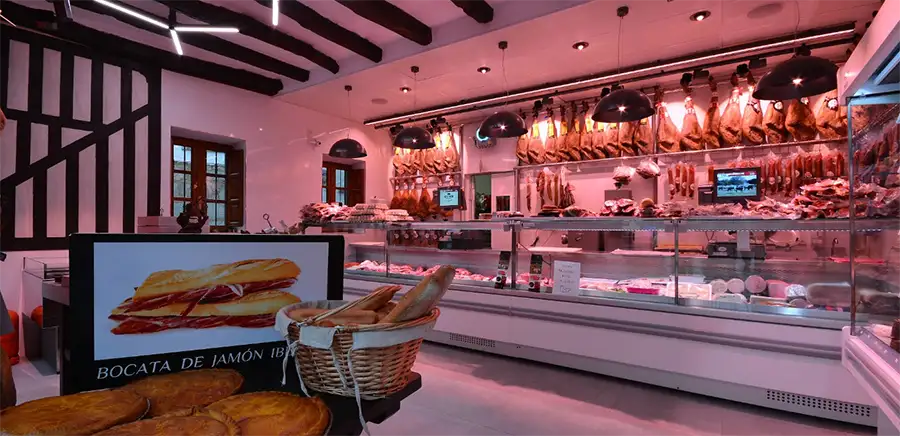
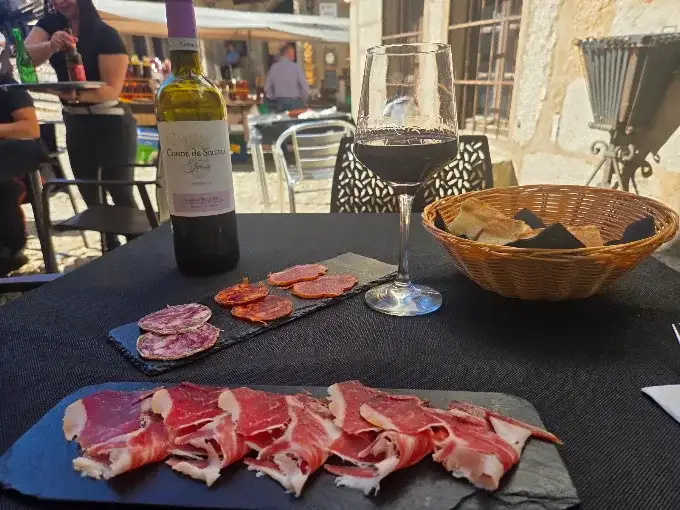
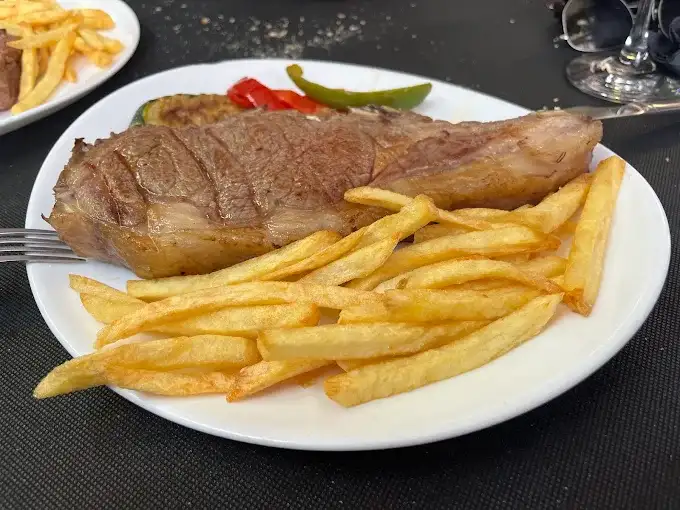
We ate at this restaurant on the Plaza Mayor. What struck us most is that it's first and foremost a butcher's shop, with a restaurant at the back. As soon as we sat down, the house brought out a complimentary board with three types of chorizo. We were extremely well looked after, as if we were old friends. We ordered wine and a presa ibérica, which was brought over from the butcher's counter to show us the cut before it was cooked. The food was delicious, though I have to admit it's a little pricey.
Other options
We only had time to eat at Doña Consuelo, but La Alberca is a popular tourist destination, so there's no shortage of options. A few well-rated ones worth mentioning:
La Cantina de Elías
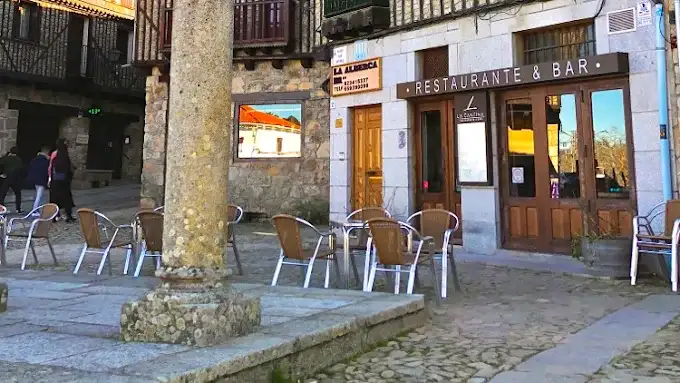
- Elaborate food, carefully presented, with more creative dishes.
- Average price of €20 to €40 per person.
- Most popular dishes: chuletón, croquettes, cheesecake and patatas revolconas.
- View location
Restaurante El Encuentro
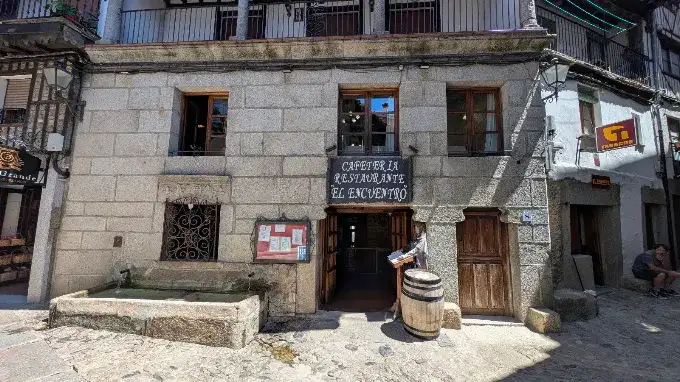
- Traditional home cooking.
- Average price of €20 to €30 per person.
- Most popular dishes: patatas revolconas, alubias, cochifrito and chuletón.
- View location
Mesón La Colmena
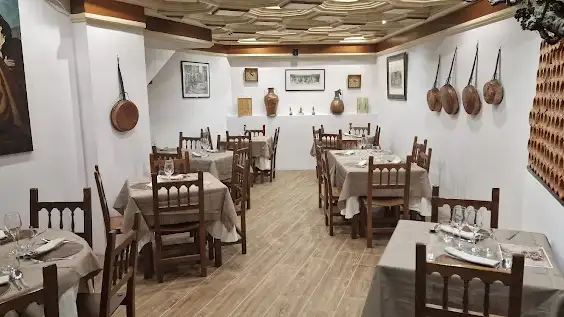
- Traditional food, mainly char-grilled meats.
- Average price of €20 to €30 per person.
- Most popular dishes: patatas revolconas, lagarto, entrecôte and cochifrito.
- View location
What to try
Patatas meneás
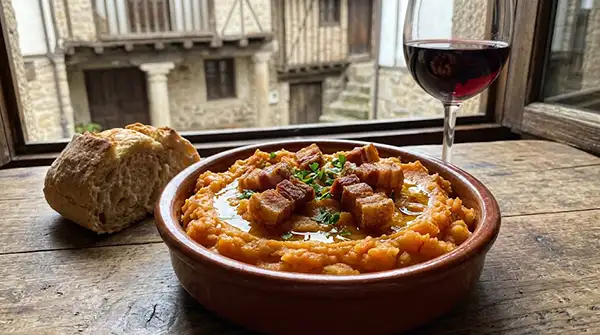
Mashed potato with paprika and garlic, topped with crispy pork crackling.
Cabrito cuchifrito
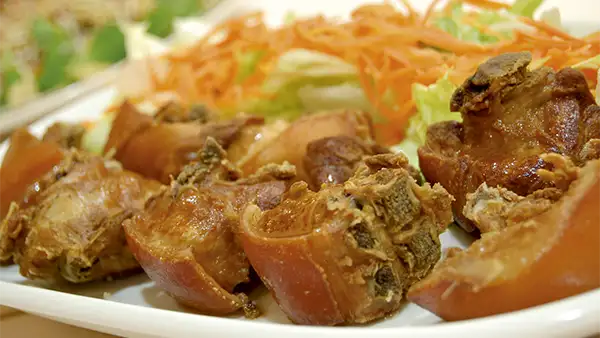
Young goat meat, fried or roasted, with skin that's crispy on the outside and tender on the inside.
Jamón ibérico
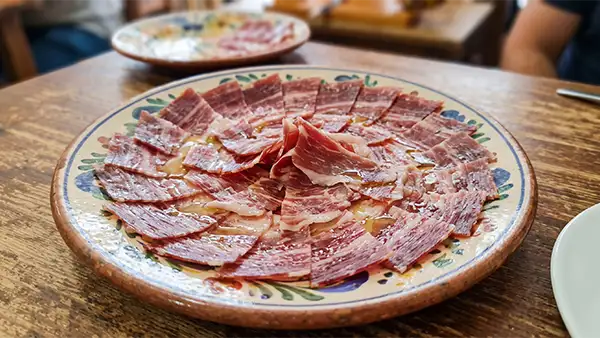
Cured Iberian pork ham. The region is a benchmark for this cured meat in Spain.
Hornazo
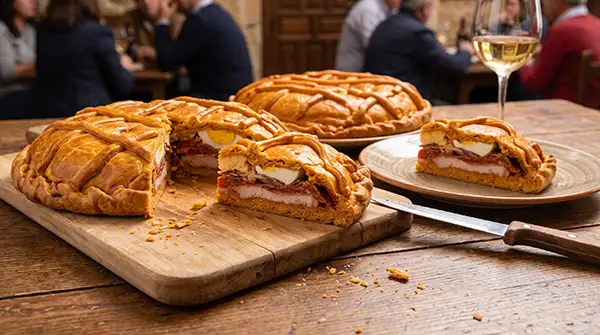
A savoury pastry (a bit like a pie) filled with cold cuts.
Limón serrano
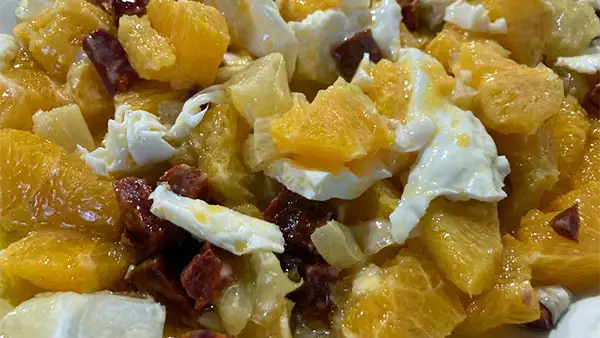
A salad of lemon, orange, hard-boiled egg and chorizo.
Where to stay in La Alberca
We didn't stay overnight in La Alberca, but as we've already mentioned, it's a fairly touristy destination. There's a good range of accommodation on offer, with simple guesthouses from €45 a night, rural houses between €60 and €100, and more upmarket hotels above €100.
In the wider area, in villages such as Mogarraz and San Martín del Castañar, prices tend to be a bit lower.
Book your hotel
Booking.com is our partner. You can search and book accommodation in La Alberca right here.

By booking through this link, you help keep MiraEspanha running at no extra cost to you.
When to visit La Alberca?
As it sits in the Sierra de Francia, over 1,000 metres above sea level, La Alberca has a cooler climate than much of Spain, even in summer.
Spring and summer are the busiest times, with the village fuller and shops keeping longer hours.
In autumn and winter, the streets are quieter, though it can get very cold.
Weekends and public holidays tend to get crowded, as happened during our visit, so it's worth considering a weekday trip to enjoy the place at a calmer pace.
Local festivals
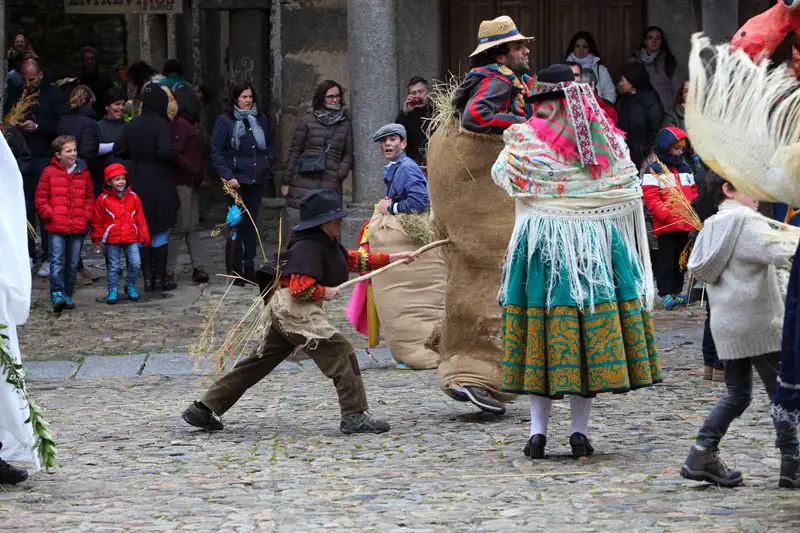
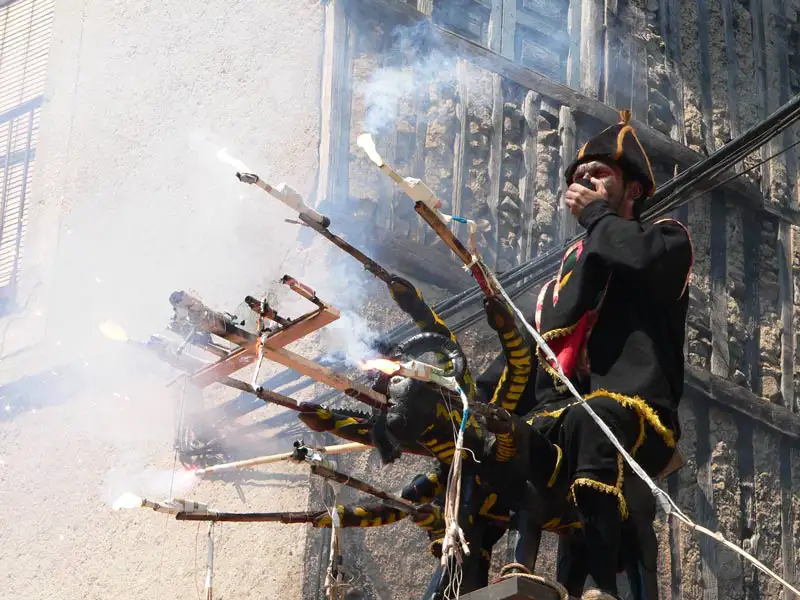
Throughout the year, the village keeps up old traditions worth bearing in mind when planning your trip, whether to join in or to avoid the busiest dates. The list below covers the main ones, though the local calendar has other smaller festivals scattered throughout the year.
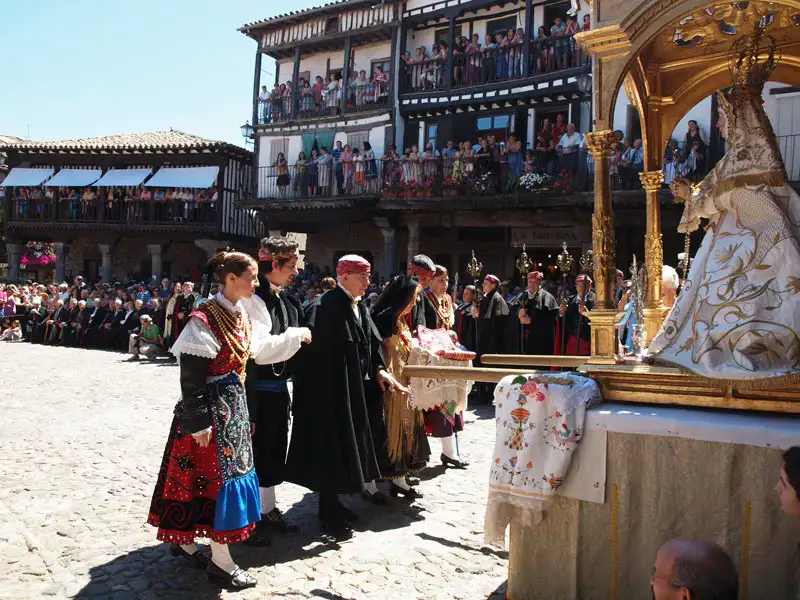
La Moza de Ánimas
Every day
At dusk, a local woman walks through the streets ringing a bell and praying for the souls in purgatory.
Marrano de San Antón
13th June and 17th January
The release and raffling of the pig, the village's best-known tradition
Carnavales Patahenos
February or March
A comic carnival figure, a man covered in hay and straw, in a popular parody of a bullfight
Semana Santa
March or April
Processions with traditional costumes, including a re-enactment of the Passion of Christ on Maundy Thursday and the Día del Pendón the following Monday
Corpus Christi
May or June
Residents scatter thyme on the ground and decorate balconies and windows along the procession route with quilts and hand-embroidered cloths, filling the streets with colour and scent
Diagosto
14th to 18th August, peaking on the 15th
The main festival, in honour of the Virgen de la Asunción, featuring the Traje de Vistas costume and floral offerings
La Loa
16th August
One of the oldest medieval mystery plays in Spain, depicting the triumph of Good over Evil
Magosto
November
As autumn draws to a close, residents gather around bonfires to roast freshly picked chestnuts to the sound of bagpipes and drums
Trails and outdoor walks
We didn't do any hiking on our visit, but the region has plenty of good options for anyone keen to explore the Sierra de Francia.
Camino de las Raíces
A circular route of around 9 km, easy difficulty, starting at the Church of Nuestra Señora de la Asunción. Part of a project that weaves works of art into the natural landscape.
More information →

Camino del Agua
A circular route of around 6 km, easy difficulty, passing through oak woods and crossing the river at points. Also part of the project weaving art into the region's landscape.
More information →
Camino de los Prodigios
A circular route of around 12 km, moderate difficulty, linking Miranda del Castañar and Villanueva del Conde. Has a fair amount of elevation gain.
More information →
Bosque de los Espejos
A one-way trail of around 10 km, all uphill, starting in La Alberca along the GR-10, up to the Sanctuary of Nuestra Señora de la Peña de Francia, at the highest point of the mountain range, with views over much of the region.
More information →
Climb to Peña de Francia
A one-way trail of around 10 km, all uphill, starting in La Alberca along the GR-10, up to the Sanctuary of Nuestra Señora de la Peña de Francia, at the highest point of the mountain range, with views over much of the region.
More information →
Ruta de Las Batuecas
An out-and-back trail of around 10 km, moderate difficulty, starting at the Monasterio de las Batuecas. Follows the river up to the Chorro de las Batuecas waterfall, passing prehistoric cave paintings along the way.
More information →
Nearby villages worth visiting
Beyond the villages of the Sierra de Francia, the area around La Alberca has other destinations well worth the detour.
Mogarraz
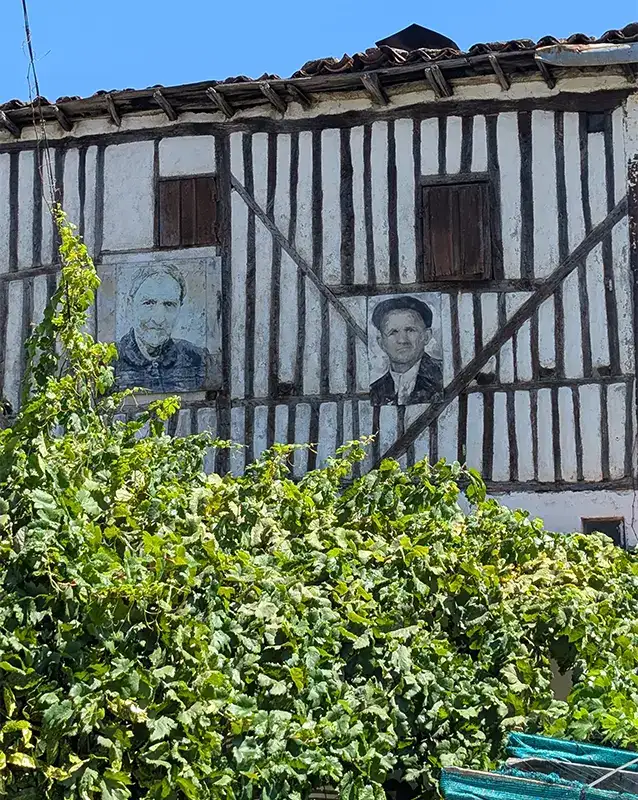
About 10 minutes from La Alberca, Mogarraz stands out for its more than 800 portraits painted on house façades, a tribute to former residents created by the artist Florencio Maíllo.
The village was declared a Conjunto Histórico-Artístico in 1998, and walking through the Plaza Mayor and its narrow streets feels like wandering through an open-air art gallery.
Hervás
In another province altogether, Cáceres, we found Hervás lively and full of life on its streets.
The highlight is the old Jewish quarter, one of the best-preserved in Spain, with adobe and timber houses and narrow, sloping streets. Tucked away down one of the alleyways, we came across a private cactus garden, kept by a local resident and open for anyone to visit.
San Martín del Castañar
Known for the plant pots dotted around its streets, decorated with local sayings and expressions. It also has a 15th-century castle, now turned into an interpretation centre for the Biosphere Reserve.
Miranda del Castañar
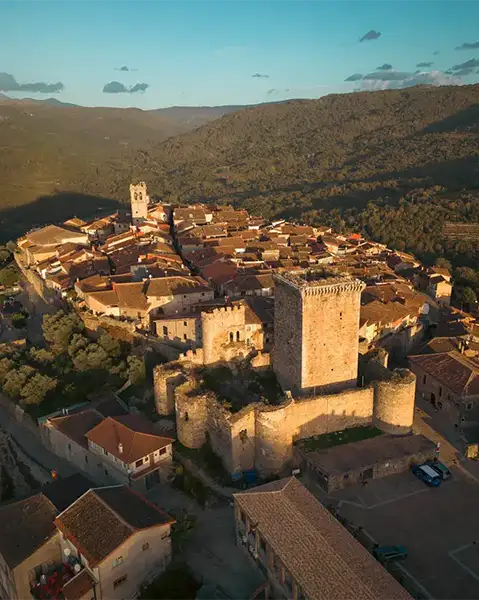
Walled village, one of the most distinctive in the region. It retains more than 600 metres of medieval walls, with four original gates, along with a 14th-century castle.