Some people get flowers for their birthday. Some people get chocolates. I got a triangle. But before you think my esteemed other half got carried away with geometry, let me explain that this triangle is made up of three cities in southern Spain, in the heart of Andalusia, home to one of the most fascinating wines in the world.
And there's more. My birthday is May 26. And May 26 is World Sherry Day, the international day of Jerez wine. Coincidence? My esteemed other half clearly thinks not. And I'm not going to argue.
So, what exactly is the Sherry Triangle?
The Sherry Triangle (or Triángulo de Jerez) is a region in southwestern Spain, in the province of Cádiz, formed by three cities that sit at the points of this imaginary triangle. They are Jerez de la Frontera, Sanlúcar de Barrameda, and El Puerto de Santa María.
What ties the three together is the wine. Because only here, within this defined area, is the legitimate wine of Jerez produced, the famous sherry, a fortified wine unlike anything else in the world. It's the protected Denominación de Origen that guarantees this, and if the wine wasn't made inside the triangle, it can't be called Jerez.
A bit of history
The winemaking tradition in this region goes back more than 3,000 years. The Phoenicians were already growing vines here. Then came the Romans, the Moors, and in the 15th century the Spanish began exporting the wine to England, where it picked up the nickname sherry, which is basically what happened when the English tried to pronounce Jerez and gave up halfway through.
In 1933, Spain created the Jerez-Xérès-Sherry Denominación de Origen, the oldest in the country, to protect this liquid heritage.
Why exactly a triangle?
Because each city has a different microclimate, but they all share the albariza soil (that chalky white, mineral-rich clay that retains moisture through the hot summer), and the Atlantic winds that come in from the ocean.
The main grape is Palomino, the base for the dry wines. Pedro Ximénez and Moscatel go into the sweeter styles.
And the aging system? That's the most special part of all. It's called the solera system, in which young and old wines are progressively blended across rows of stacked barrels. The result is a wine with no vintage, with a flavor consistency that spans decades and sometimes centuries.
The three cities of the triangle
Sanlúcar de Barrameda: the most charming of them all
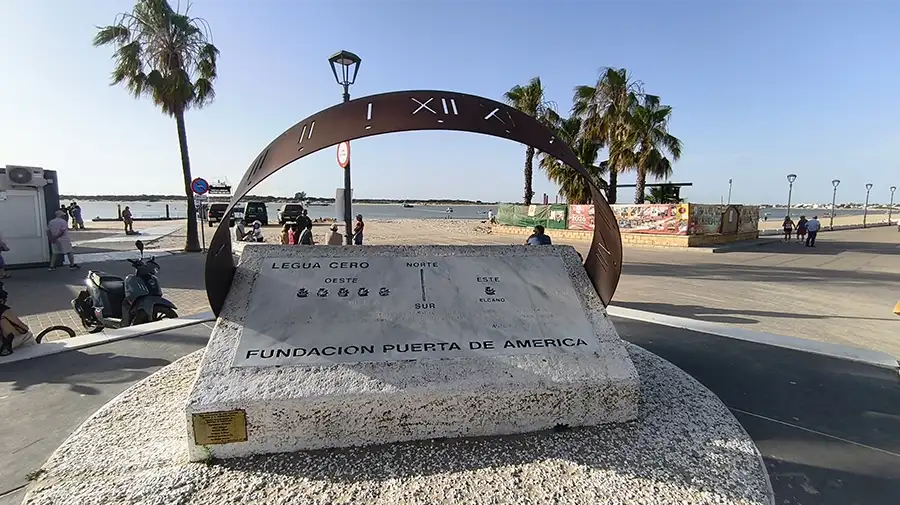
We start with Sanlúcar, or as I call it, Barranquilla de la Barranca (inside joke). Sanlúcar sits at the mouth of the Guadalquivir River, right on the Atlantic coast. This is where Columbus set sail (on one of his voyages) and where Magellan's expedition, the one that completed the first trip around the world, departed. That's no small thing.
But what makes Sanlúcar unique within the triangle is Manzanilla, a type of Fino that can only be produced here, thanks to the humid, salty microclimate by the sea. It's lighter, more floral, with a slightly salty note that pairs perfectly with the incredibly fresh seafood served nonstop by the restaurants along the river.
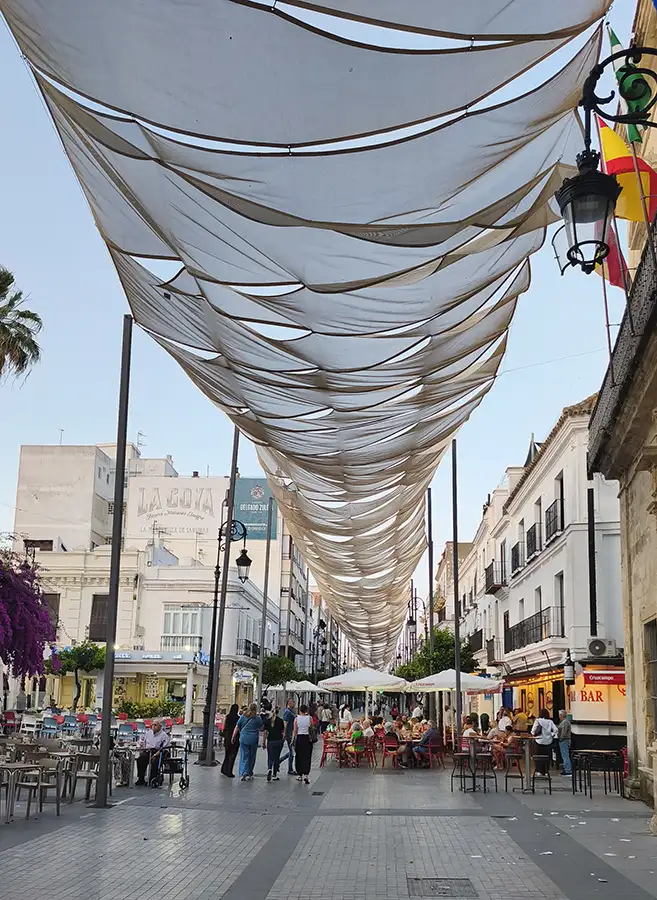
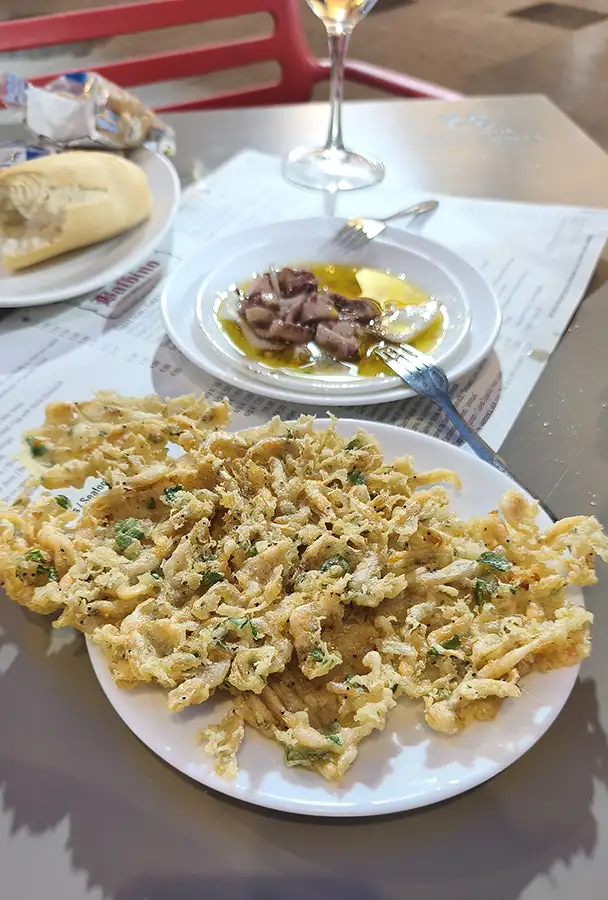
And really, Sanlúcar is a gem. A pleasant stroll through the center and through the Barrio Alto, the Palacio de los Duques de Medina Sidonia, a small square full of bars and restaurants. And speaking of bars and restaurants, it was right there, near the square, at Balbino, where we had the best tortita de camarón. Simply spectacular. Enjoy the late afternoon around there, or at the restaurants along the waterfront, you won't regret it.
Sanlúcar is also home to Doñana National Park, one of the largest nature reserves in Europe. And all it takes is a ferry ride to discover a bit of what this park has to offer.
Fun fact: in August, Sanlúcar hosts its famous horse races on the beach. That's right, horses racing along the sand by the sea. A tradition that dates back to 1845.
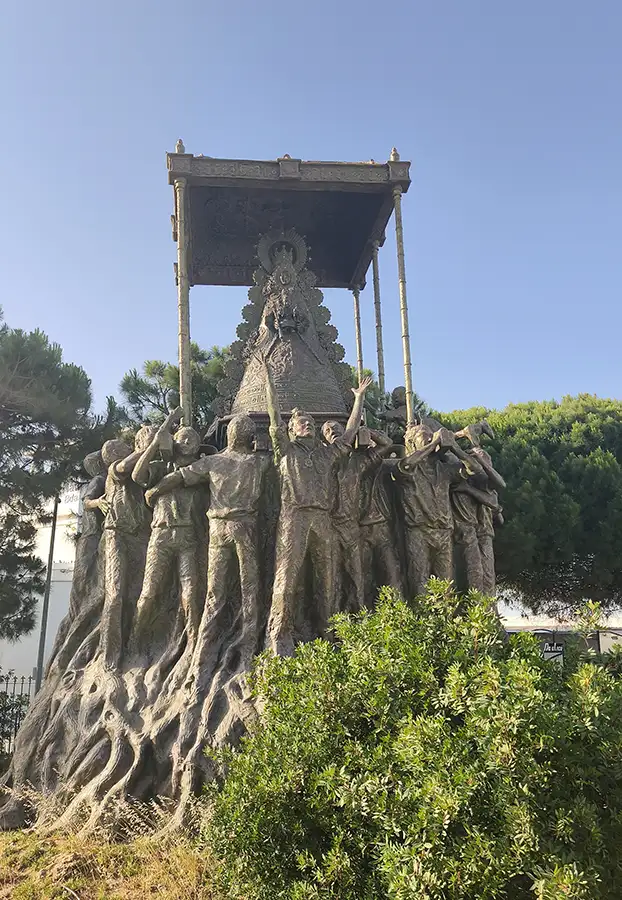
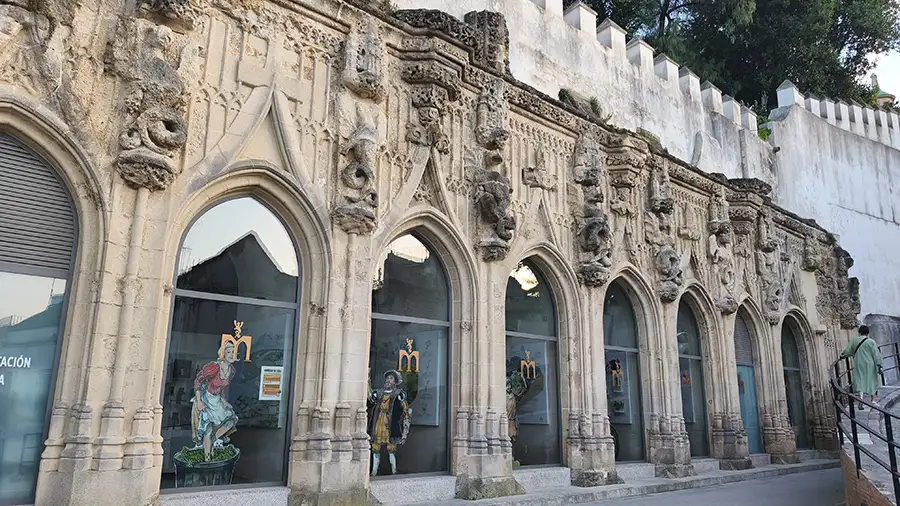
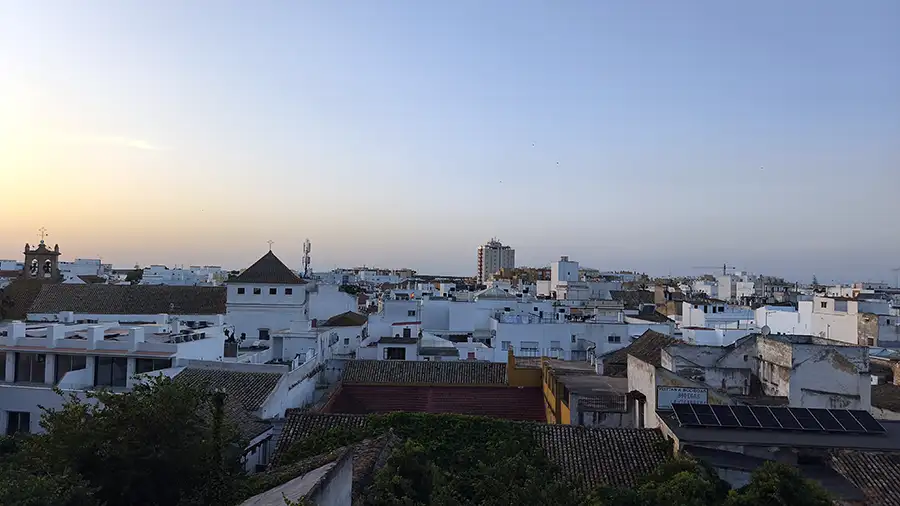
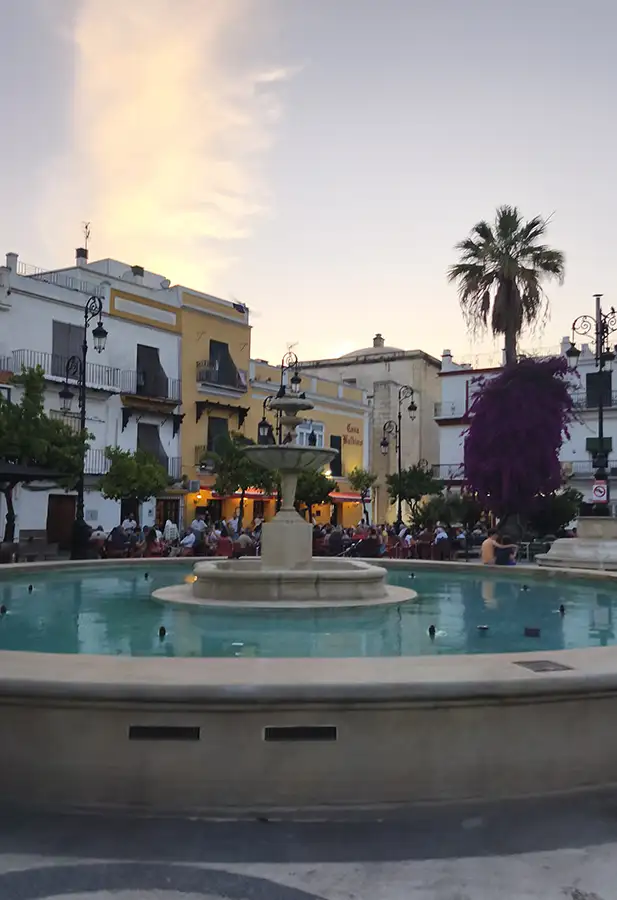
El Puerto de Santa María: beaches and seafood
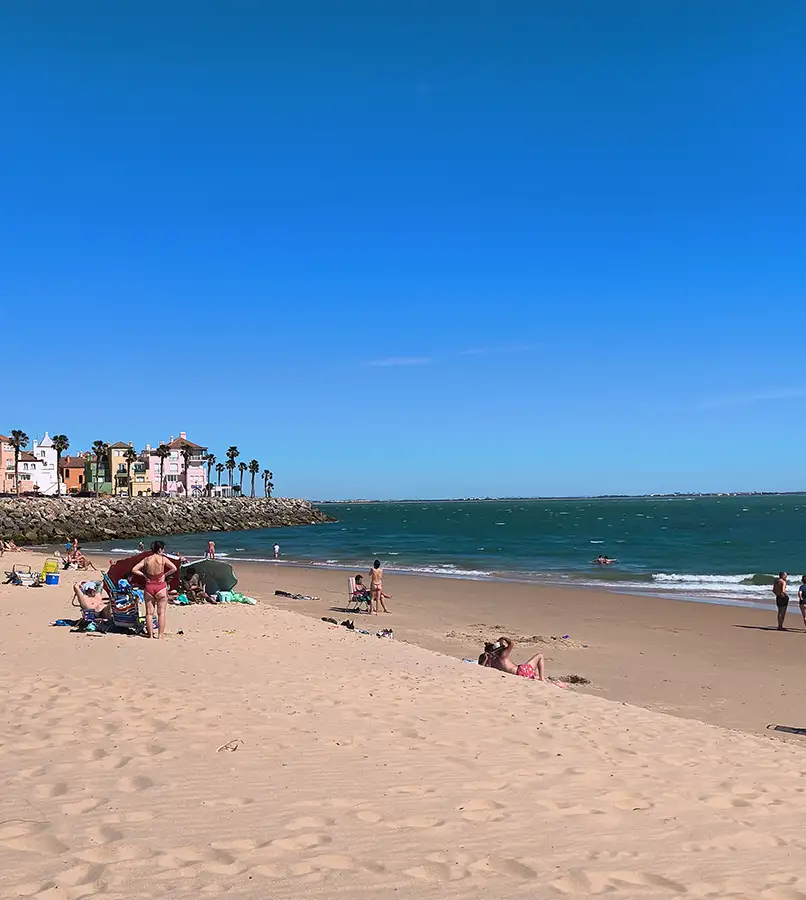
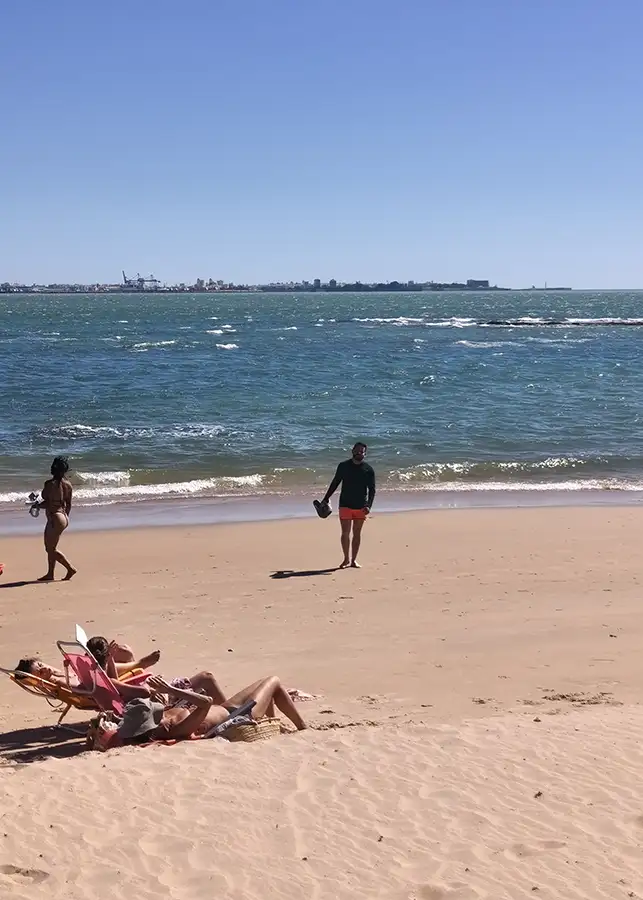
El Puerto sits on the Bay of Cádiz and is the most beach-focused of the three. It has beautiful fine sand beaches, a medieval castle, and historic bodegas like Osborne (yes, the ones behind the giant black bull you see along Spanish highways).
El Puerto's strong suit is its food. The seafood here is so good that the city became known as "la ciudad de los cien palacios y un millón de gambas", the city of a hundred palaces and a million shrimp. An exaggeration? A little. But the shrimp part is very real.
What to see: the Castillo de San Marcos (13th century), the Vapor, the boat that crosses over to Cádiz, and the Osborne bodega park.
Fun fact: the Fino produced in El Puerto has a different profile from the ones in Jerez and Sanlúcar because of the direct Atlantic breeze. It's more refined, with a gentle salinity and a lightness that pairs well with seafood.
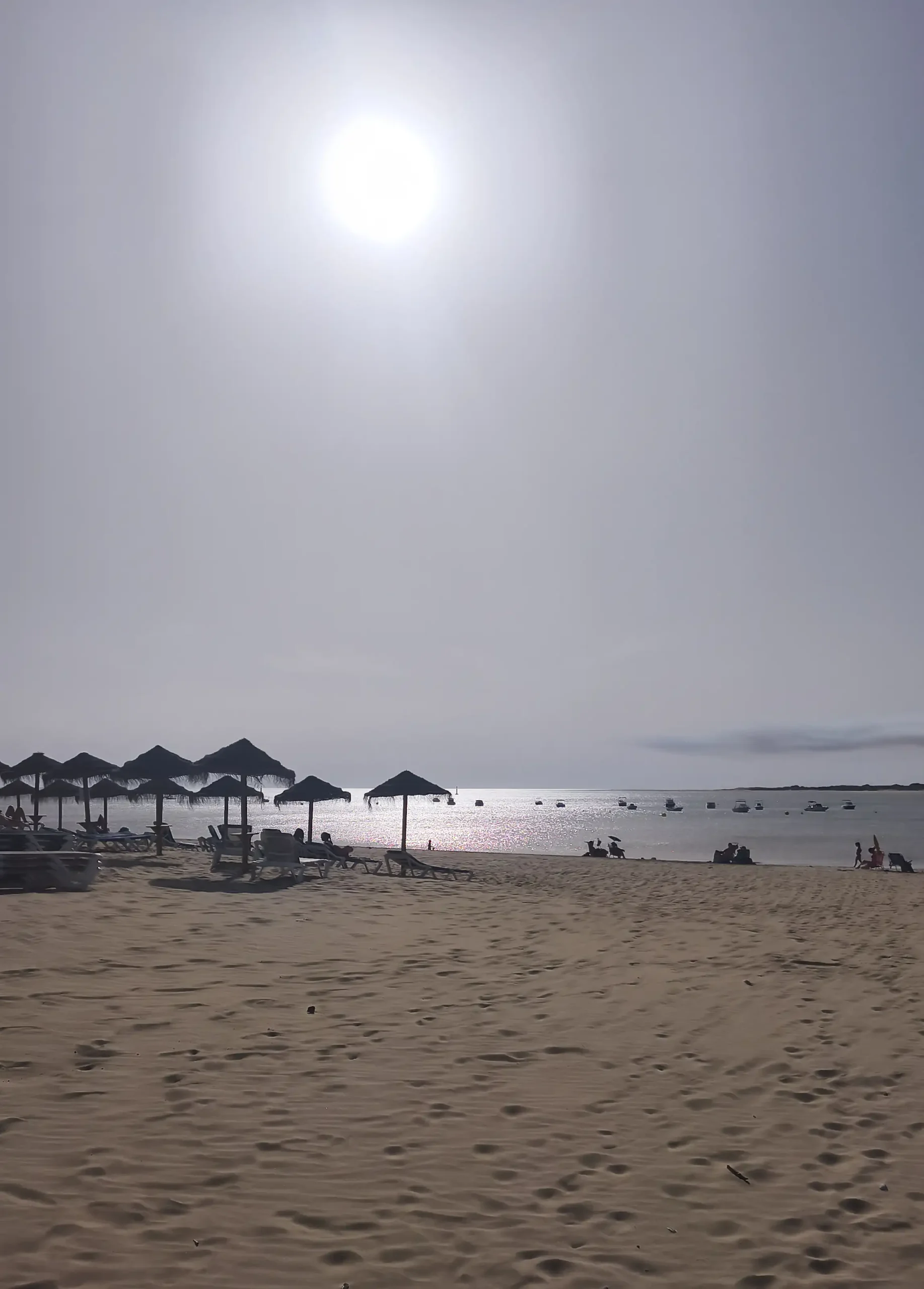
I have to admit we didn't make the most of the city. The sun was brutal and we ended up choosing the beach instead. The ice cold dip is well worth it to escape the heat.
Jerez de la Frontera: the capital of sherry
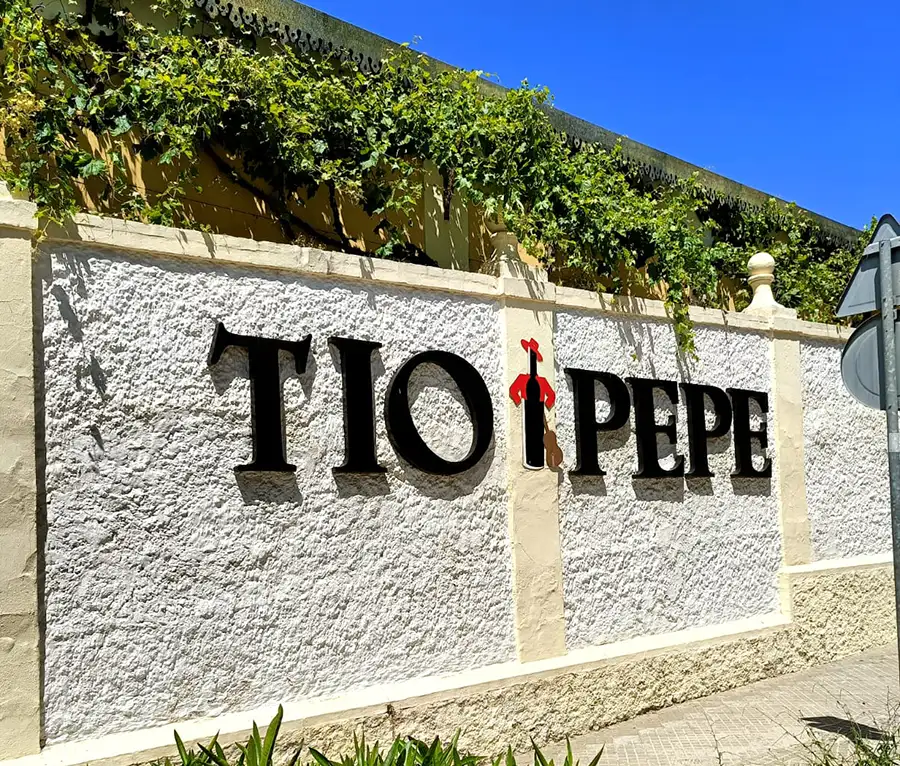
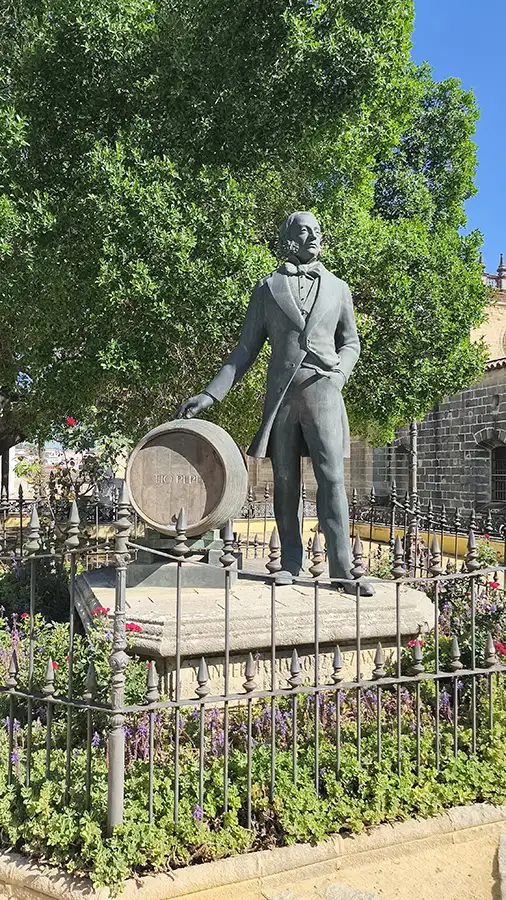
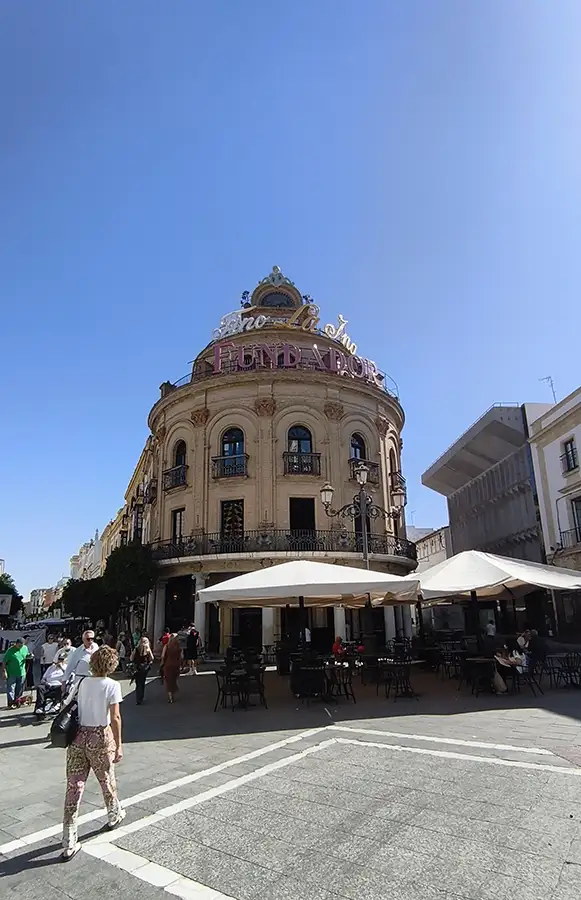
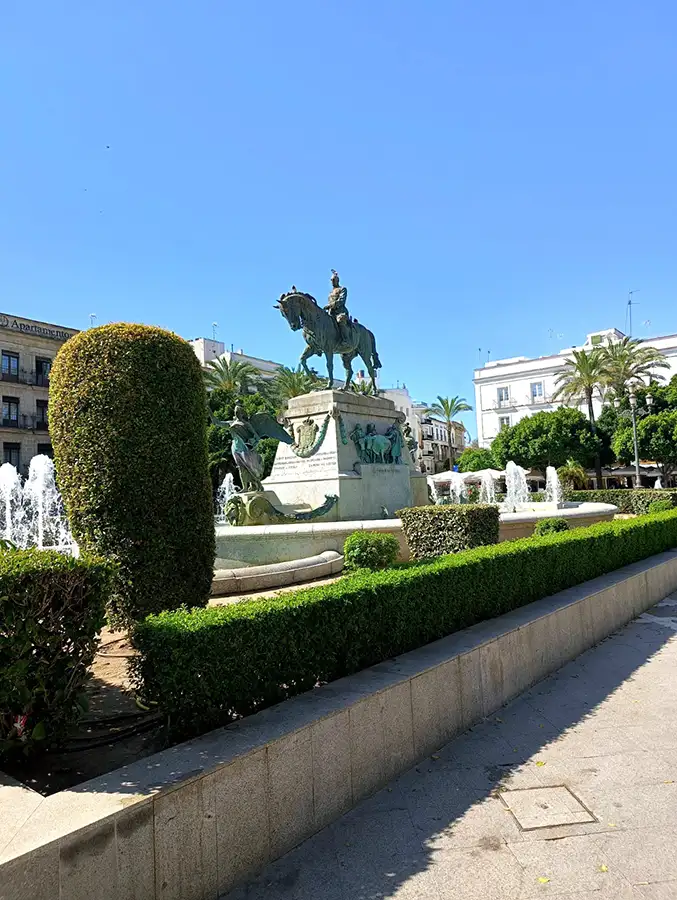
Jerez is the largest of the three, sits further inland, and is the beating heart of this whole culture. This is where the most famous bodegas are located, like González Byass (the Tío Pepe you can read more about HERE), Lustau, Tradición, and Williams & Humbert.
But Jerez isn't just about wine. The city is also the world capital of flamenco (home to Spain's most important flamenco school) and of purebred Andalusian horses.
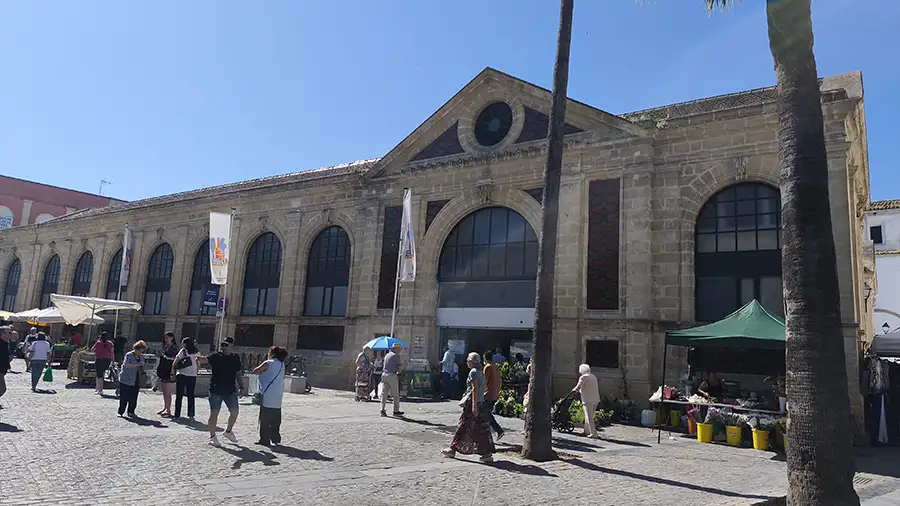
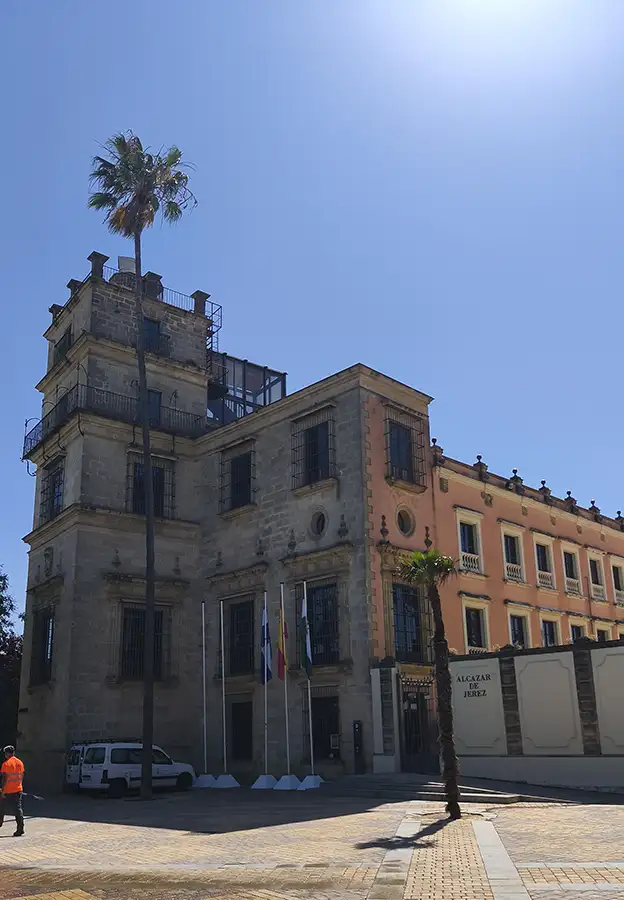
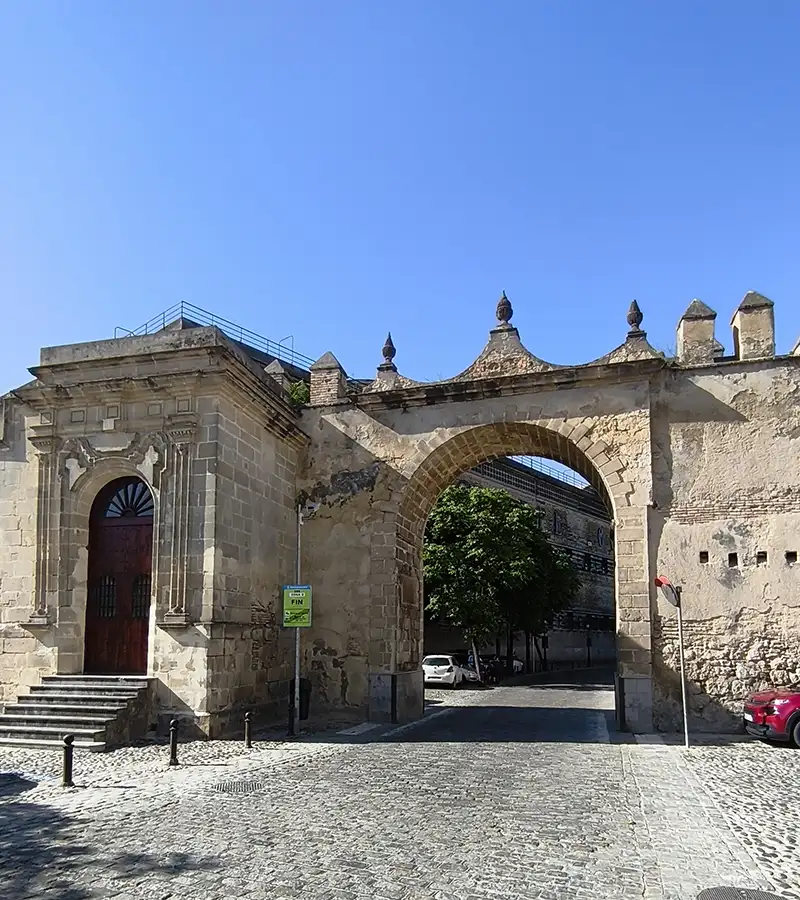
There we passed by the Jerez Cathedral, which is beautiful. The Arab Alcázar was unfortunately closed, we couldn't tell if it was for a private event or renovations, but the view from outside, sitting under a tree and soaking in the moment, was worth it.
The Santiago neighborhood (the birthplace of Jerez flamenco) is also worth visiting, and if you have time, go see a show. But the real star of a Jerez visit is definitely the bodega tour. In our case, we chose Tío Pepe.
Fun fact: in Jerez, the wines age in those enormous high-roofed buildings that look like cathedrals, and locals actually call them that. Air from the region circulates through the windows and directly influences how the wine ages.
The types of wine you'll find there
You don't need to become a sommelier, but just in case the waitress asks what you'd like:
Fino
Dry, pale, crisp. The most popular. Served chilled.
Manzanilla
A cousin of Fino, only from Sanlúcar, with that salty touch of the sea.
Amontillado
Amber colored, more complex, with a slightly nutty note.
Oloroso
Fuller bodied, oxidative, with notes of walnuts and caramel.
Palo Cortado
The rare one, the mysterious one, starts out as a Fino and changes course halfway through aging.
Pedro Ximénez
Sweet, dark, dense. Almost a liquid dessert. Amazing with vanilla ice cream (I'm not making this up, it's a classic).
How to get there
From Madrid: there's a high-speed AVE train to Jerez de la Frontera (about 4 hours) or to Cádiz, where you can catch a bus or rent a car. By car, it's about 6 hours along the A-4.
Sanlúcar and El Puerto are less than an hour from Jerez.
To explore the whole triangle: it's best to have a car or plan around the local buses (there are connections between the three cities). You can comfortably cover the whole region in 3 to 4 days.
Need a bus or train?
Take a look with our partner. You don't pay anything extra for it, you get the platform's discounts, and you help MiraEspanha keep creating free content.
Best time to visit
Spring (April to June) is the perfect time: Temperatures are pleasant, between 20°C and 28°C, the May festivals take place in all three cities, with plenty of flamenco, horses, and of course wine, and the vineyards are lush and green.
September is also special: the time of the Vendimia, the grape harvest. In Jerez, the celebration kicks off with the traditional grape stomping in front of the Cathedral, yes, with actual feet.
Avoid July and August if you're not a fan of intense heat. Temperatures in Jerez climb past 38°C and the cities fill up with tourists.
JEREZ DE LA FRONTERA ClimaQuick tips before you pack
1
At the bodegas, don't ask for a "sherry." Locals don't use that word. Ask for the type instead, for example, "un fino, por favor."
2
Tabancos are the traditional bars where wine is served straight from the barrel. They're the most authentic (and cheapest) place to drink in Jerez.
3
The seafood in Sanlúcar and El Puerto is so fresh it almost feels unfair. Try everything you can find among the fried fish and seafood. And don't skip the tortita de camarón.
4
Book your bodega visits ahead of time, especially González Byass and Tradición.
Bonus stops
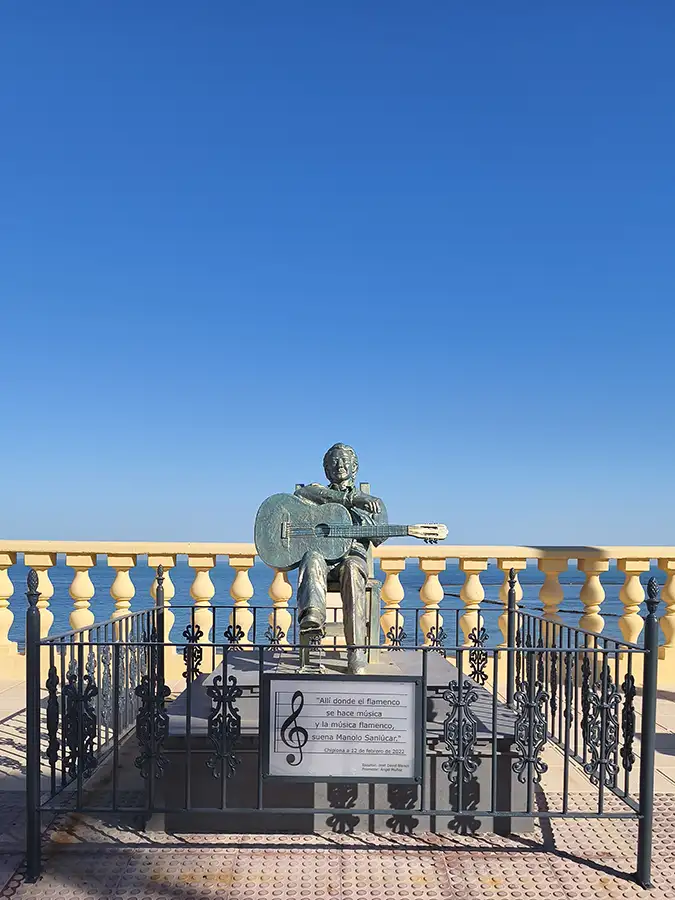
Who said a triangle can't have a fourth or fifth point? During the trip through the triangle, we made a few detours to coastal towns that were worth every mile.
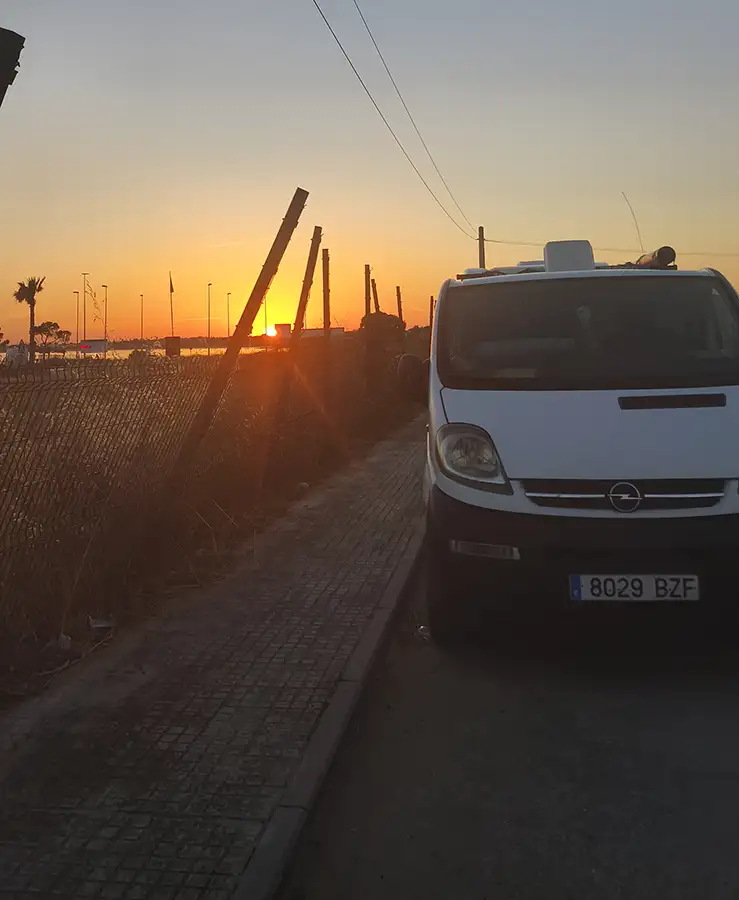
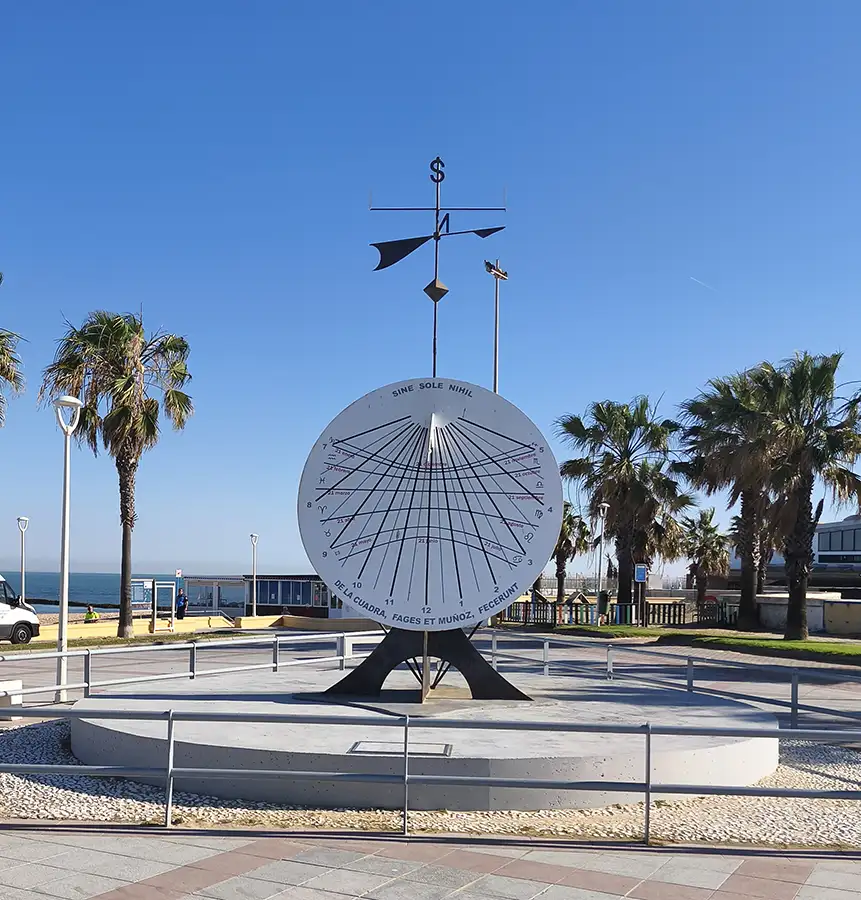
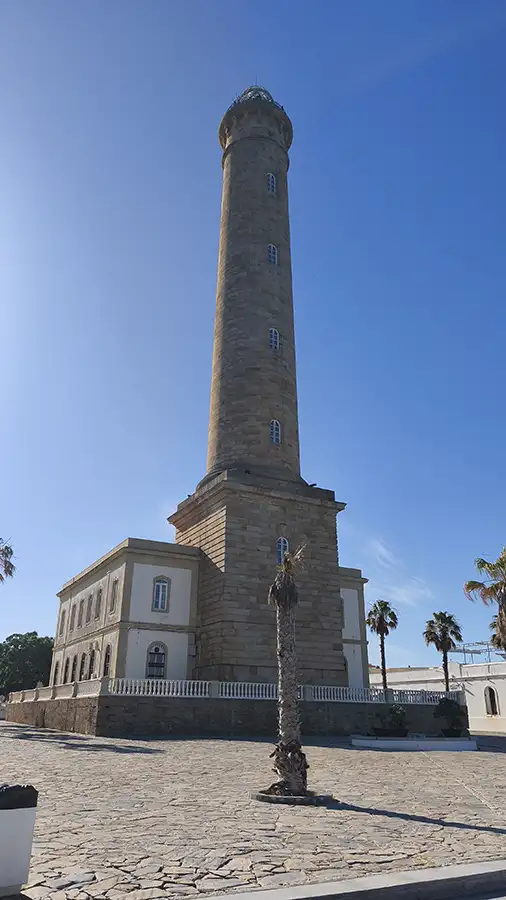
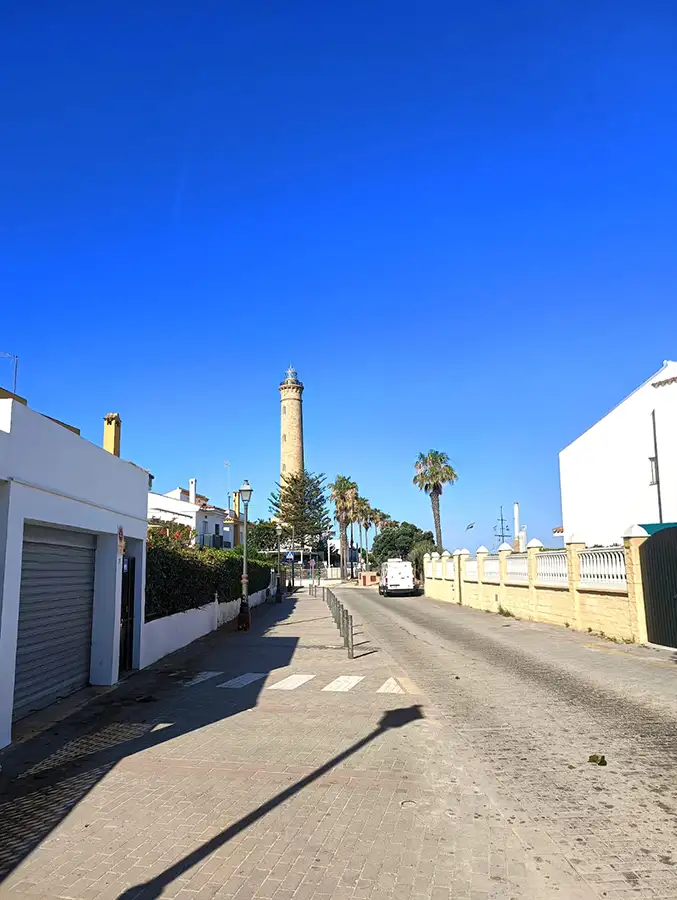
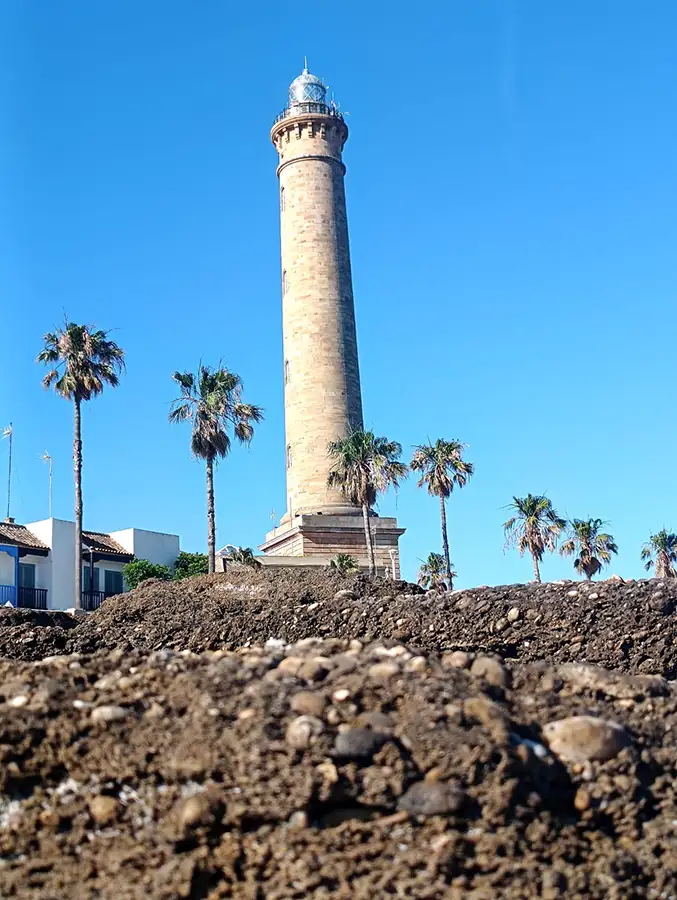
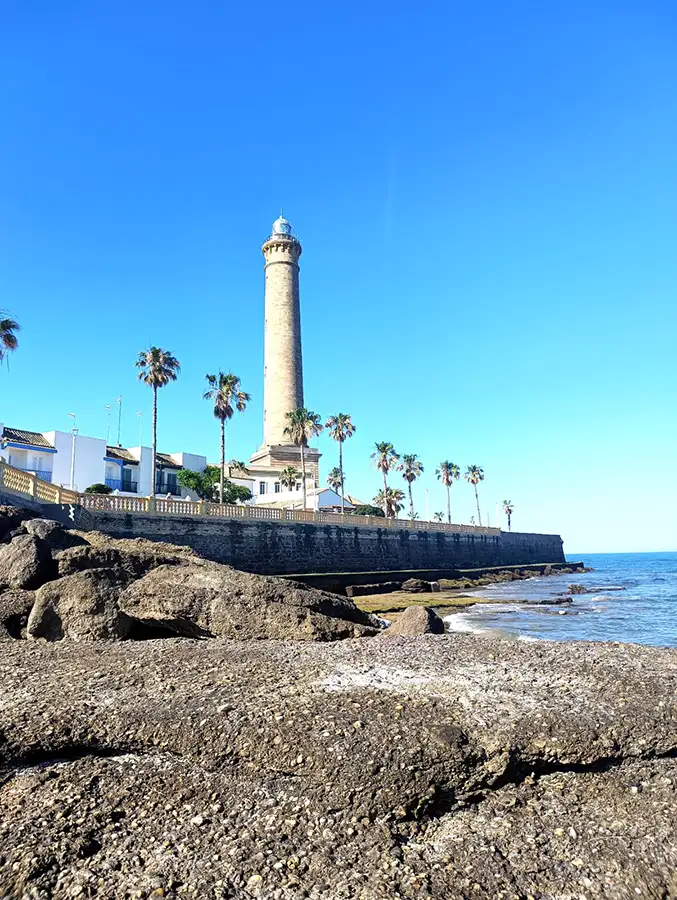
After visiting Sanlúcar, we decided to sleep a little further along. And we ended up stopping in Chipiona. Sleeping by the sea, listening to the sound of the waves, was one of the things I really wanted. Turns out we couldn't actually hear the waves, and I'll explain why in a second, but that didn't take anything away from the experience of this town.
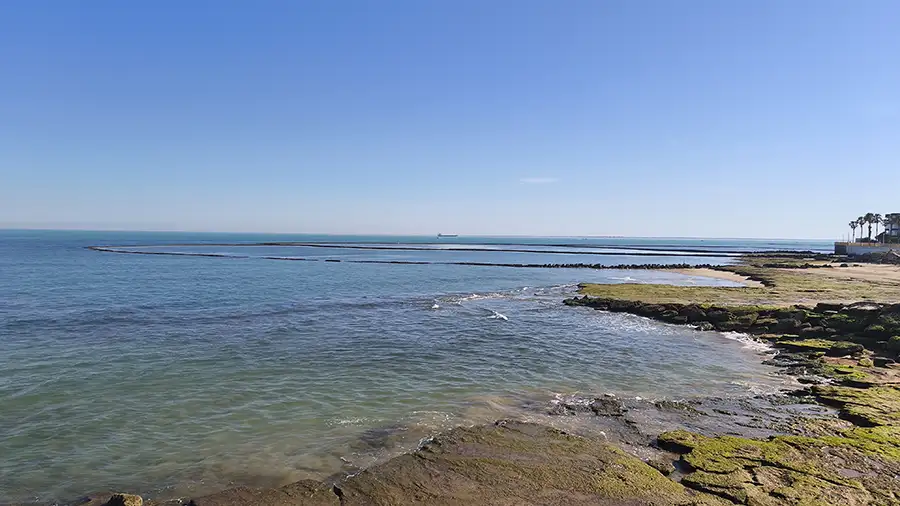
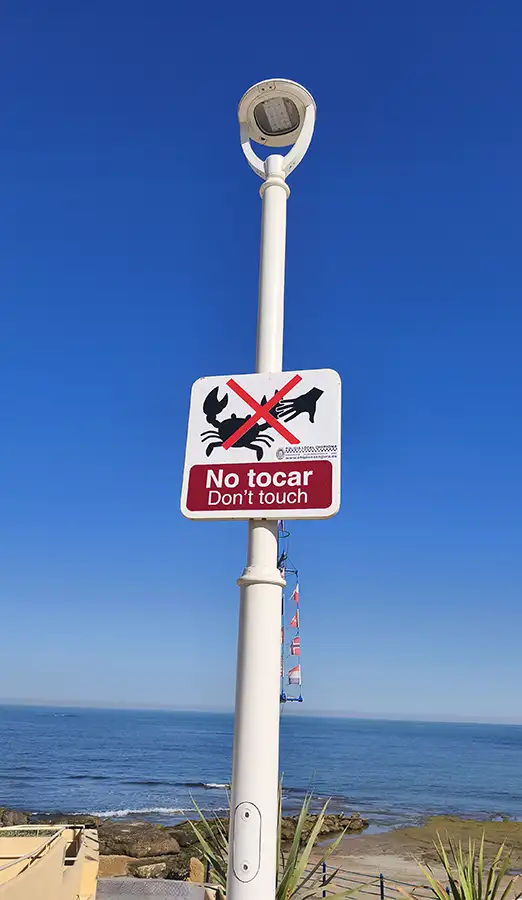
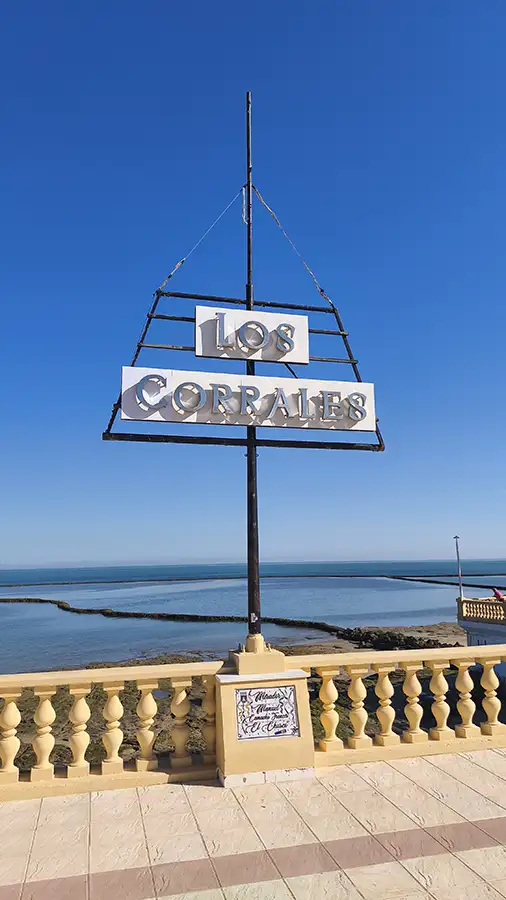
Chipiona's main beaches are shaped by the corrales. These are stone enclosures built directly on the rocks of the beach, working like giant traps that follow the rhythm of the tides. At high tide, fish, crabs, and mollusks swim in over the walls, and at low tide, when the water drains out through the channels at the base of the rocks, the creatures get trapped inside with no way out. That's when the fishermen show up, wearing rubber boots, carrying a trident and a bucket of olive oil, which they pour onto the surface of the water to calm the glare and see the bottom clearly.
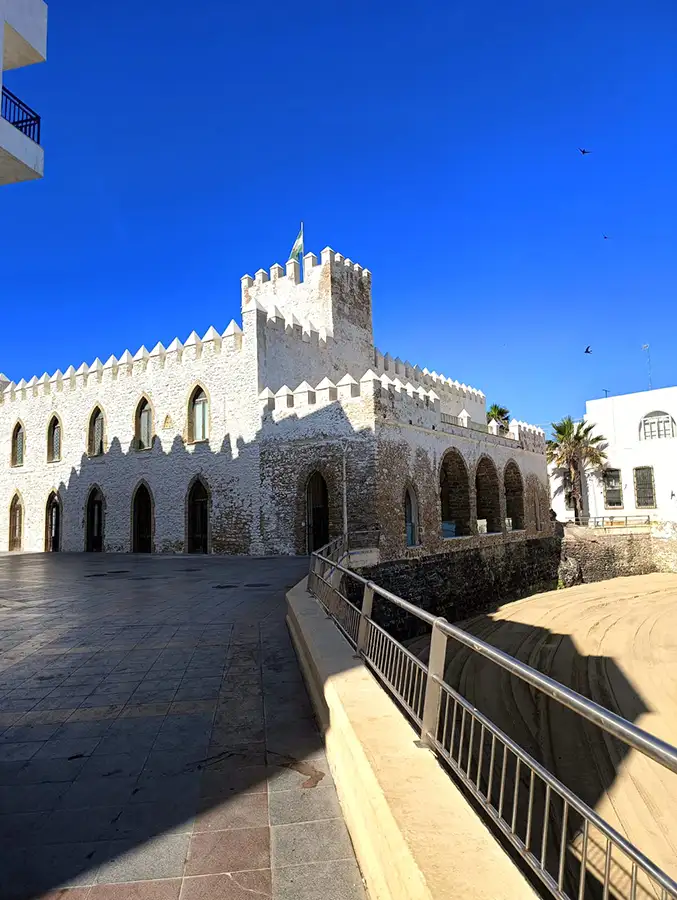
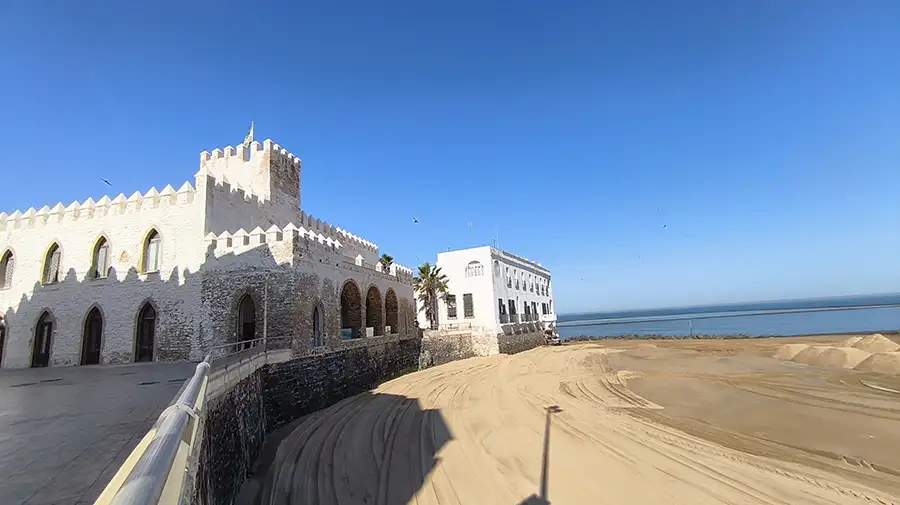
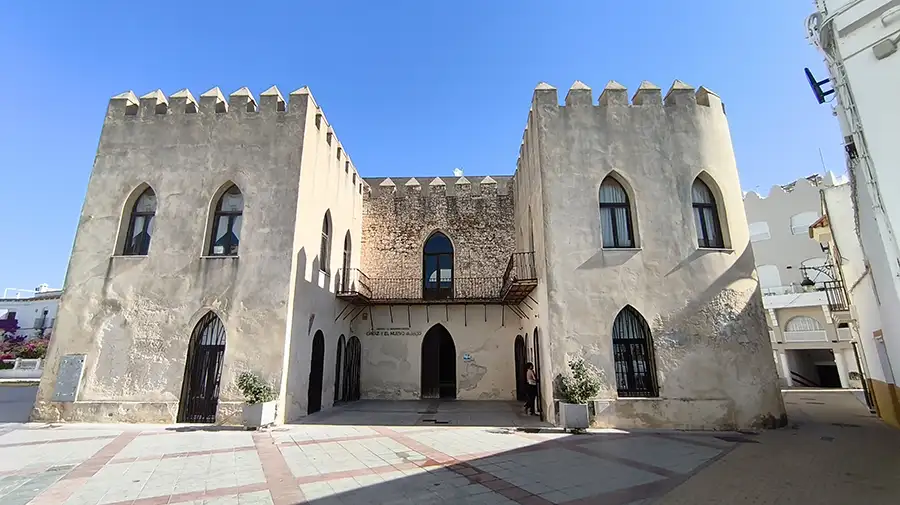
The technique has Roman origins, was refined by the Arabs, and survives to this day thanks to a small association of shellfish gatherers who keep this thousand-year-old tradition alive. The walls of the corrales don't use cement, they're made of ostionera stone bound together by oysters, algae, and barnacles that grow naturally between the rocks, forming a kind of living cement that repairs itself over time. From the outside, they look like medieval ruins by the sea. From the inside, they're an entire ecosystem. It's one of those things you see and can barely believe exists. Chipiona also has a lovely waterfront promenade and a castle facing the sea that's also worth visiting.

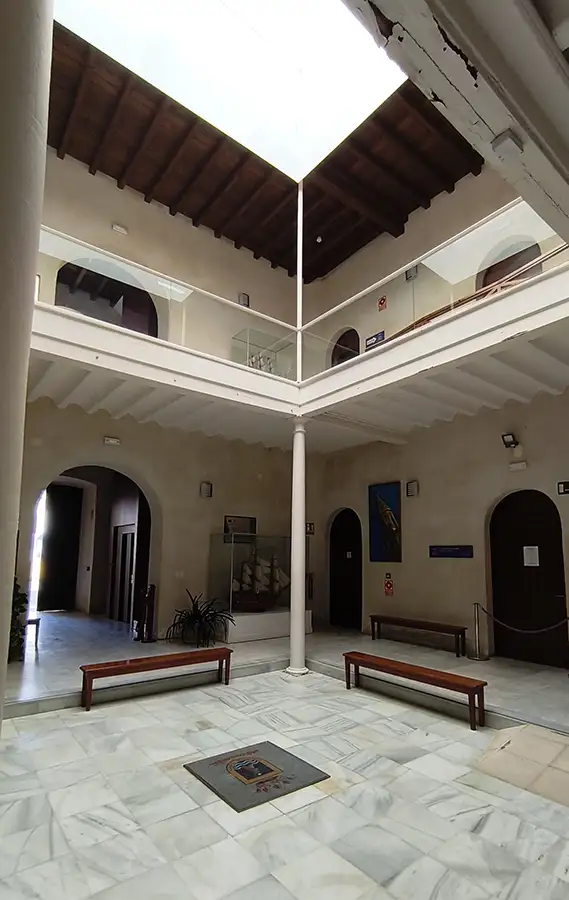
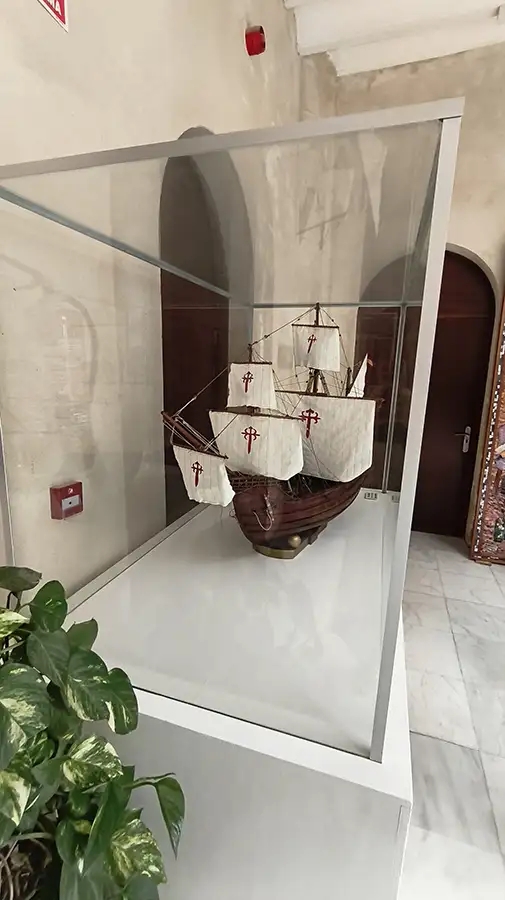
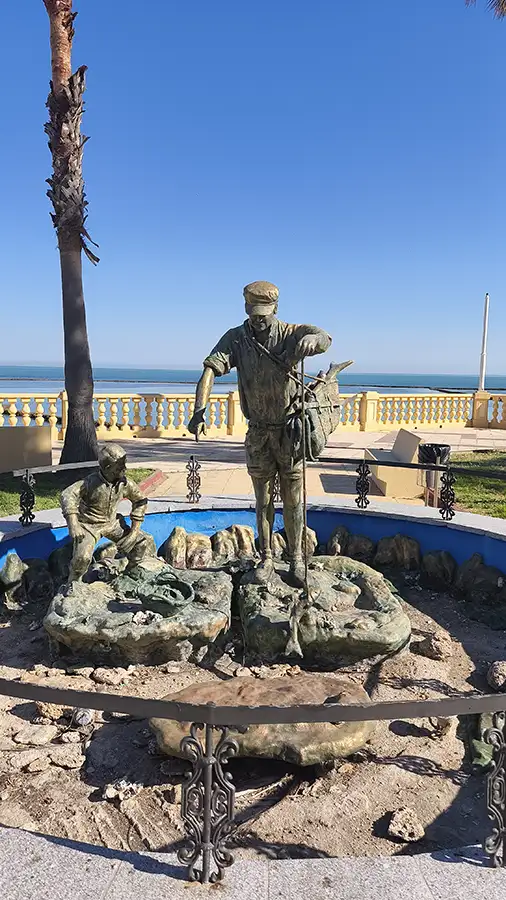
After Chipiona, it was Rota's turn. And Rota has quite a peculiar personality, since it's at once an Andalusian village of flower-covered houses and home to one of the largest United States naval bases in Europe.
That's right, you're walking along the beautiful Atlantic waterfront and suddenly, on the other side of the fence, you spot a military setup that looks straight out of an American action movie. Destroyers, aircraft, NATO communications equipment... all of it just a few meters from the fried fish stalls.
The base was established in 1953, under the Madrid Pact between Franco and the United States, in a strategic area of nearly 25 km² between Rota and El Puerto de Santa María. Today it houses around 8,000 Americans between military personnel and families, and includes a school, a hospital, a supermarket, and even a small multi-faith chapel. It's literally a city within the city. And no, you can't get in without an invitation.
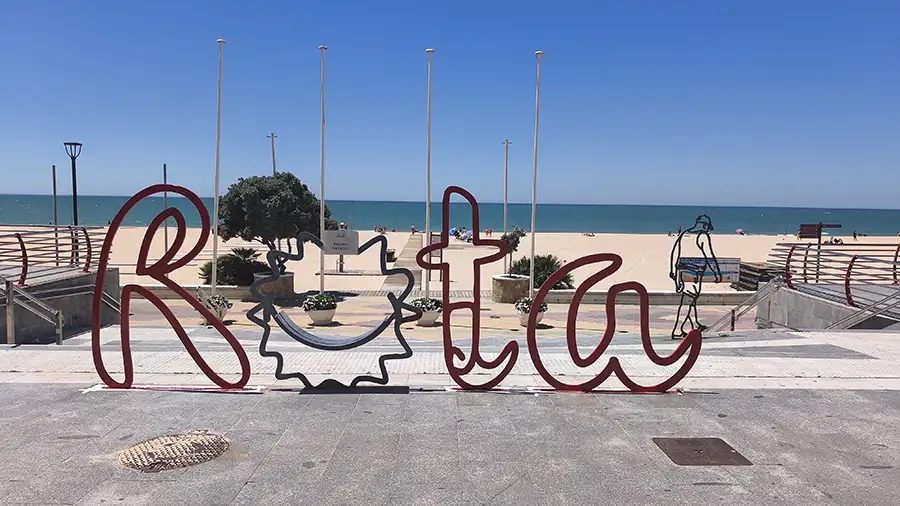
But what you can actually do in Rota is much more enjoyable. Also, I'll spare you my thoughts on the base and that country so I don't get worked up. Setting that aside, Rota is captivating.
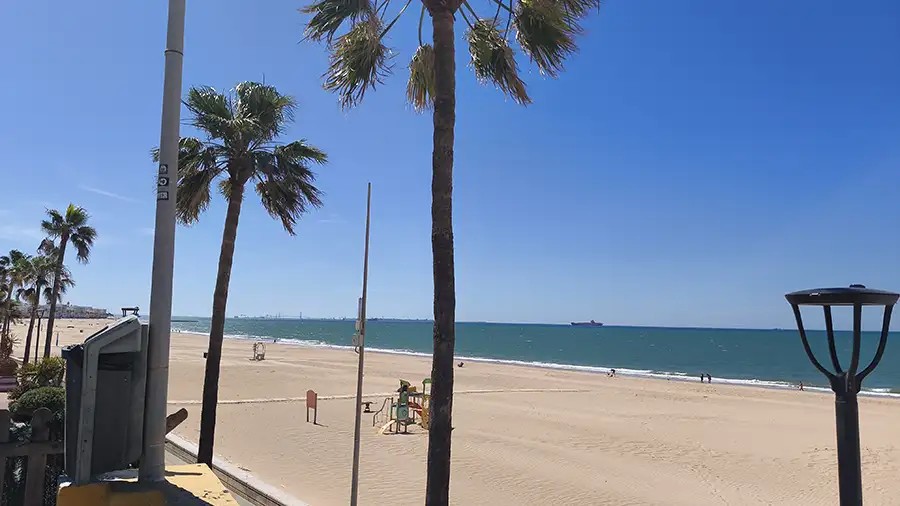
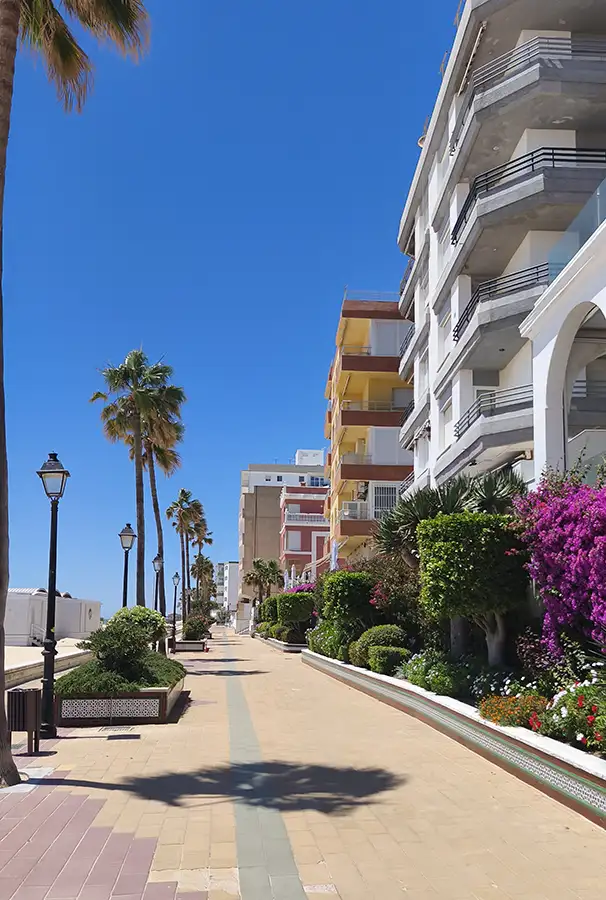
The waterfront promenade is wide, breezy, and almost bar-free, but in the end that turns out to be part of its charm. Unlike so many other promenades along the Spanish coast crammed with kiosks, here you can actually see the sea, feel the Atlantic breeze, and stroll around in peace. According to the local Tourism Office, the base's presence ended up holding back aggressive tourism development, and today that's considered an advantage.
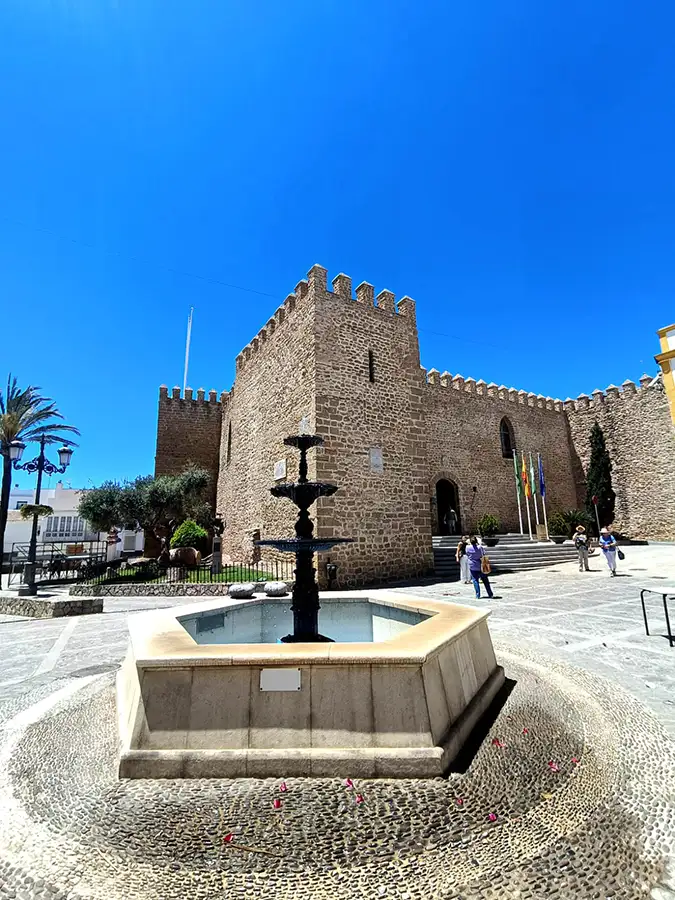
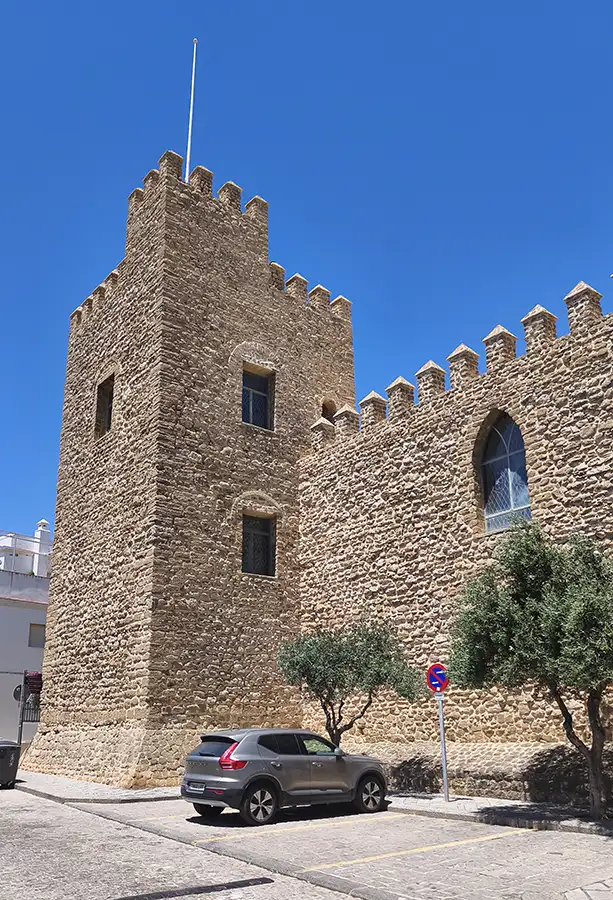
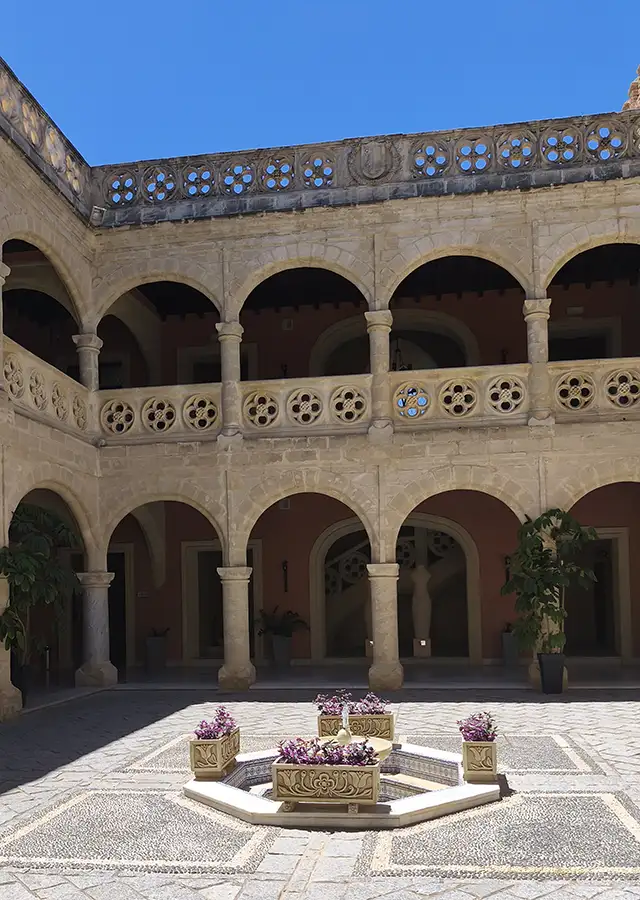
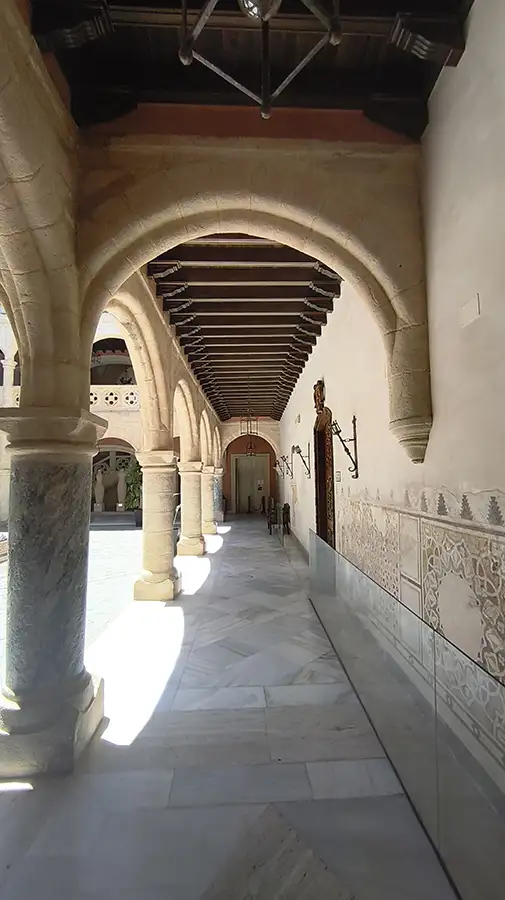
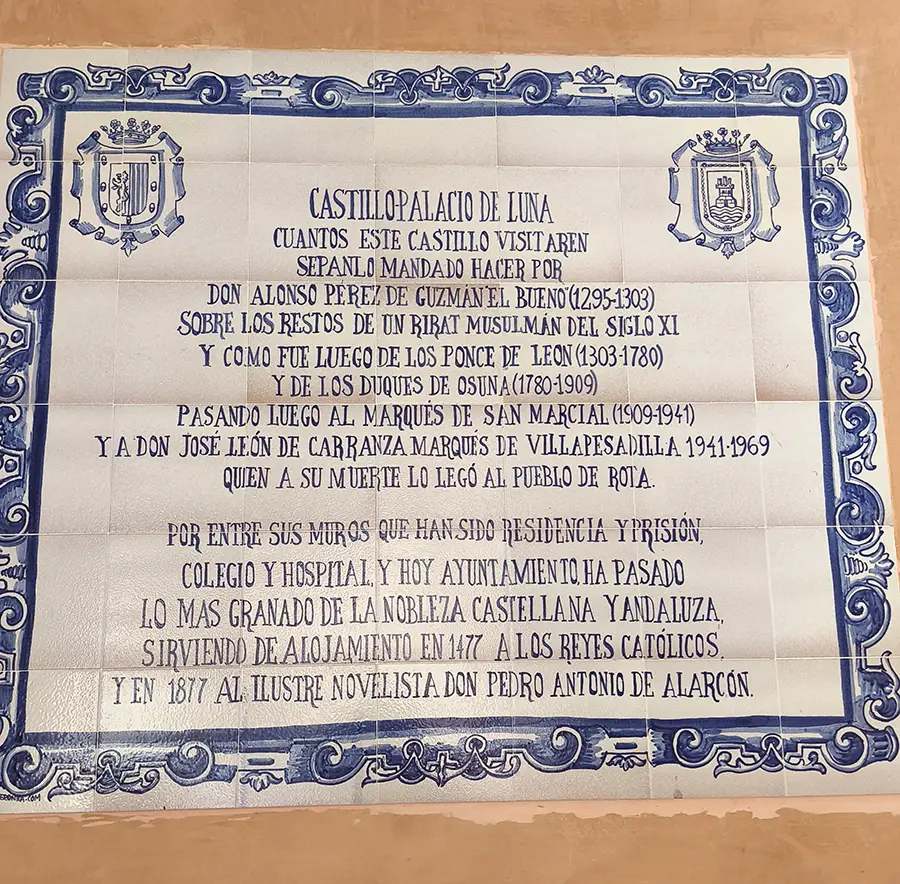
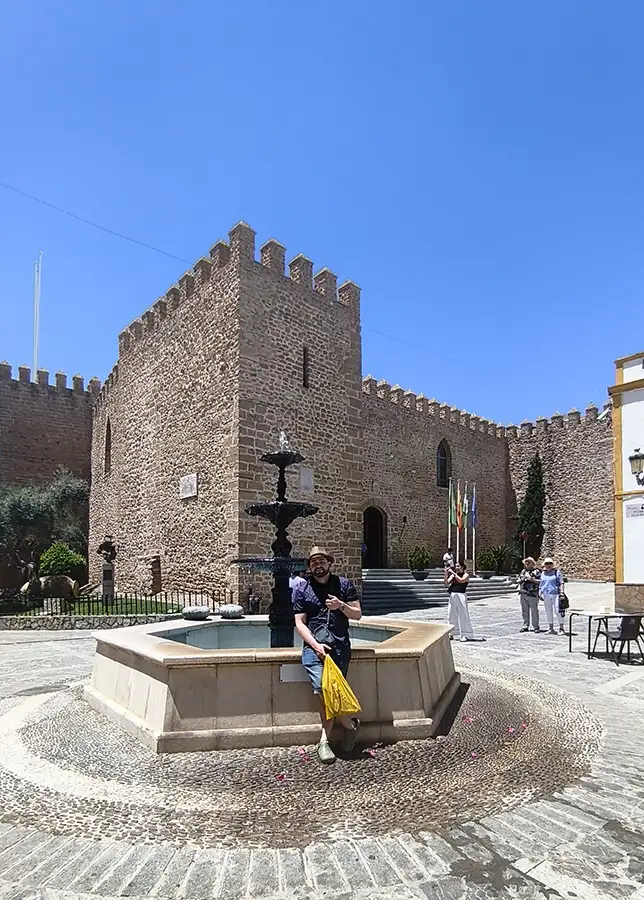
The Castillo de la Luna is the postcard image of the historic center, a 13th century fortress commissioned by Guzmán el Bueno on top of an earlier Arab structure, with five battlemented towers and a breathtaking 15th century gothic courtyard. It now houses Rota's town hall offices. In other words, the town hall literally operates inside a medieval castle. Spain being Spain. But honestly, if I let my inner princess dreams speak up, that's exactly where I'd want to live. What an impressive place, right on the sea, and the people we met there were a wonderful bonus. Super friendly and helpful, eager to help out, recommend places and dishes to try.
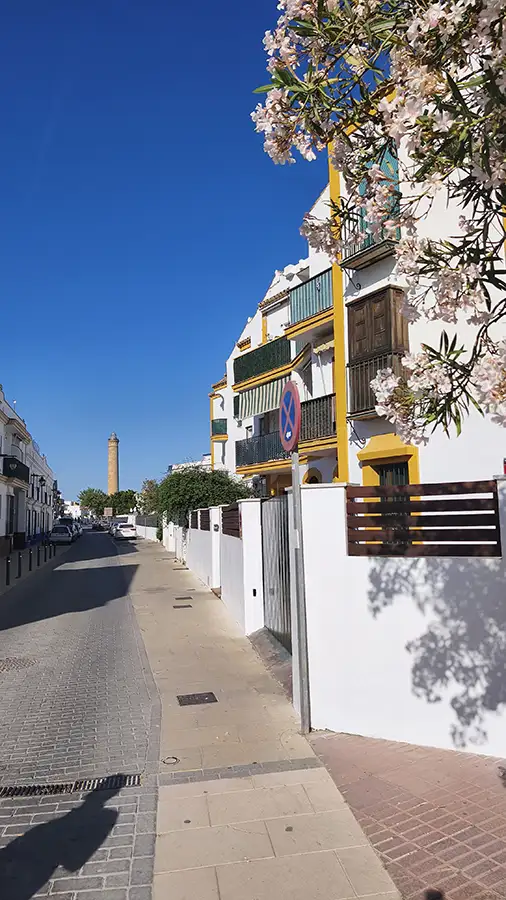
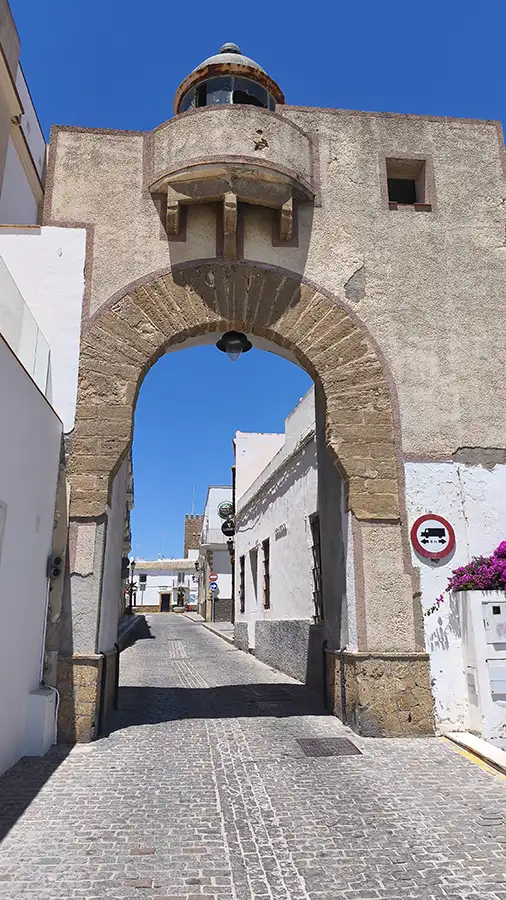
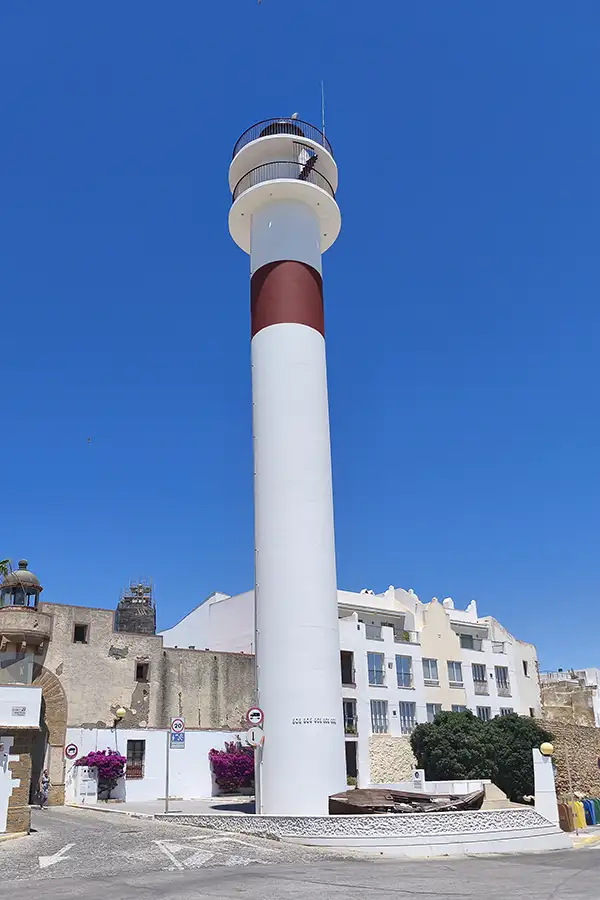
The lighthouse and the Puerta del Mar mark the entrance to the old town, with its little white alleys full of flower pots practically begging to be photographed from every angle.
The beaches are enormous, with fine sand and Atlantic water, much colder than the Mediterranean but a much deeper blue. There are 16 kilometers of coastline in total. And if you're up for it, the Senda del Litoral is a 4 km trail along wooden boardwalks through dunes and pine trees that ends up at nearly untouched beaches.
Rota is one of those towns where a quick visit leaves you wanting to come back.
Conclusion
So there you have it. My esteemed other half somehow figured out that the perfect birthday destination was a wine triangle in southern Spain, and the universe agreed, placing World Sherry Day on exactly May 26.
It could have been flowers. But this was so much better.