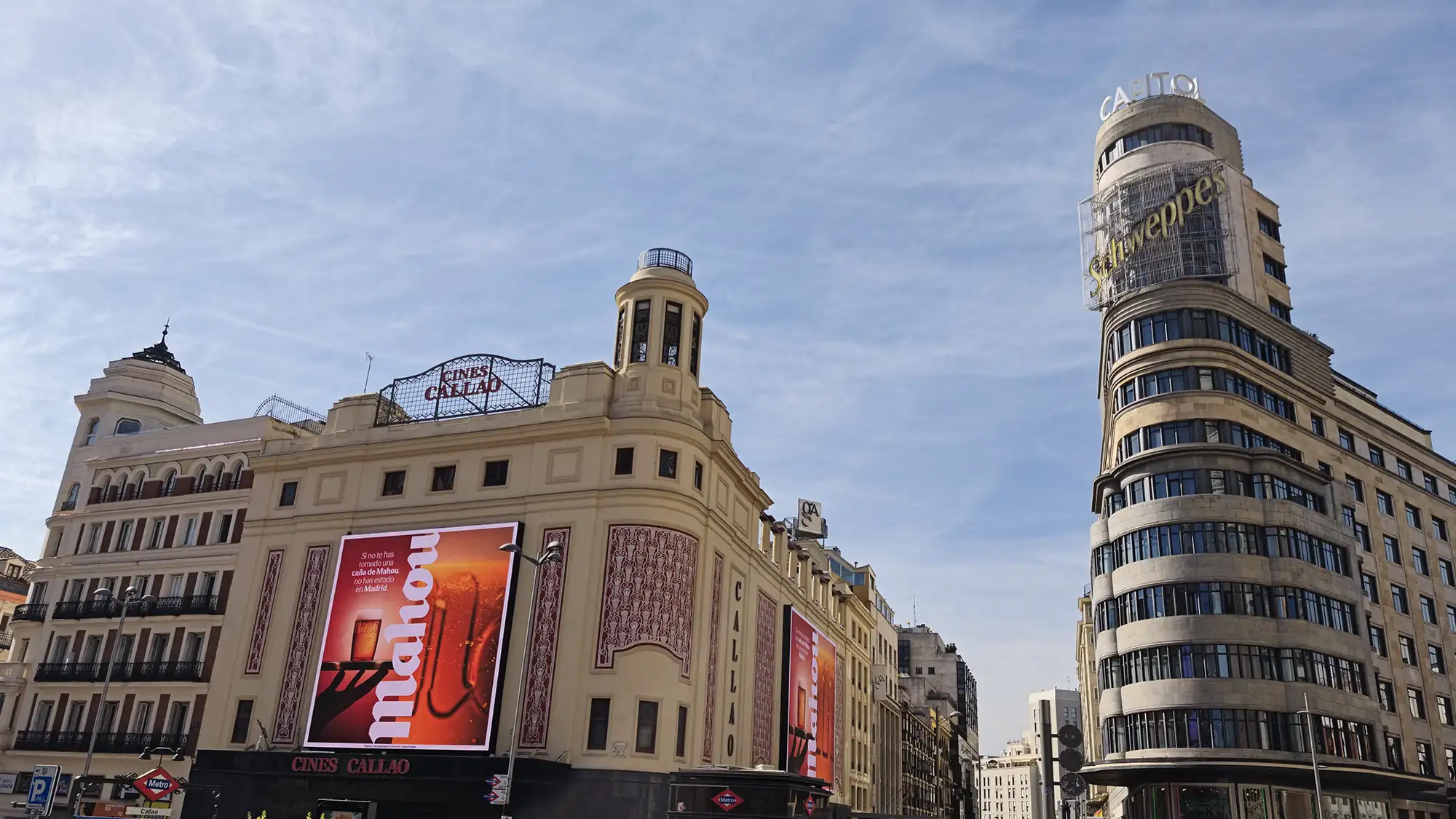
A lot of people live in or visit Madrid without realising the region makes wine. It does, with its own Designation of Origin, and less than an hour from the centre you can visit a family winery with a 17th-century cave underneath it.
We went to check out the Bodega Pedro García, in Colmenar de Oreja. Here's what the visit is like, what's included in the tasting, and what you need to know before going.
Visiting the Bodega Pedro García in Colmenar de Oreja
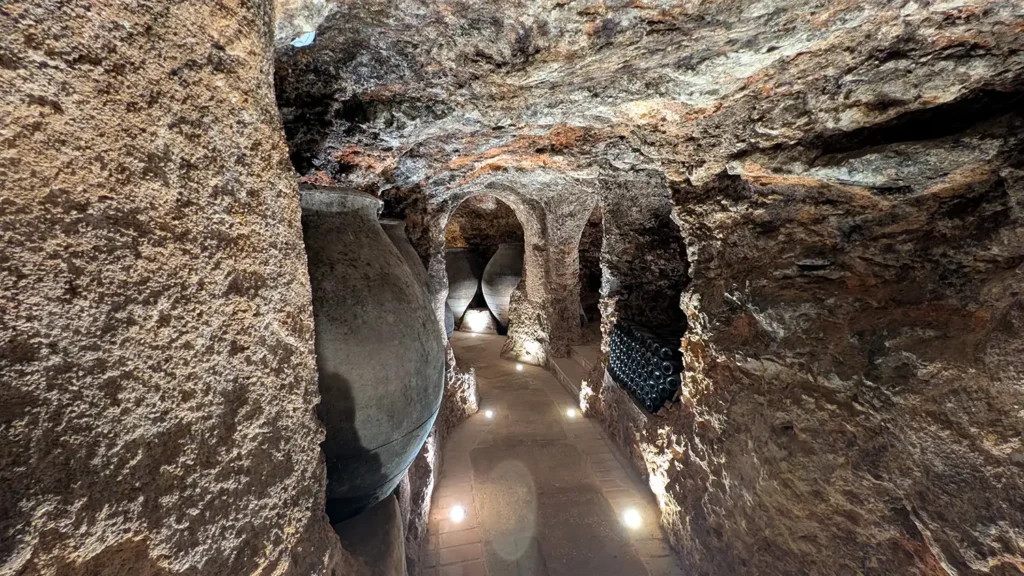
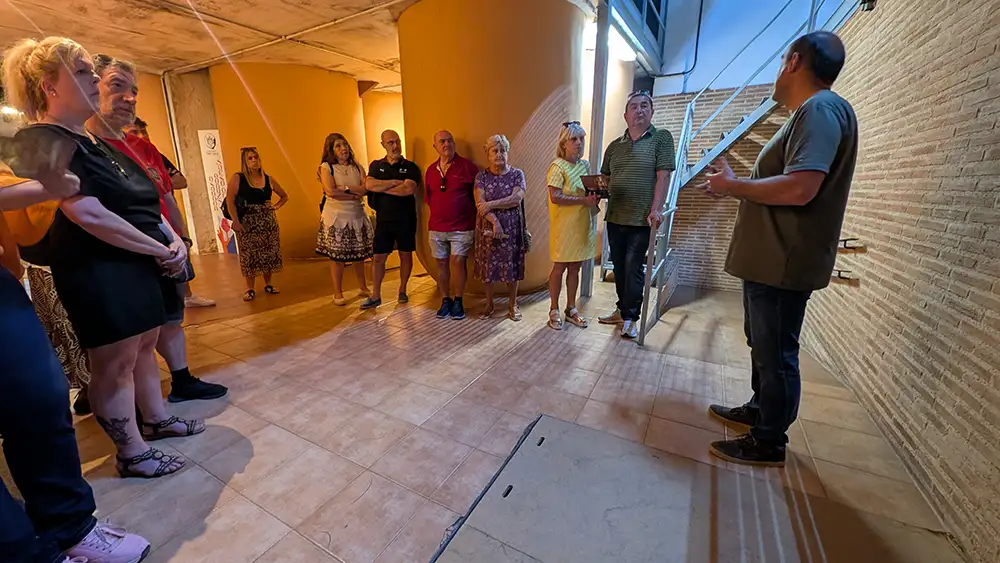
The guided tour at Pedro García lasts about an hour and ends several metres below street level, inside a 17th-century cave.
It starts above ground. Pedro García is a family winery that's been running since 1931, and the tour is led by Francisco, the house winemaker. He explains everything at an easy pace and is happy to answer whatever you ask.
The first stop is the fermentation room, where grape juice actually turns into wine. Francisco walks through the process and the different wines made there. We won't go into all the technical details here, but it's a genuinely useful stop for understanding how wine is made without getting lost in jargon.
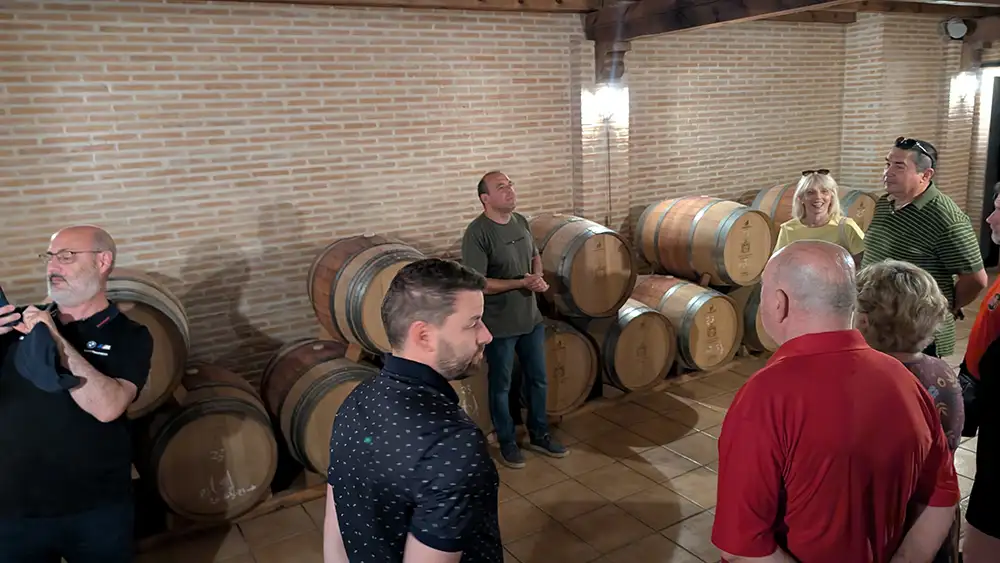
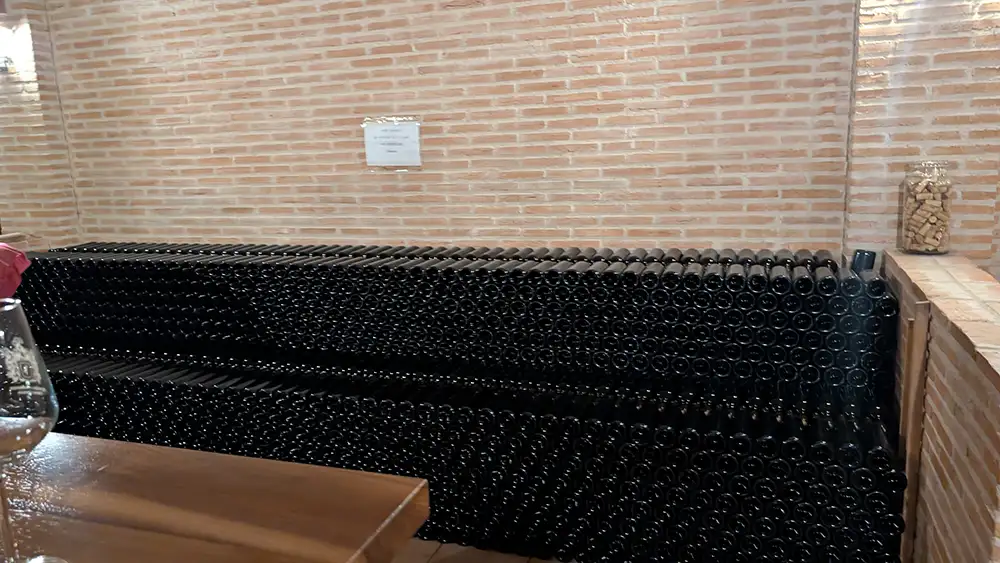
Next comes the room where the wine is left to age. Oak barrels line one side, bottles the other. If you thought ageing a wine just meant leaving the bottle on a shelf, this is where you find out there's a crucial step before that.
Ageing happens in two distinct stages, and oxygen is what sets them apart. First the wine goes into the barrel. Because the wood is porous, it lets in a small amount of air, which softens the tannins and adds woody aromas to the wine. It then moves into the bottle, a completely sealed environment where the wine develops slowly on its own.
This ageing time is where the words you see on any supermarket shelf in Spain come from, especially with red wine. A crianza has aged for at least 24 months, six of them in a barrel. A reserva, 36 months, with 12 in a barrel. A gran reserva, 60 months, with 18 in a barrel, and so on.
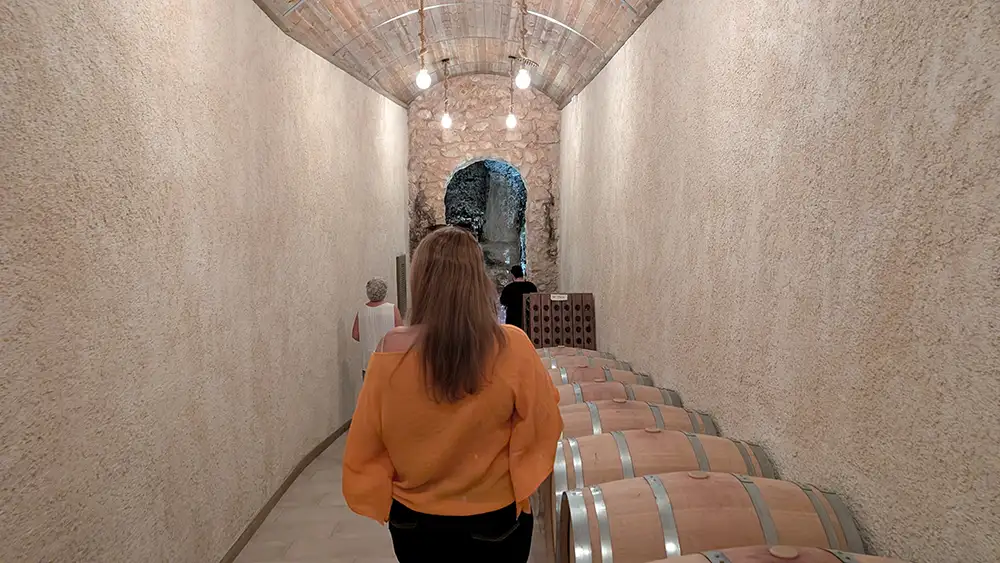
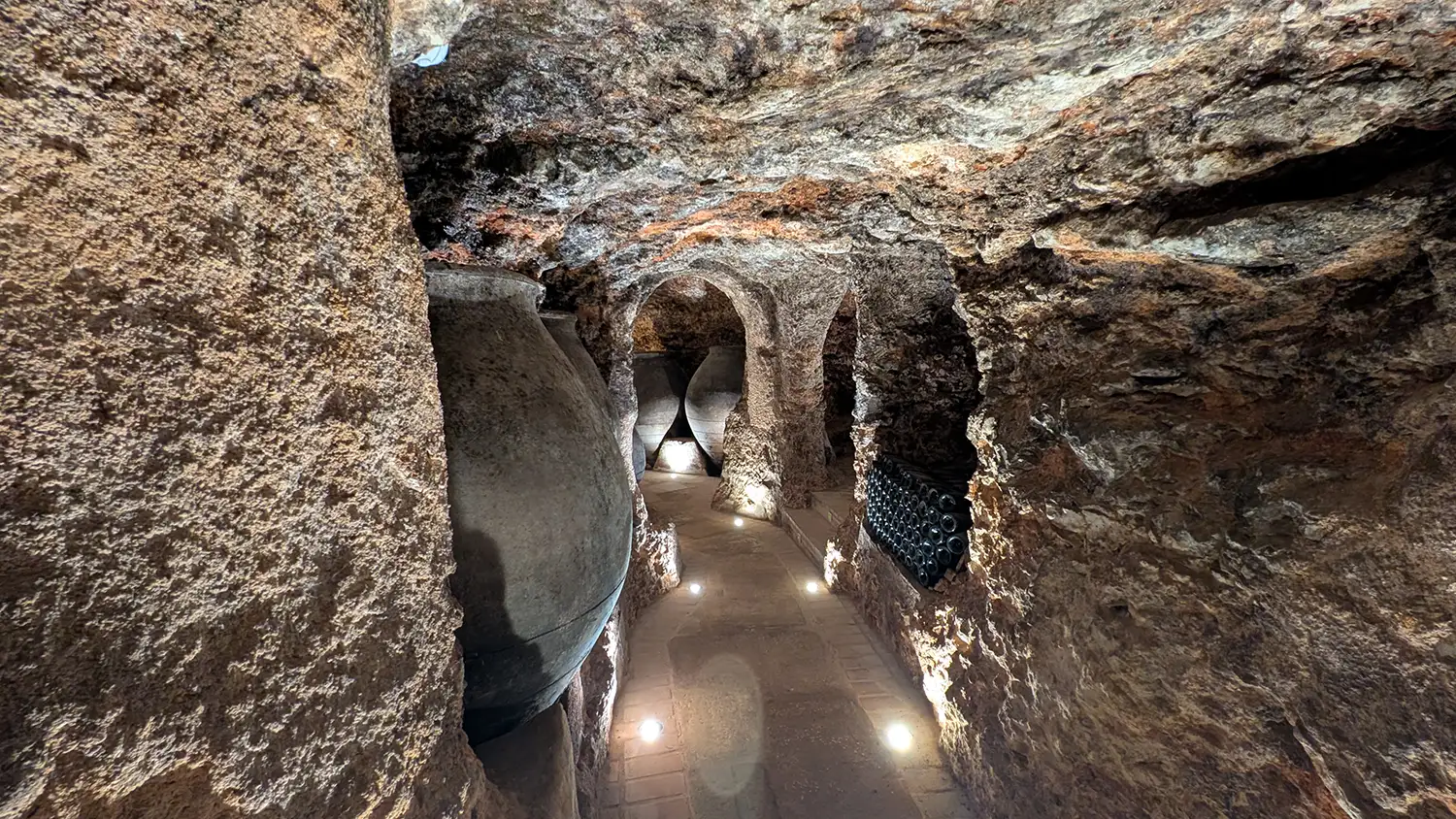
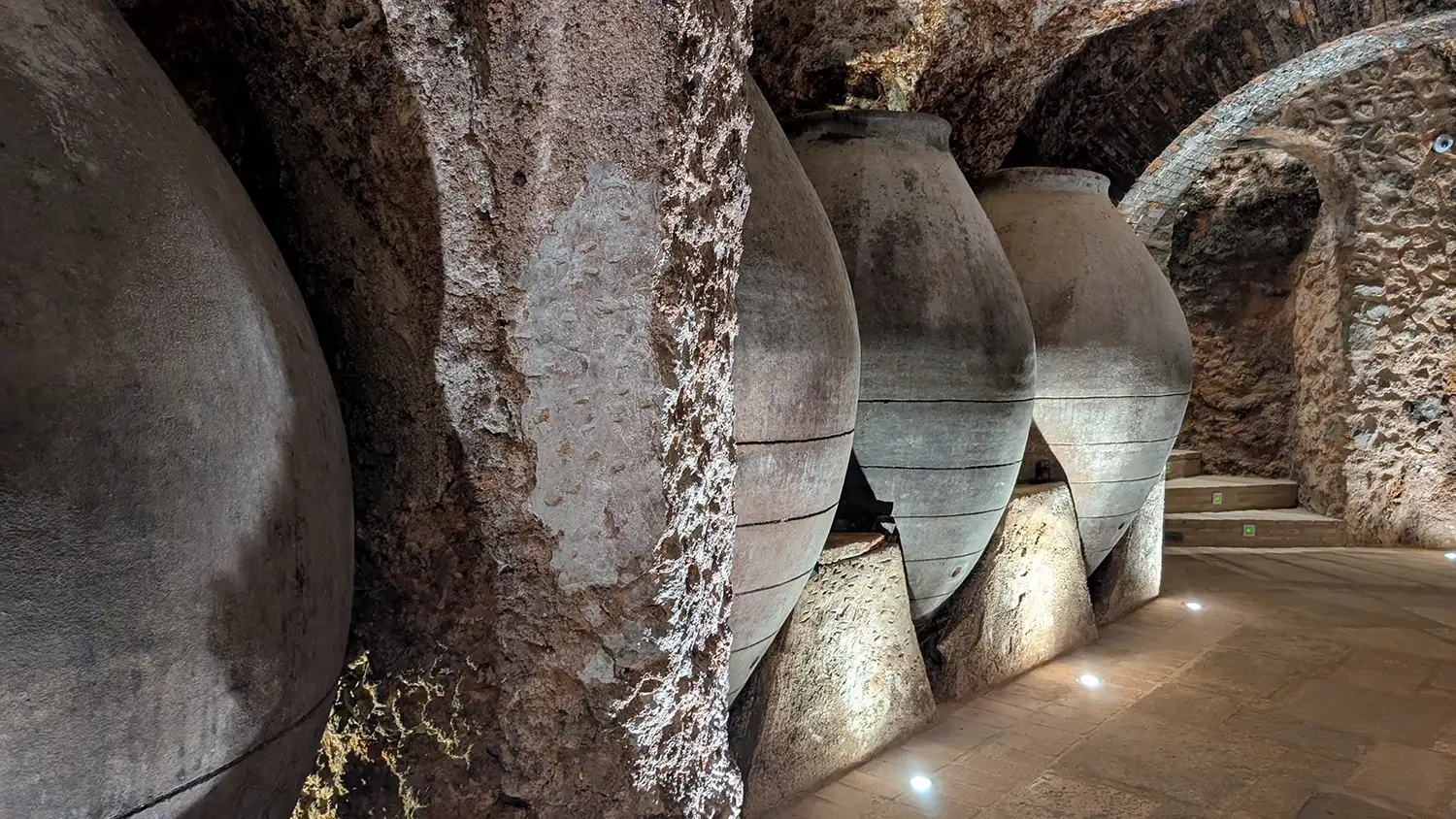
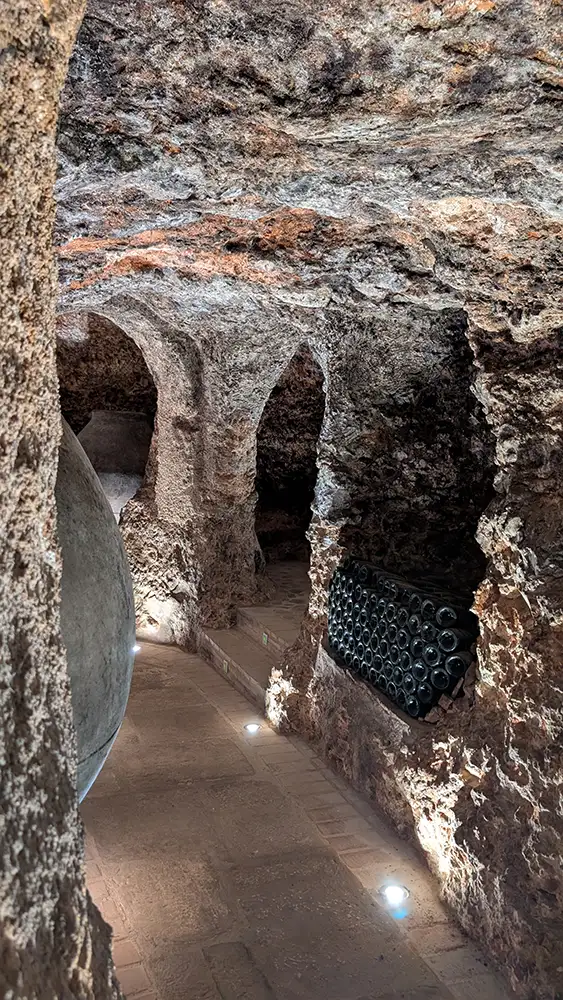
Then, comes the descent into the cave. The air changes before the surroundings do, turning cool without being cold, and down there the walls are lined with huge amphorae. These are clay pots the size of a person, where wine used to ferment and rest long before stainless steel or temperature control existed.
As a curious detail, the cave was dug by hand into the limestone bedrock. This particular stone, quarried locally, is the same material used to build the Cibeles fountain and the Royal Palace in Madrid.
Having a cave like this wasn't unique to this winery either. Colmenar once had around 150 similar caves, as each family would dig out their own space beneath their house to store their own wine.
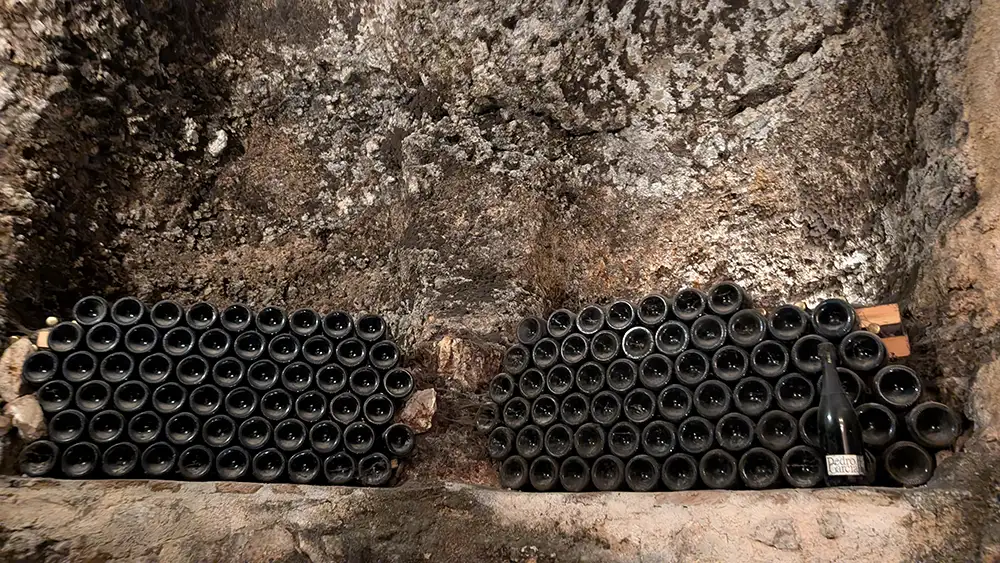
Today, the cave holds the winery's sparkling wines, made using the same method as champagne, with the second fermentation happening inside the bottle. Being down there isn't just for show. The cave's temperature stays constant all year round, which lets the fermentation happen slowly, and the slower it happens, the finer the bubbles.
The wine tasting
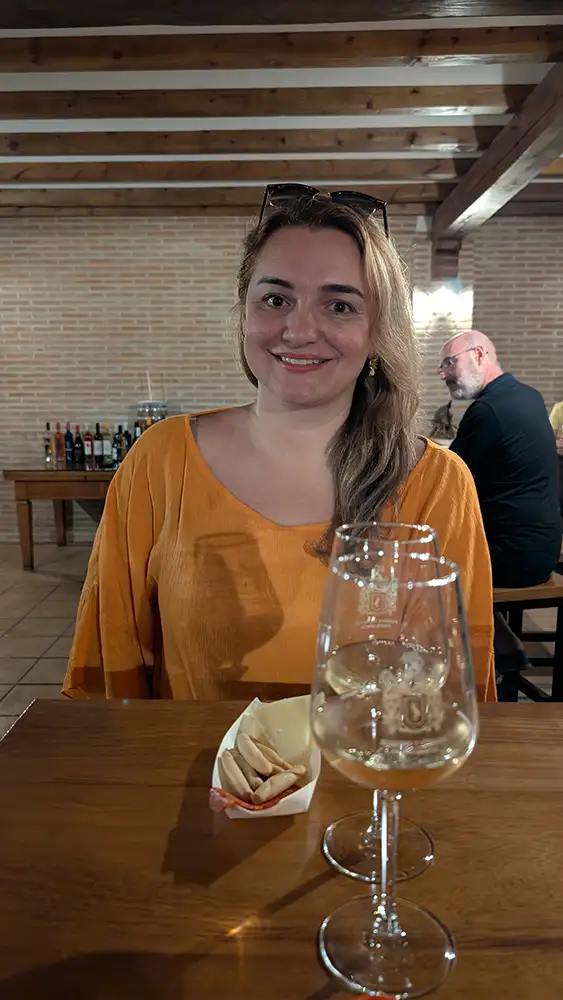
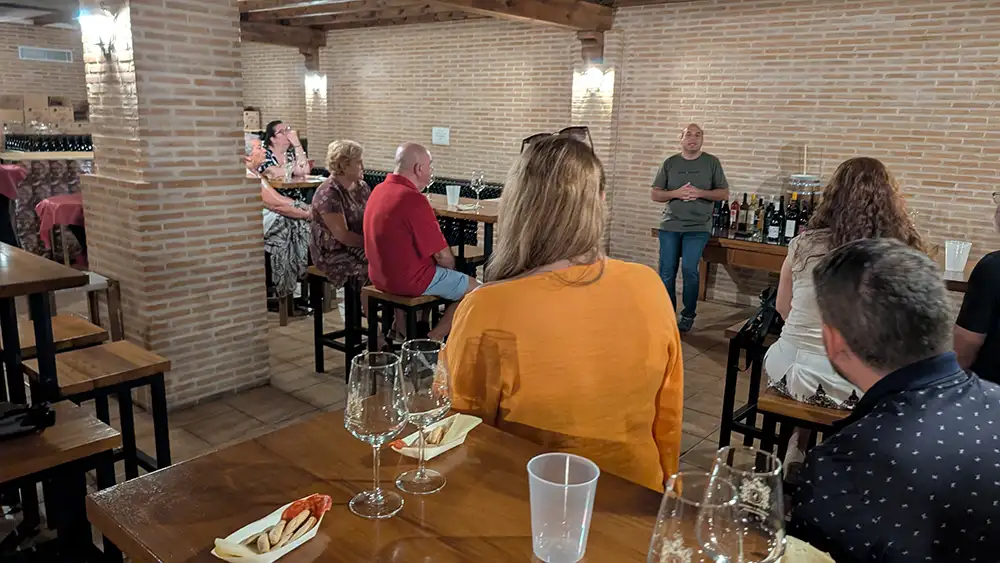
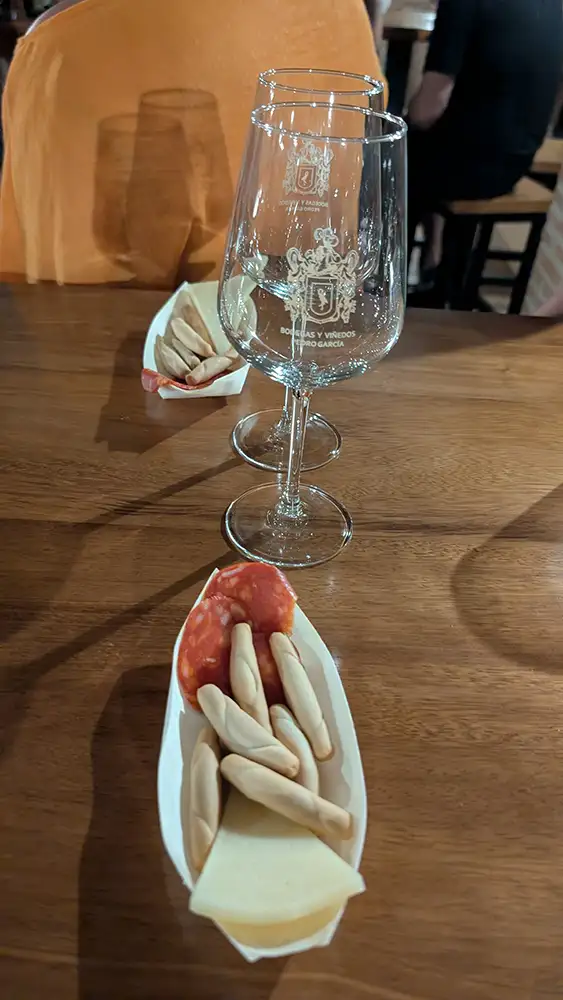
The tasting takes place in the same room where the wines age, among the oak barrels and bottles. There are three wines, served with a small spread of cheese, cured meats and crackers.
It starts with a semi-sweet white. It's pleasant and easy to drink, even though sweet wine isn't really our thing.
The second is a dry white, and it was our favourite. It has well balanced acidity, that green apple character, and enough freshness to make it very easy to drink.
The third is the red, fuller bodied and quite tannic. It was our least favourite, though that's just personal taste. If you like a red with more structure, you'll probably disagree with us.
Overall, these are good, easy drinking wines without much pretension. For what the experience costs, they more than deliver.
The tasting itself is meant to last 20 to 30 minutes, but we ended up staying much longer. We sat, drank, chatted, and only left because the next group was already arriving.
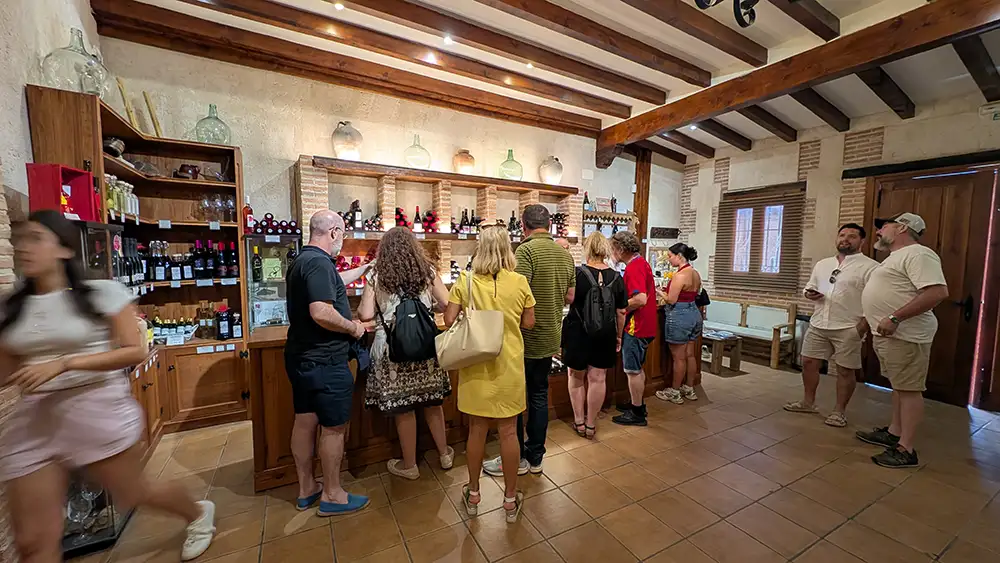
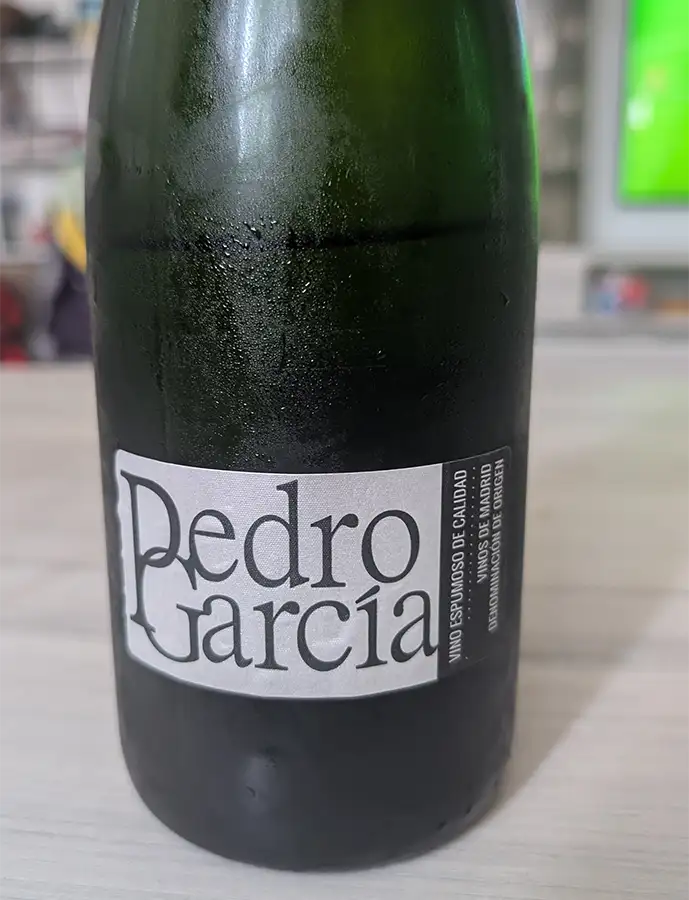
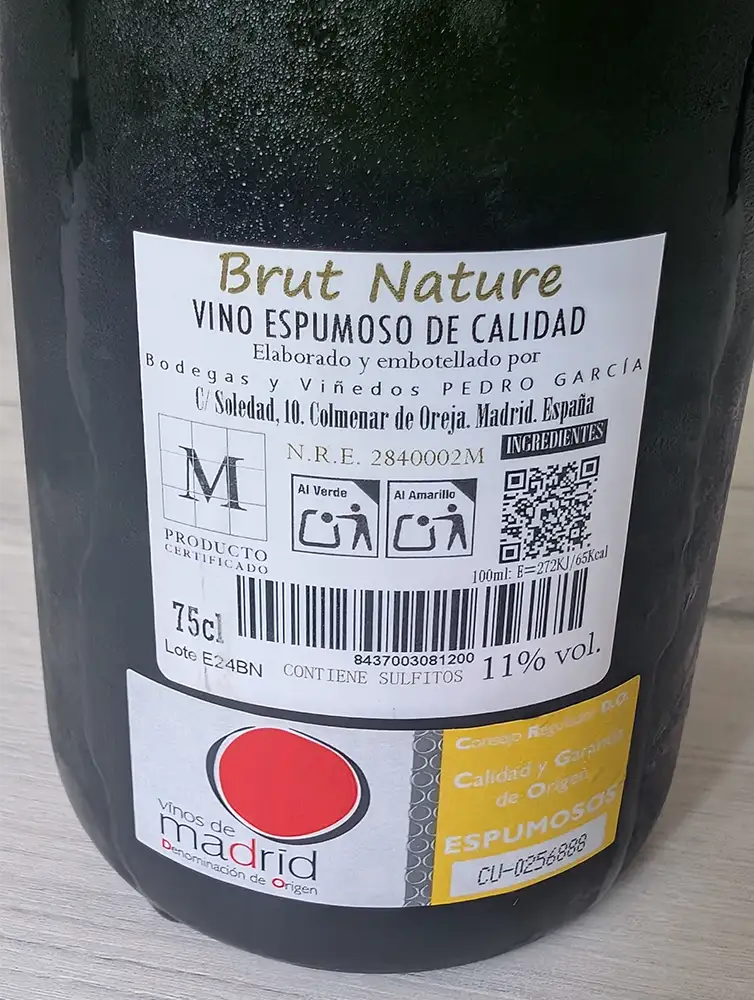
On your way out, you can buy the wines directly from the winery. We picked up the brut nature sparkling wine that ages in the caves, and it was the best purchase of the day. Nicely balanced acidity, genuinely fine bubbles, and it cost around €9. At that price, we thought it was better than the well known supermarket cava brands.

What is the DO Vinos de Madrid
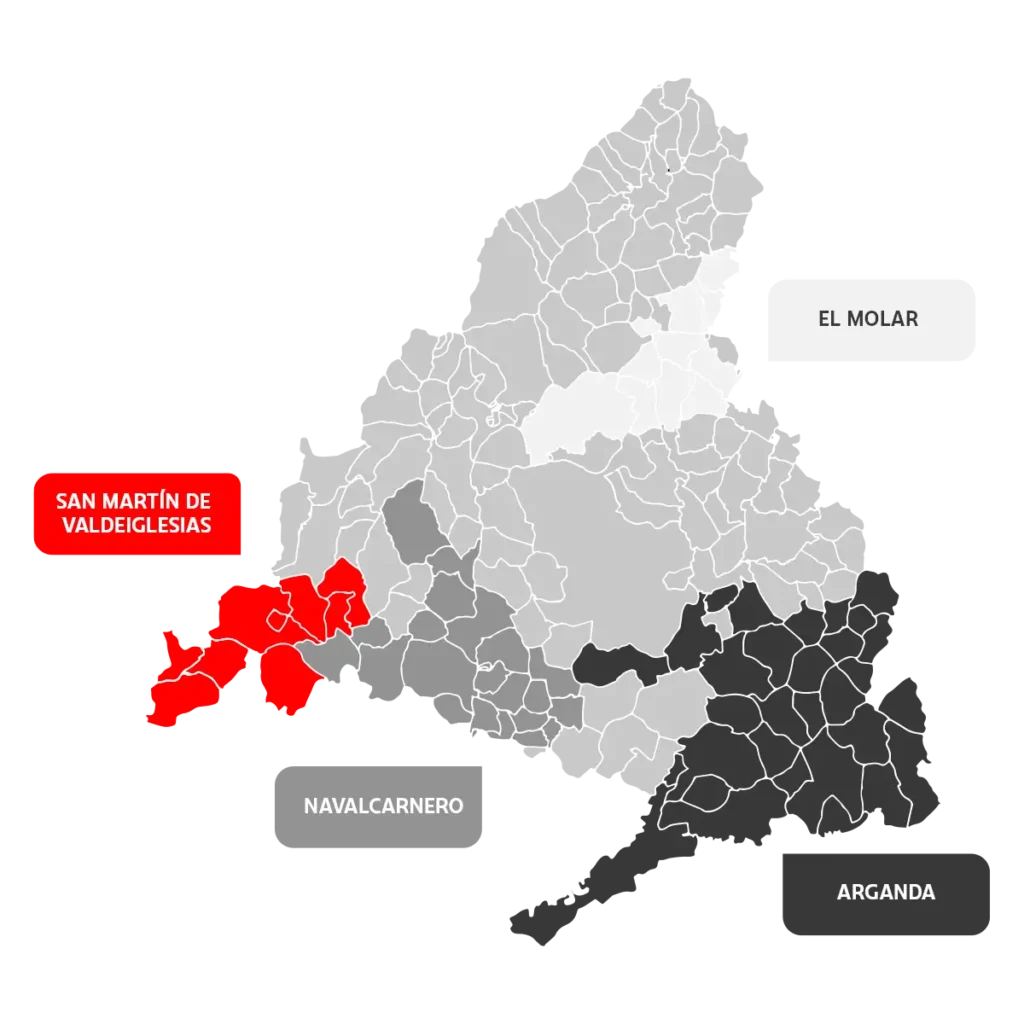
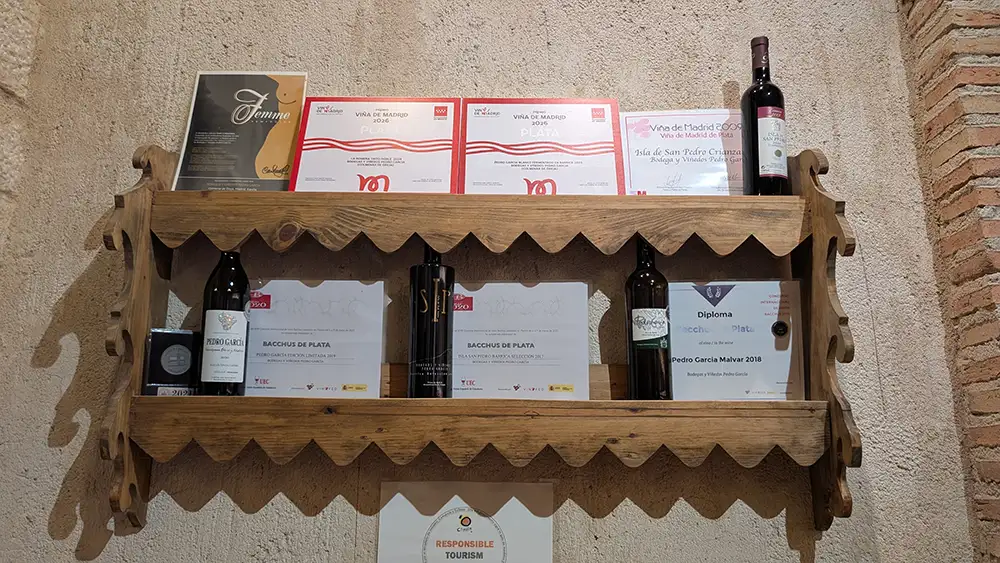
The DO Vinos de Madrid has existed since 1990 and is the seal that covers wines made within the Madrid region itself. Plenty of people don't even know Madrid makes wine.
There are four sub-zones, and Colmenar de Oreja sits within Arganda, the largest of them. Around here, the whites are made mostly from malvar, a local grape that produces fresh, fruity wines, while the reds come mainly from tempranillo.
The denomination is small because the city gradually grew over the vineyards throughout the twentieth century. The upside is the price. These wines are little known outside the region, so you can find decent bottles cheaply in any supermarket in Madrid.
Practical information for visiting the winery
How to get to Colmenar de Oreja from Madrid
The winery is at Calle Soledad, 10, in the historic centre of Colmenar de Oreja, about 50km southeast of Madrid.
By car, it's around 50 minutes. This is the most practical option, especially if you want to combine the visit with other nearby towns on the same day.
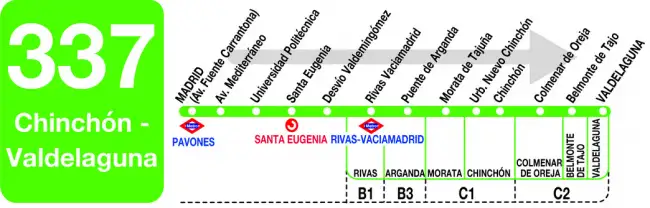
It's also possible without a car. Interurban bus line 337 leaves from southeast Madrid, connecting with metro line 9 at Pavones, and takes around an hour and ten minutes to reach the bus station in Colmenar de Oreja. Buses run roughly every hour, and a single ticket costs €3, bought on board. From there, it's a short walk to the winery, as everything is within the town centre.
How to book and what it costs
Phone
+34 918 943 278
Contact
You can also book through wine tourism platforms such as Aladinia, Guía Repsol, Smartbox and Groupon, which sometimes include a bottle of wine in the package.
There are two types of visit:
- Standard. A 45 minute guided tour of the winery, with a tasting of two young wines. €10 per person.
- Gourmet. A one hour visit that includes the walk through the centuries old caves, a tasting of three wines and a regional snack. €15 per person.
If you're going for the caves, it has to be the Gourmet option. The standard tour doesn't go underground.
It's worth noting that the winery is accessible for visitors with reduced mobility, and that the tasting is for over eighteens only.
Is it worth visiting?
It was well worth it, and we really enjoyed it. This visit carries the MiraEspanha seal of recommendation.
What stays with you afterwards is the caves. That's what sets this winery apart from other wine tourism visits, and it's the reason to choose the Gourmet option over the standard one.
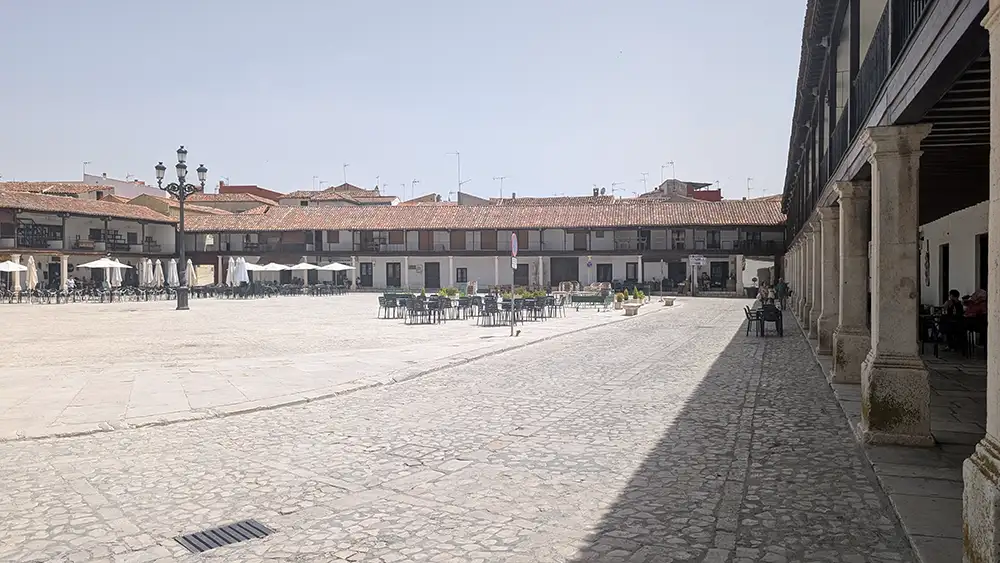
Colmenar de Oreja has its entire historic centre listed as a Site of Cultural Interest, including the arcaded Plaza Mayor and the Ulpiano Checa Museum, dedicated to the painter born in the town. You can tell the town had a fairly rich past, the buildings in the old quarter are huge and the church looks almost like a fortress.
And while you're there, it's worth eating well too, the local food is another highlight. Around the Plaza Mayor, restaurants serve stews, tapas and grilled meats paired with local wines, all made with ingredients from the region. It's delicious
Ten minutes away by car is Chinchón, known for its Plaza Mayor with green wooden balconies, which has featured as a filming location several times. You can easily fit both towns and the winery into one day without rushing.
Frequently asked questions
It's for over eighteens only.
Yes. Despite being several metres below street level, the cave has been adapted and welcomes visitors with reduced mobility.
The standard tour costs €10 per person. The Gourmet, which includes the cave, costs €15.
Yes. Visits only take place with a prior booking.
The standard tour doesn't go down into the cave and includes a tasting of two young wines. The Gourmet includes the walk through the centuries old caves and a tasting of three wines, with a snack.
Interurban bus line 337 connects Madrid to Colmenar de Oreja, departing near Pavones metro station, with a journey of around an hour and ten minutes.